Rose Drawing: 22 Beautiful Roses to Draw, From Bud to Full Bloom
The rose is the flower we reach for when words aren’t enough — and it’s just as loved on paper as it is in a bouquet. It’s one of the most-drawn flowers in the world, and once you understand how a rose is actually built, it’s far easier to draw than it looks. Free printable of 22 drawings available at the end of the article.
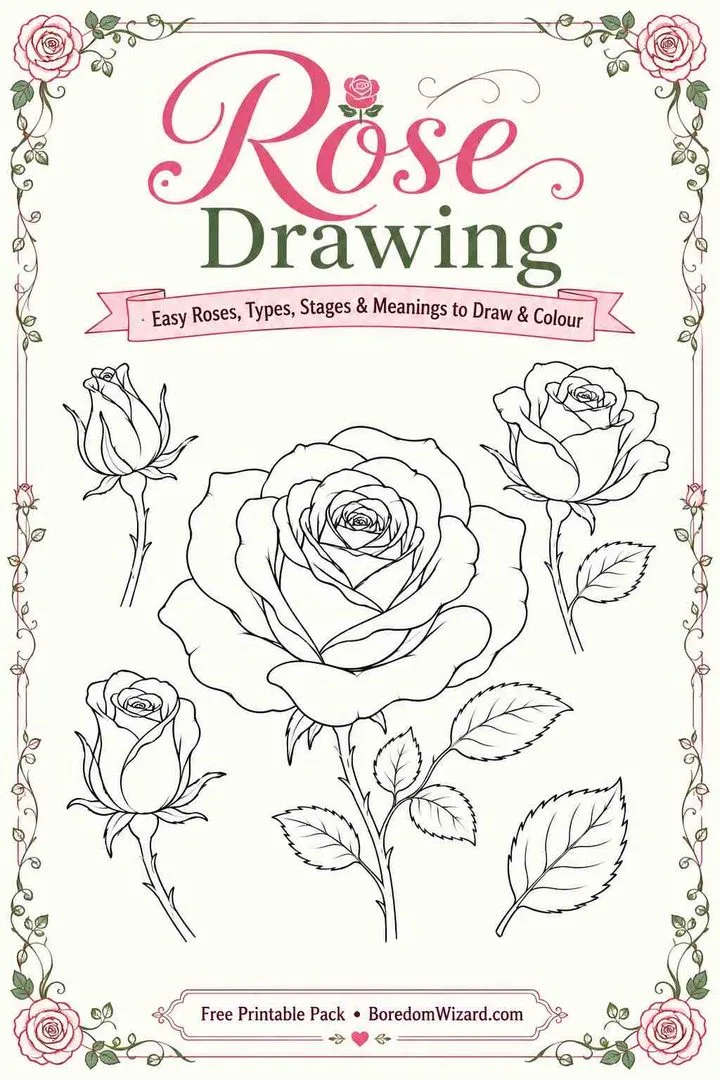
This is a complete rose drawing guide: 22 roses to draw and colour, from a dead-simple spiral bud to a full, ruffled bloom. You’ll get the main types of roses, every stage from bud to full bloom, and a little about what each rose quietly means. Every design is clean black-and-white line art, so you can trace it, sketch from it, or print the free pack and colour it in. If you love flowers, it pairs perfectly with our broader flower drawing ideas and our sunflower drawing guide.
How to draw a rose: the Spiral-Out Method
To draw a rose the easy way, start with a small spiral for the centre, then wrap two or three curved petals around it. Add larger, looser petals fanning outward and let them overlap. Cup the base with a few sepals, drop a stem below, and finish with two pointed, toothed leaves. Simple shape first, petals second.
Every rose in this guide — cute, classic, or intricate — starts the same way. I call it the Spiral-Out Method, and after drawing hundreds of these, it’s still the fastest route from a blank page to a rose that genuinely reads as a rose:
1. Spiral centre. Draw a small loose spiral or a little “e” shape. That’s the heart of the flower.
2. Inner petals. Wrap two or three short, curved petals snugly around the spiral.
3. Outer petals. Add bigger, looser petals fanning outward, overlapping as they go.
4. Stem & leaves. Cup the base with a few sepals, drop a stem, and add pointed leaves.
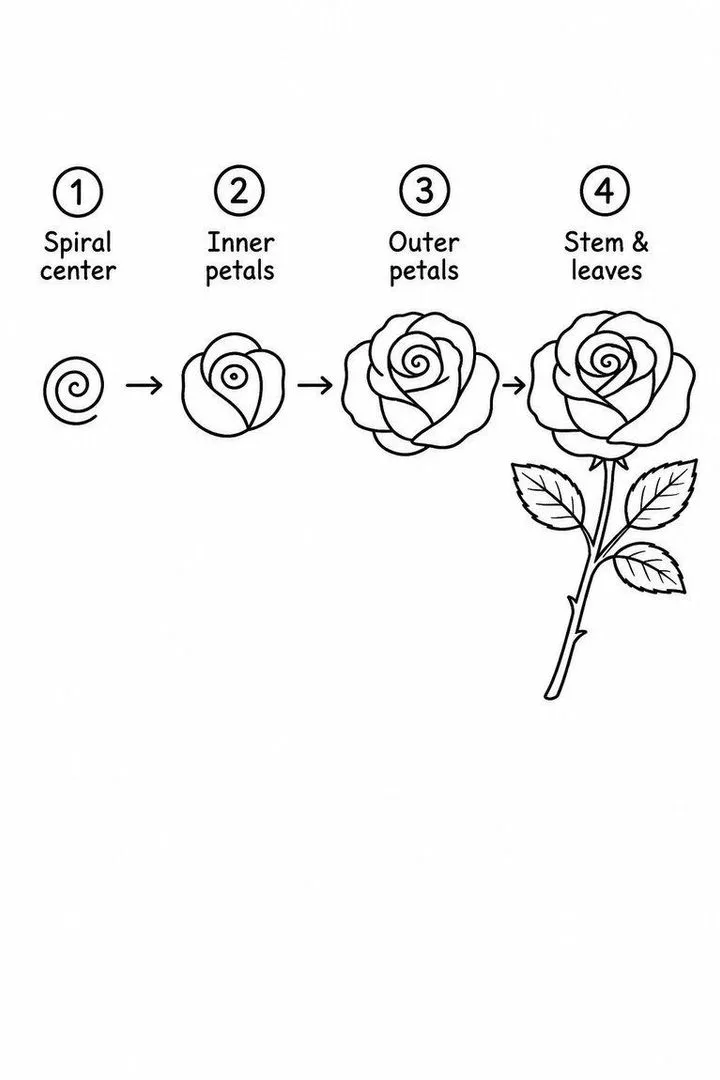
The Spiral-Out Method — how to draw a rose step by step.
Start with the simplest version there is. This little simple rose is about six clean lines — the perfect easy rose drawing to warm up with or hand to a total beginner.
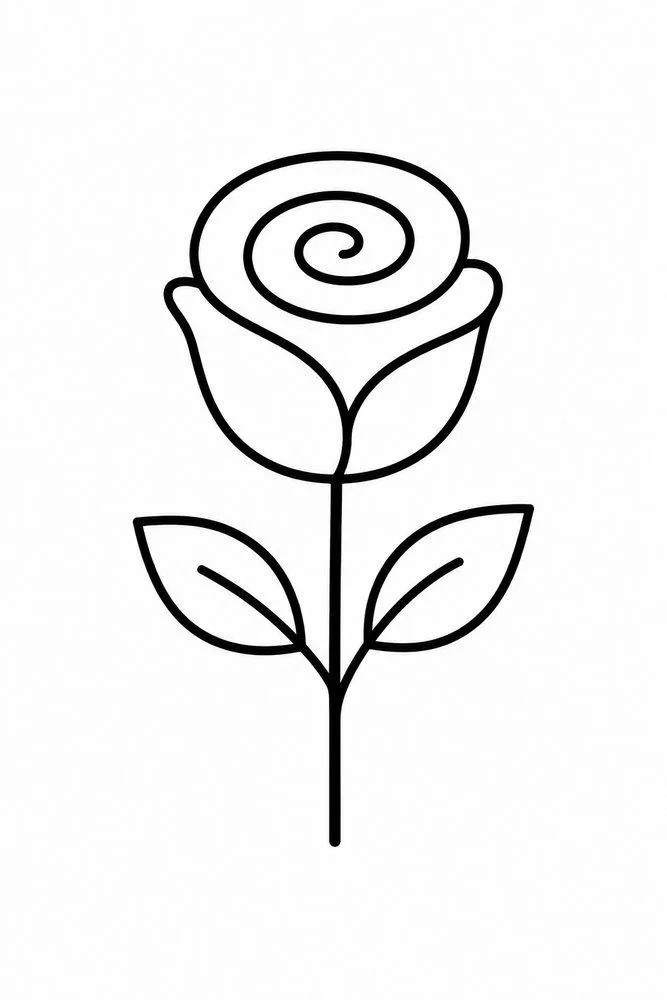
Simple rose icon — the easiest rose to draw.
Once that feels natural, open it into a fuller rose outline with layered petals, a leafy stem, and a thorn or two — clean and roomy, ready to colour.
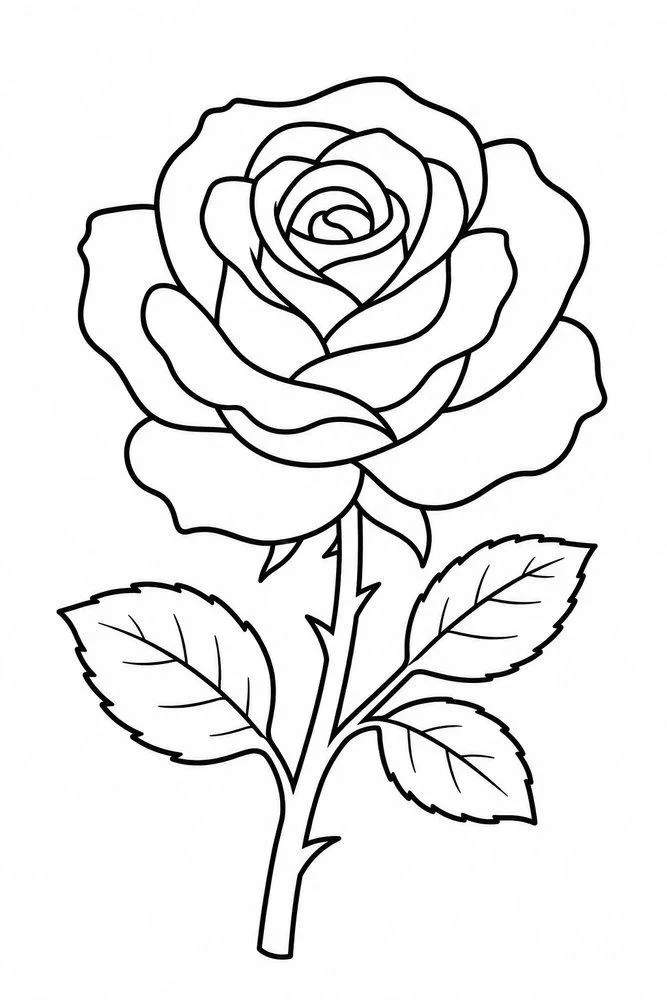
Rose with leaves — a simple rose outline coloring page.
And if you’re drawing with little ones, the cute cartoon rose keeps everyone smiling. It’s a favourite in our drawing ideas for kids and sits nicely alongside other easy things to draw.
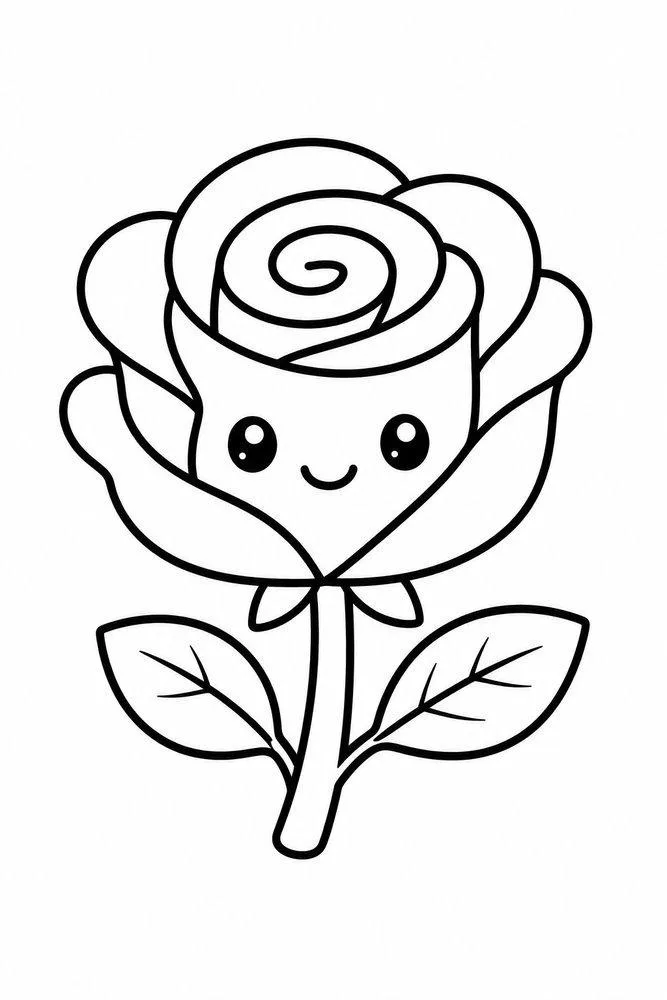
Kawaii rose — a cute, beginner-friendly cartoon rose.
The stages of a rose: from bud to full bloom
A rose isn’t one shape — it’s a sequence. It opens through five clear stages, and drawing them side by side is the single best way to understand how the whole flower is built.
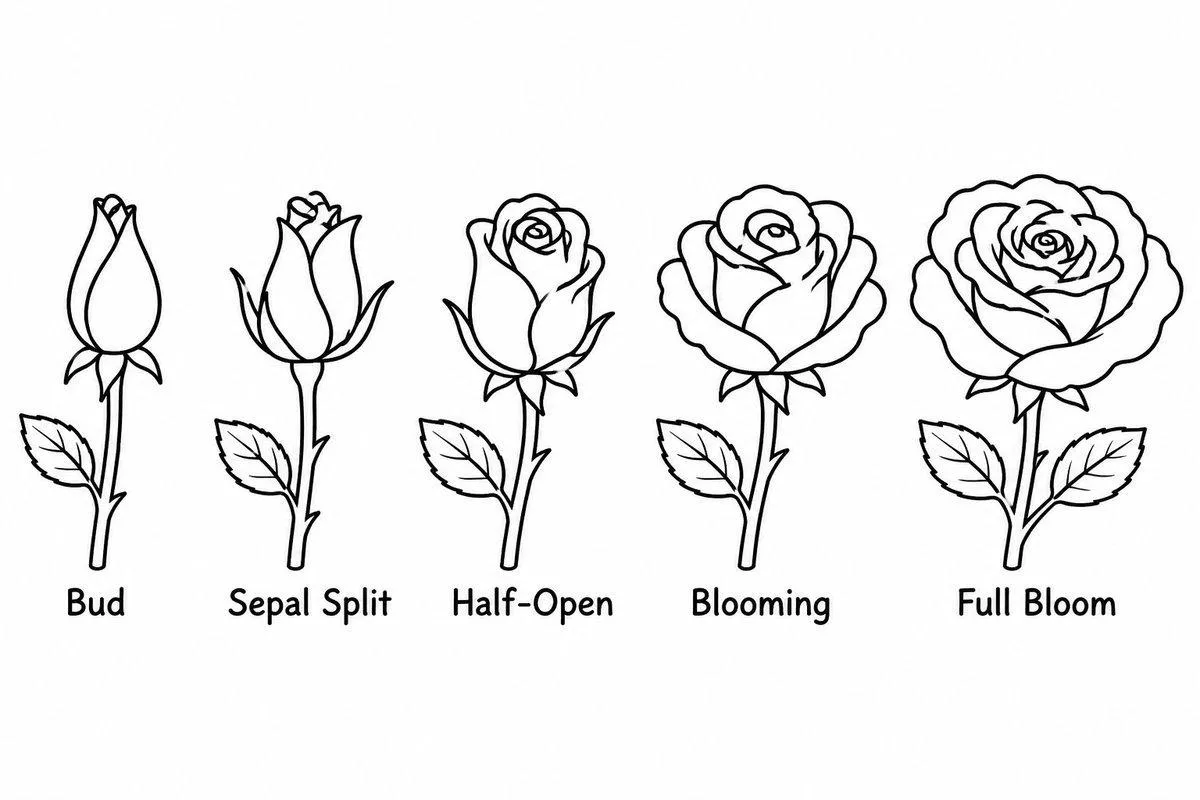
Rose bloom stages — bud, sepal split, half-open, blooming, full bloom.
Bud → Sepal Split → Half-Open → Blooming → Full Bloom. Each step just loosens the one before it. Draw the tight teardrop first, then let the green sepals peel back, then let the petals fan open a little more each time.
The rose bud is the easiest rose of all — a little teardrop wrapped in a few pointed sepals on a stem. In the old language of flowers, a bud stands for youth, and for a love that’s only just beginning.
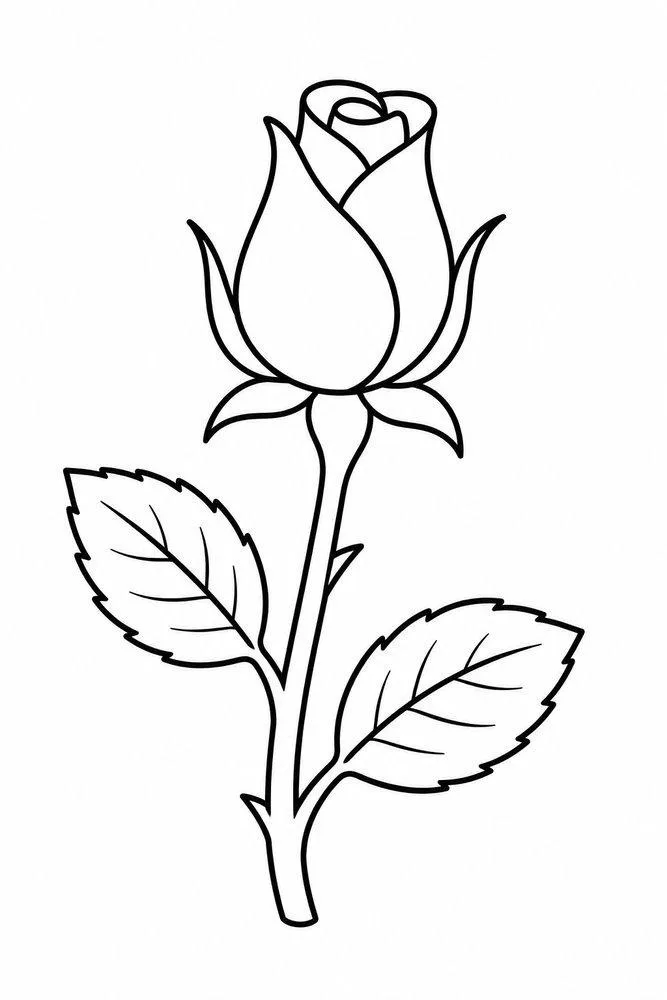
Rose bud — a tight, closed bud, the simplest stage to draw.
As the sepals drop and the outer petals loosen, you reach the half-open rose: the coiled centre still tucked in, the outer petals just beginning to unfurl. This is the romantic favourite — the stage that traditionally means a love that is growing but not yet spoken.
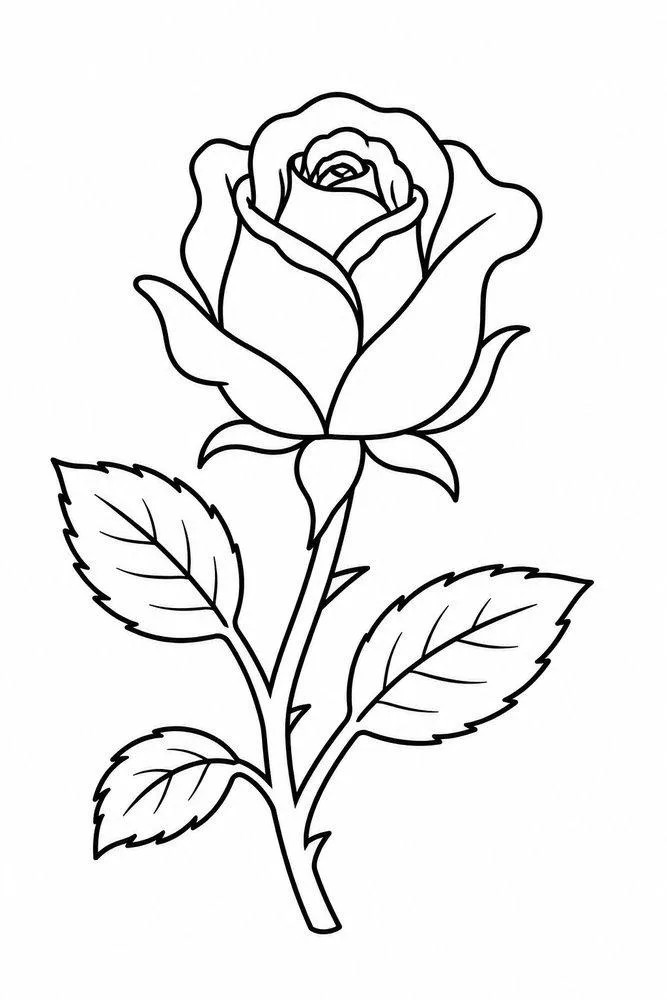
A classic rose caught half-open, petals just unfurling.
Fully open and seen from above, the petals spiral all the way to the edge in a perfect full bloom. A rose at full bloom is the flower at its most generous — the traditional symbol of a full, declared, grateful love.
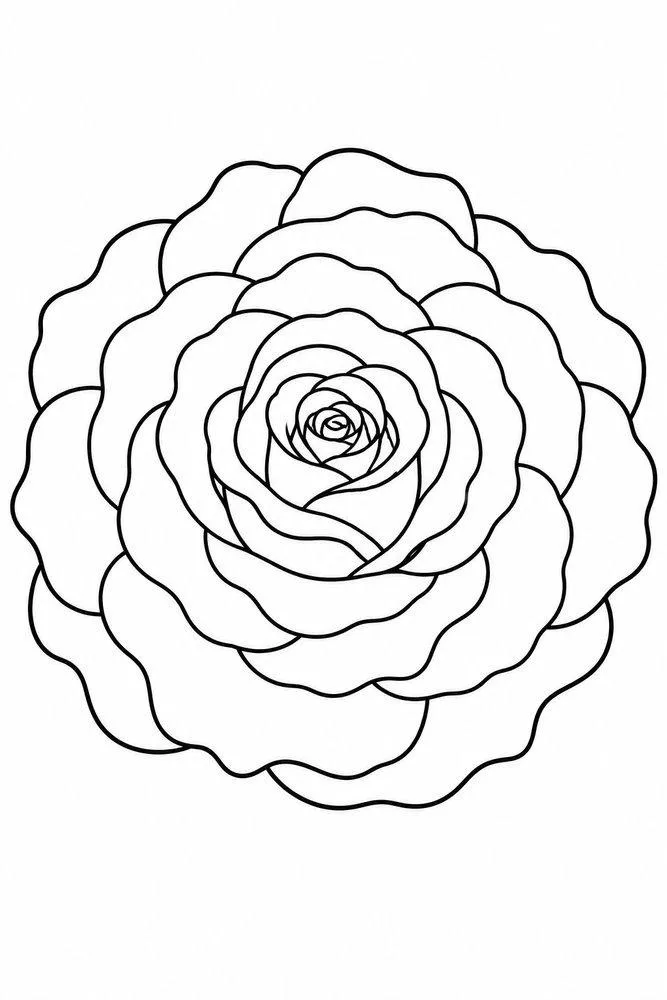
Full-bloom rose, top view — petals spiralling to the edge.
There’s no rule about which stage is “best,” but if you draw roses for other people as often as I do, you start to notice patterns. The delicate bud and the soft half-open rose tend to be the ones people choose for gentle, romantic designs — they’re the most-saved rose tattoos and the most-requested for cards. The bold full bloom and the single long-stem rose are the timeless gifting choice — the rose most people reach for to say a plain, confident “I love you.”
Types of roses to draw
Not every rose looks the same. Learning a few types of roses gives your drawings variety — and each one is just the Spiral-Out Method with a different number and shape of petals.
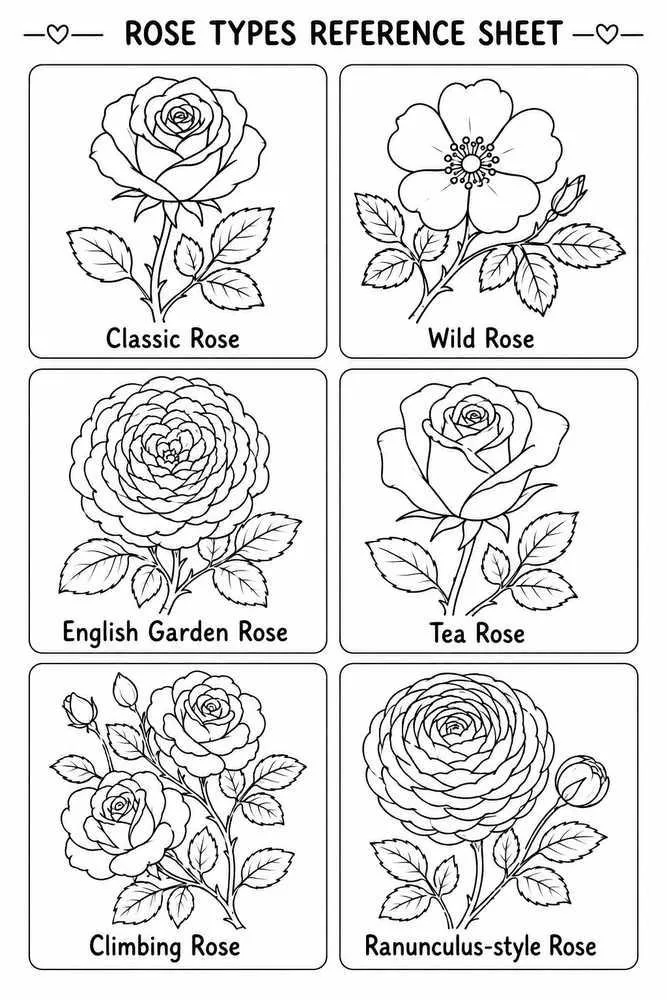
Rose types reference sheet — classic, wild, English garden, tea, climbing, and ranunculus-style.
The classic long-stem rose is the florist rose everyone pictures: one elegant bloom, a tall stem, a few thorns, and paired leaves. It’s the single rose drawing you’ll use most.
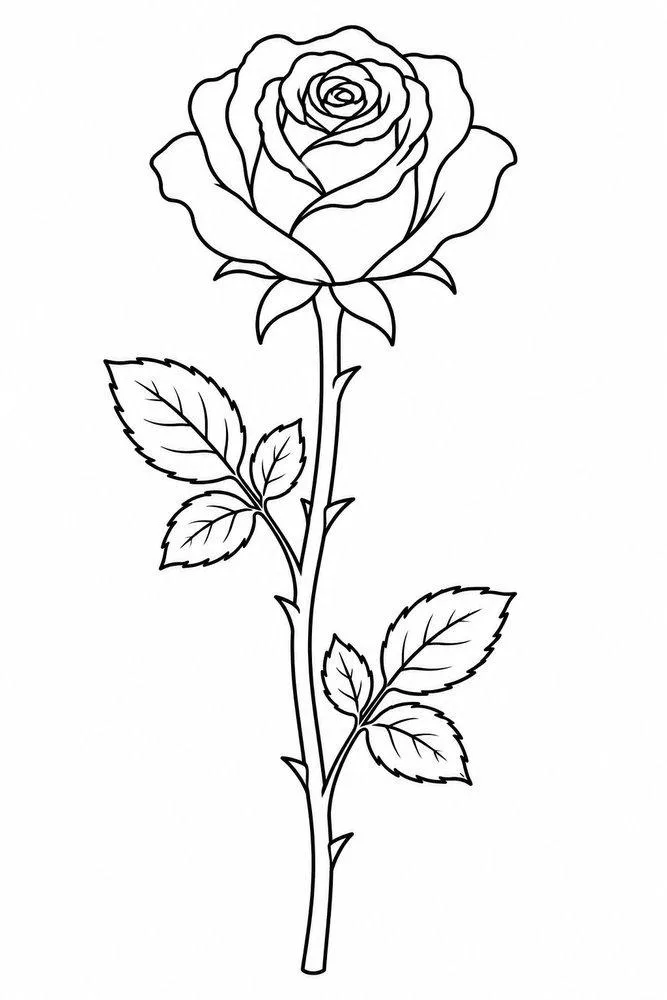
Classic long-stem rose — the timeless florist rose.
The wild rose (or dog rose) is the opposite — a simple, flat five-petal flower with a starry centre of tiny stamens. It’s the quickest of them all to draw, and it stands for simplicity and fresh beginnings.
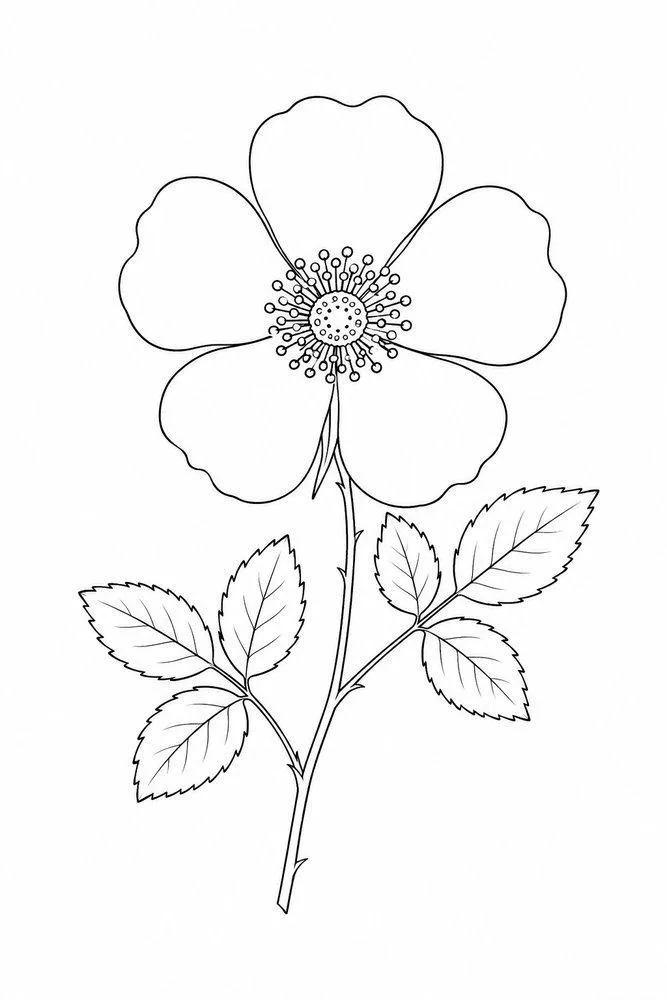
Wild rose — a simple five-petal bloom.
The lush English garden rose (the cabbage rose) packs dozens of densely ruffled petals into one round, full head — the showiest rose to colour. Its close cousin on the reference sheet, the tea rose, and the many-petalled ranunculus-style rose, follow exactly the same build with tighter, rounder petals.
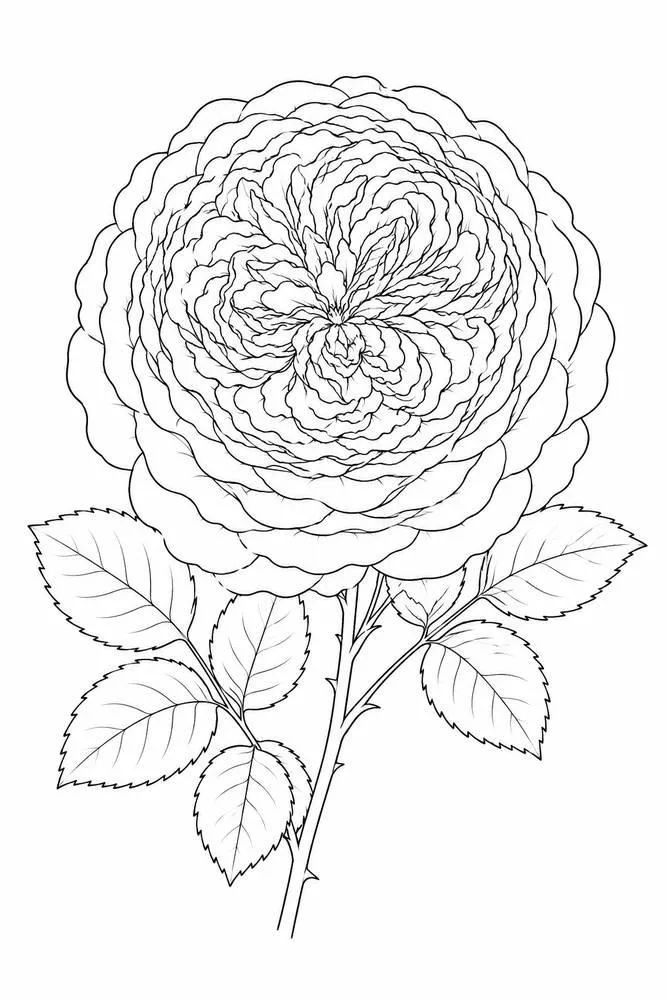
English garden rose — a full, ruffled cabbage-style bloom.
Climbing roses wind up a trellis with blooms and buds at every stage — a decorative rose vine that’s perfect when you want more than one flower on the page.
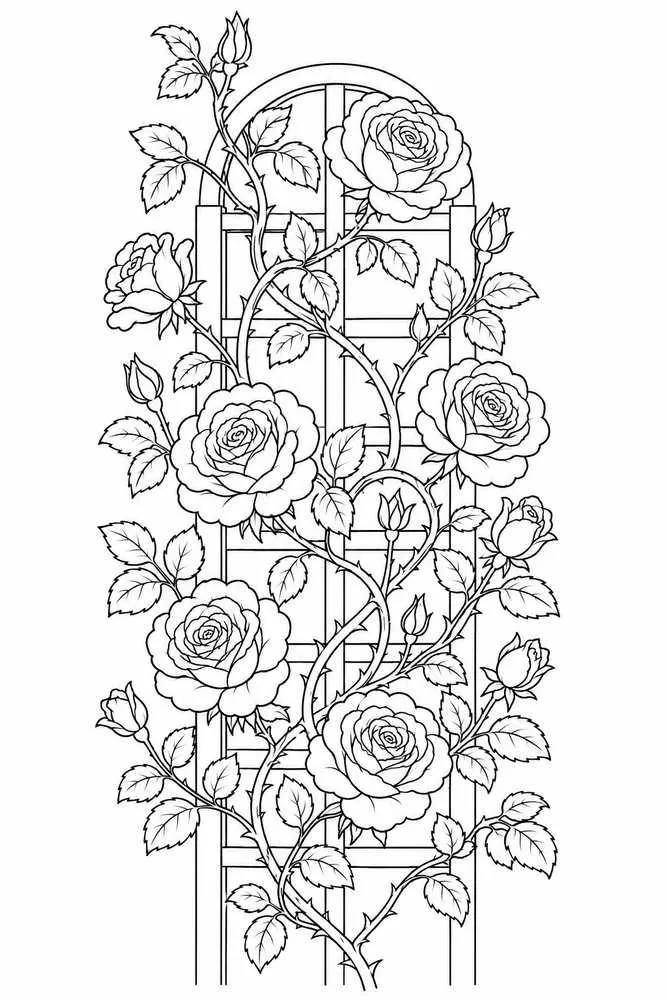
Climbing roses on a trellis — blooms and buds along a vine.
Roses with meaning: love, romance & symbolism
Roses carry more meaning than almost any other flower, which is exactly why they’re so satisfying to draw as gifts. A single rose says one clear thing: I love you. Drawn on a card or a page, it’s the simplest, most heartfelt design in this whole guide.
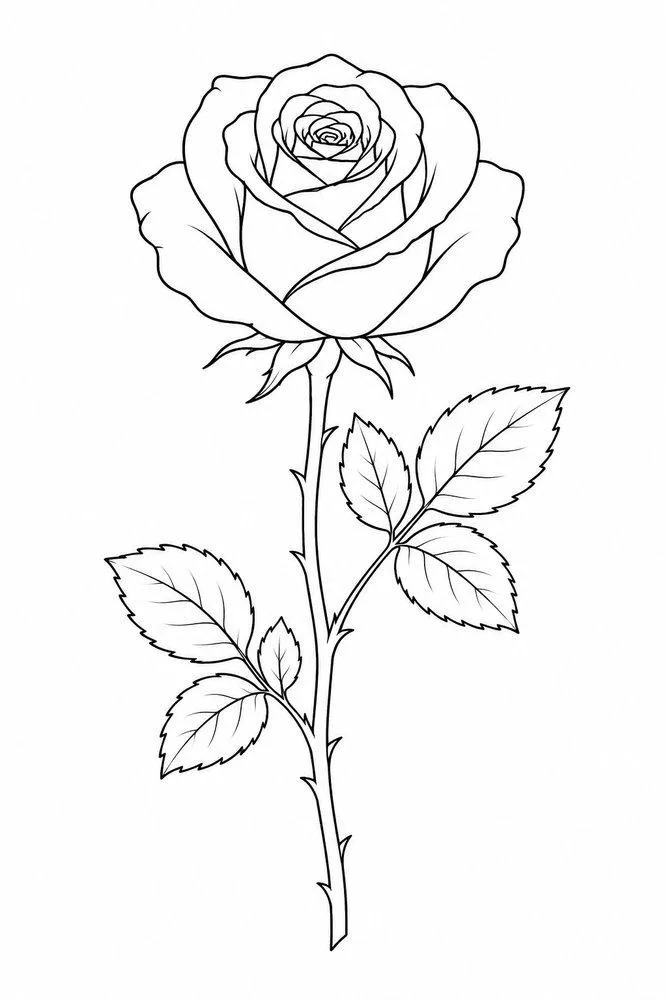
A single rose — the universal symbol of love.
Colour changes the message. When you colour your roses, it helps to know the traditional language of flowers: red for love and passion, pink for gratitude and admiration, white for purity and new beginnings, yellow for friendship and joy, and orange for energy and desire. A red rose and a yellow rose say two very different things.
A full rose bouquet, tied with a ribbon, turns that single message up to devotion — a dozen roses is the classic “I’m all in.”
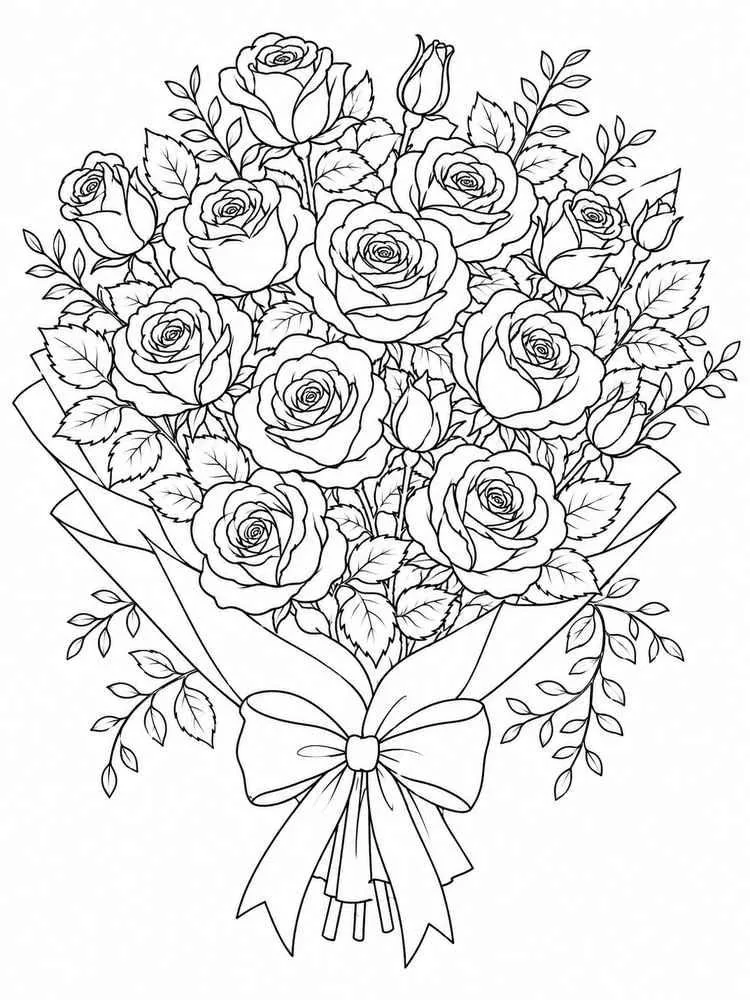
Rose bouquet with a bow — the classic gift of a dozen roses.
A heart made of roses is the Valentine motif made to be coloured, and a rose being handed from one person to another captures the tender little moment of giving itself — both are favourites every February.
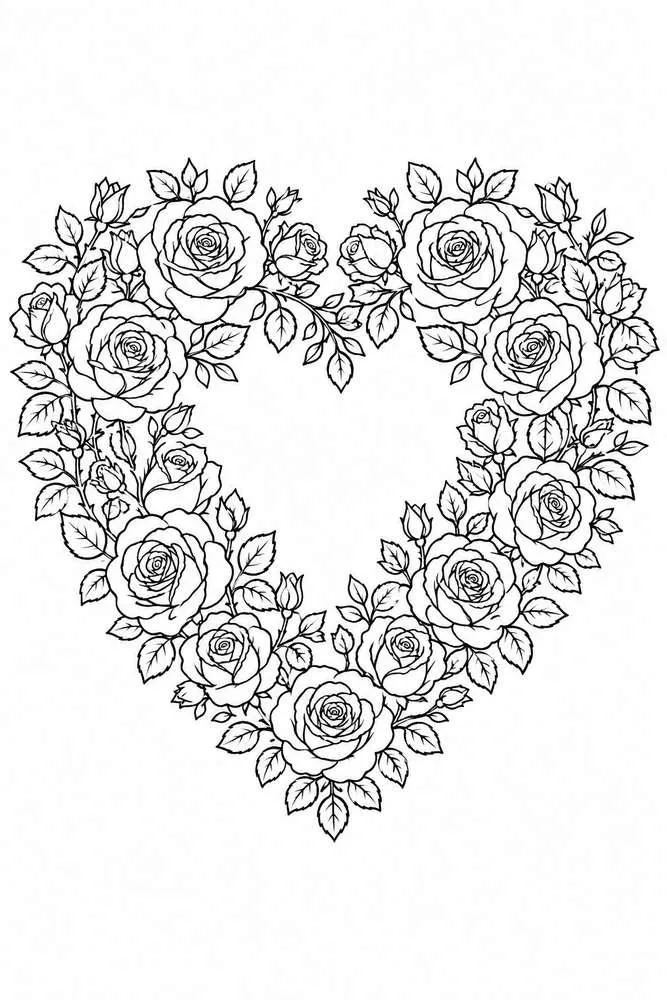
A heart wreath of roses — a Valentine’s coloring favourite.
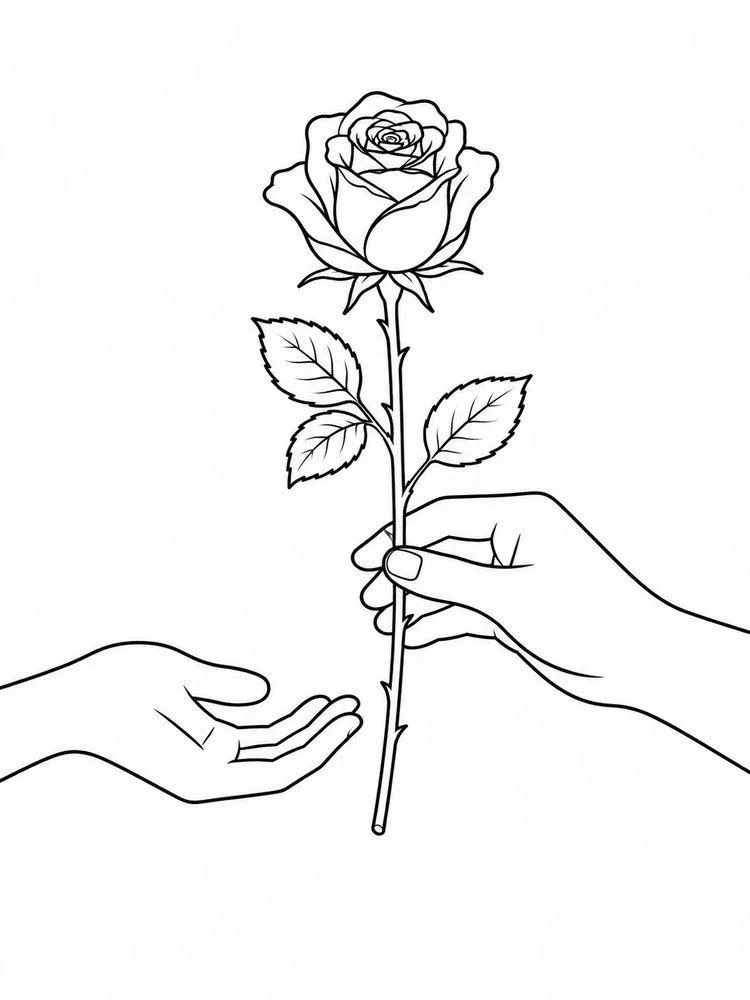
One hand offering a rose to another — the act of giving.
Decorative & aesthetic rose drawings
Beyond the botanical roses, a few designs are made purely to be beautiful — the aesthetic rose drawings that do so well as wall art, wallpaper, and tattoo ideas. If this is your lane, you’ll also love our full aesthetic drawing ideas.
A rose mandala arranges roses, buds, and leaves into radial rings — meditative to colour and a natural crossover with our mandala drawing guide.
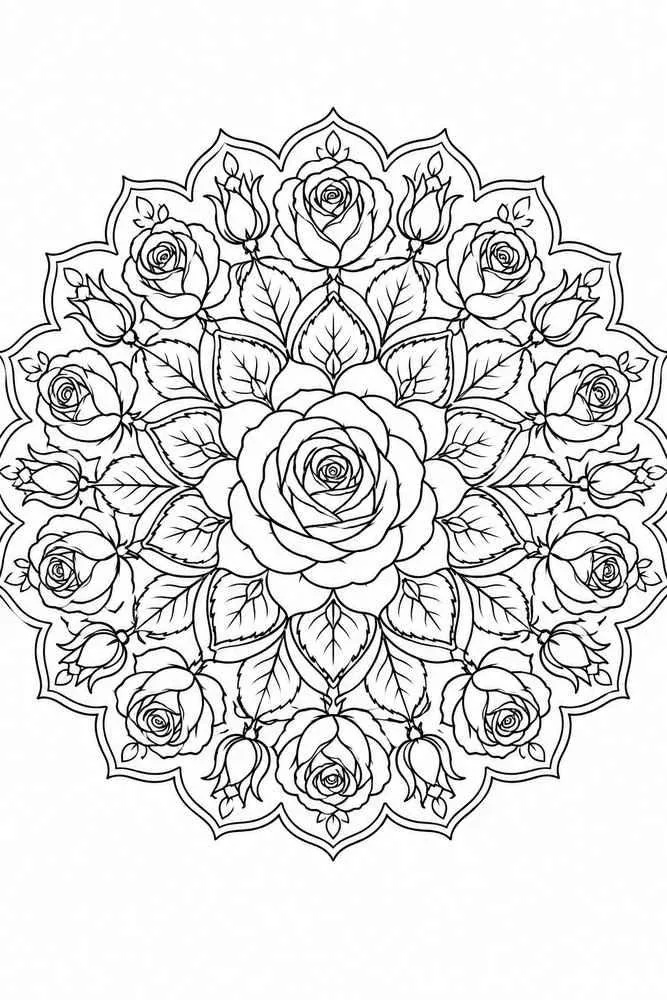
Rose mandala — roses arranged in a symmetrical, radial pattern.
The one-line rose is the modern, minimalist opposite: a single unbroken stroke that flows from bloom to leaf. It’s the go-to minimalist rose tattoo and logo design.
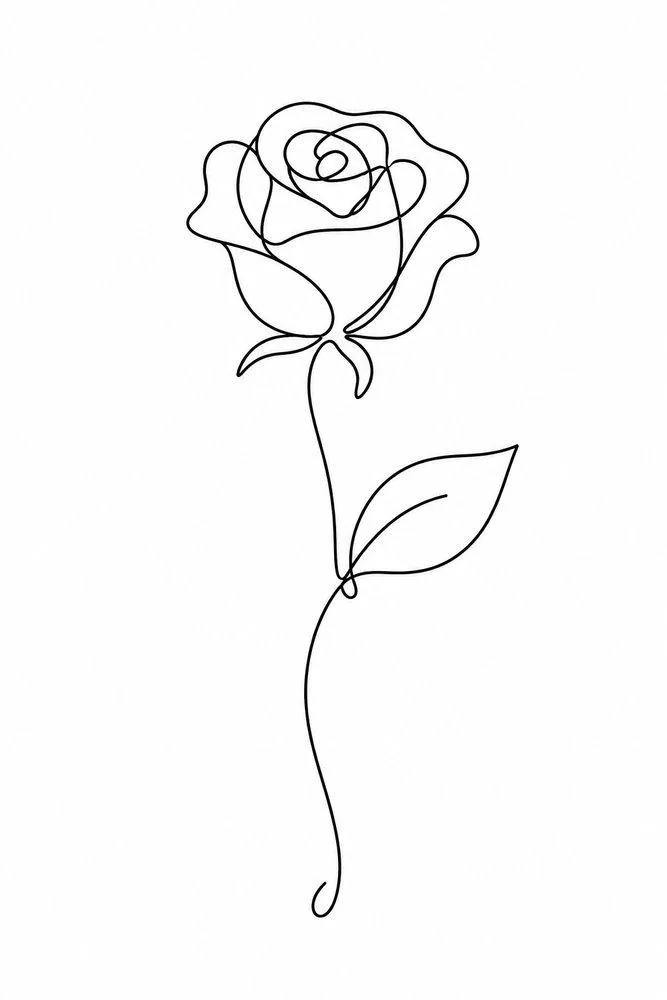
Continuous one-line rose — minimalist and tattoo-friendly.
A rose wreath frame leaves open space in the middle for a monogram or quote, and a rose with a butterfly resting on a petal is pure prettiness — a pairing you’ll also find in our butterfly drawing guide.
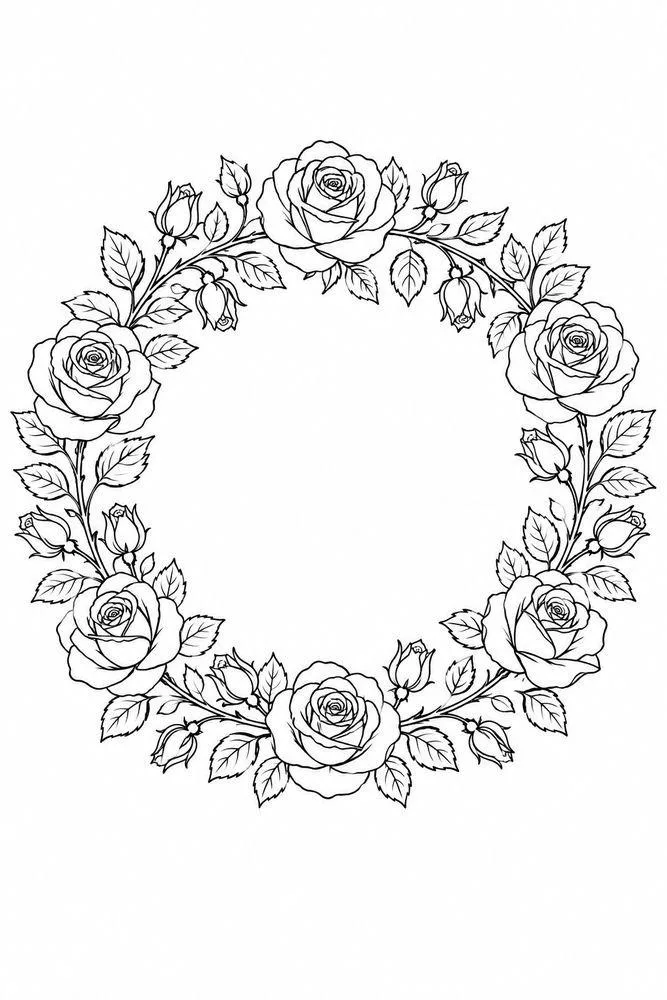
Rose wreath frame — an open ring for a name or quote.
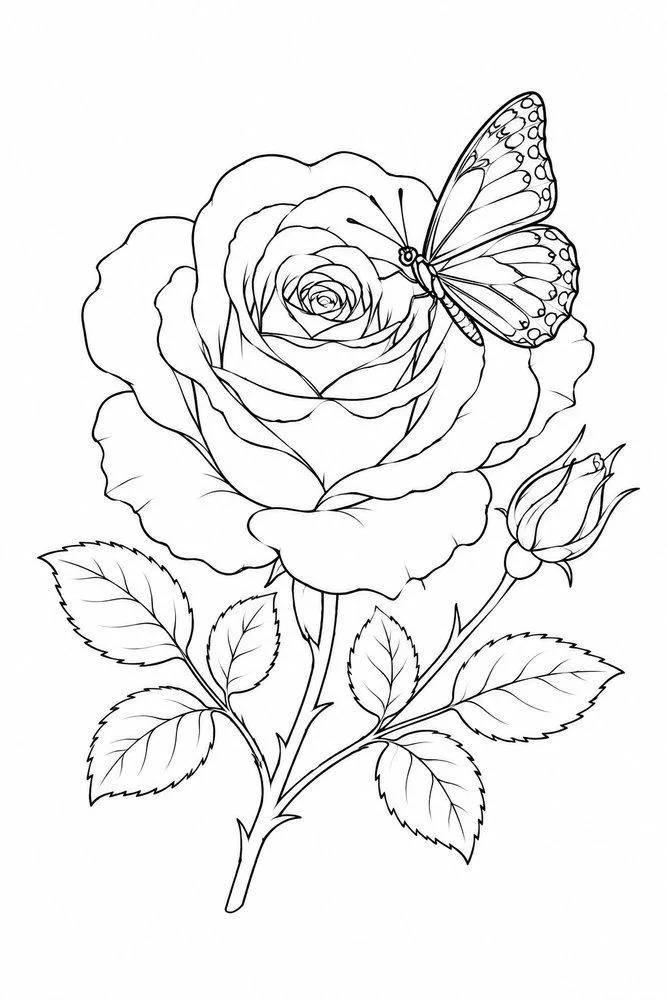
Rose with a butterfly — a delicate, aesthetic pairing.
A big rose coloring page
Finally, when you just want to relax and colour, this full-page rose garden brings buds, half-open roses, full blooms, and wild roses together into one lush rose coloring page. It’s the centrepiece of the free printable pack below.
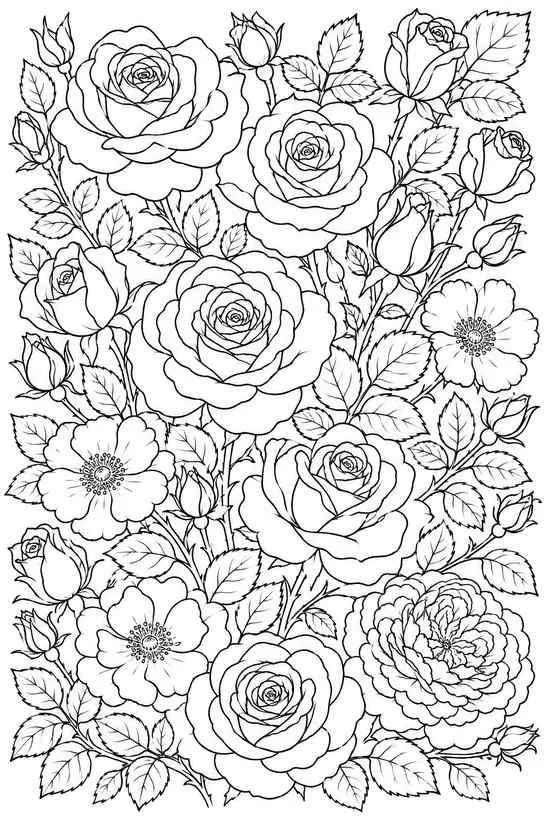
Rose garden pattern — a full-page rose coloring sheet.
Rose drawing tips that make a difference
Spiral first, always. Whatever rose you’re drawing, place the little spiral centre before anything else. Every petal grows out from it.
Get the leaves and thorns right. Rose leaves grow in odd-numbered sets (three, five, or seven), with finely toothed edges and a clear central vein. A few small thorns down the stem add instant realism to a rose with thorns.
Cute or realistic — you choose. Fewer petals and rounder shapes read as cute; more overlapping petals plus soft shading from one light source make a realistic rose drawing. Same method, different dial.
Looking for more single-flower practice? Our sunflower drawing guide uses a similar shape-first approach.
Free printable rose drawing pack
All 22 designs — the how-to guide, the bloom-stages sheet, the types reference, and every rose above — are bundled into one free printable rose drawing pack. No sign-up: download, print, trace, or colour as many times as you like.
Rose drawing FAQ
How do you draw a rose easily?
Start with a small spiral for the centre, wrap two or three curved petals around it, then add larger petals fanning outward. Cup the base with sepals, add a stem, and finish with pointed leaves. Shape first, petals second — that’s the whole trick.
What is the easiest rose to draw?
A simple spiral rose or a closed rose bud. Both are just a few clean lines: a spiral (or a teardrop) with a couple of sepals and a short stem. Start there before you try a full open bloom.
How do you draw a cute rose?
Keep it round and simple. Use a chunky spiral bloom, a short stem with two leaves, and add a tiny smiling face for a kawaii, cartoon look. Fewer petals and softer curves always read as cuter.
What are the stages of a rose?
A rose opens in five stages: bud, sepal split, half-open, blooming, and full bloom. Each stage simply loosens the one before it, from a tight teardrop to a fully open flower with petals spiralling to the edge.
What does a rose symbolise?
A rose symbolises love, but the details matter. A bud means youth and new love, a full bloom means mature or declared love, and colour shifts the meaning — red for love, pink for gratitude, white for purity, and yellow for friendship.
How do you draw a minimalist one-line rose?
Draw the whole rose without lifting your pen: loop a small spiral for the bloom, curve out one or two petal shapes, then flow the same line down into a stem and a single leaf. Keep it loose and let the line overlap itself.
Is there a free printable rose drawing pack?
Yes. The free pack includes all 22 rose drawings in this guide — easy roses, bloom stages, rose types, and meaningful designs. There’s no sign-up: just download, print, and colour.
Roses reward patience more than talent — draw the spiral, add the petals one ring at a time, and let the flower open on the page the way it does on the vine. For more botanical background, the Wikipedia entry on the rose is a lovely rabbit hole. Then print the pack and go find your favourite stage.