Window Art: 40 Ideas & What Paint to Use (2026)

A window is the one “canvas” in your home that comes with its own backlight. That’s why window art hits differently to anything on a wall — sunlight pours through the design and changes it hour by hour. This guide has 40 window art ideas you can copy, split into two very different styles: hyper-real window painting sketches that trick the eye, and glowing faux stained glass panels. Plus the part most guides skip: exactly what kind of paint to use on windows so your art lasts — and comes off cleanly when you want it to.
Window art is any decorative design painted, drawn, or applied directly onto glass — including window painting, faux stained glass, suncatchers, window clings and window murals. Most people use water-based acrylic or tempera paint, chalk markers, or specialty glass paint. Acrylic and tempera wash off with warm soapy water; glass paint can be baked on to stay permanent. Below are 40 window art ideas, from 3D pencil illusions to full stained glass panels and there free pdf printable is also available at the end.
What is window art called?
There isn’t one single name, which is exactly why it’s hard to search for. The terms overlap:
- Window painting — paint applied straight onto the glass — the broadest term, and the one used for shop fronts and holiday displays.
- Faux stained glass — translucent paint and black leading lines that imitate real stained glass without the lead, glass cutting, or the cost.
- Suncatchers — small, standalone translucent pieces hung in a window to catch the light.
- Window clings — reusable vinyl or dried-glue shapes that stick by static, no paint needed.
- Window murals — large-scale painted scenes across a whole pane or storefront.
- Trompe-l’œil window art — realistic drawing that tricks the eye into seeing something that isn’t there — the illusion style below.
All of them count as window art. The two families below are where the most striking window art designs live.
Part 1: 3D illusion window painting ideas
This is the style nobody expects on a window. Instead of decorating the glass, you draw through it — a pencil-realistic figure or object that looks like it’s standing on the sill, hanging off the frame, or pressing in from outside. Because the real view behind the glass becomes the background, the illusion changes with the weather. These are the most shareable window drawing ideas going, and they work with nothing more than a fine-tip white or black chalk marker.
The artist drawing his own window
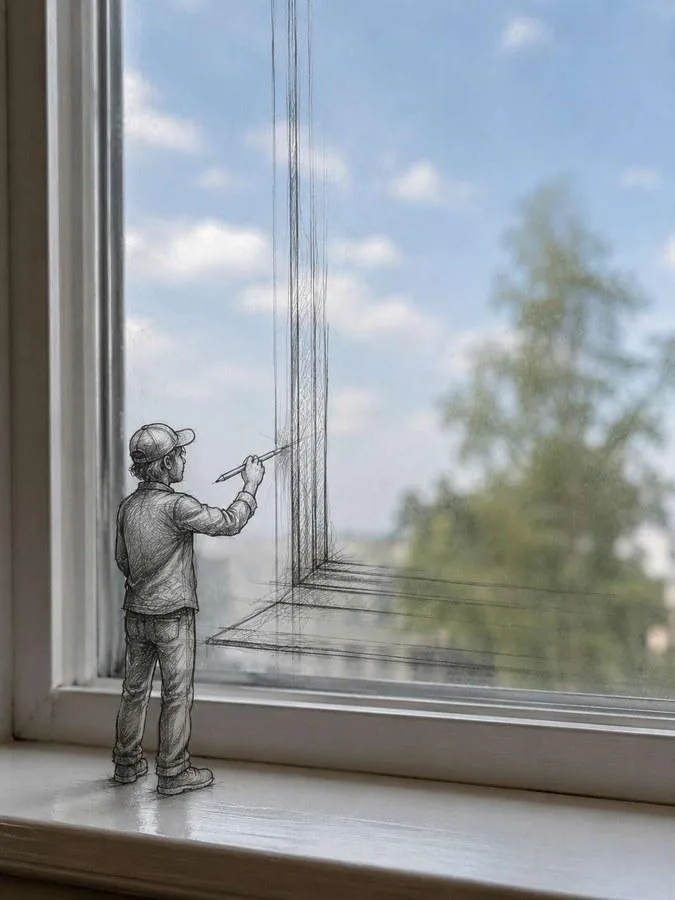
A tiny sketched figure standing on the sill, pencil in hand, drawing a second window that opens onto the same view. It’s the perfect starter piece — the “drawing” he’s making is just straight ruled lines, so all the difficulty sits in one small figure.
How to get it: Draw the ruled window lines first with a ruler, then add the figure last so his scale matches.
The rope ladder escape
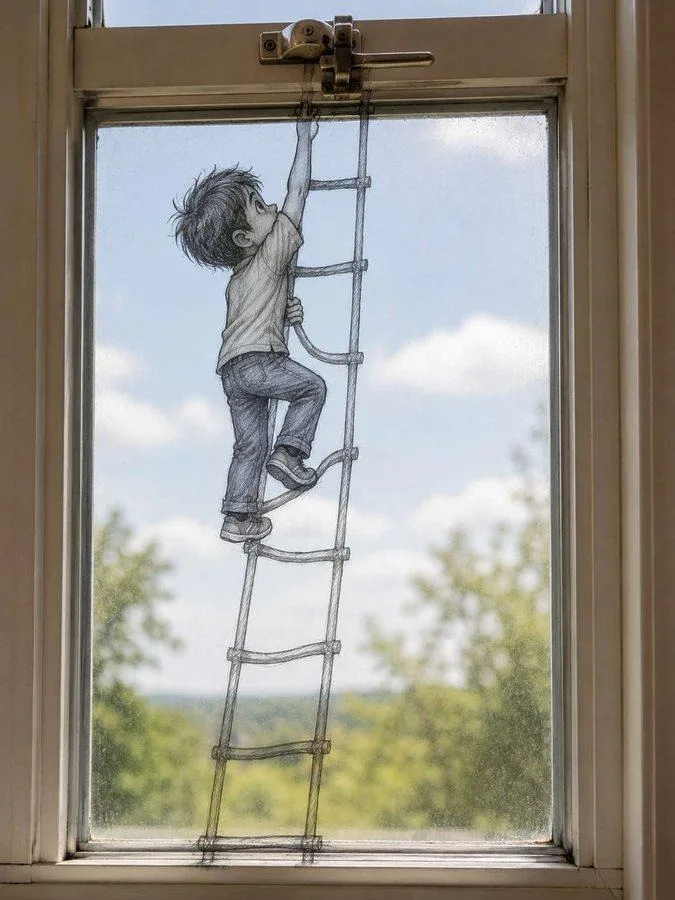
A child climbing a rope ladder that hangs from the top of the frame down past the sill. It uses the window’s own architecture as the anchor point, which is what sells the illusion.
How to get it: Hook the top rung over the real window latch — the tiny overlap does all the work.
The hand-drawn curtain
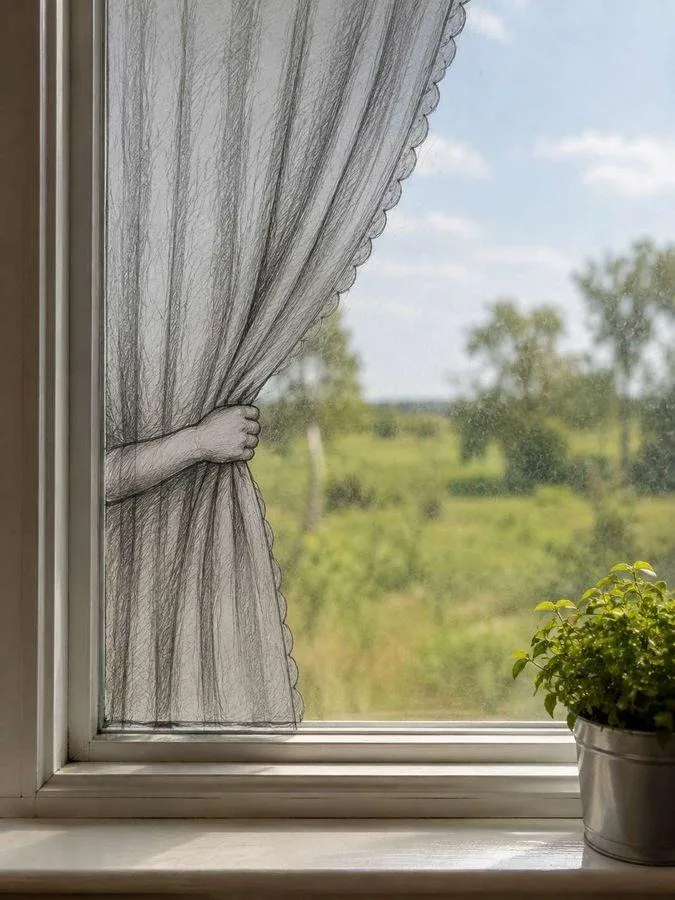
A soft, scalloped curtain sketched onto the glass and pulled aside by a drawn hand, so the real garden becomes the view it’s revealing. Quiet, cosy, and one of the easiest window art ideas here because it’s all flowing lines and no anatomy.
How to get it: Keep the fabric folds as long parallel strokes that curve toward the hand — that’s the whole trick.
Stairs into the sky
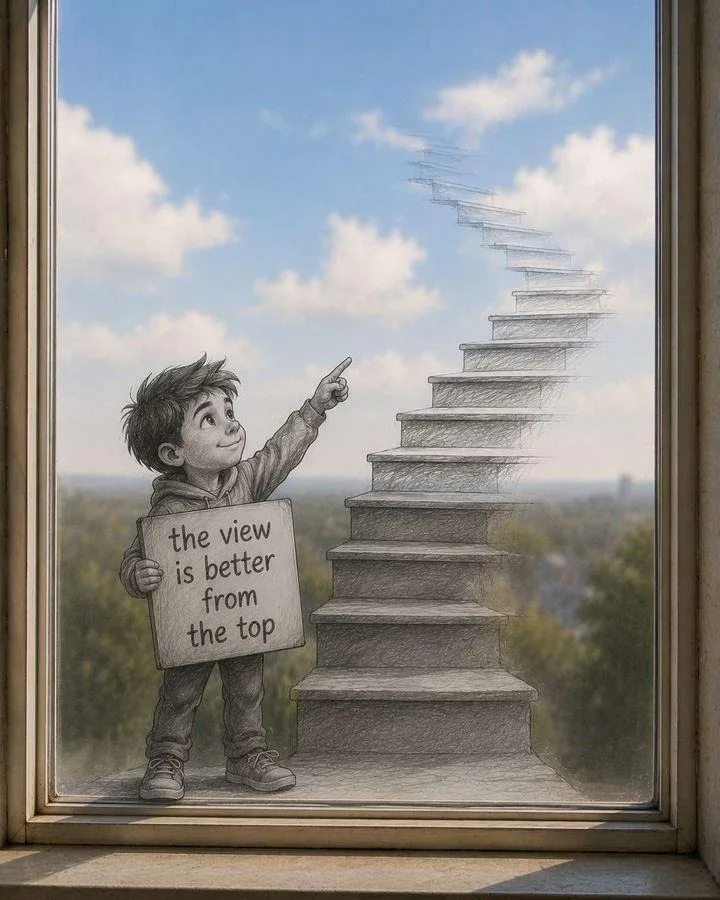
A boy holding a small sign, pointing up a flight of stone steps that dissolve into the clouds. The steps get lighter and thinner as they rise, so the sky does the fading for you.
How to get it: Draw the bottom three steps solid and let each one above lose about a fifth of its line weight.
The hand on the rainy glass
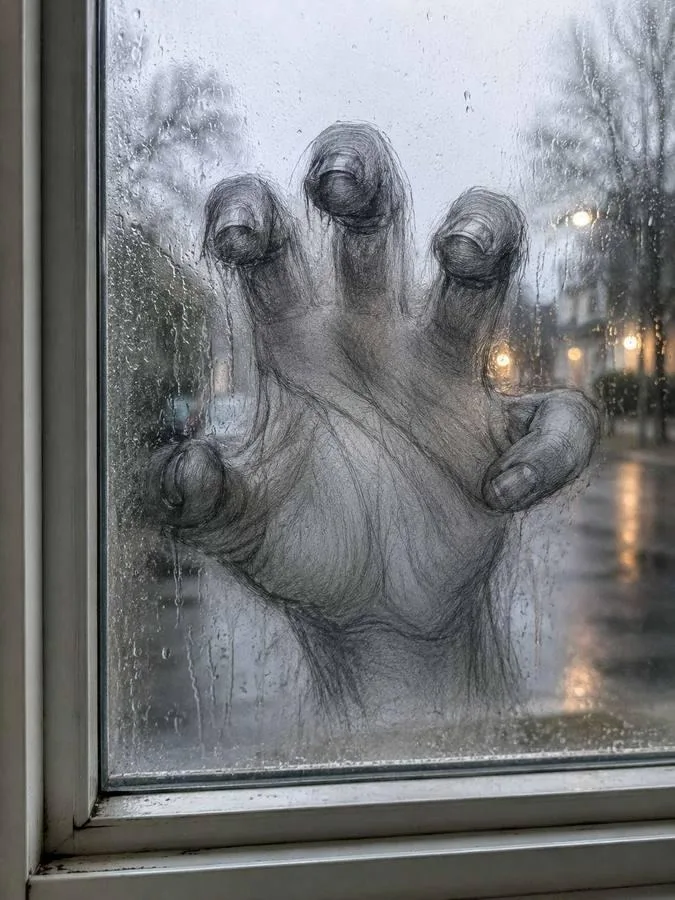
A huge hand pressing against the pane from outside, drawn in dense, scribbled graphite. On a wet evening with streetlights behind it, it becomes genuinely cinematic — a brilliant Halloween window.
How to get it: Build it in loose overlapping scribbles rather than clean outlines; the messiness is what makes it look wet.
The cartoon character pushing the frame
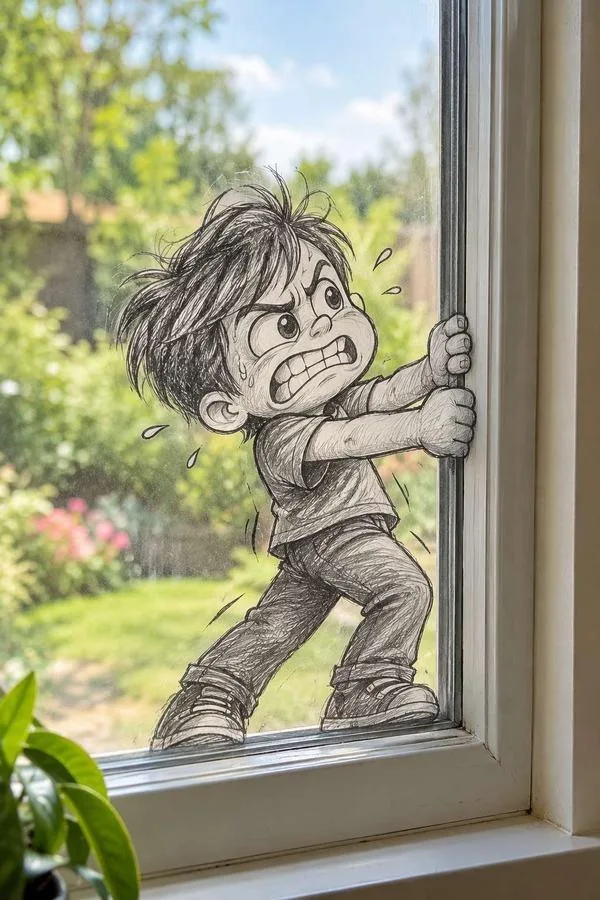
A wide-eyed cartoon kid straining to shove the window open, feet braced against the sill. Softer and funnier than the realistic pieces — the version to try if you want window art for kids that still looks impressive.
How to get it: Exaggerate the lean and add three sweat droplets; cartoon effort reads instantly.
Butterflies at golden hour
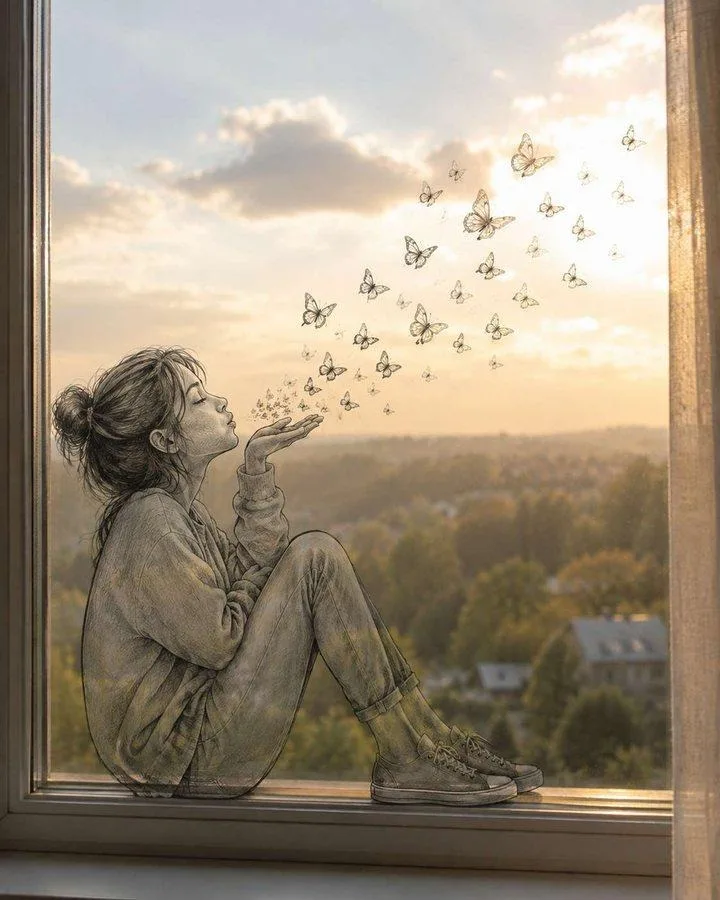
A girl sitting on the sill blowing a cloud of butterflies out across the real sunset. This is the most-saved composition of the whole style, and the one that photographs best.
How to get it: Scatter the butterflies from large-and-detailed near her hands to tiny specks at the top corner.
Motivational window art & quote ideas
Add a few hand-lettered words and the same technique becomes a daily reminder you can’t scroll past. These window quote pieces work brilliantly on a home-gym window, a study, or a bedroom you see first thing. If you like the lettering side of this, our doodle ideas and bullet journal ideas cover the same hand-lettering skills on paper.
“New day, new me” on foggy glass
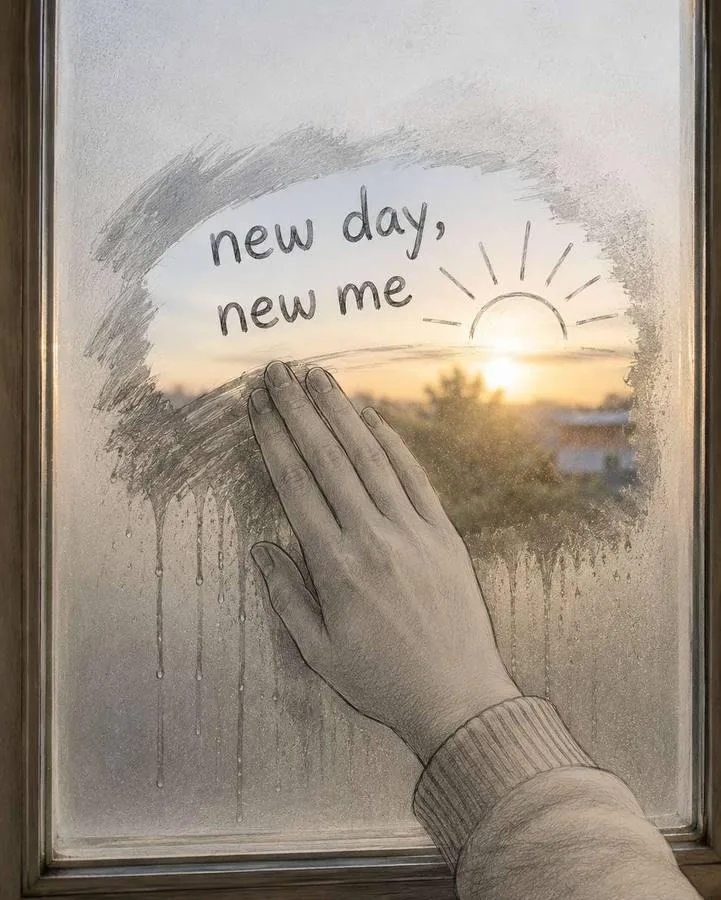
A hand wiping a clear arc through condensation to reveal the sunrise, with the words written into the fog and a little drawn sun. The most beginner-friendly idea on this page — it’s a smear, some handwriting and a half-circle.
How to get it: Add drip lines running down from the wiped arc; that single detail makes the fog believable.
“Note to self” marker lettering
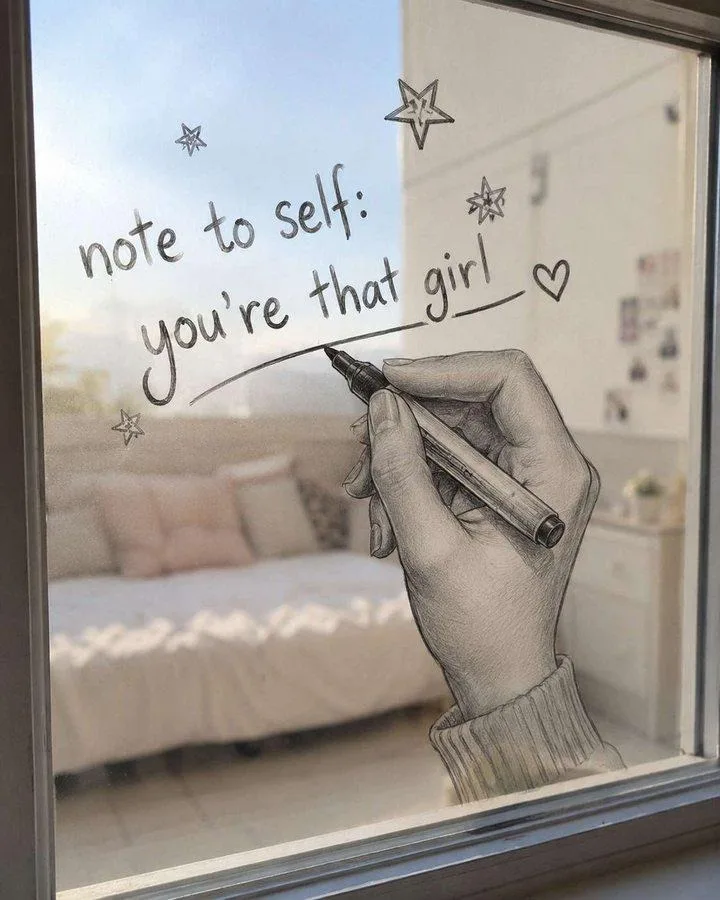
A hand mid-word writing an affirmation on the glass in marker, finished with stars and a little heart. Pure girly-desk energy and the easiest way to get real window art into a bedroom.
How to get it: Write your line first in chalk marker, then draw the hand holding the pen at the final letter.
“Break your limits” shattered glass
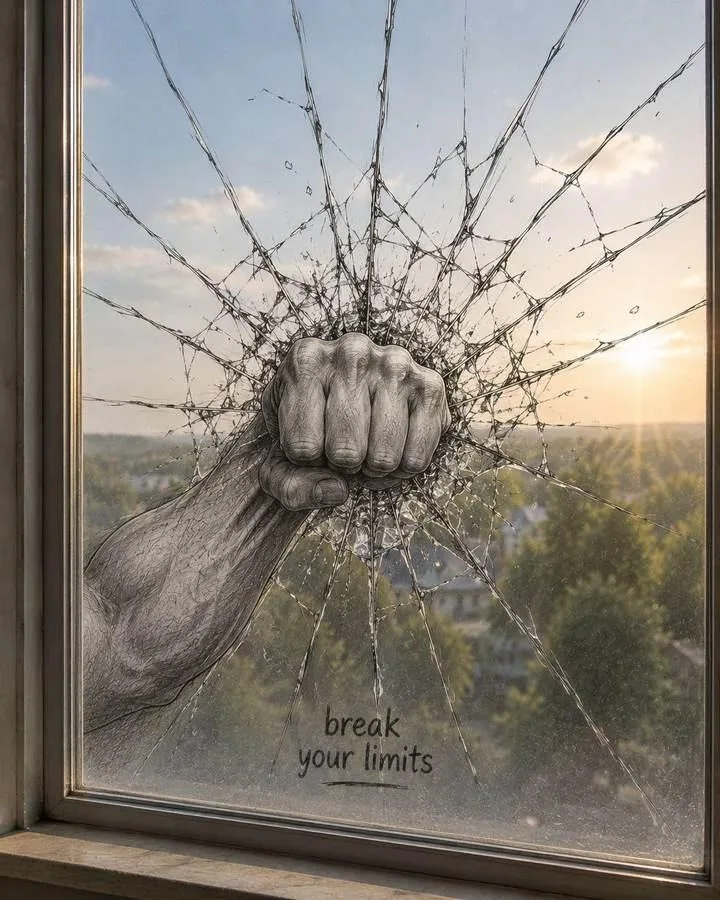
A fist punching through the pane with cracks radiating out to the frame. It’s the boldest piece here and, surprisingly, one of the simplest — the cracks are just straight lines from a single point.
How to get it: Draw the impact point first, then radiate lines outward and connect them with short cross-fractures.
The wolf at the mountains
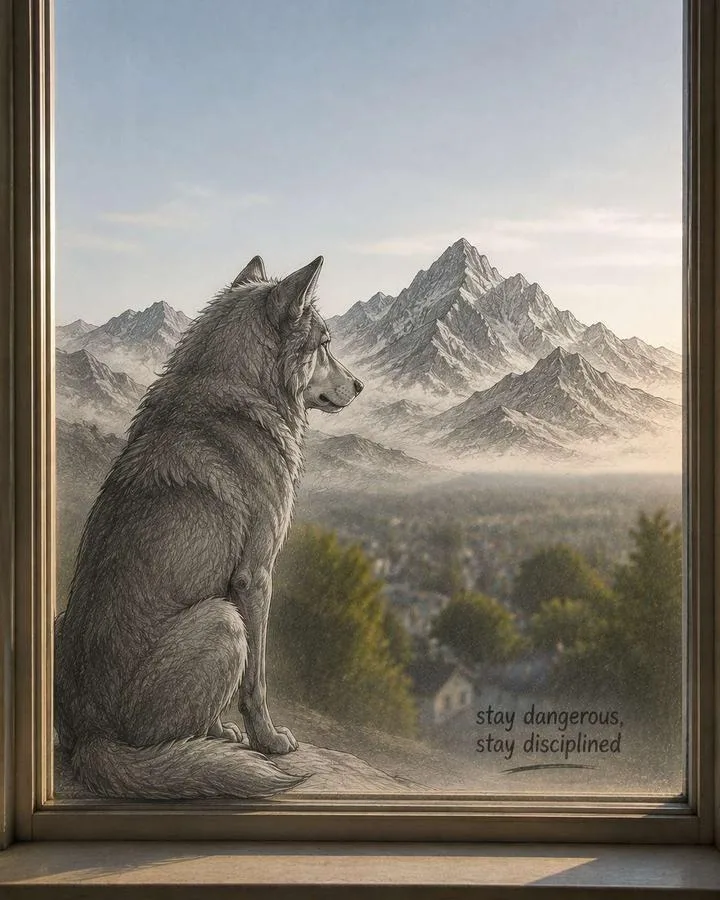
A wolf sitting on the sill facing a drawn mountain range that blends into the real horizon. A masterclass in letting the actual view do half the picture.
How to get it: Match your drawn horizon line to the real one outside — line them up before you commit.
“One more rep” pull-up
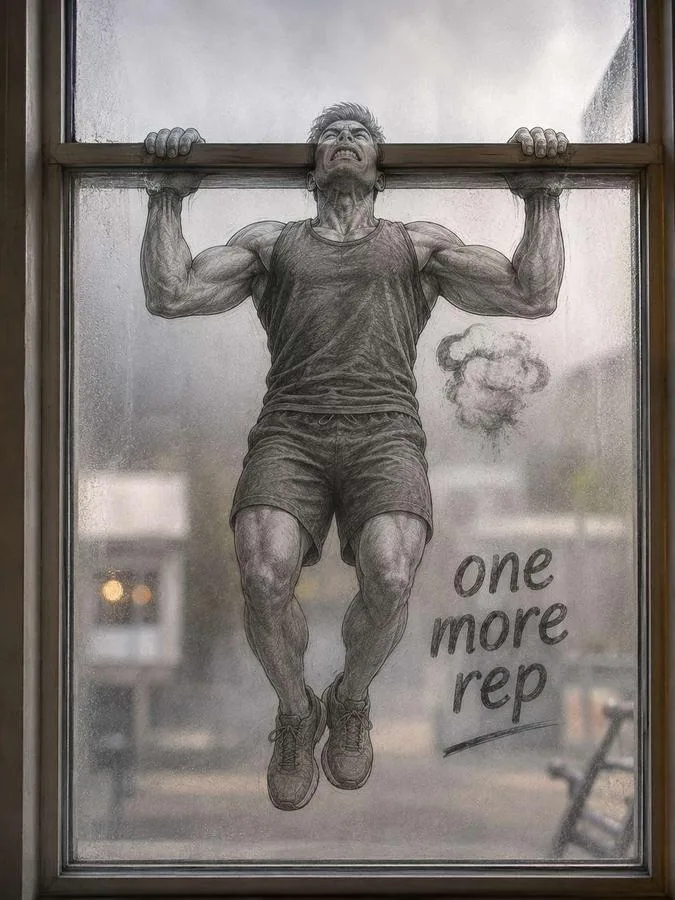
A figure hauling himself up on the window’s own crossbar. The frame becomes the pull-up bar, which is the entire idea.
How to get it: Position the hands so they wrap the real bar — overlap the frame slightly on both sides.
“Outwork yesterday” finish line
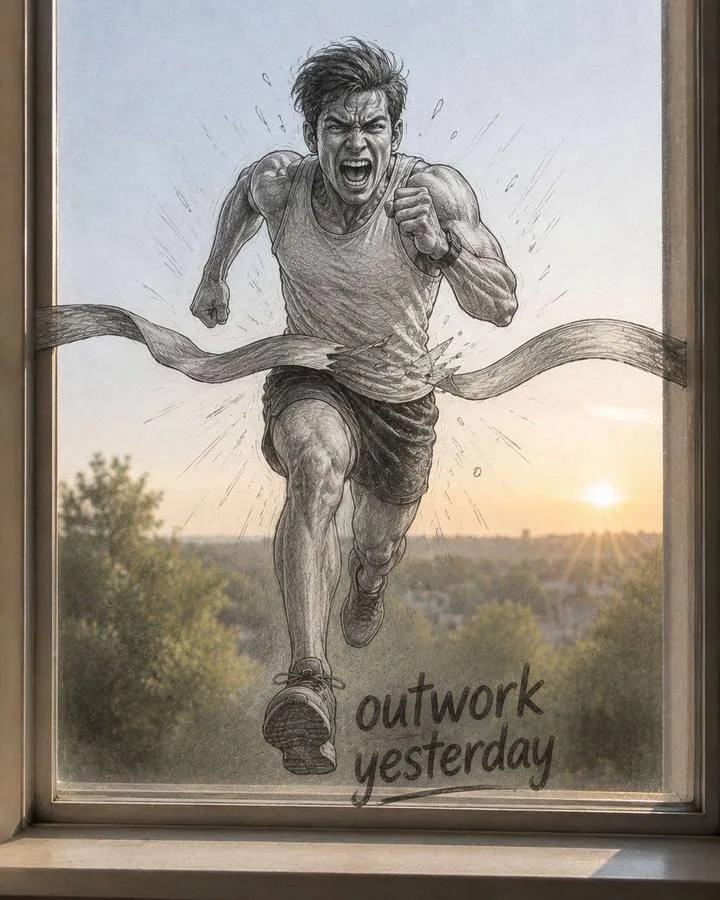
A runner bursting through a tape at full sprint against the sunrise. Motion lines and a torn ribbon do all the heavy lifting.
How to get it: Add speed streaks behind the trailing arm and leg only — not around the whole body.
“No excuses” bench press
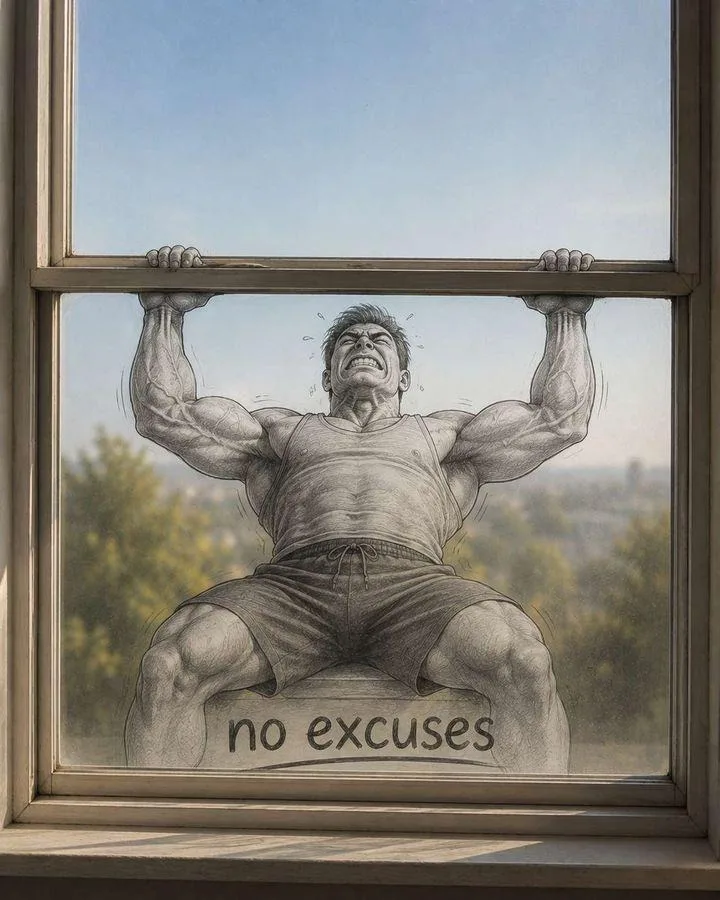
A lifter pressing the entire lower sash upward like a loaded bar, with the words on the bench below. Gym-window art at its most literal.
How to get it: Let both hands grip the real horizontal glazing bar so the window becomes the weight.
“Grind now, shine later” shutter
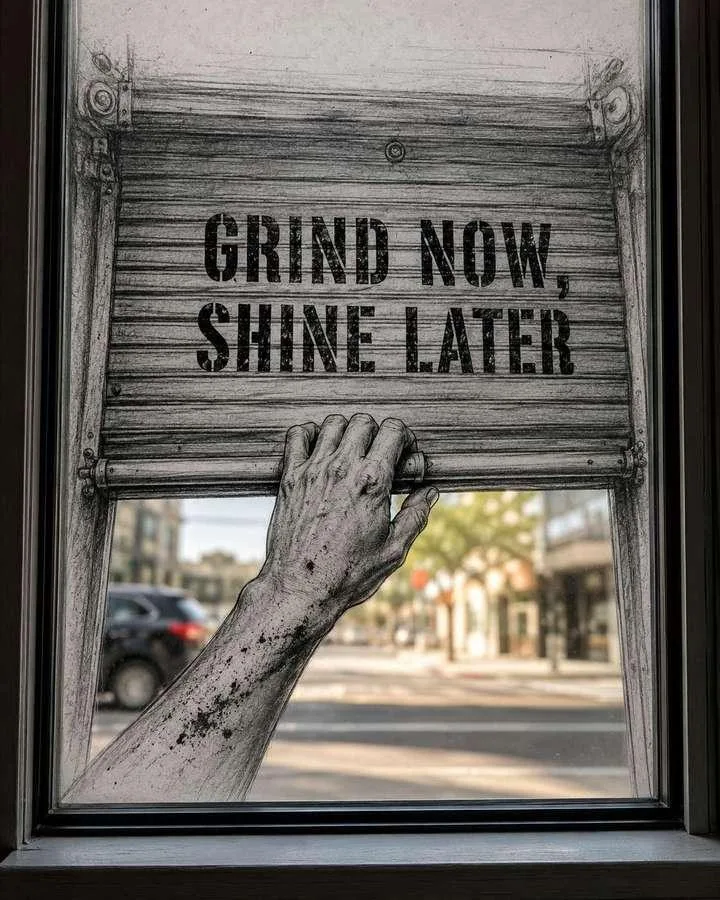
A hand hauling up a metal roller shutter with the slogan stencilled across it, the street visible beneath. Great for a storefront or a home-office window.
How to get it: Draw the shutter as tight horizontal bands with heavier shadow at each end.
Part 2: Faux stained glass window art ideas
The second family is pure colour. Faux stained glass window art uses translucent glass paint inside bold black leading lines, so light passes through and throws colour across the room. You can paint it straight onto the pane, or onto a clear acetate sheet you peel off and stick up — which makes it renter-friendly and reusable. These are the window art designs that turn an ordinary pane into something that looks installed rather than decorated.
Sunrise & golden-hour panels
Warm ambers, corals and golds are the single best choice for an east-facing window — morning light fires them up.

A hand reaching up into the sun through blossom and rays — all straight radiating lines, so it’s far easier than it looks.

Concentric sunrise arcs over rolling hills. Pure shapes, no detail, and the most achievable full-pane design in this whole guide.

A poppy-and-daisy meadow under a burst of sun rays, with one monarch butterfly. Dense, but every element is a simple repeated petal.

A serene sun-goddess face ringed by flame-shaped rays and gold stars. Bold, symmetrical, and a stunning centrepiece.

A woman standing with her arms open to a radiating sunrise, framed by an arch of leaves. The most emotive piece here — she’s a silhouette, so no faces to draw.
Arched panels (the classic church-window shape)
The rounded arch instantly reads as “real” stained glass. Tape off the arch outline first and everything inside it looks more finished.
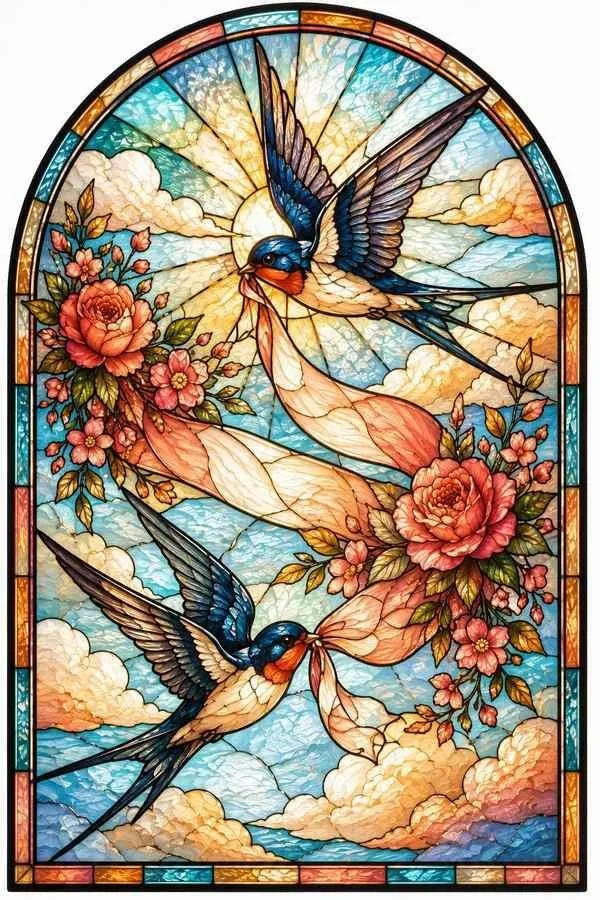
Two swallows carrying a ribbon through clouds and roses — soft blues against coral, with a chequered border.

Three hot-air balloons drifting through a pastel sunset. A joyful, kid-friendly design that still looks grown-up.
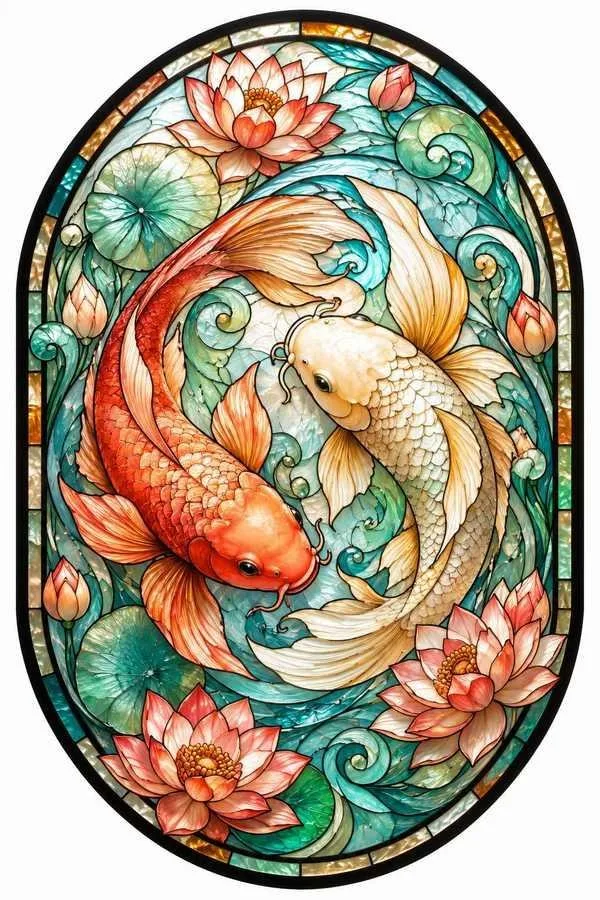
Two koi circling in an oval frame among lotus flowers and lily pads — a yin-yang layout that fills the shape perfectly.
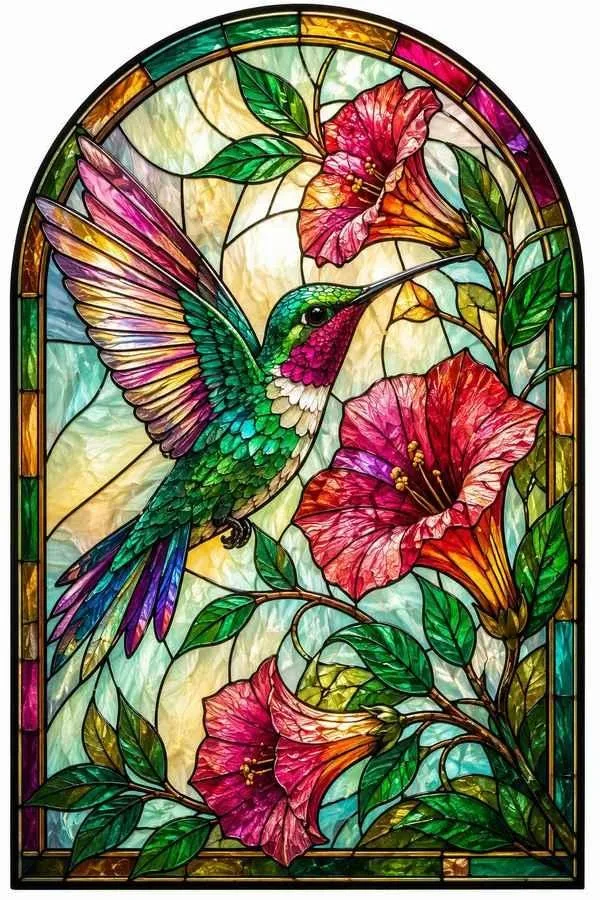
A hummingbird at a trumpet flower in jewel greens and magentas. The highest-contrast piece here and the best light-catcher.
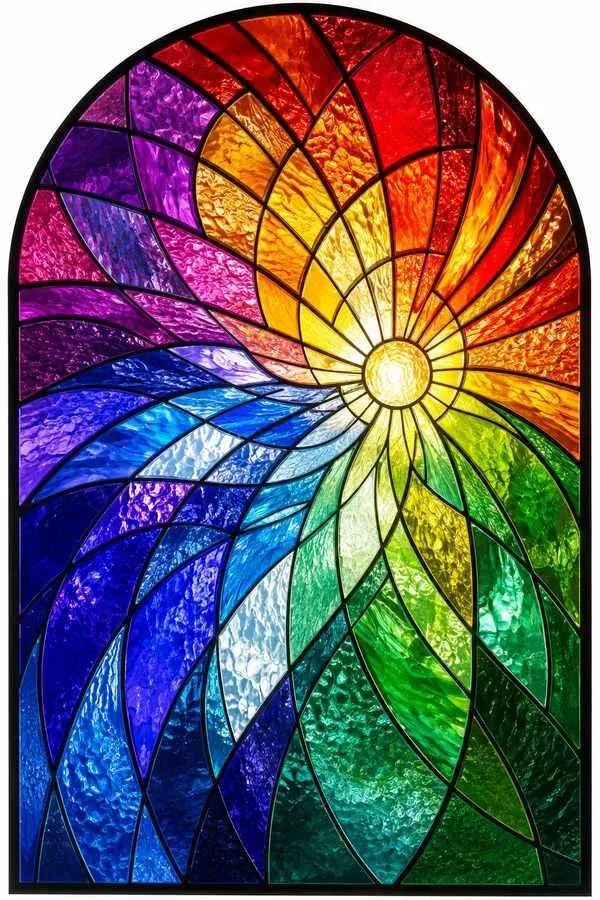
A pure geometric rainbow spiral. No drawing skill required at all — just curved segments radiating from an off-centre sun.
Animals, birds & nature
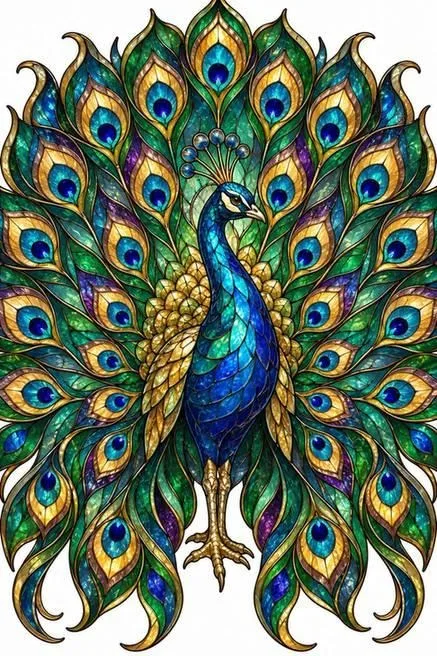
A peacock in full display, every eye-feather its own teal-and-gold panel. The showstopper of the set.
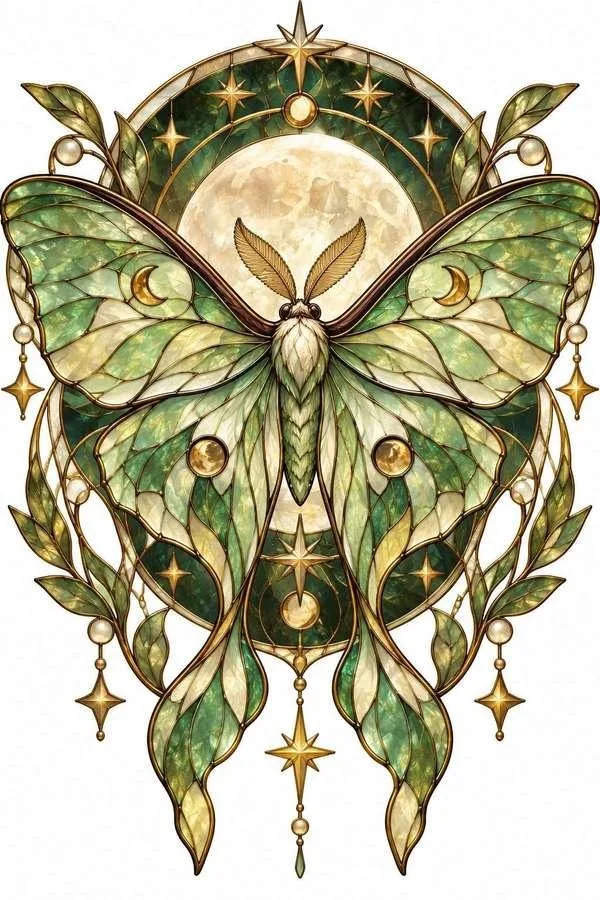
A luna moth against a full moon with hanging gold stars — sage, cream and brass. Endlessly elegant.

A phoenix rising in swirling reds and golds. Best on a west-facing window where the sunset lights the flames from behind.
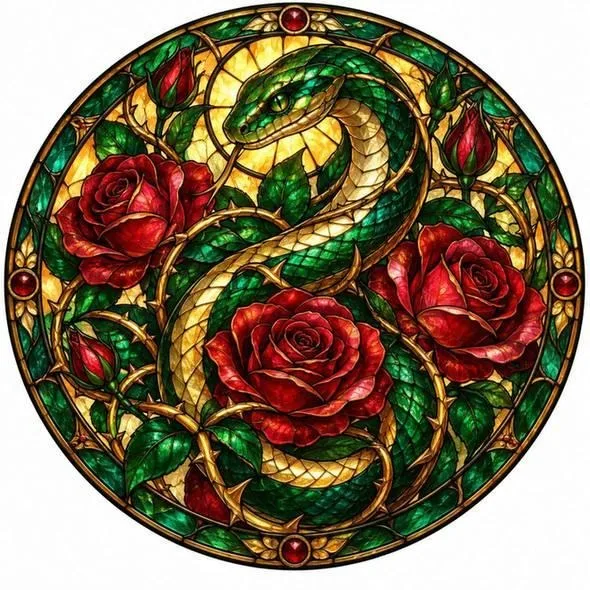
A snake coiled through red roses in a circular medallion — dark, gothic, and the most tattoo-flash of the lot.

A breaking wave meeting a low sun, in every shade of teal and pearl. The calmest piece here.
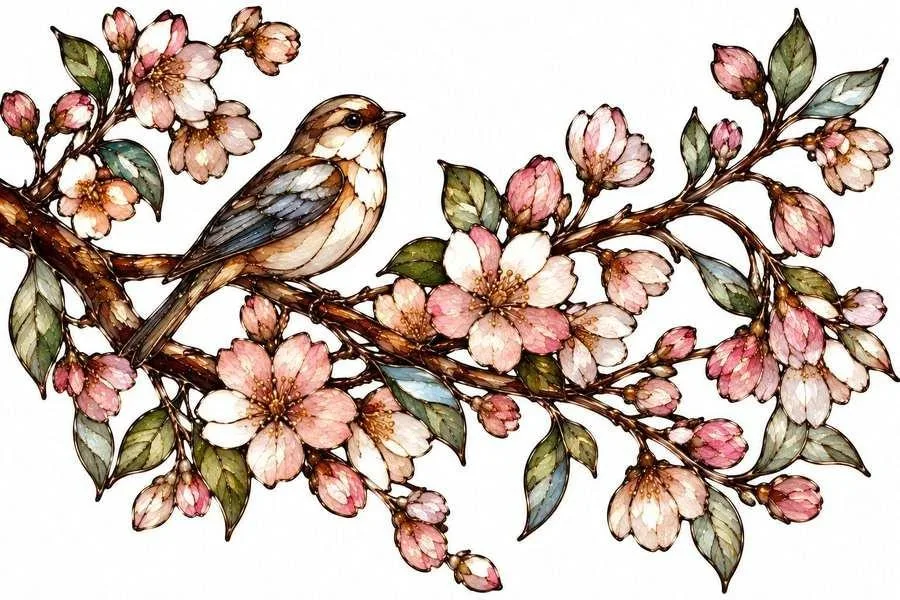
A little bird on a cherry blossom branch — a long, low design made for a wide transom window above a door.
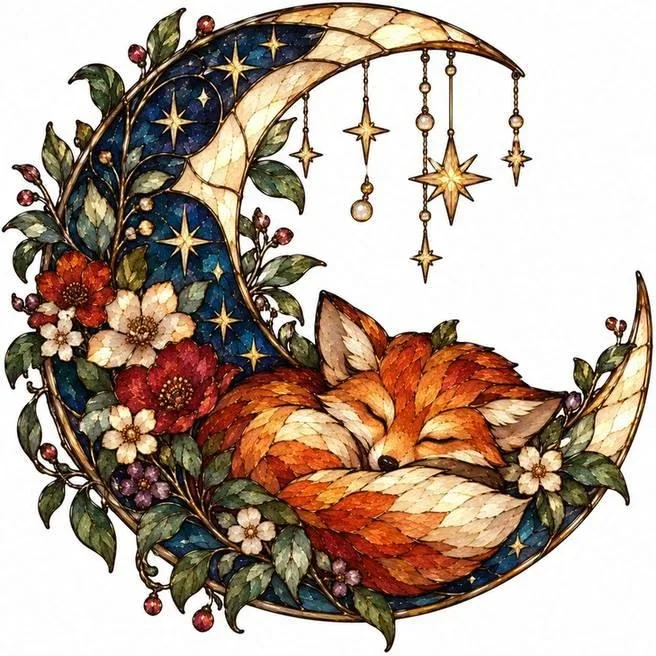
A fox curled asleep inside a crescent moon strung with stars. Perfect for a nursery or a child’s bedroom.
Celestial & moon designs

A moon goddess cradling a glowing full moon, ringed by crescents and stars in deep indigo and gold.

A sleeping woman inside the moon with the full phase cycle arced above her, in soft pearl, lilac and slate.
Floral & botanical designs
If you only try one category, make it this one. Florals suit any room, need no anatomy, and are the most forgiving to paint. They also pair beautifully with a seasonal autumn refresh.

A single lotus open on rippling water and lily pads — blush pink into gold, with the reflection built into the design.

A butterfly whose wings are made entirely of roses and blossoms. Symmetrical, so you can trace one wing and flip it.

A heart built from roses, peonies and foliage — the obvious Valentine’s window, and lovely all year. Pair it with our heart drawing guide if you want more heart shapes to work from.

A single king protea with broad green leaves. Modern, bold, and by far the fastest of the florals to paint.

And the full art-nouveau treatment: a woman in profile haloed by a gold sunburst, her hair woven through peonies and leaves. The most ambitious design in this guide — save it for a window you really want people to notice.
Lettering & quote panels
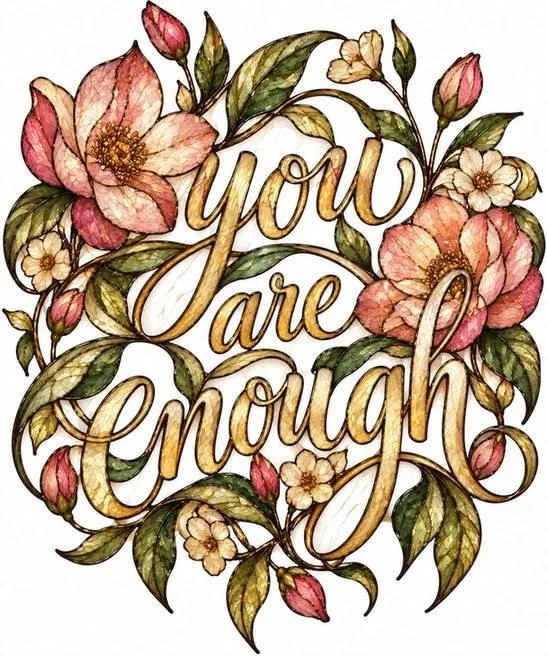
“You are enough” in gold script inside a wreath of blossom. Lettering panels are the sleeper hit of faux stained glass: the words carry the design, so the flowers around them only need to be simple filler shapes.
What kind of paint to use on windows
This is the question that decides whether your window art lasts a week or a season — and whether it comes off without a fight. Here’s what paint to use on windows, matched to what you’re actually doing:
- Acrylic craft paint — The default for indoor window painting. Cheap, opaque, endless colours, and it scrapes off glass with warm soapy water and a plastic scraper. Best all-rounder.
- Tempera or poster paint — Water-based and the safest choice for kids and classrooms. It washes off in seconds — which is also its weakness in a rainy outdoor window.
- Chalk markers — The easiest option full stop. Fine tips for the illusion sketches above, they need no brushes, and a damp cloth wipes them clean. Start here if you’re nervous.
- Transparent glass paint — The one for faux stained glass — it stays translucent so light shines through instead of being blocked. Pair it with black liquid leading for the outlines.
- Glass paint you bake on — Oven-cure enamel bonds permanently and survives washing. Only for removable panes or standalone glass — not your actual windows.
- Tempera mixed with dish soap — The old shop-window trick: a squeeze of washing-up liquid in tempera makes it grip glass better and still lift off easily. Ideal for outdoor holiday displays.
- Avoid — Oil-based paints, permanent enamels and spray paint on windows you plan to clean later. They bond hard and need solvents or a razor blade to remove.
Removing it: warm water, a drop of dish soap and a soft cloth handles acrylic, tempera and chalk marker. For stubborn edges, soak first, then use a plastic scraper — never a metal blade on coated or double-glazed panes.
How to do window art (step by step)
- Clean the glass properly. Glass cleaner, then a dry lint-free cloth. Any grease and the paint beads or peels — this is the step people skip and regret.
- Sketch or tape your design. Draw it on paper at pane size, tape it to the outside of the window, and trace from the inside. It’s not cheating; it’s how sign painters work.
- Outline first. Black leading lines for stained glass, or your pencil-style linework for the illusion pieces. Let outlines dry fully before you add colour.
- Fill with colour. Work in one direction and don’t overwork it — translucent paint looks best in a single even coat.
- Check it backlit. Step outside, or wait for the sun to move round. Colours read completely differently with light behind them than they do flat.
Want it reusable? Paint the whole design onto a sheet of clear acetate or a plastic sleeve instead. Once dry, it peels off in one piece and clings straight back onto glass with a little water — no residue, and you can store it between seasons.
Window art for kids, classrooms & back to school
Window painting is a rare craft that’s genuinely mess-tolerant: the “paper” wipes clean, so there’s very little at stake. For window art for kids, stick to tempera paint or washable chalk markers, and pick designs built from simple repeated shapes — the balloons, the rainbow spiral, the fox, the meadow.
- Back to school windows — names, numbers, a bus, and a bright border. Cheerful and quick to remove at half term.
- Classroom window painting — give each child one pane so nobody waits, and outline the panes in tape beforehand.
- Seasonal windows — swap the design every few months: blossom in spring, wave in summer, fox and moon in autumn, frost and stars in winter.
- Rainy-day version — the fog piece above works on any cold morning with no supplies at all. More like it in our hobbies to do at home.
Can you sell window art?
Yes — and it’s one of the better-paid seasonal side hustles. Hand-painted holiday windows for local shops, cafes and salons are a real service (search interest for window painting services is steady all year and spikes hard in November). Painted acetate suncatchers and stained-glass-style clings also sell well online. If that’s the direction you’re heading, our guide to crafts to make and sell covers pricing and where to list them.
Window art FAQ
What is window art called?
Window art goes by several names depending on the technique: window painting, faux stained glass, suncatchers, window clings, window murals, and trompe-l’œil window drawing. They all describe decorative designs applied to glass.
What are some creative window art ideas?
Two styles stand out: 3D illusion sketches drawn straight onto the glass — a curtain being pulled back, a ladder hanging from the frame, a hand pressing in from outside — and faux stained glass panels such as sunrise arches, peacocks, florals, moon phases and hot-air balloons.
What can you use for window art?
Acrylic craft paint, tempera or poster paint, chalk markers, transparent glass paint with black leading, or reusable window clings. Chalk markers and tempera are the easiest to remove; transparent glass paint is the one to use for stained-glass effects.
What kind of paint is best for windows?
Water-based acrylic is the best all-rounder for indoor window painting because it’s opaque, cheap and washes off with soapy water. Use transparent glass paint for stained glass effects, and tempera for kids and classrooms.
How do you remove paint from windows?
Soak the paint with warm soapy water, leave it a few minutes, then wipe with a soft cloth and lift stubborn areas with a plastic scraper. Avoid metal blades on double-glazed or coated glass.
Is window art permanent?
Only if you want it to be. Acrylic, tempera and chalk markers are all removable. Oven-cured enamel glass paint is permanent, so use it on removable panes or standalone glass rather than your actual windows.
How can I decorate my window without paint?
Use static window clings, dried-glue suncatchers, tissue paper and contact paper “stained glass,” paper snowflakes, or a painted acetate sheet you peel off and reposition — all completely residue-free.
Is window art good for kids?
Very. The surface wipes clean, washable tempera and chalk markers come off in seconds, and simple shape-based designs like balloons, rainbows and animals give an impressive result fast.
Pdf of all 40 window art ideas
Pick one pane and start
You don’t need the whole house. Choose one window, one design, and a single chalk marker — the foggy “new day” piece or the sunrise hills are both under an hour. Once you’ve seen what afternoon light does to it, you’ll be looking at every pane in the house differently. For more low-cost creative projects, try our easy things to draw and hobbies to do at home.