Reading Journal & Tracker: Ideas, Prompts + Free Printable Kit
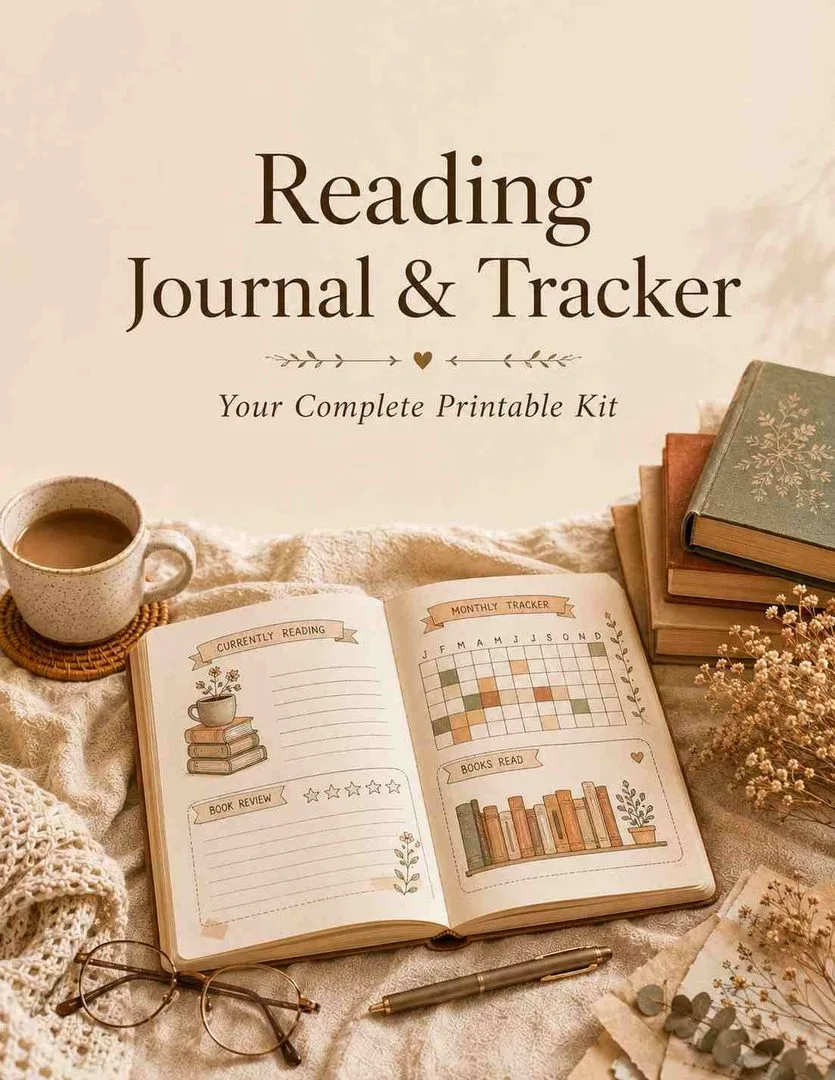
If you’ve ever finished a book, loved it, and forgotten almost everything about it a month later — a reading journal fixes that. It’s the cosiest way to remember what you read, track your goals, and actually watch your reading year take shape. Below you’ll find the eight spreads that make up a complete reading journal and tracker, real ideas and prompts to fill them, and a free printable reading journal kit with every page already done for you.
A complete reading journal has eight core pages: a title and contents page, a yearly reading log, a monthly tracker, a book review page, a to-be-read (TBR) list, a reading challenge, a favourite-quotes page, and a year-in-books stats spread. Set those up once — or print the free kit below — and you’ll capture every book, rating and memory all year long.
Grab the free kit at the bottom, or read on for what goes on each page.
What to include in a reading journal (the 8-page method)
You don’t need to be an artist or a bullet-journal expert. Every reading journal — from a plain notebook to an elaborate bullet-journal spread — is really just eight repeatable pages. Set up these eight and your journal is complete:
- A title & contents page — the welcome page and a quick index.
- A yearly reading log — every book you read this year, in one list.
- A monthly reading tracker — pages and books, month by month.
- A book review page — one page per book, with a rating.
- A to-be-read (TBR) list — everything you want to read next.
- A reading challenge — fun prompts to stretch your reading.
- A favourite-quotes page — the lines you never want to forget.
- A year-in-books stats spread — your “reading wrapped” at year’s end.
That’s the whole system. Here’s what each one looks like — and exactly what to put on it.
1. The title & contents page

Every journal deserves a proper first page. Your title page sets the mood — a hand-lettered heading, a little stack-of-books doodle, maybe your reading goal for the year. Opposite it, a simple “What’s Inside” contents list makes your journal easy to flip through as it fills up. This is the lowest-pressure page in the whole book, so it’s the perfect place to start if a blank notebook feels intimidating.
What to include: a title, the year, your reading goal (e.g. “40 books”), and a contents list with page numbers.
2. Yearly reading log — “books read this year”
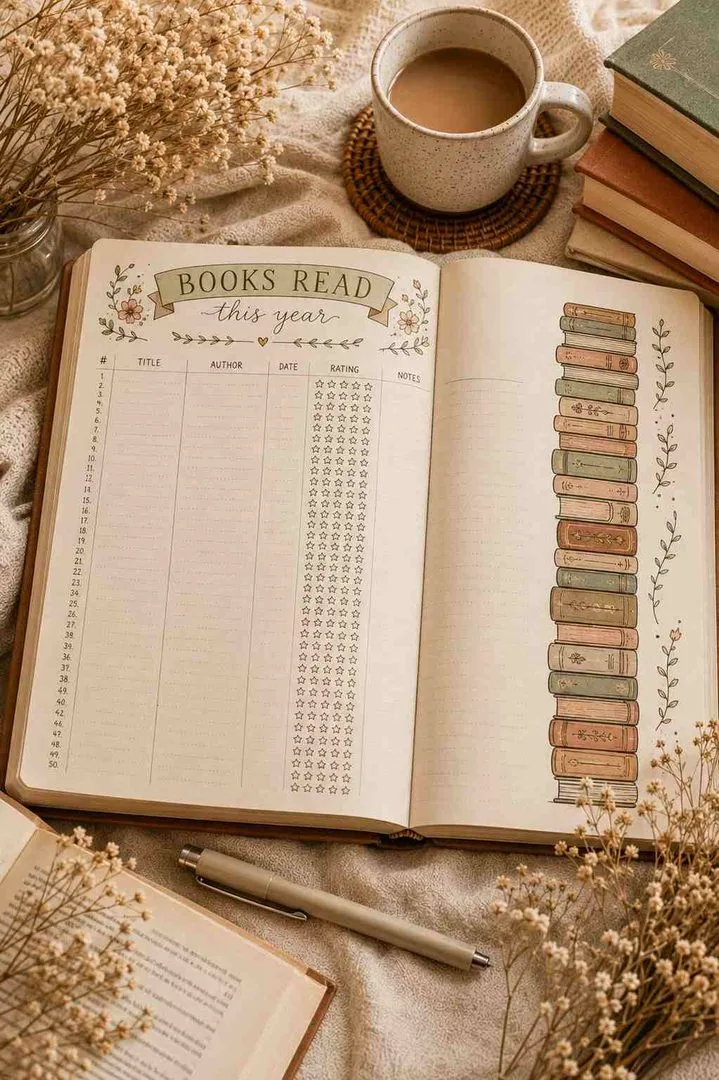
This is the heart of any reading tracker: one running list of every book you finish, numbered so you can see your total climb. Keep the columns simple — number, title, author, date finished, and a row of stars for your rating. Colouring in a little book spine for each title turns your log into a visual you’ll actually want to fill.
What to include: #, title, author, date finished, and a 5-star rating. That’s it — the magic is watching the list grow.
3. Monthly reading tracker
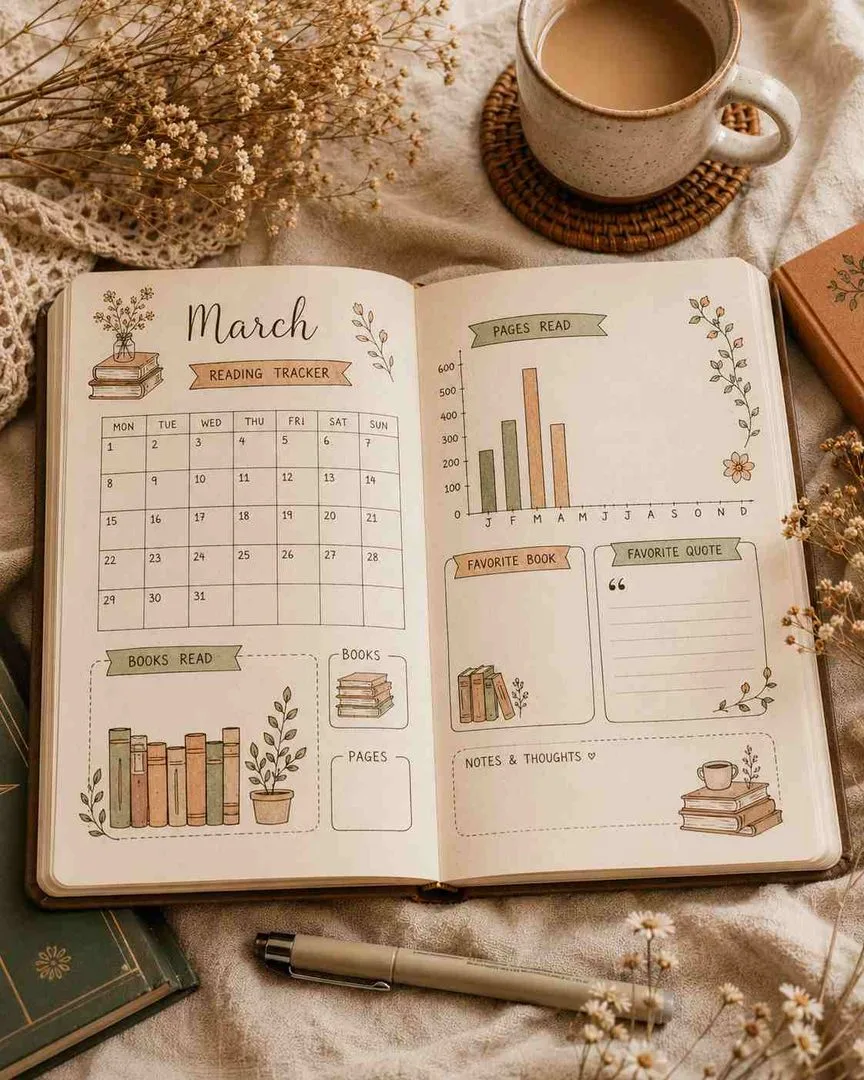
If a whole year feels too big, track it a month at a time. A monthly reading tracker pairs a simple calendar (shade the days you read) with a little bar chart of pages read, plus small boxes for the month’s books, your favourite read and a stand-out quote. This is where the reading tracker bullet journal crowd gets creative — but even a plain version keeps your habit visible.
What to include: a calendar to shade reading days, a pages-read chart, books finished, and a favourite of the month.
4. Book review & rating page
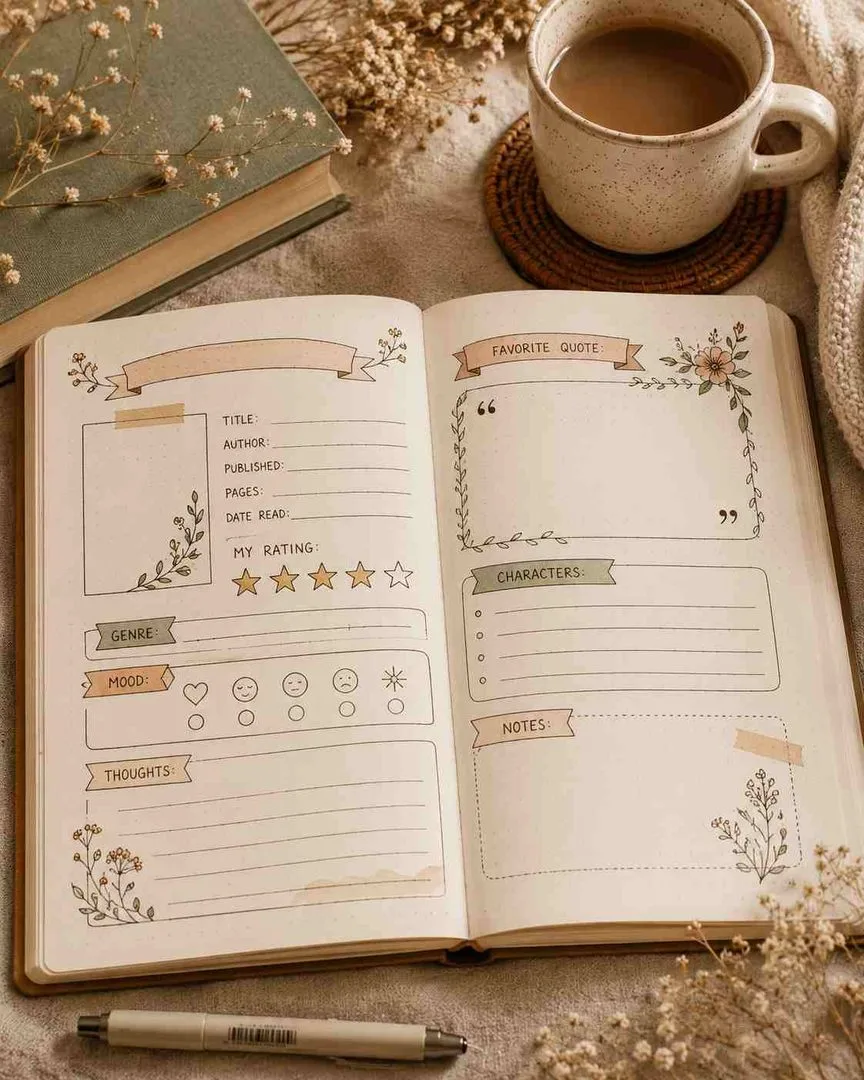
This is the page book lovers get attached to: one full page per book. Along with the basics (title, author, pages, dates), a good book review template captures the feeling — a star rating, a genre and mood tracker, a box for your favourite quote, room for characters you loved, and space for your honest thoughts. Print one for every book and, by December, you’ll have a personal library of mini-reviews.
Reading journal prompts for this page: What drew you to this book? Which character felt most real? How did the ending sit with you? What will you carry with you from this story?
5. To-be-read (TBR) list

Every reader has a growing pile of “someday” books — the TBR list is where you finally corral it. A simple checklist with little boxes to tick is all you need; a hand-drawn tower of books beside it makes it feel like a treat rather than a chore. Keep a few “quick wins” on the list so there’s always something short to reach for.
Need to fill it? You can add hundreds of free classics from Project Gutenberg — a wonderful, no-cost way to build a TBR you’re excited about.
What to include: a checkbox list of titles, and maybe a second column for “who recommended it.”
6. Reading challenge tracker
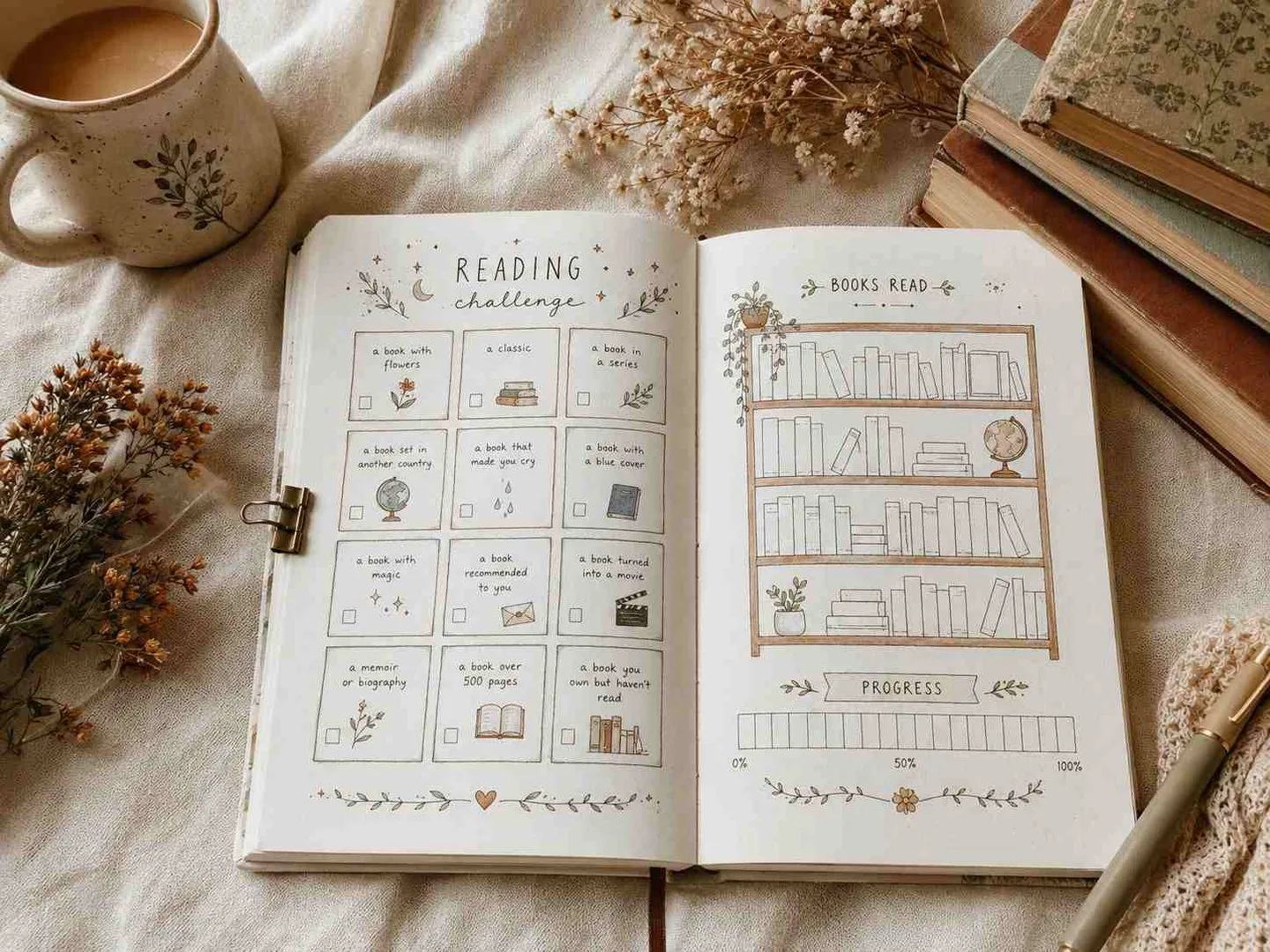
Want to read wider, not just more? A reading challenge gives you a grid of playful prompts — “a book with flowers on the cover,” “a book that made you cry,” “a book set in another country” — to colour in as you go. Pair it with a bookshelf you fill in or a simple progress bar, and finishing the year becomes a game. It’s the single best cure for a reading slump.
What to include: 20–25 prompt boxes with checkboxes, plus a progress bar or colour-in bookshelf. (The free kit has all 25 ready to go.)
7. Favourite quotes page

Some lines deserve to outlive the book. A dedicated quotes page — with pretty banners and framed boxes — becomes a little collection of the words that moved you. Long after you’ve forgotten the plot, you’ll flip back to these. Jot the quote, the book, and the page number so you can always find it again.
What to include: several framed boxes for quotes, each with room for the book title and author.
8. Year in Books — your reading, wrapped
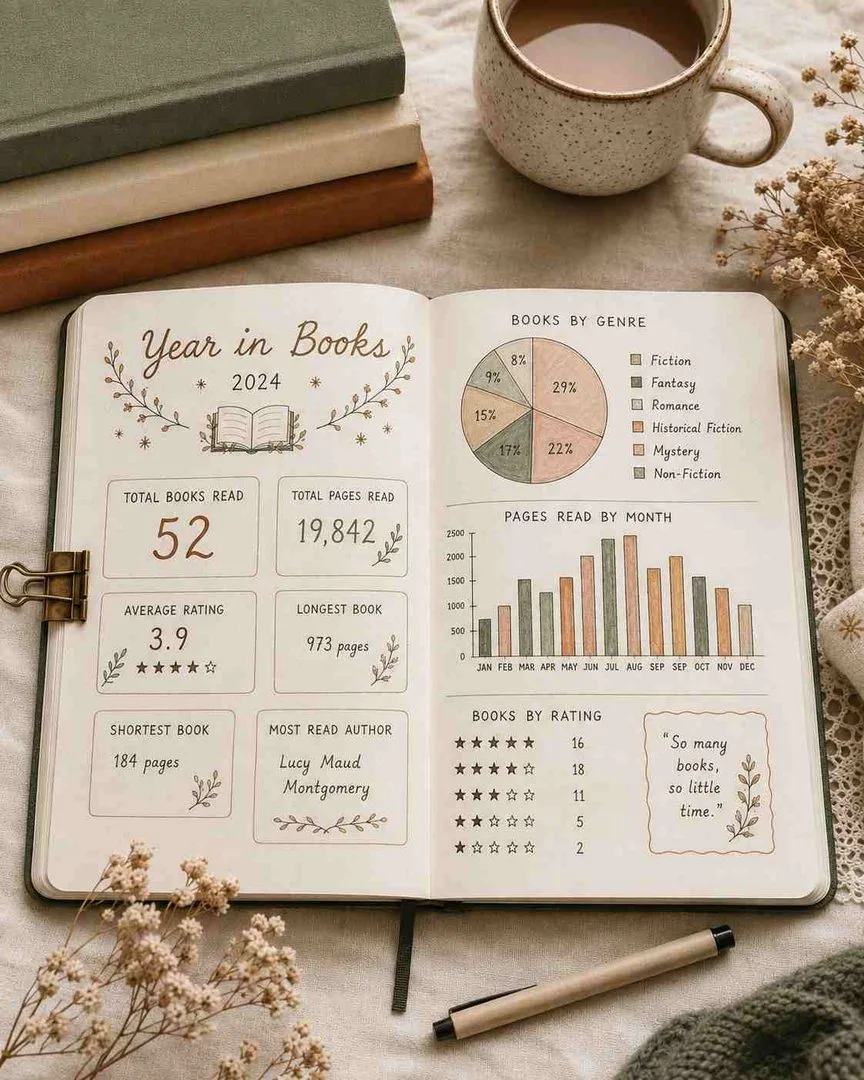
This is the payoff — and the page no free competitor gives you. Think of it as your own “reading wrapped”: total books read, total pages, average rating, longest and shortest book, most-read author, a genre breakdown, a pages-read-by-month chart, and a star-rating tally. Fill it in each December and you’ll have a beautiful, shareable snapshot of your whole reading year.
What to include: total books and pages, average rating, favourites, a genre breakdown and a monthly pages chart.
Reading journal prompts to get you started
Not sure what to write on a review page? These reading journal prompts work for any book:
- What drew you to this book?
- Which character felt most real to you — and why?
- What’s a line you want to remember forever?
- How did this book make you feel?
- What did it teach you about yourself?
- What surprised you most?
- How did the ending sit with you?
- Which scene played most vividly in your mind?
- What themes stayed with you after the last page?
- If this book were a season, a colour, or a kind of weather, what would it be?
- Would you recommend it — and to whom?
- What book does it make you want to read next?
How to start a reading journal (in 5 easy steps)
- Pick your format — a printable kit (easiest), a dotted notebook, or a mix of both.
- Set up the eight core pages — above, or print them ready-made.
- Add each book as you finish it — log it, rate it, and fill a review page.
- Track your habit monthly — so it stays visible and fun.
- Fill in your Year in Books — each December and celebrate the year you read.
Prefer digital? Apps like StoryGraph and Goodreads track your reads too — but nothing beats a printable you can hold, colour and keep. Many readers use both: the app for logging, the journal for remembering.
Get the free Reading Journal Kit
↓ Download the free Reading Journal Kit (PDF) ↓
Want all eight pages done for you? The free Reading Journal Kit includes every spread above — a yearly reading log, a monthly tracker, a book review page, a TBR list, a 25-prompt reading challenge, a favourite-quotes page, a reading-prompts page and a Year-in-Books stats spread — beautifully designed and ready to print. No sign-up: download, print, and start today.
Pair it with our other free planners to make 2026–2027 your most intentional year yet: map your goals with our vision board ideas, turn “read more” into a real plan with our 100 bucket list ideas, and find more calm, screen-free hobbies to do at home, books to read when bored.
Frequently asked questions
What is a reading journal?
A reading journal is a notebook (or printable) where you record the books you read — with ratings, reviews, favourite quotes and reading goals. It helps you remember what you read, track your habit, and reflect on the stories that stay with you.
What should I include in a reading journal?
The eight essentials are a title/contents page, a yearly reading log, a monthly tracker, a book review page, a TBR list, a reading challenge, a favourite-quotes page, and a year-in-books stats spread. The free kit above includes all eight.
How do I start a reading journal for beginners?
Start simple: a title page, a yearly log, and one book review page. Add a book each time you finish one. You can print the free kit and be set up in five minutes — no drawing skills required.
What’s the difference between a reading journal and a reading tracker?
A reading tracker focuses on the numbers — books and pages logged. A reading journal adds the reflection — reviews, quotes and thoughts. Most readers want both, which is why this kit combines them.
Do I need a special notebook?
No. A plain dotted or lined notebook works perfectly, or you can print the kit onto plain paper and pop it in a binder. Use whatever makes you want to sit down and read.
Is the reading journal printable free?
Yes. The complete Reading Journal Kit is free to print for personal use — all eight pages, no sign-up.