Panda Drawing: 20 Ways to Draw a Panda from Easy to Advanced (Free Printable)
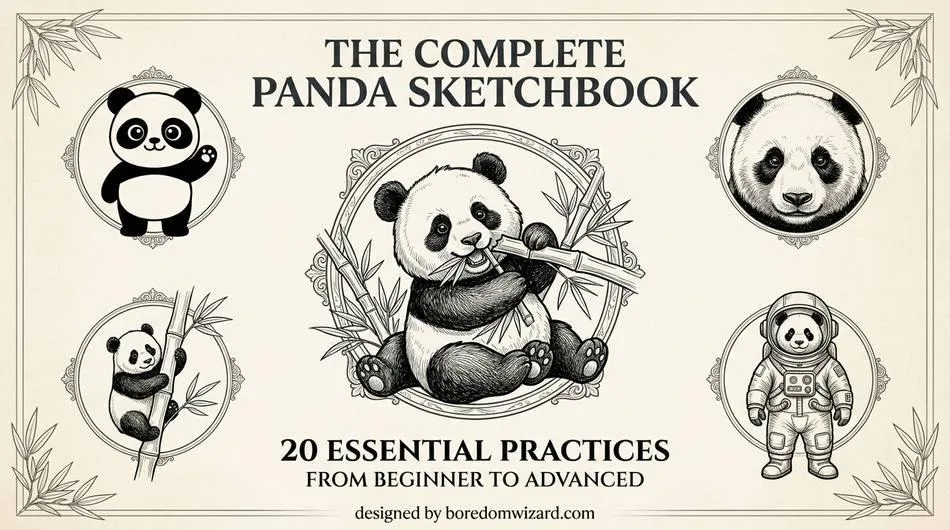
Pandas are one of the most satisfying animals to draw because the black-and-white markings do most of the work. Get the eye patches, ears and body shape right and it reads as a panda instantly, even in a five-minute sketch. This guide covers 20 panda drawings from a simple cartoon to a realistic portrait, with a free printable practice pack you can download available at the bottom, print and use as colouring pages or tracing references.
The easiest way to draw a panda is to start with a large circle for the head, add two small circles for ears, draw two oval eye patches, place small eyes inside them, add a round nose and a curved mouth. For the body, draw a larger oval below the head, add short arms and legs with round paws, and colour the ears, eye patches, shoulders, arms and legs black. The whole drawing takes 3–5 minutes.
Easy panda drawings for beginners
Start here. These five drawings use simple shapes, bold outlines and forgiving proportions. Getting the eye patches slightly wrong still reads as a panda.
1. Simple cartoon panda sitting with bamboo
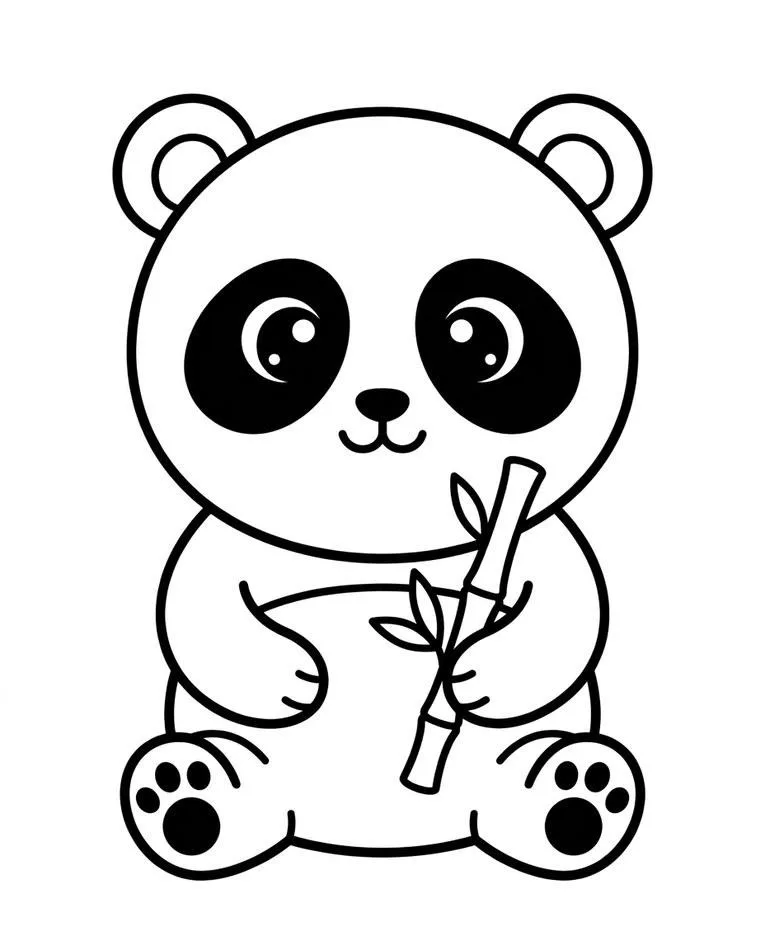
A round chubby body, classic black eye patches, a friendly smile and a bamboo stalk in one paw. This is the five-minute panda — the one you draw on a birthday card or in the corner of a notebook. Start with a large circle for the head, a larger oval for the body, add the ear circles and eye-patch ovals, then the paws and bamboo. Pandas are one of the easiest animals to get right because the black-and-white pattern is so distinctive that even a rough version is immediately recognisable.
2. Panda face — front view
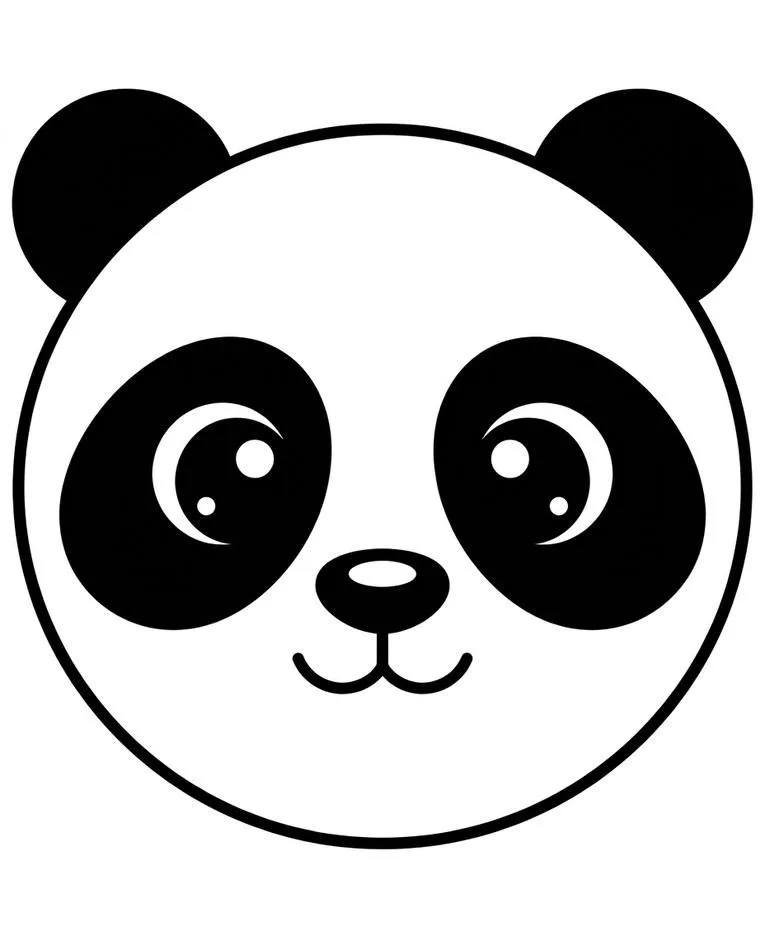
Just the face, filling the whole frame. Two big round black eye patches with shining eyes inside, a small oval nose, a gentle smile, and two round ears at the top. Perfectly symmetrical, which means you only need to draw one half correctly and mirror it. This is the single easiest panda to draw and the one that works best as a sticker, avatar or profile picture.
3. Chibi kawaii baby panda
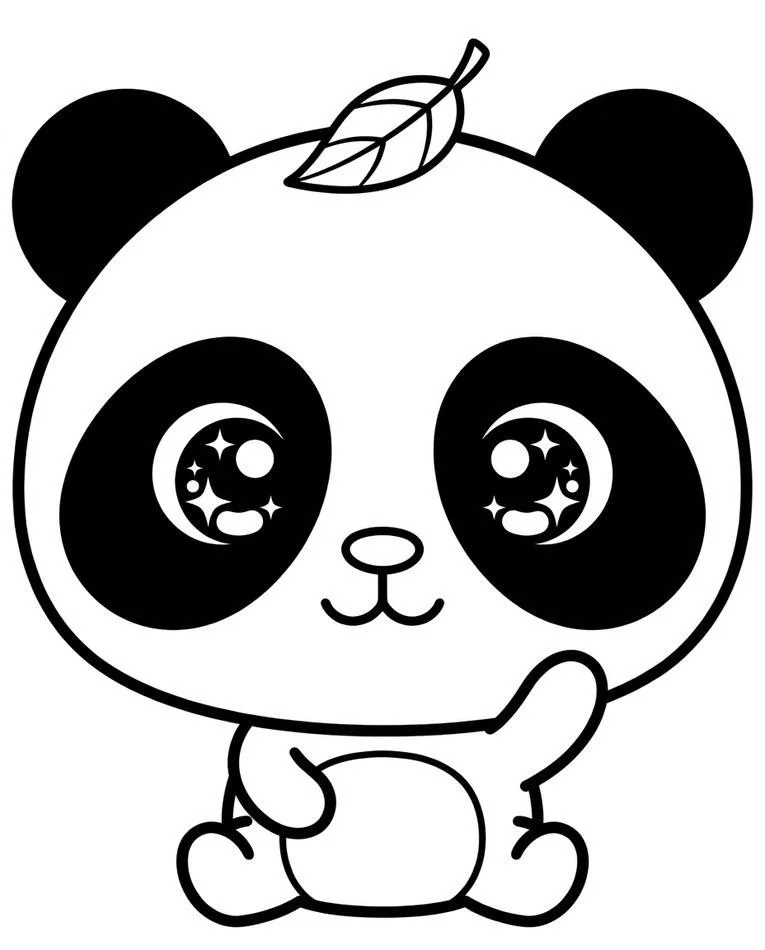
Massively oversized head, enormous sparkly eyes that take up half the face, a tiny round body, and stubby paws. A bamboo leaf sits on top of the head like a hat. The chibi style breaks every proportion rule on purpose, which makes it the most forgiving panda to draw — any mistake is absorbed by the cartoon exaggeration. This captures the “cute panda drawing” cluster at 3,400 monthly searches.
4. Panda from basic shapes — the construction method
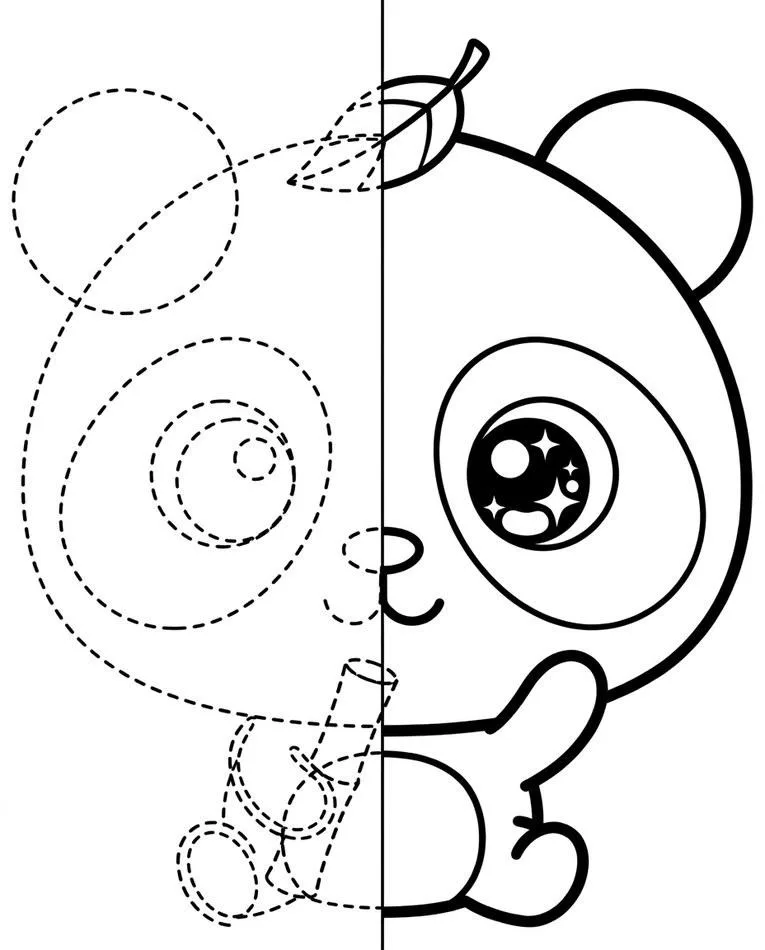
The most useful drawing on this page. The left side shows the geometric skeleton: dashed circles and ovals showing where every part goes. The right side shows those shapes refined into a finished panda. Every panda you draw from now on starts with this construction. Print this page and keep it next to your sketchbook.
5. Simple panda waving
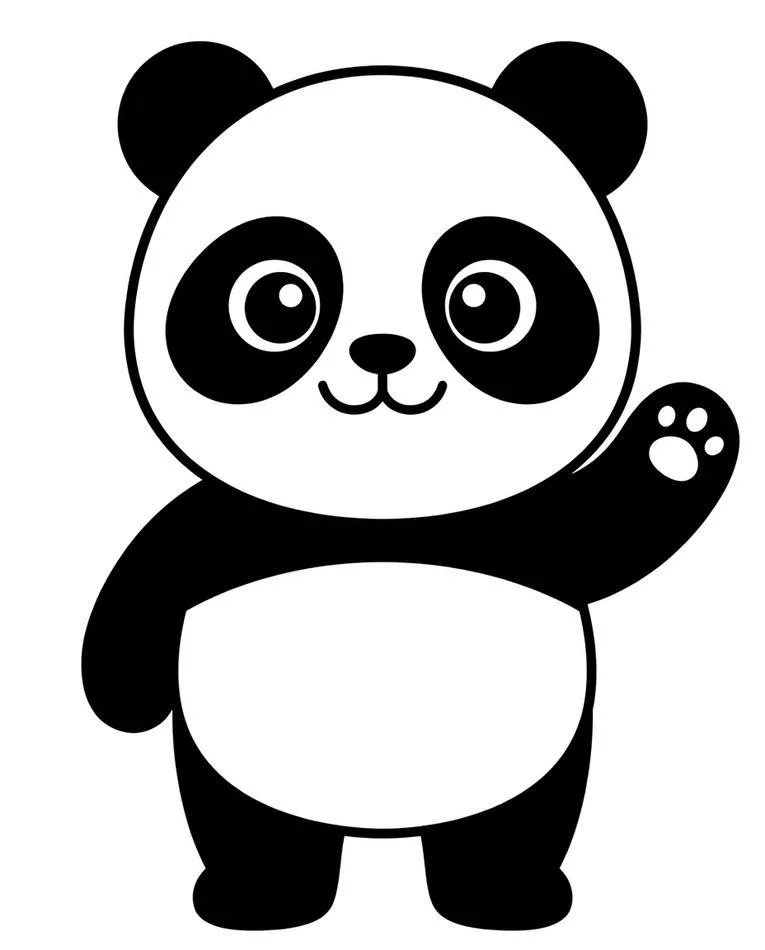
A cartoon panda standing upright on two legs, facing the viewer, with one paw raised in a friendly wave. Round body, round head, classic markings. This is the panda that works on greeting cards, classroom projects and as an intro to drawing standing poses. The wave gives it personality that a static pose lacks.
Cute panda drawing variations
The poses and expressions that make pandas the internet’s favourite animal. These are the drawings that perform best on Pinterest and as colouring pages.
6. Panda hugging a bamboo stalk
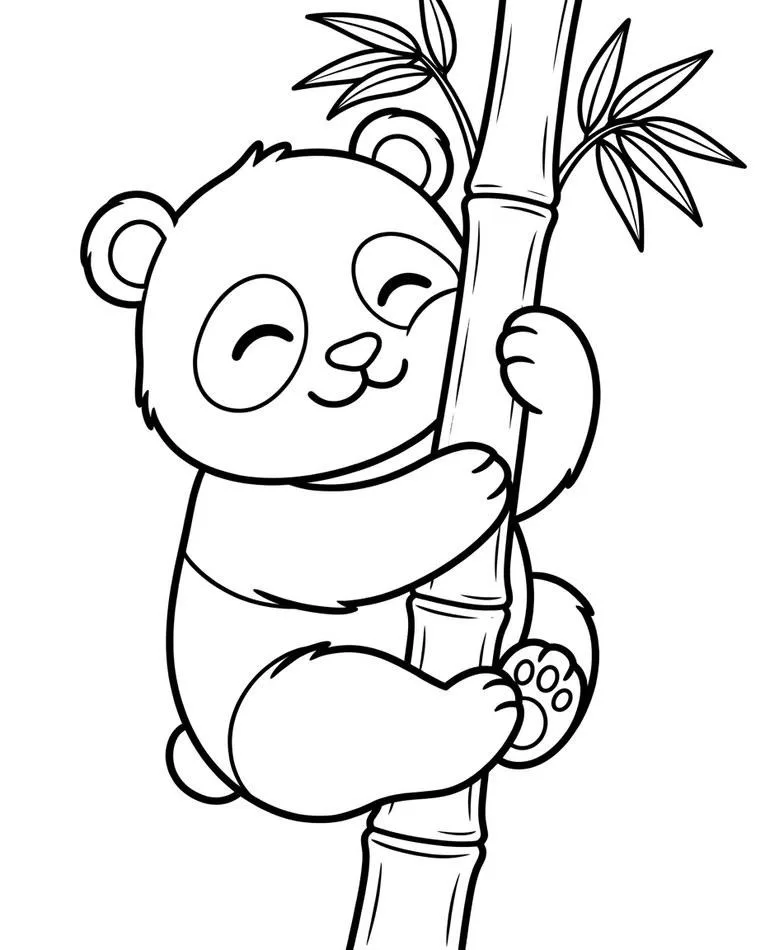
A panda clinging to a tall bamboo stalk like a koala on a tree, cheek pressed against it, eyes closed, smiling contentedly. This is the drawing that gets shared — the combination of the panda’s round body wrapped around the straight bamboo is visually satisfying and endlessly colourable.
7. Panda lying on back eating bamboo — the lazy pose
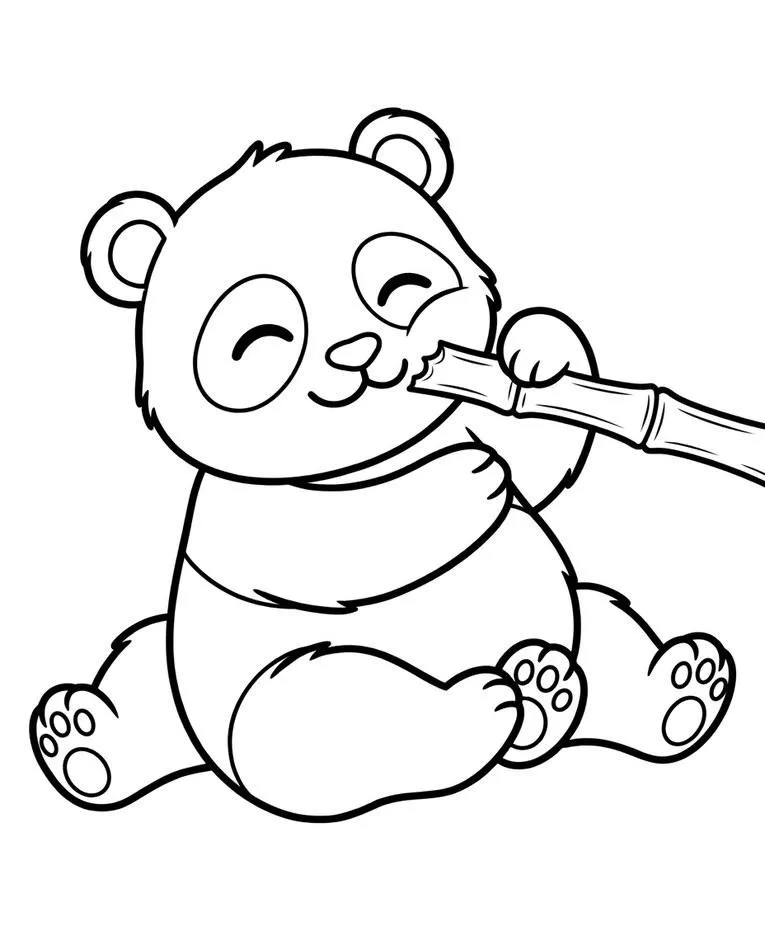
The most iconic panda image from every nature documentary: lying on its back, holding a bamboo stalk above its belly, chewing on one end, completely unbothered. This pose captures everything people love about pandas — they eat lying down because sitting up is too much effort.
8. Baby panda climbing a tree
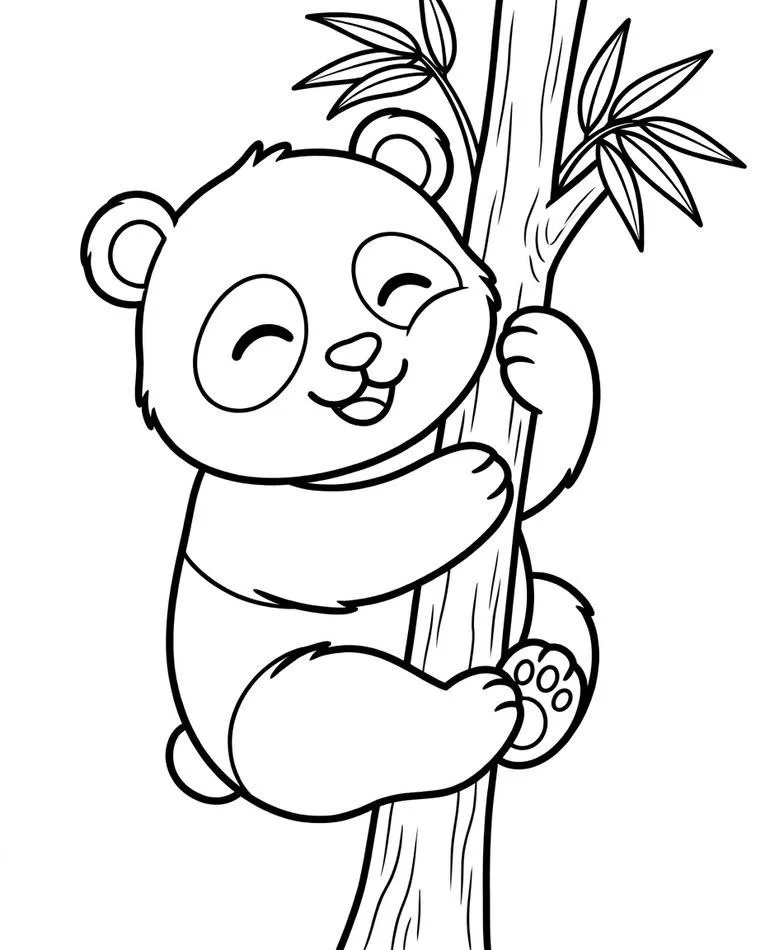
A baby panda clings to a tree trunk, looking over its shoulder toward the viewer with a playful expression. Baby pandas are clumsier and rounder than adults, with shorter limbs and bigger heads. The climbing pose shows the paw pads, which kids especially love to colour.
9. Panda holding a heart
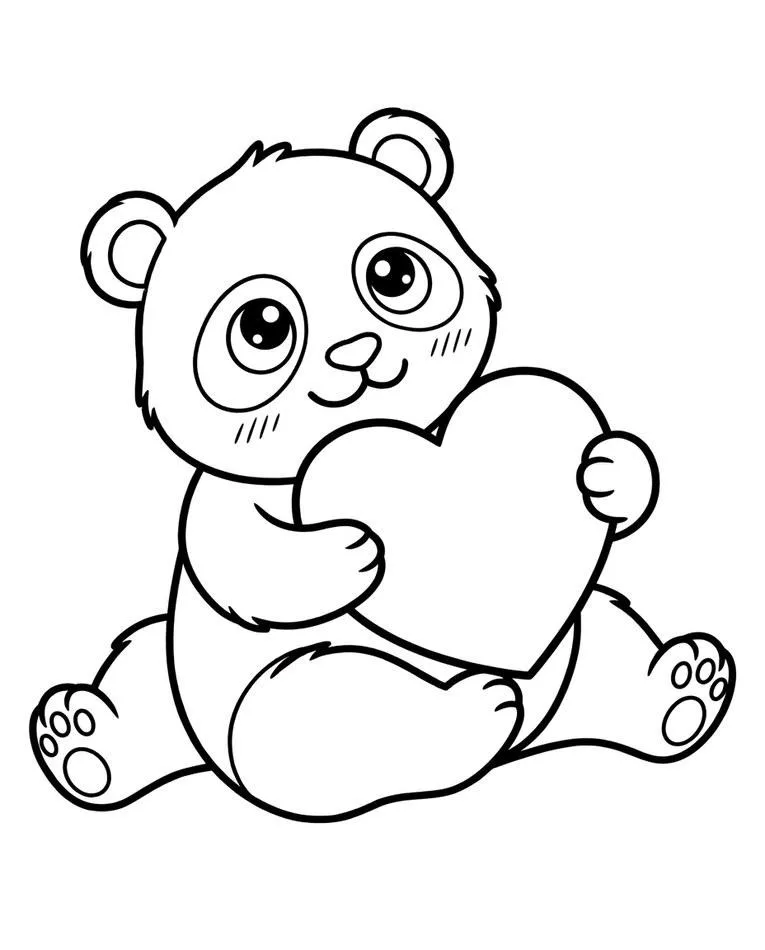
A cute panda sitting and pressing a large heart against its chest, with big adoring eyes and slightly blushing cheeks. The heart is empty inside — perfect for colouring. This is the most pinnable and giftable drawing in the set: Valentine’s cards, birthday cards, love notes.
10. Sleeping panda curled up
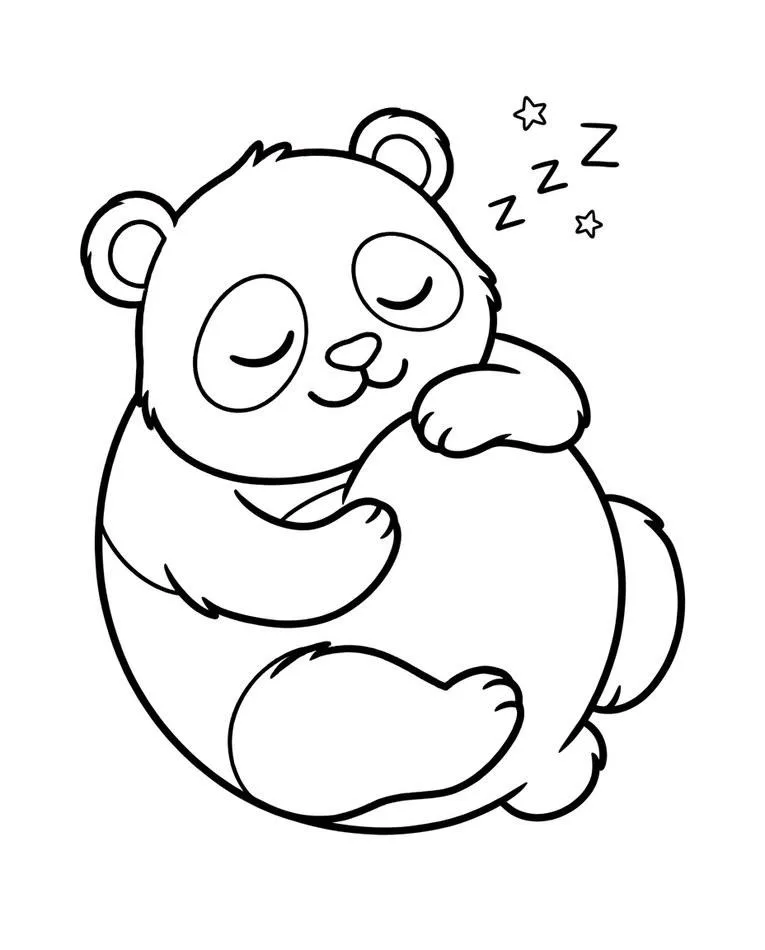
Eyes closed peacefully, one paw tucked under the chin, body curled into a soft round ball. Small Z letters float above. Calm, cozy, and the drawing equivalent of a weighted blanket. This is the page parents print when a child needs a quiet colouring activity before bedtime.
Realistic giant panda drawings
These drawings use correct anatomy, fur texture and natural poses. The construction method from drawing 4 is still the starting point — sketch the circles first, then refine.
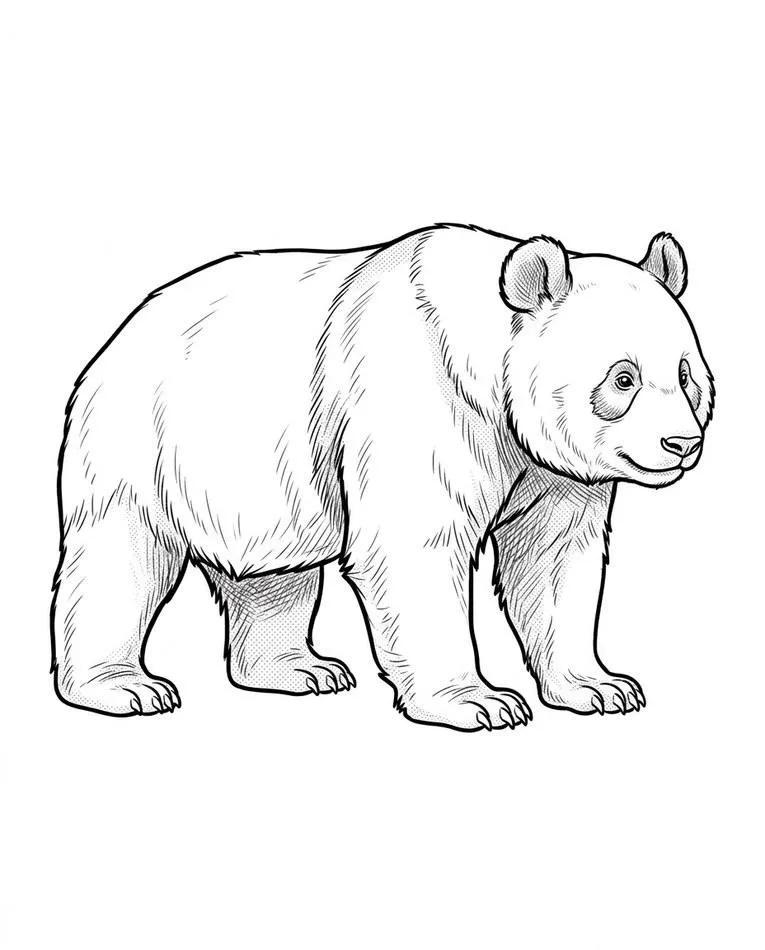
11. Realistic panda standing — side view
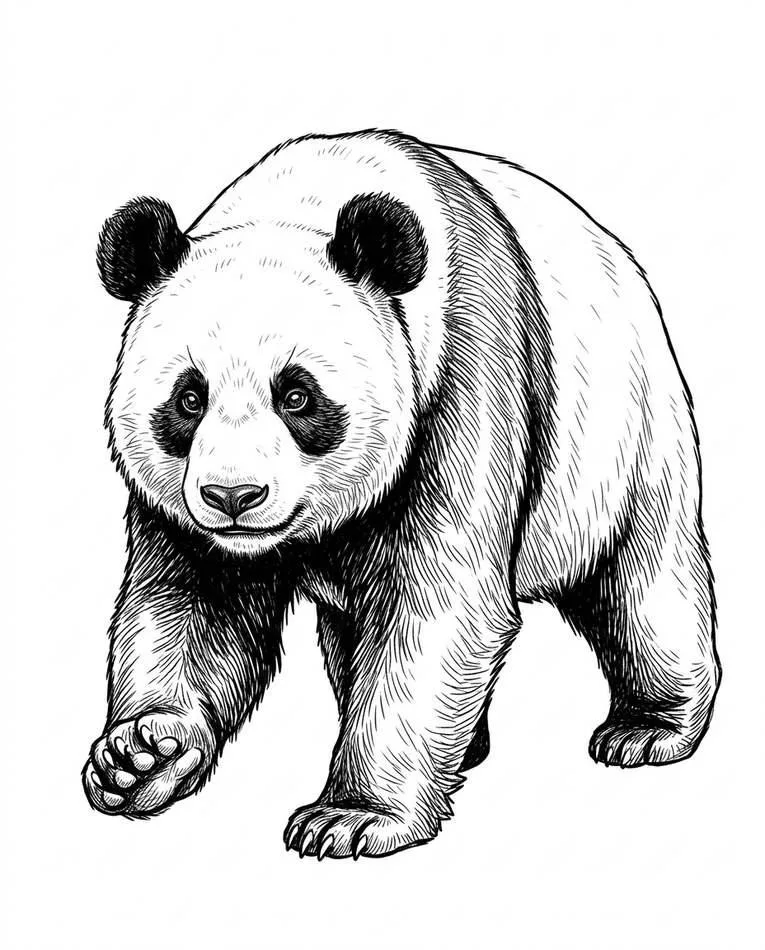
A realistically proportioned giant panda on all four legs in side view. The stocky barrel body, pigeon-toed front paws, and distinctive rolling gait are all visible. The black patches on ears, eye patches, shoulders, arms and legs are suggested with heavier line weight and directional fur strokes. This is the drawing that teaches you what a panda actually looks like beneath the cartoon version.
12. Realistic panda head portrait — close-up
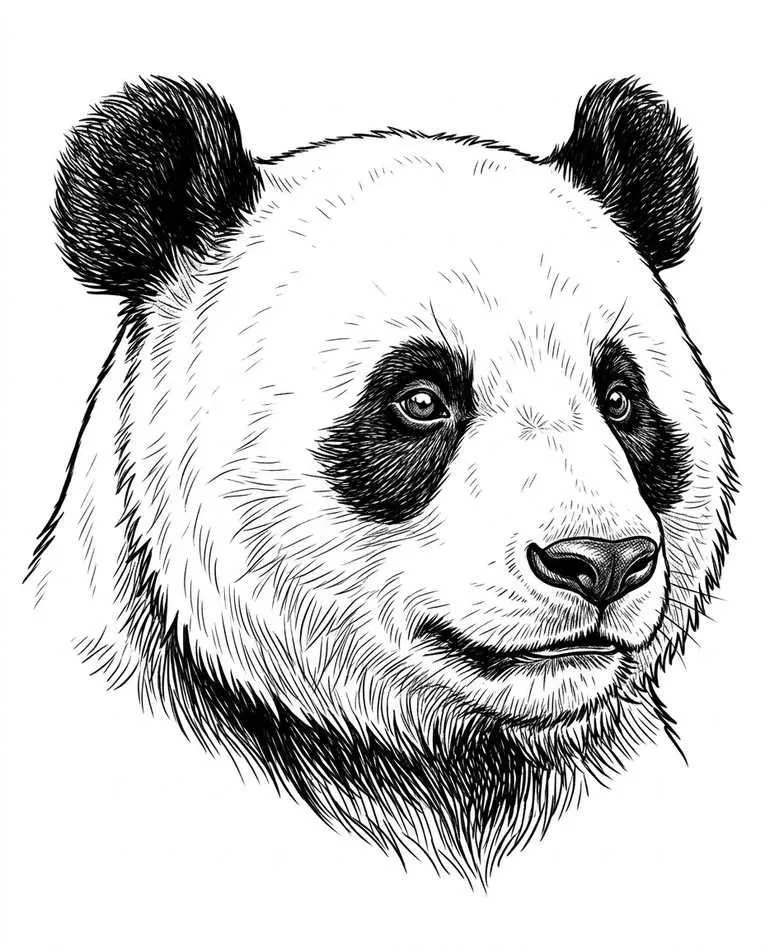
A detailed giant panda head in three-quarter view filling the frame. The fur texture is built from confident directional strokes — short on the face, longer on the cheeks. The eye patches use denser line work to suggest darkness while keeping the drawing colourable. The broad flat nose, powerful jaw and round ears are all anatomically accurate.
13. Panda walking — three-quarter view
A giant panda walking toward the viewer at a three-quarter angle, one front paw extended mid-step. This pose shows the distinctive body shape — the heavy front end, narrow hips and pigeon-toed gait. The foreshortening makes this a more challenging drawing than the side view.
14. Mother panda with newborn baby
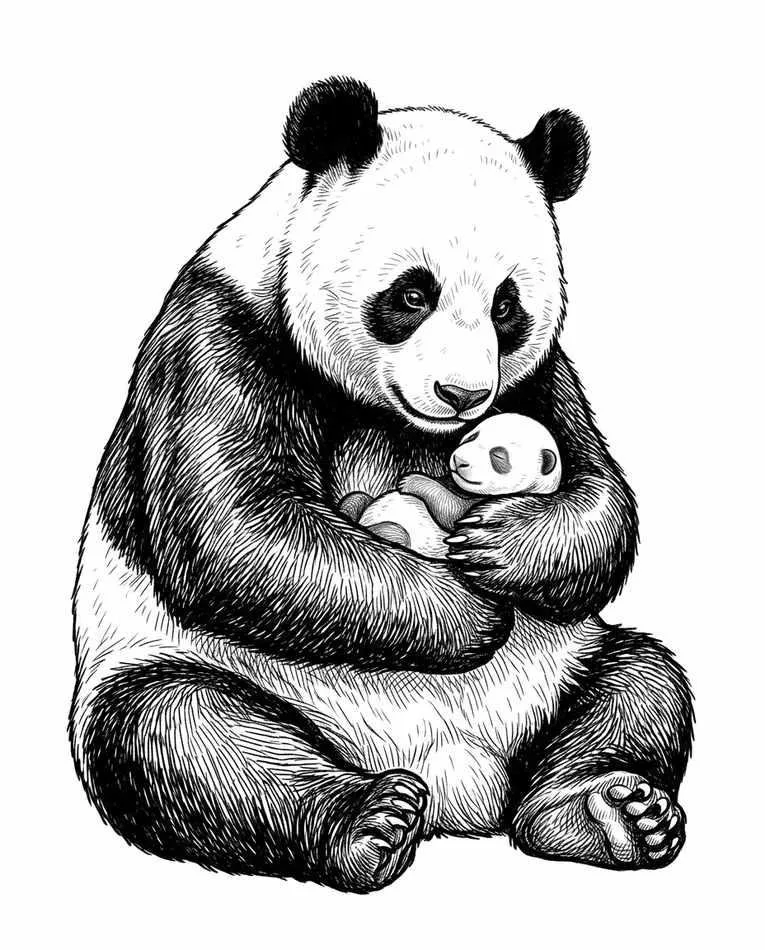
A mother panda cradling a tiny newborn in her arms. The size contrast is dramatic and accurate — newborn pandas are roughly the size of a stick of butter. The mother is large and detailed, looking down protectively. The baby is smooth, almost hairless, with eyes closed. One of the most emotionally powerful animal drawings you can do.
15. Panda in bamboo forest — full scene colouring page
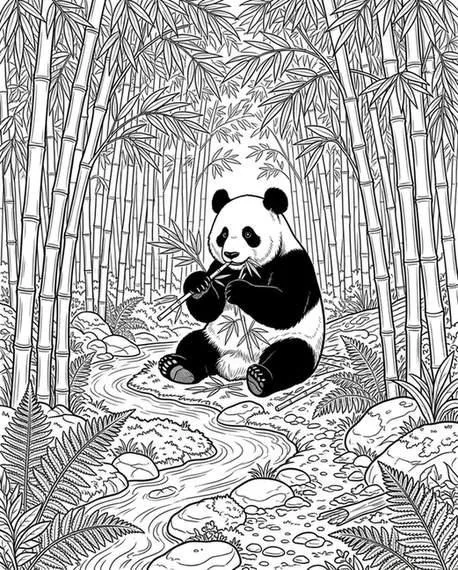
A complete scene: a panda sitting in a bamboo forest with tall stalks, leaves, a stream, rocks and ferns. This is the most complex page in the printable pack, designed for older kids and adults who want a longer colouring session. Each element is drawn with clear outlines for individual colouring.
Creative and special panda drawings
The drawings that go beyond reference and into imagination. These are the pages that earn Pinterest saves and the ones nobody else’s panda article includes.
16. Panda astronaut
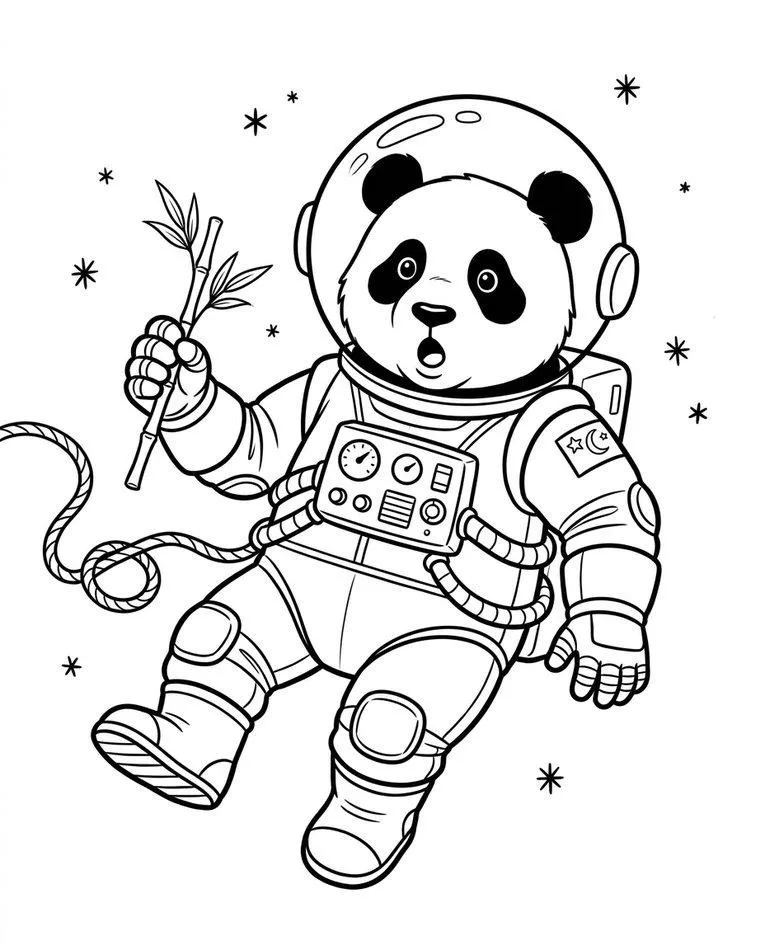
A cartoon panda in a full space suit and helmet, floating among stars, holding a bamboo stalk in one gloved hand. The face is visible through the visor with a surprised expression. This is the creative wildcard — the drawing that makes people stop scrolling because they did not expect a panda in space. It is also the page kids ask to colour twice.
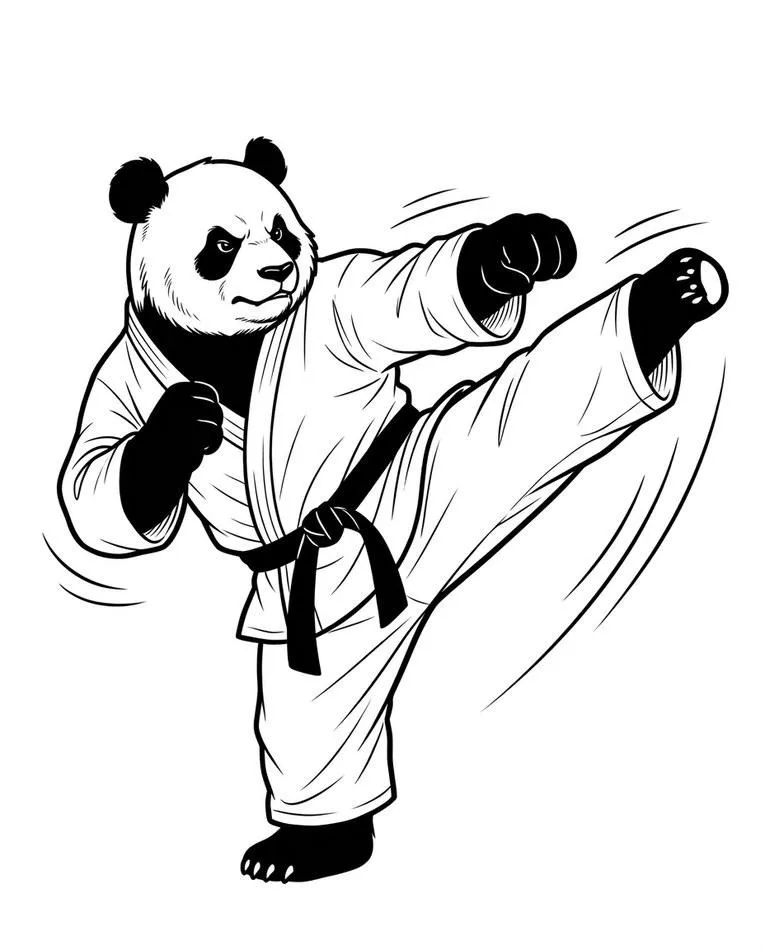
17. Panda in martial arts pose
A panda in a dynamic high kick wearing a white gi with a black belt, motion lines suggesting speed. A determined, focused expression. This is a generic martial arts panda, not a reference to any specific movie character — just a panda who knows how to fight. The action pose is the most challenging to draw and the most rewarding to colour.
18. Geometric mandala panda — adult colouring page
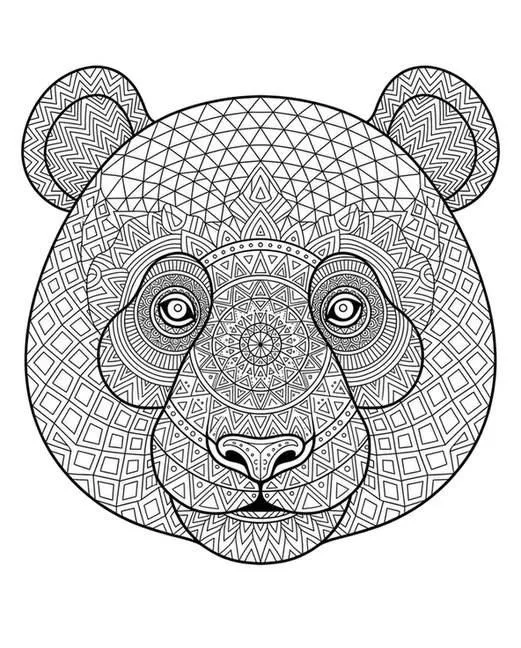
A panda face with every surface filled with intricate geometric patterns: concentric circles in the eye patches, triangular tessellations on the forehead, diamond patterns on the cheeks, zigzag lines in the ears. The overall shape reads as a panda; the interior is a meditation exercise. Designed for adults, and the page that takes the longest to colour in the entire pack.
19. Two pandas playing and tumbling
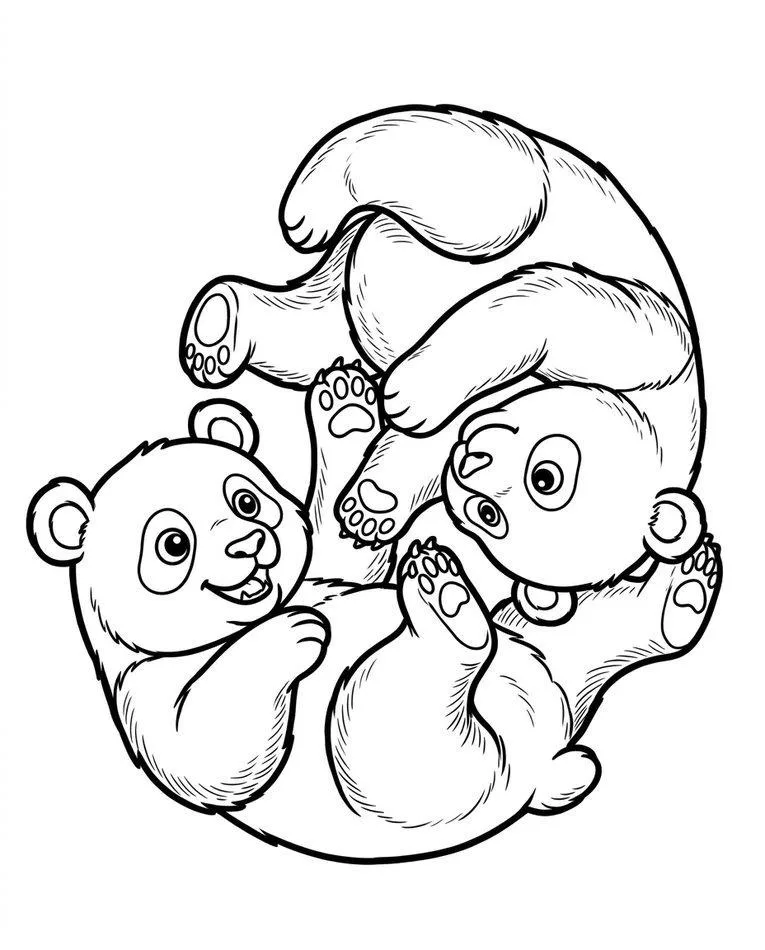
Two young pandas wrestling — one on its back with paws in the air, the other tumbling over the first mid-roll. Both have joyful expressions. The tangled, clumsy playfulness captures exactly why panda videos go viral. Their limbs intertwine as they roll, making this the most dynamic composition in the set.
Free printable panda drawing pack — PDF download
Download all 20 panda drawings as a single PDF — one drawing per page, ready to print on standard letter or A4 paper. Use them as colouring pages, tracing references or drawing practice. Print as many copies as you want.
Panda drawing tips that actually help
- Start with the head circle, not the eyes. The head sets the scale. Add the eye patches, ears and facial features to the head, not the other way around.
- Eye patches are ovals, not circles. They tilt slightly outward from the nose — wider at the outside edge, narrower near the centre. Getting this tilt right is what separates a good panda from a raccoon.
- The eyes are tiny inside the patches. Beginners make the eyes too large. Real panda eyes are small relative to the black patches around them. The patches are the dominant feature, not the eyes.
- The body is pear-shaped, not round. Heavier at the bottom, narrower at the shoulders. Drawing a perfect circle for the body makes the panda look like a bowling ball.
- Black goes on: ears, eye patches, shoulders, arms, legs. White stays on: face, belly, back. The black-white boundary runs across the shoulders like a saddle. Getting this boundary right is more important than any other detail.
- Add a highlight dot to each eye. A single white dot in the upper-right of each black eye makes the panda look alive rather than flat. This one detail transforms every drawing in this set.
Panda drawing: FAQ
How do you draw a panda step by step?
Draw a large circle for the head. Add two small circles at the top for ears. Draw two tilted ovals for eye patches. Place small round eyes inside the patches with a highlight dot in each. Add a small oval nose and a curved mouth. Below the head, draw a larger pear-shaped oval for the body. Add short arms with round paws and short legs. Colour the ears, eye patches, shoulder area, arms and legs black. Leave the face, belly and back white.
How do you draw a simple panda for kids?
Use drawing 1 or 2 from this guide. Draw a big circle for the head, two small ear circles, two big oval eye patches with dots for eyes, a nose and a smile. For the body, a big oval with stubby arms and legs. The simpler the shapes, the easier it is for kids. The panda face alone (drawing 2) is the absolute easiest — just one circle with features added.
What makes panda drawings easy?
Pandas have the most distinctive markings of any animal. The black eye patches, black ears and black-and-white body pattern mean that even a rough drawing is immediately recognisable as a panda. No other animal is this forgiving of proportional mistakes.
How do you draw a realistic panda?
Start with the construction method from drawing 4 — overlapping circles and ovals for the body structure. Refine the shapes into a smooth outline with correct proportions: a heavy front end, narrow hips, pigeon-toed front paws. Add fur texture with short directional strokes. Use heavier, denser line work for the black patches to suggest darkness without solid fill. See drawings 11–15 for realistic references.
How do you draw a panda face?
A circle for the head. Two small circles at the top for ears. Two large ovals tilted slightly outward for eye patches. Small round eyes inside each patch — much smaller than you think — with a white highlight dot. A small oval nose centred between the patches. A W-shaped mouth below the nose. That is the whole face. See drawing 2 for the simplest version and drawing 12 for a realistic version.
What is a panda’s pseudo-thumb?
Giant pandas have an enlarged wrist bone that functions like a thumb, allowing them to grip bamboo stalks. It is not a true thumb but an evolutionary adaptation unique to pandas. You can see it in drawing 15 where the panda grips bamboo while sitting. Including this detail in a realistic drawing shows anatomical knowledge.
Pick a panda and start drawing
The cartoon panda face (drawing 2) takes three minutes. The chibi kawaii version (drawing 3) takes five. The realistic portrait (drawing 12) takes an afternoon. Each one teaches you something about shape, proportion and the black-white boundary that makes pandas the most recognisable animal on the planet.
For more animal drawings, our how to draw a horse guide covers 20 poses with a free printable pack, and how to draw a dinosaur covers 20 species. Easy things to draw has dozens more starting points, cute things to draw is the full cute collection, and doodle ideas covers quick five-minute sketches.