Is Sleeping a Hobby? (The Honest Answer Nobody Gives You)
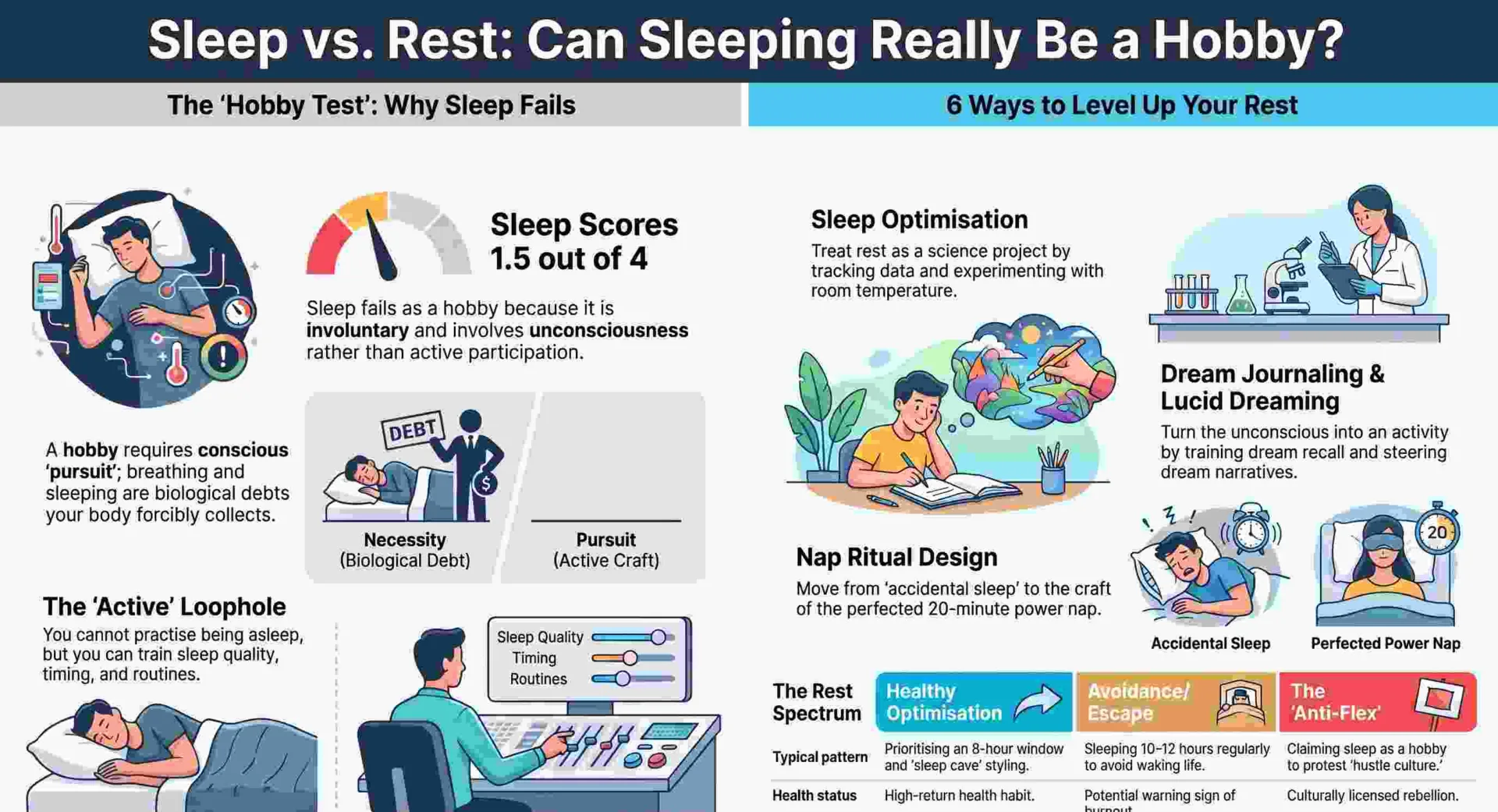
Is sleeping a hobby? Technically, no — a hobby is an activity you choose to do for pleasure in your leisure time, and sleep is a biological necessity your body demands whether you enjoy it or not. But that is only half the answer. The other half — the half every generic answer skips — is that the ritual you build around sleep absolutely can become a hobby, and millions of self-described sleep enthusiasts are quietly proving it.
If you have ever deadpanned “sleeping is my hobby” in an icebreaker and watched someone’s eyebrows rise, this article is your full, honest breakdown: what the definition actually says, why the phrase refuses to die, when loving sleep is healthy and when it is a warning sign, and six rest-based hobbies that genuinely count — no eyebrow-raising required.
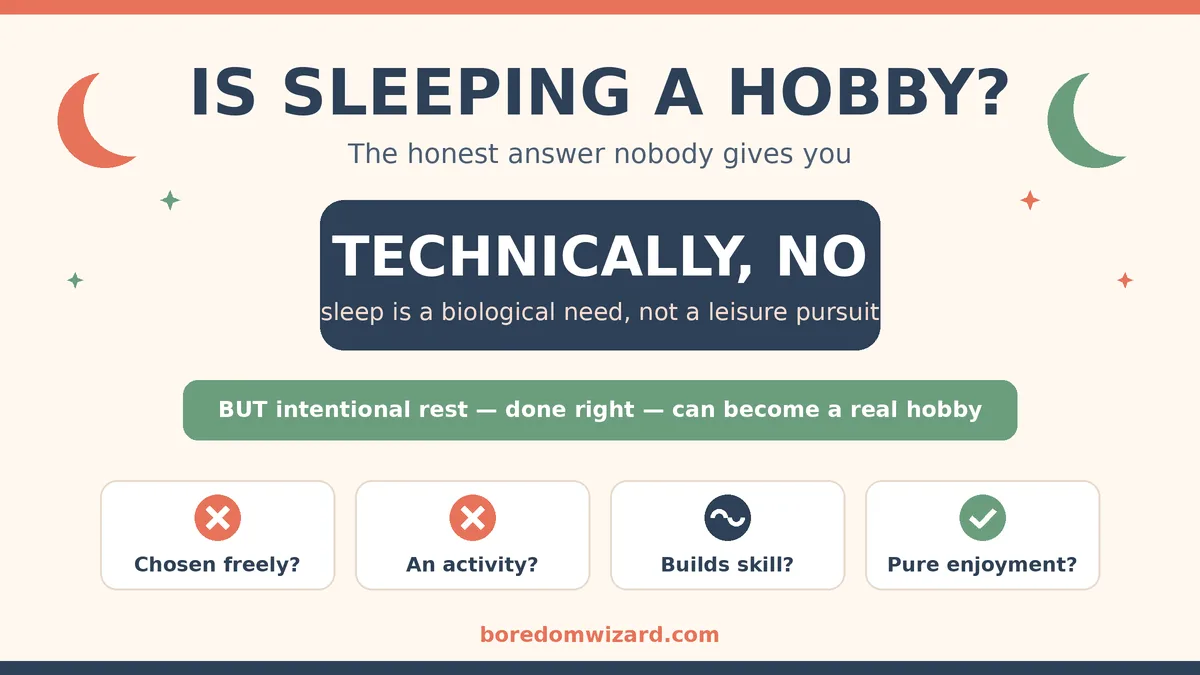
The short version: sleep fails the hobby test but intentional rest passes it.
What Makes Something a Hobby in the First Place?
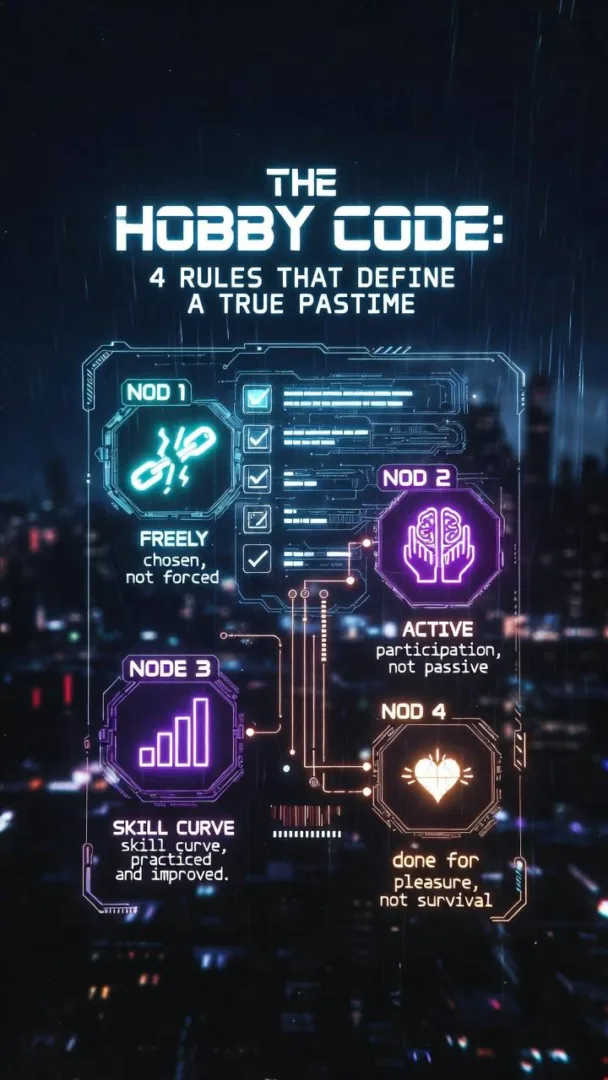
Before we put sleep on trial, we need the criteria. Across dictionary definitions and how people actually use the word, a genuine hobby has four ingredients:
- It is chosen freely. Nobody is forced into birdwatching. A hobby is optional by nature.
- It is an activity. You participate consciously — hands, mind, or both are engaged.
- It can be practiced and improved. There is a skill curve, however gentle.
- It is done for pleasure in leisure time. The point is enjoyment, not survival or salary.
This is the same four-part test we applied in Is Working Out a Hobby? and Is Traveling a Hobby? — both of which pass comfortably. Working out is chosen, active, skill-building, and enjoyable. Travel is the same. Now watch what happens when sleep takes the test.
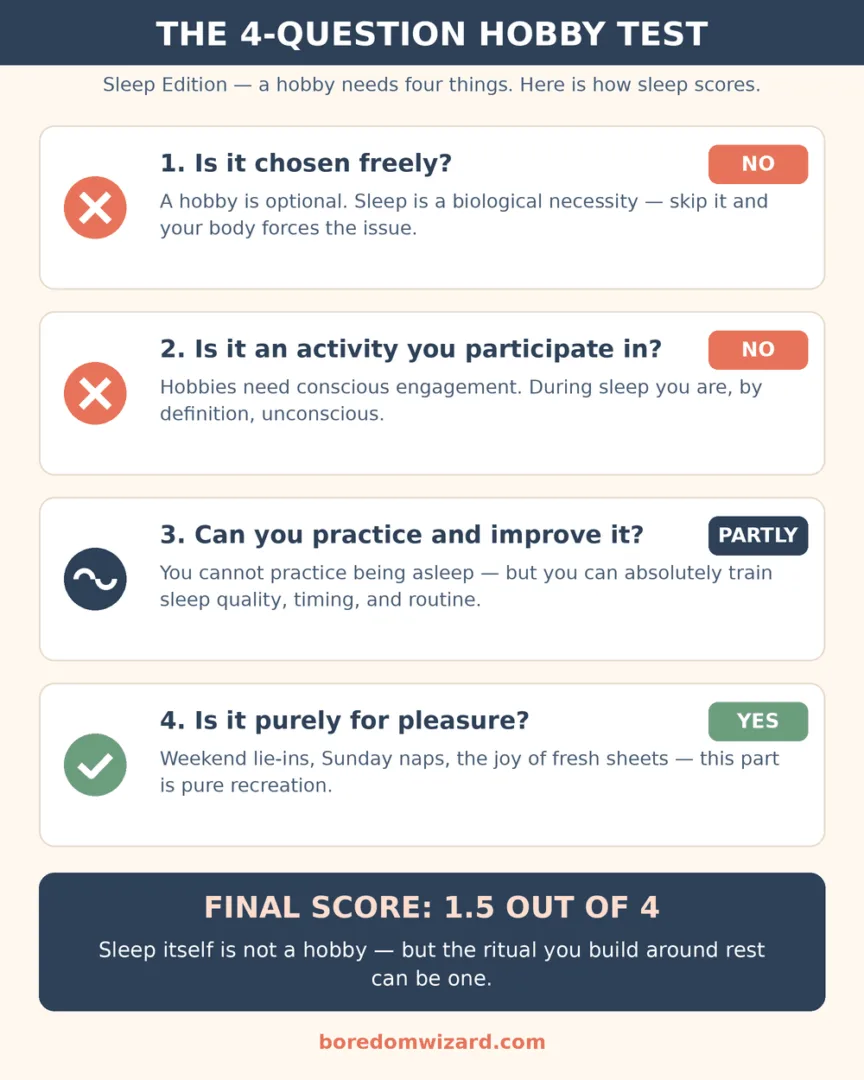
Sleep scores 1.5 out of 4 — a failing grade for “hobby,” a perfect grade for “beloved necessity.”
Final score: 1.5 out of 4. Sleep is the unconscious leisure debate in a nutshell — it feels like leisure, it functions like biology. That half-point on question three, though, is where the entire rest of this article lives. You cannot practice sleeping. You can absolutely practice resting well — and that distinction is what separates “sleeping is my hobby” as a joke from sleep as a legitimate passive time investment.
Why Millions of People Still Say “Sleeping Is My Hobby”
The phrase is practically a cultural institution. Science communicator Kristin Fehlauer opened a World Sleep Day essay with exactly those words — “sleeping is my hobby” — before explaining that she doesn’t just enjoy sleep, she enjoys reading about it, pondering it, and collecting techniques for it, from counting backwards from 100 to mentally walking through her grandparents’ house until she drifts into dreamland. That year’s World Sleep Day theme was “Quality Sleep, Sound Mind, Happy World” — a decent summary of why sleep lovers feel no shame.
Language teacher Scott Gardner noticed the same thing in his classrooms: ask students their hobbies, and “sleep” appears more often than almost anything else. His verdict was wonderfully split — biologically prompted efforts to stay alive shouldn’t count, he argued, but sleep as a perfected skill just might. Anyone who can sleep standing on a crowded train, he pointed out, has developed something genuinely impressive.
College essays celebrate it too — the nap as a way to momentarily escape reality, to feel refreshed and ready to conquer the world. And the internet has minted a thousand “sleeping is my hobby” quotes, from “my bed and I are in a committed relationship” to the unbeatable “the bed is never mad at you.” The meme persists for one honest reason: in a culture that treats exhaustion as a status symbol, saying sleep is your hobby is a small act of rebellion. It is calling a nap what it really is — a relaxation mini vacation, a free therapy session, a chance to unwind mentally and physically while your body and mind regenerate.
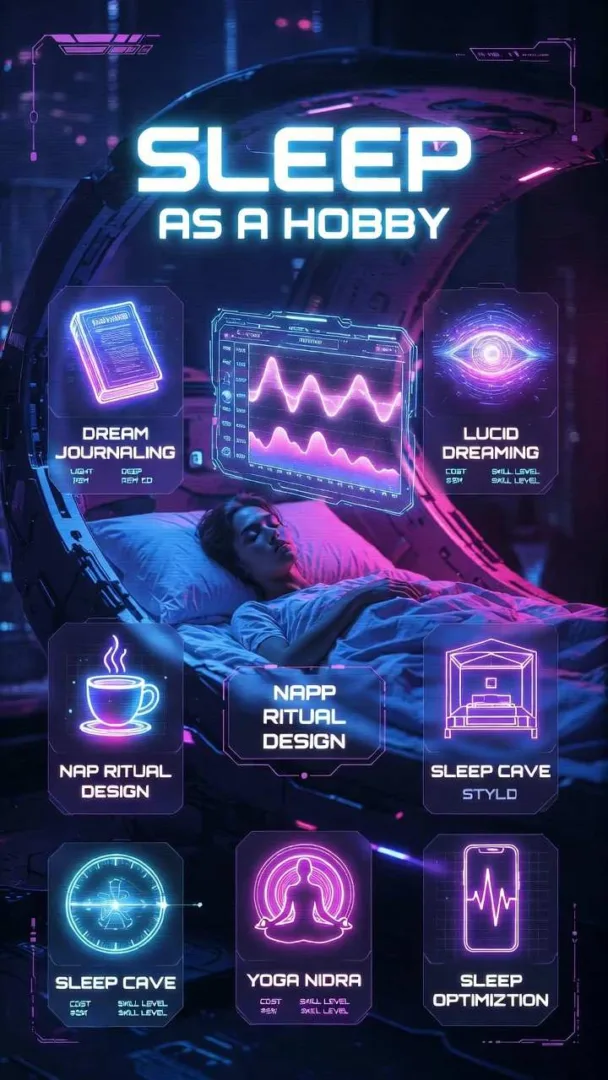
Natty’s take: After years of coaching, I can tell you the people who joke about sleep marathons are almost never the ones getting good sleep. The joke is usually a flag that rest has become the only leisure they have energy left for. That’s not a hobby problem. That’s a recovery problem — and it deserves a real answer, which is why the second half of this article exists. If that’s you, start with my guide on things to do when you’re feeling tired and bored — it was written for exactly this state.
Is Sleeping a Good Hobby or a Bad Hobby?
Loving sleep is good. Hiding in sleep is not. Since “is sleeping a good hobby” and “is sleeping a bad hobby” are both questions people genuinely search, here is the honest line between them.
When loving sleep is a genuinely good thing
Prioritizing sleep is arguably the single highest-return health habit that exists. Good sleep has restorative effects on nearly every system you own — memory consolidation, immune response, emotional regulation, muscle repair, even skin. If your “hobby” is protecting an eight-hour window, keeping screens in night mode, wearing a sleep mask, and treating your bedroom like a sanctuary, you are not lazy. You are doing what sleep scientists beg the rest of us to do.
When it becomes a warning sign
There is a difference between enjoying rest and using unconsciousness as an exit. Regularly sleeping 10 to 12 hours to avoid your waking life, napping to escape feelings rather than to recharge, or feeling exhausted no matter how much you sleep — these patterns can point to depression, hypersomnia, or burnout rather than healthy rest. Oversleeping deserves the same attention as insomnia. If your relationship with sleep feels more like avoidance than enjoyment, my guide on things to do when you’re feeling depressed and bored offers gentler starting points than another nap — and a conversation with a doctor is worth more than any listicle.
What Sleep Science Says About the Debate
Sleep researchers would smile at this whole argument. Neuroscientist Matthew Walker, author of Why We Sleep, calls sleep “the single most effective thing we can do to reset our brain and body health each day.” Clinical psychologist Michael Breus — “The Sleep Doctor” — has built a career showing that your circadian rhythm is as individual as your fingerprint, which is why night owls and early birds experience the same eight hours so differently. According to the Sleep Foundation, a healthy night cycles through four sleep stages — light sleep, deep sleep, and REM sleep — roughly every 90 minutes, each stage doing distinct repair work on your body and mind.
Here is the nightly productivity paradox in that research: sleep is the least “productive-looking” thing you do, and simultaneously the foundation of every productive hour you have. Science’s verdict on our question is clear — sleep is a biological need, not a leisure pursuit. But the same science validates the flip side: because sleep quality responds dramatically to behavior, everything surrounding sleep is trainable. Which brings us to the part of this article you can actually use.
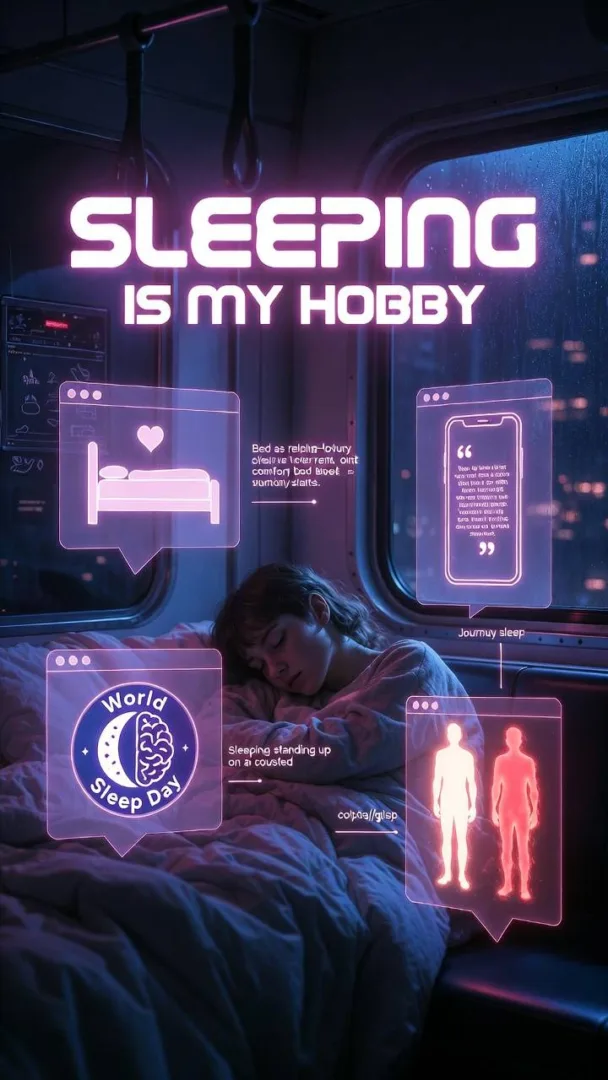
Sleep Isn’t a Hobby — But These 6 Rest-Based Hobbies Are
If you love sleep enough to have googled this question, you are one small step away from a real hobby — the circadian hobby hypothesis, if you like. Each of these six passes the full four-question test: chosen, active, skill-building, and done purely for pleasure.
| Rest-Based Hobby | What You Actually Do | Start Cost | Skill Ceiling |
|---|---|---|---|
| Sleep optimization | Track your sleep, run small experiments (caffeine cutoffs, room temperature, wind-down routines), and watch the data change | $0 (phone apps) | High — it’s a personal science project |
| Dream journaling | Keep a notebook at your bedside and record dreams the moment you wake; patterns and recall improve within weeks | $5 (a notebook) | Medium — recall is a trainable skill |
| Lucid dreaming | Learn reality checks and wake-back-to-bed techniques until you can recognize — and steer — a dream while inside it | $0 | Very high — dreaming as hobby content, literally |
| Nap ritual design | Engineer the perfect 20-minute power nap: timing, light, sound, even the espresso-before-nap trick | $0 | Medium — the siesta is a craft |
| Sleep cave styling | Design your bedroom for perfect rest — blackout light, cool temperature, layered textures | $0–50 | Medium — equal parts design and biology |
| Yoga nidra / NSDR | Follow guided non-sleep deep rest sessions that deliver nap-level recovery while fully awake | $0 (free on YouTube) | Medium — stillness is harder than it sounds |
Six ways to turn a love of sleep into an actual, defensible hobby.
A few notes from the field. Dream journaling is the cheapest entry point and pairs beautifully with the reflective habits in my dopamine menu guide — rest belongs on everyone’s menu. Sleep cave styling is the most fun if you already enjoy home decor projects — and yes, the mattress industry has noticed sleep lovers exist, which is why brands from Casper to Tempur-Pedic to Sweetnight now market cooling gel foam and PCM technology directly to self-described sleep enthusiasts. And if evening scrolling is what’s really stealing your sleep, the 30-day digital detox challenge fixes the root cause before any mattress can.
Should You Actually Say “Sleeping” When Asked About Your Hobbies?
In a job interview: no. On a date: only as a joke you immediately upgrade. “Sleeping” as a stated hobby signals you don’t have one — which is rarely true, just unexamined. The upgrade is simple: name the active version. “I’m into sleep optimization — I’ve been running experiments on my own sleep for six months” is a conversation starter. “I keep a dream journal” is genuinely interesting. If neither is true yet, pick one from the table above, or take the five-question diagnostic in How to Find a Hobby You Actually Enjoy — it exists precisely for people whose current answer is “sleep.”
FAQs: Every Version of This Question, Answered
Is napping a hobby?
Same verdict as sleep, with a better loophole. A nap is still unconscious — but nap ritual is a craft. The person who has perfected the 20-minute post-lunch power nap with an eye mask and a pre-nap espresso has a legitimate practice; the person who accidentally slept through the afternoon has a Tuesday.
Is eating and sleeping a hobby?
Neither is, for the same reason: biological necessities aren’t pursuits. But both have hobby versions one level up — eating becomes the hobby of cooking or food exploration, and sleeping becomes the six rest-based hobbies above. The pattern is always the same: the necessity isn’t the hobby; the craft around it is.
Is sleeping a hobby or an interest?
“Interest” is the more defensible word. You can be genuinely interested in sleep — reading the research, following the science, comparing mattresses — without sleep itself being an activity you “do.” Kristin Fehlauer’s version is exactly this: an interest in sleep expressed through reading and experimenting, worn proudly as a deadpan one-liner.
What does Reddit say about sleeping as a hobby?
Reddit threads on this split reliably into three camps: the purists (“it’s a bodily function, obviously not”), the comedians (“I’ve been practicing daily for 30 years”), and the reframers (“sleep no, sleep optimization yes”). The reframers win the argument — which is essentially the position of this article, with citations.
Why did “sleeping is my hobby” become a meme?
Because it’s the perfect anti-flex. In a hustle culture where everyone’s hobbies are secretly side businesses, claiming sleep is a joke, a boast, and a tiny protest all at once. Memes survive on tension, and “I cherish the thing you’re all sacrificing” has plenty.
Is sleeping a hobby — yes or no, final answer?
No — sleeping is not a hobby, because it is an involuntary biological necessity rather than a chosen leisure activity. But intentional rest practices like sleep optimization, dream journaling, and lucid dreaming are real hobbies you can start tonight.
The Verdict, By Situation
| Your Situation | The Honest Verdict |
|---|---|
| You love weekend lie-ins and Sunday naps | A cherished pastime — enjoy it guilt-free, but it’s not a hobby |
| You track your sleep and experiment with routines | A real hobby — sleep optimization passes all four tests |
| You keep a dream journal or practice lucid dreaming | A real hobby — active, skill-building, and fascinating |
| You say “sleeping is my hobby” as a joke | Culturally licensed — Fehlauer and half of Reddit are with you |
| Sleep is the only leisure you have energy for | A recovery flag — address the exhaustion, not the vocabulary |
| You sleep 10+ hours to avoid your waking life | A warning sign — worth a conversation with a doctor |
| You’re asked about hobbies in an interview | Name the active version, or find a real one first |
Final Thoughts: Give Sleep a Hobby’s Respect
So, is sleeping a hobby? No — and it doesn’t need to be. Sleep is more important than any hobby you will ever have; it is the thing that makes every hobby possible. The real takeaway isn’t the label. It’s that your instinct to treasure rest is correct, and it deserves better than a punchline.
Natty’s take: Here’s the reframe I give every client: stop defending sleep as a hobby and start giving it a hobby’s respect — scheduled time, genuine curiosity, small experiments, and zero guilt. Do that for a month, and you’ll wake up with enough energy to want an actual hobby again. When that day comes, the 50 best ones are waiting.