Bored at Home? Try Textured Canvas Art (A Beginner’s Weekend Project)
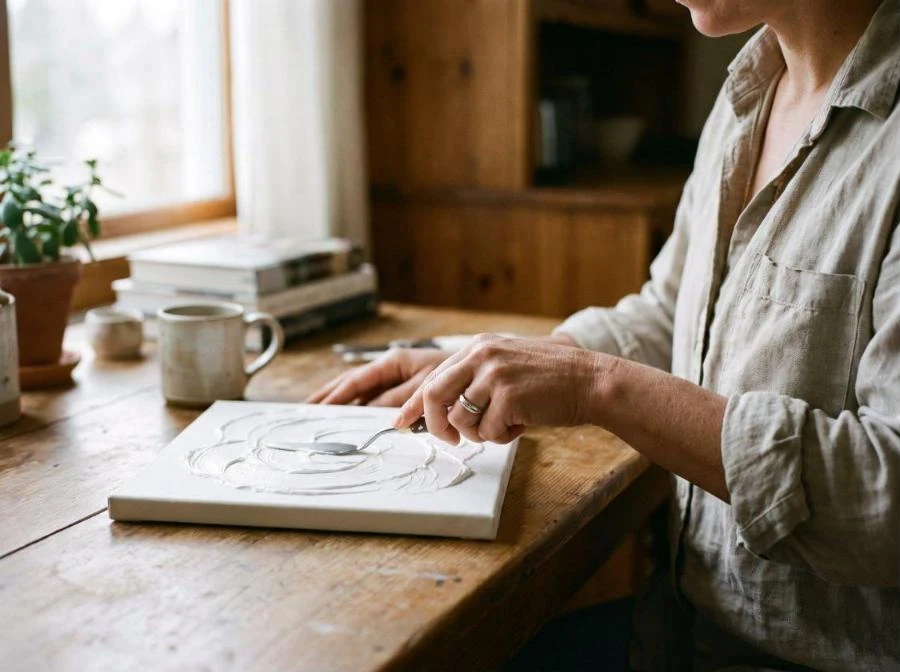
You’ve scrolled every feed, rewatched the show, and reorganized the same drawer twice. The evening is still long, and your thumbs are tired. That restless feeling usually isn’t a lack of options; it’s a lack of anything that pushes back.
Here’s a better answer: a weekend project that’s tactile, forgiving, and leaves you with something to hang on the wall. Textured canvas art needs no drawing skill, a short shopping list, and about 45 minutes to get started. Below, we’ll cover why it works on a bored brain, what the research says, what to buy, and how to make your first piece without cracking it.
Why Dimensional Canvas Work Fits a Bored Brain
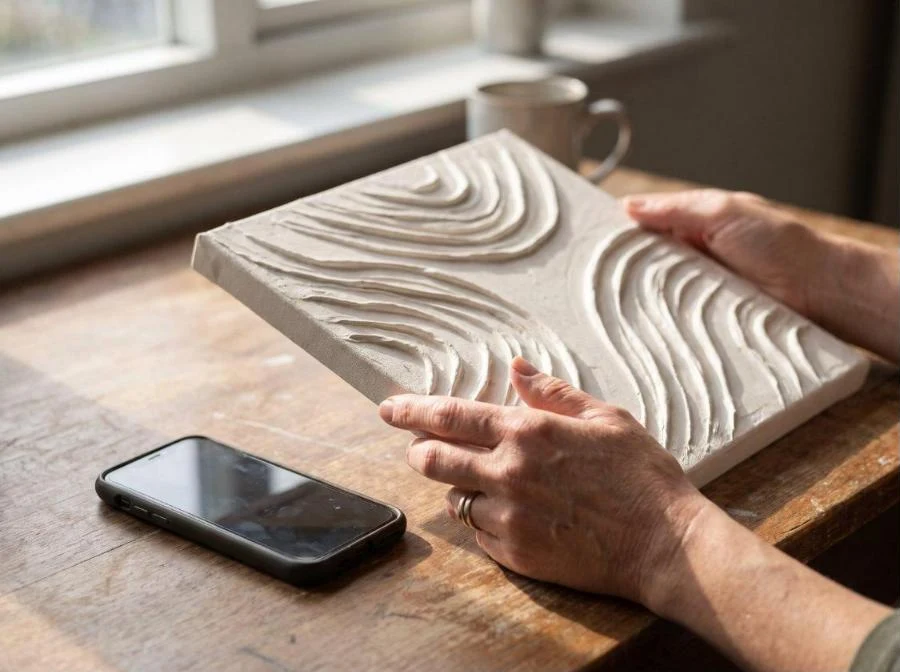
A 3d canva painting is built from paint plus raised material, so the surface has real ridges, swirls, and peaks that cast shadows and change as the light moves through the day. That’s the whole idea. You aren’t trying to draw a perfect apple. You’re moving thick material around with a knife and watching it hold its shape.
This is why it suits boredom so well. Your hands are busy, the feedback is instant, and a slip of the knife doesn’t ruin anything. It just becomes another ridge. Most hobbies punish beginners for early mistakes; this one rewards them with character.
What the Research Says About Making Things With Your Hands
Crafting isn’t just a way to fill time. A 2024 study from Anglia Ruskin University, published in Frontiers in Public Health, analyzed responses from 7,182 UK adults and found that arts and crafts participants reported higher happiness and life satisfaction. The boost to feeling that life is worthwhile was comparable to the one linked with having a job. About 37.4% of respondents had done at least one craft activity in the past year.
There’s a caveat worth stating plainly. The study found no link to lower anxiety or loneliness, and the data is correlational, so it can’t prove that crafting causes the happiness. Still, it’s a solid reason to choose a hands-on project over another hour of video.
What You Need Before You Start
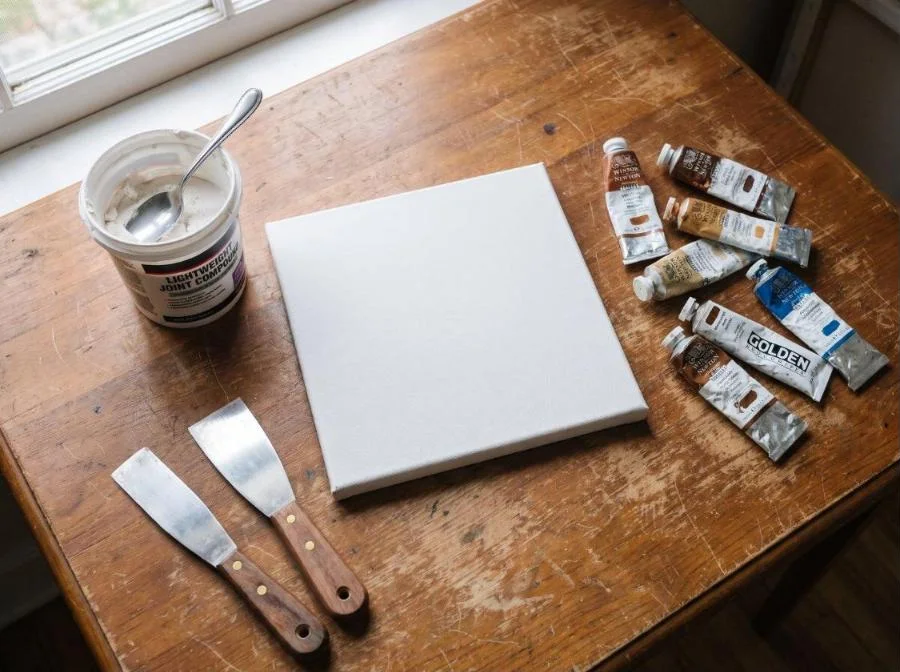
The shopping list is short, and most of it lives in the hardware aisle. Start with a sturdy 16×20 inch canvas; joint compound dries rigid, and a flimsy canvas will flex and crack it. Add a tub of lightweight joint compound, a putty knife or palette knife, a few acrylic paints, and something for texture, such as a spoon, an old comb, or a foam roller.
Joint compound is porous when left unsealed, so pick up a clear acrylic sealer too. For a rundown of materials and prep, Home Depot’s guide to DIY textured art covers the basics well, though it’s a retailer’s take and leans toward its own aisles.
A Simple First Project in Five Steps
Keep the first piece small and the rules loose.
- Thin the compound with a little water until it’s about the thickness of peanut butter.
- Spread it across the canvas with your knife, thicker than feels natural.
- Make texture: swirl with a spoon, drag a comb, press a crumpled sheet of foil, or stamp with a sponge.
- Let it dry for about 24 hours. Resist poking it.
- Dry-brush acrylic paint over the ridges so the color catches the high points and leaves the valleys light.
The low-pressure start matters. In a 2016 pilot study in Art Therapy by Girija Kaimal and colleagues at Drexel University, 39 adults made art freely for 45 minutes, and cortisol levels fell in 75% of them regardless of prior experience. It was a small study with no control group, so treat it as encouraging rather than conclusive. But 45 minutes with a knife and some paste is an easy experiment to run on yourself.
Mistakes That Turn Into Features
Cracks are the most common complaint. They show up when the compound goes on too thick in one pass. If you want real height, build it in layers over several days and let each one dry fully. Heavy canvases are the second problem; keep the first piece modest so it hangs safely.
Everything else is forgivable. A gouge becomes a valley. A smeared patch becomes a soft area that contrasts with the sharp ridges. If you’re stuck on a design, borrow a shape from one of our flower drawing ideas, sketch the bloom lightly in pencil, then build the petals up with compound instead of ink.
Making It a Habit
One canvas can turn into a routine surprisingly fast. Keep a rainy-day kit in a shoebox: a spare canvas, a half tub of compound, two knives, and your favorite three paints. When the urge to scroll hits, the box is already open.
Neutral palettes of white, cream, and soft gray look great on most walls, while a single bold color on a ridged surface makes a statement piece. If you enjoy the rhythm of it, our easy crafts for adults has 40 other relaxing projects to rotate through, so the habit never goes stale.
Turning Finished Pieces Into Gifts and Decor
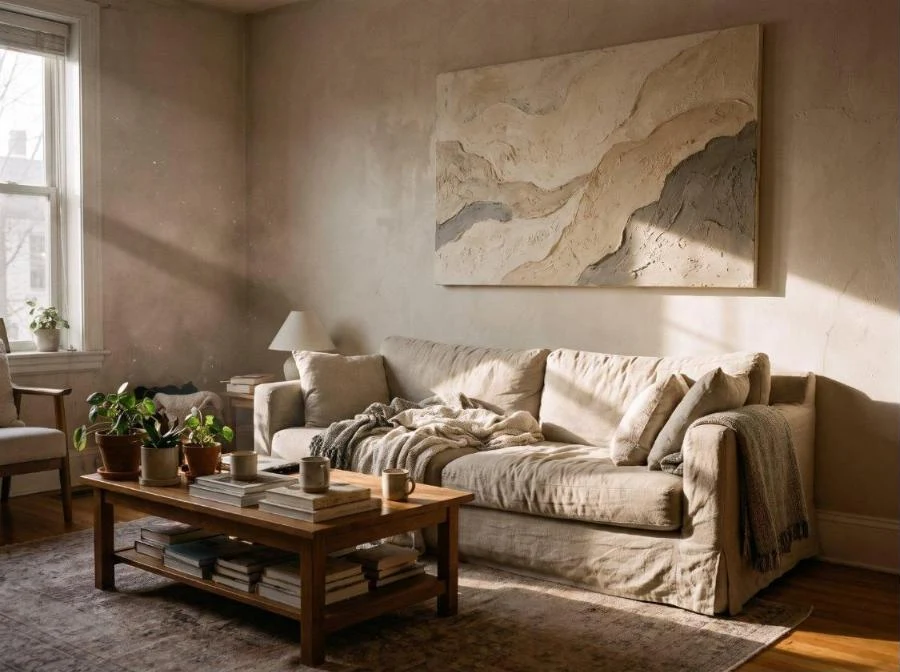
Once you have two or three pieces, hang them as a set above a sofa or a desk. Texture does the heavy lifting, so the simplest colors often look best. Smaller canvases also make personal gifts; add initials or a date pressed into the wet compound and the piece becomes something nobody else owns. We’ve collected more ideas like that in our personalized craft projects.
Start Small This Weekend
Buy one canvas and one tub of compound. Skip the elaborate design, skip the tutorials, and skip the perfect workspace. Spread the paste, make a mess, and see what the light does to it tomorrow morning. A bored evening rarely needs a better plan, just something real to put your hands on.