Paint by Numbers for Bored Adults: How to Start Tonight (and What to Buy)
It’s 8 p.m. You’ve scrolled for an hour, watched three videos you won’t remember, and you feel slightly worse than when you started. You don’t want another show. You want something to do with your hands that doesn’t need talent, a plan, or a trip to an art store.
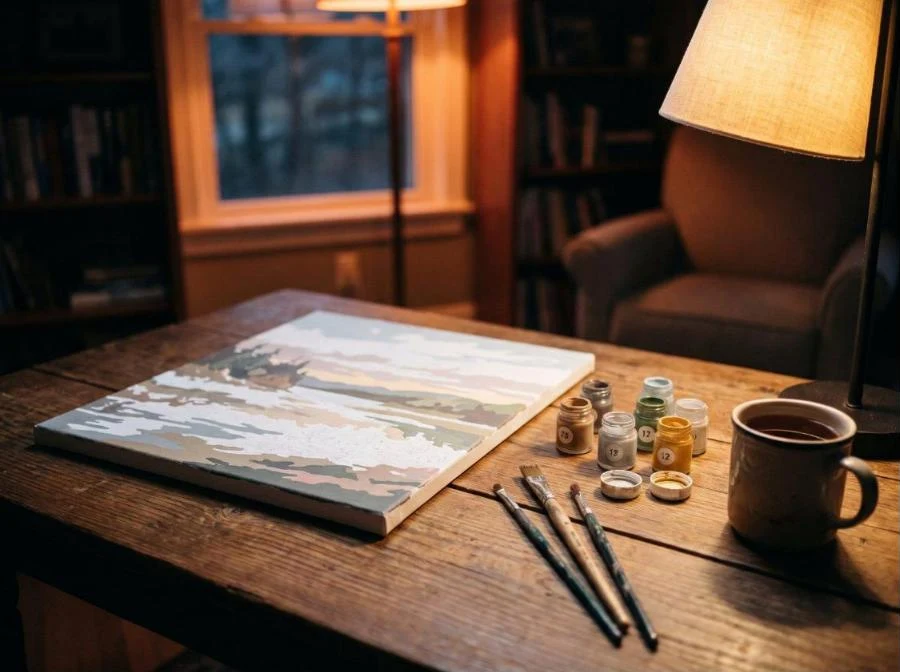
Paint by numbers fits that gap better than most hobbies. The picture is already chosen, the colors are labeled, and you can start in minutes. This guide covers why it works against boredom, how to pick a kit that isn’t junk, and how to make the habit stick.
Why Paint by Numbers Works When You’re Bored
Most people stall at the first question: where to buy paint by numbers kits that arrive with decent paint and a canvas that lies flat? The answer matters, because a bad first kit is the fastest way to abandon the hobby. The buying checklist below makes that choice easier. If you’d rather browse a ready-made selection first, start with where to buy paint by numbers kits in a range of sizes and subjects.
The real appeal is that the hard decisions are gone. You don’t choose a subject, a palette, or a composition. Boredom often comes from having too many options and no energy to pick one, and a numbered canvas removes every option except “paint the next patch.”
That also gives you small wins. Each filled section is a visible bit of progress, which is exactly what an evening of scrolling never gives you.
There’s some research behind the calming effect, though it’s about art making in general rather than paint by numbers specifically. A 2016 study by Girija Kaimal, Kendra Ray and Juan Muniz at Drexel University, published in Art Therapy, had 39 adults make art for 45 minutes. Cortisol, a stress hormone, dropped in about three quarters of them, and prior art experience made no difference. It’s a small study, so treat it as encouraging rather than proof.
If you like the idea of a hands-on hobby with a low barrier, our list of hobbies that feel rare and fun shows where painting sits among other options.
What to Check Before You Buy a Kit
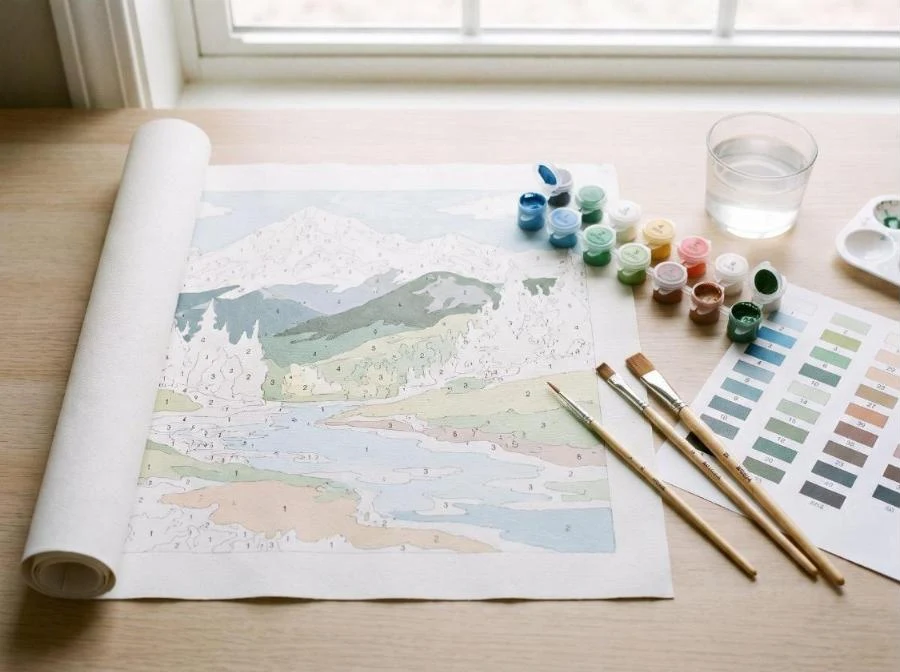
Paint by numbers is a mainstream hobby, not a niche one. Growth Market Reports estimates the global kit market at about $1.06 billion in 2025, though trackers disagree on the exact figure. That popularity means plenty of choice, and plenty of poor kits. Check these five things:
- Section size: Beginners should look for fewer, larger areas and plain backgrounds. Tiny numbered cells in a crowded scene turn relaxing into tedious.
- Canvas: A pre-stretched or framed canvas is easier to work on than a rolled one that curls at the corners.
- Paint quality: Thin, watery acrylic needs two or three coats. Look for reviews that mention coverage.
- Contents: You want brushes in more than one size, a reference picture, and a little extra paint.
- Size: 16×20 inches is a common standard and a sensible first project.
On price, budget kits run roughly $8 to $15, mid-range kits $15 to $30, and premium ones $30 to $60 or more. Most quality 16×20 kits land around $30 to $50. Skip the bargain-bin option with paint that barely covers the numbers; it costs you the same evening you were trying to save.
Kits sell through marketplaces, craft chains, specialist online shops, and custom shops that turn your own photo into a kit. A specialist shop usually gives you the most consistent paint and canvas, while marketplaces vary widely by seller.
How to Make It a Habit That Beats the Scroll
Buying the kit is the easy part. Using it on a tired Tuesday is harder, so lower the starting cost.
- Set a 45-minute window, the same length used in the Drexel study.
- Put your phone in another room, not just face down.
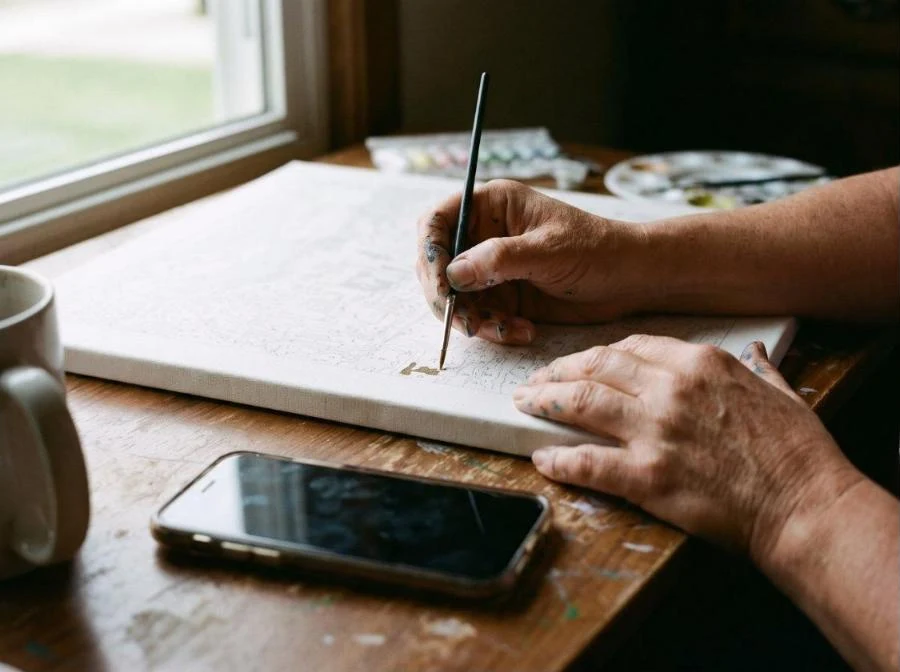
- Do a 10-minute starter session. Open the paints, fill three patches, and stop if you want to.
- Work from lightest to darkest colors, and keep lids shut between sessions so the paint doesn’t dry out.
- Add music or a podcast, and good light.
Our guide with more ideas for a solo evening rates painting as an artistic activity that takes roughly 45 to 180 minutes and costs about $15 to $100, which matches what most beginners spend.
Motivation matters too. PaintOnNumbers.ca, a retailer, reported in its 2025 survey that 68% of adult buyers cite stress relief and mindfulness as their main reason for buying. That’s seller data, so take it with a pinch of salt, but it fits what the hobby offers.
There’s a tradeoff. Paint by numbers is structured, and some people find that dull. If you want freedom and improvisation, free drawing will suit you better. The kit is for people who want the decisions made for them.
Ways to Make Your First Kit Feel Less Like Homework
A few small choices keep it enjoyable:
- Pick a subject you actually care about, such as a pet, a place, or a color scheme you’d hang at home.
- Start with a small canvas, so you finish something within a week or two.
- Paint with a friend. It turns a solo habit into a low-key evening plan.
- Frame the finished piece or give it away. A finished, displayed painting is a strong reason to start the next one.
- Once you’re hooked, try a custom kit made from your own photo.
If painting becomes one of your regulars, see our roundup of trending hobbies this year for what to try next.
Conclusion
For a bored, screen-tired adult, one evening and one decent kit beats another hour of scrolling. You don’t need skill, a plan, or a big budget; you need a canvas that lies flat, paint that covers, and 45 minutes without your phone.
Start small, pick a subject you like, and finish one patch. The rest tends to follow.