Dog Tricks: 25 Easy and Fun Tricks to Teach Your Dog When You’re Both Bored
A bored dog chews, digs and barks. A bored human scrolls. Dog tricks fix both at once: five minutes of training gives your dog a mental workout that tires them out faster than a walk, and gives you something genuinely fun to do together.
This guide covers 25 tricks to teach your dog, from easy dog tricks you can teach tonight to advanced dog tricks for show-offs. You’ll get one simple method that works for every trick, a trick picker to choose the right ones for your dog, and step-by-step instructions using reward-based training only.
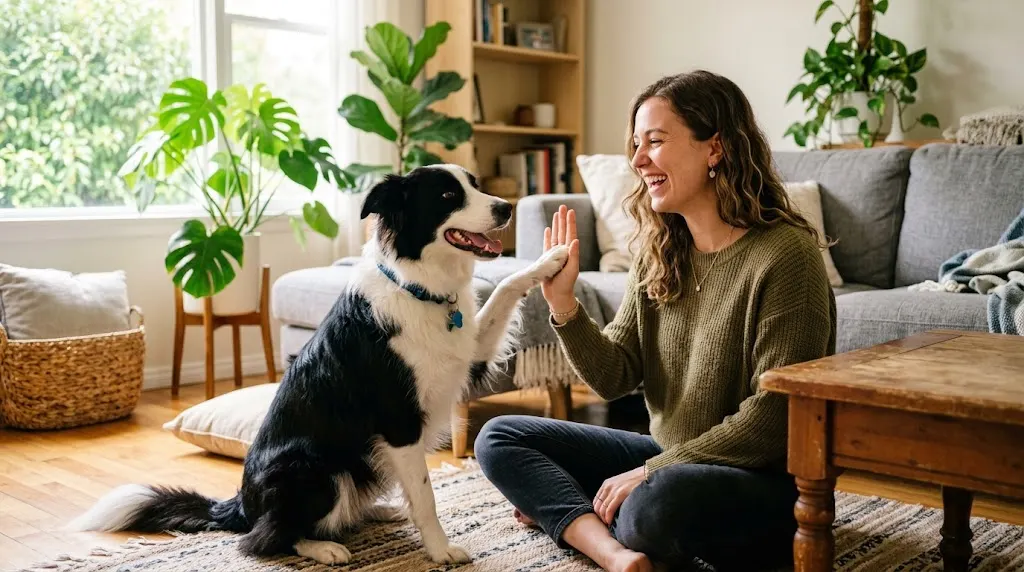
Quick answer: The easiest tricks to teach your dog are touch, shake, spin and bow. Teach each one with the Treat-to-Trick Loop: lure the position with a treat, mark it with “yes”, pay with the treat, then fade the lure and add a word cue. Keep sessions to about 5 minutes.
Dog tricks list: 25 tricks to teach your dog at a glance
Use this dog tricks list as your trick picker. Start with any Level 1 trick, then follow the “teach first” column so each new trick builds on one your dog already knows. Session counts are rough estimates for 5-minute sessions; every dog learns at its own pace.
| Dog trick | Level | Teach first | Typical sessions | Best for |
|---|---|---|---|---|
| 1. Touch | Easy | None | 1 to 3 | Every dog, puppies |
| 2. Shake | Easy | Sit | 2 to 4 | Every dog |
| 3. High five | Easy | Shake | 2 to 4 | Every dog |
| 4. Wave | Easy | High five | 3 to 6 | Show-offs |
| 5. Spin | Easy | None | 2 to 4 | High-energy dogs |
| 6. Bow | Easy | None | 3 to 6 | Every dog |
| 7. Speak and quiet | Easy | None | 3 to 6 | Vocal dogs |
| 8. Find it | Easy | None | 1 to 2 | Bored dogs, seniors |
| 9. Leave it | Useful | None | 4 to 8 | Every dog |
| 10. Drop it | Useful | None | 3 to 6 | Chewers |
| 11. Go to your mat | Useful | None | 4 to 8 | Busy homes |
| 12. Back up | Useful | None | 3 to 6 | Every dog |
| 13. Ring a bell | Useful | Touch | 5 to 10 | Potty training |
| 14. Roll over | Fun | Down | 4 to 8 | Healthy adult dogs |
| 15. Play dead | Fun | Down | 5 to 10 | Party trick |
| 16. Crawl | Fun | Down | 4 to 8 | Small and medium dogs |
| 17. Peekaboo | Fun | None | 3 to 6 | Every dog |
| 18. Leg weave | Fun | Spin | 5 to 10 | Agile dogs |
| 19. Cover your eyes | Fun | Wave | 5 to 10 | Show-offs |
| 20. Sit pretty | Fun | Sit | 6 to 12 | Healthy adult dogs |
| 21. Tidy up toys | Advanced | Drop it | 10+ | Clever dogs |
| 22. Jump through a hoop | Advanced | Touch | 6 to 12 | Adult dogs only |
| 23. Say your prayers | Advanced | Touch | 8 to 12 | Medium and large dogs |
| 24. Fetch by name | Advanced | Drop it | 10+ | Retrievers, herders |
| 25. Close the door | Advanced | Touch | 8 to 12 | Clever dogs |
How to teach a dog tricks: the Treat-to-Trick Loop
To teach a dog tricks, lure the position with a treat, mark the exact moment they get it with “yes” or a click, pay with a treat within two seconds, then fade the treat lure and add a word cue. We call this the Treat-to-Trick Loop, and it works for every trick in this guide.
The same loop works for fun dog tricks, practical dog training tricks and show-off moves alike, so once you learn it, you can teach your dog almost anything.
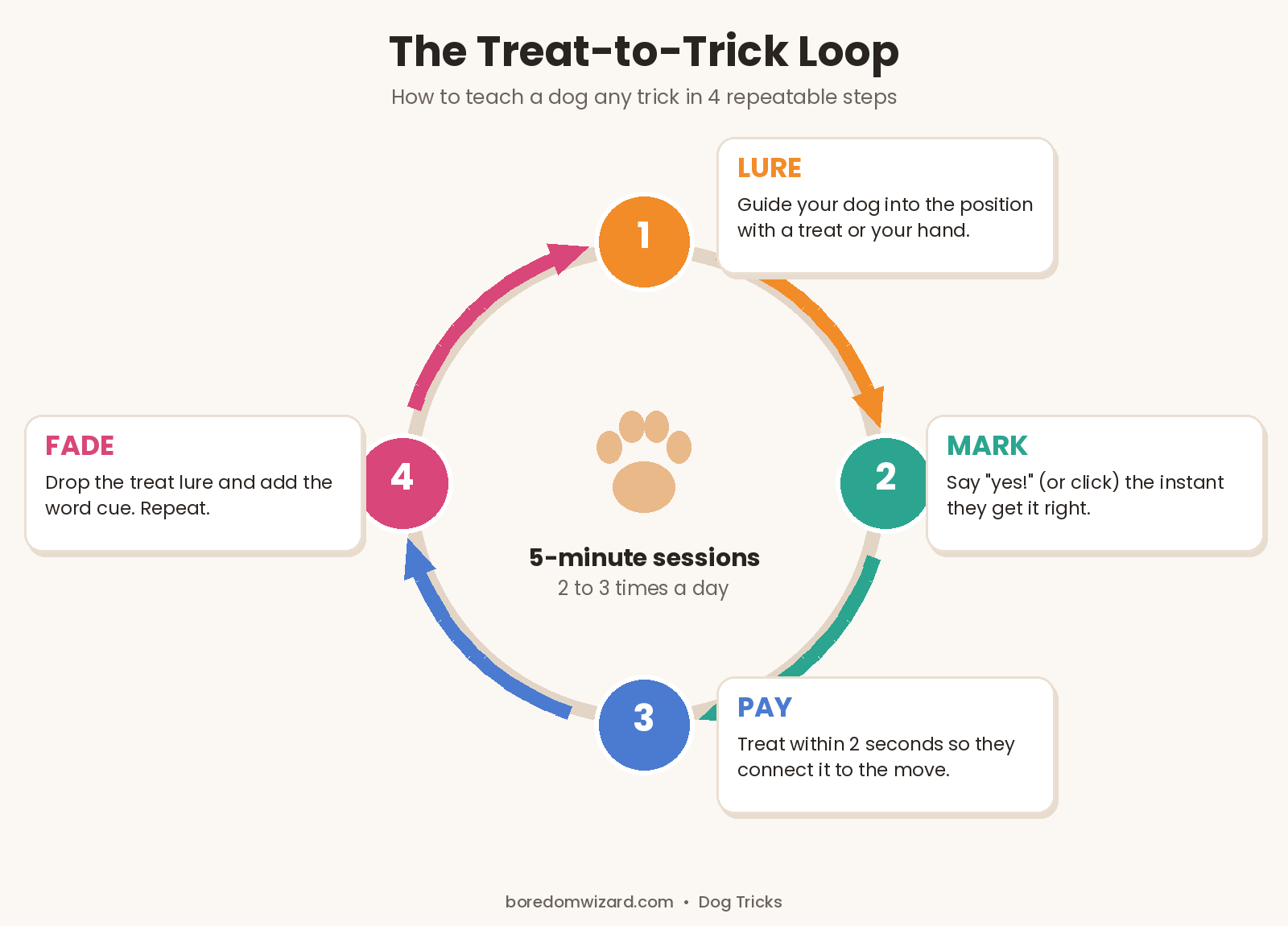
A four-step, reward-based method for teaching your dog any trick in short 5-minute sessions.
Total Time: 5 minutes
Lure
Hold a small, soft treat at your dog’s nose and use it to guide them into the position you want.
Mark
Say “yes!” or click a clicker the instant your dog gets the position right.
Pay
Give the treat within about two seconds so your dog connects the reward to the move.
Fade
After a few successes, use an empty hand in the same motion, then add the word cue just before the hand signal.
What you need: pea-sized soft treats, a quiet room, and 5 minutes. Use a single marker word (“yes!”) or a clicker, and always stop while your dog is still having fun.
- Lure: guiding your dog with a treat. Fast, but fade it early so your dog doesn’t need food in your hand.
- Capture: rewarding something your dog does naturally, like a bow when they stretch or a bark.
- Shape: rewarding small steps toward the final trick, such as a paw lift on the way to a wave.
Every method here is reward-based. The American Veterinary Society of Animal Behavior recommends reward-based training for all dogs, so there’s no place for scolding, collar corrections or pushing your dog into position.
Easy tricks to teach your dog (start here)
These easy dog tricks and simple dog tricks need no props and no prior training beyond a sit. They’re the best tricks to teach your dog first because each one takes only a few short sessions.
1. Touch (hand target)
Best for: every dog, including puppies; it’s the foundation for bell ringing, closing doors and more.
- Hold your flat palm a few inches from your dog’s nose.
- The moment their nose bumps your hand, mark “yes” and treat.
- Repeat, moving your hand a little to the left, right and higher.
- Add the cue “touch” just before you present your hand.
2. Shake
Best for: every dog; it’s one of the most common dog tricks.
- Ask your dog to sit and hold a treat in a closed fist near the floor.
- Wait. When they paw at your hand, mark “yes” and open your hand.
- Gradually raise your fist and switch to an open palm.
- Add the cue “shake” as you offer your hand.
3. High five
Best for: every dog that already knows shake.
- Ask for a shake, but turn your palm to face your dog like a high five.
- Mark and treat as their paw touches your palm.
- Raise your hand a little higher over a few sessions.
- Add the cue “high five”.
4. Wave
Best for: show-offs who already know high five.
- Ask for a high five, then pull your hand just out of reach.
- Mark the moment your dog lifts their paw in the air.
- Reward bigger, higher paw lifts.
- Add the cue “wave” and wave your own hand as a signal.
5. Spin
Best for: high-energy dogs that need to burn off steam.
- Hold a treat at your dog’s nose.
- Slowly guide them in a full circle, keeping the treat at nose height.
- Mark and treat when they finish the circle.
- Fade the treat to a circling hand signal and add the cue “spin”.
Tip: teach the other direction separately with a different word, like “twirl”.
6. Bow
Best for: every dog; it’s often captured when dogs stretch.
- With your dog standing, hold a treat at their nose.
- Lower it straight down toward the floor between their front paws.
- Mark the moment their elbows touch the floor while their back end stays up.
- Treat quickly before they lie all the way down, then add the cue “bow”.
7. Speak and quiet
Best for: vocal dogs; teaching “quiet” is the useful half.
- Get your dog excited with a toy until they give a small bark.
- Mark and reward that bark, then add the cue “speak”.
- After a speak, wait for a pause in barking.
- Mark the silence, reward it and add the cue “quiet”.
8. Find it
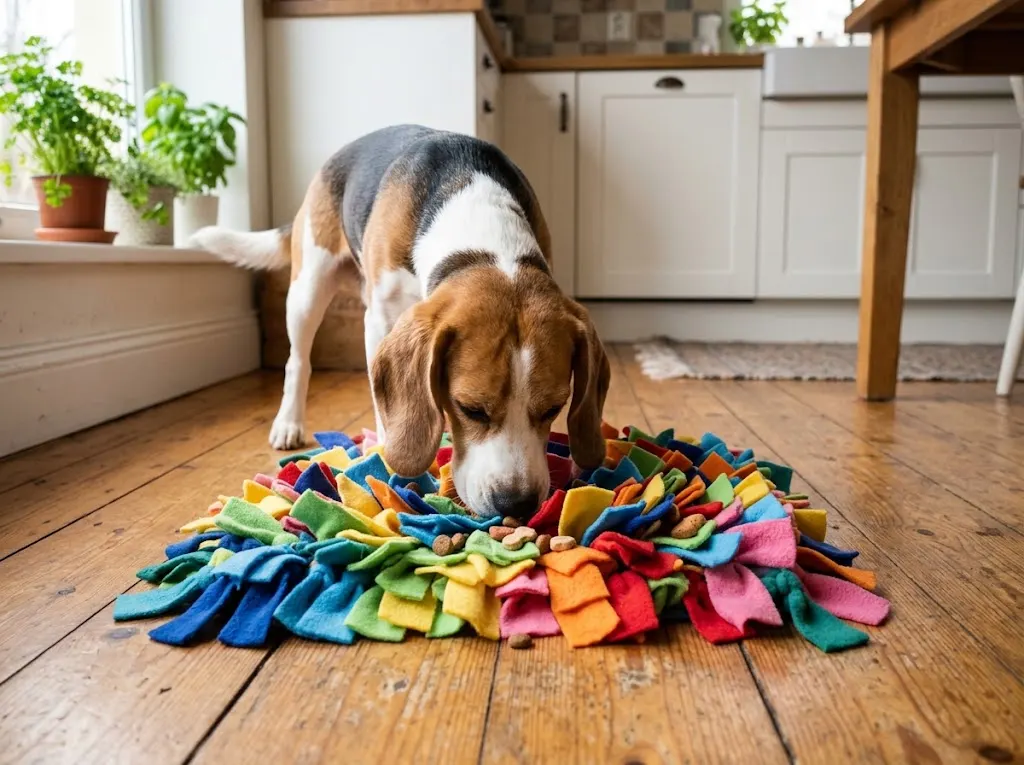
Best for: bored dogs and seniors; it’s a nose game that tires dogs out fast.
- Say “find it” and toss a treat on the floor where your dog can see it.
- Next, toss it a little farther away or behind a chair leg.
- Then hide treats around the room while your dog waits.
- Release them with “find it” and let their nose do the work.
Tip: five minutes of sniffing games is one of the best things to do with a bored dog on a rainy day.
Useful tricks to teach your dog
These useful tricks to teach your dog double as everyday manners. They make walks safer and the house calmer.
9. Leave it
Best for: every dog; it can stop your dog from grabbing something dangerous.
- Hold a treat in a closed fist and let your dog sniff it.
- The moment they back off, mark “yes” and reward from your other hand.
- Never give them the treat they were told to leave.
- Add the cue “leave it”, then practice with a treat on the floor under your foot.
10. Drop it
Best for: chewers and toy-guarders.
- While your dog holds a toy, put a tasty treat at their nose.
- Say “drop it” as they open their mouth for the treat.
- Mark and reward, then give the toy back so dropping it never means losing the fun.
11. Go to your mat
Best for: busy homes, doorbells and dinner time.
- Lure your dog onto a mat or bed.
- Mark and treat when all four paws are on it.
- Toss the next treat off the mat to reset, then let them go back on their own.
- Add the cue “mat” and slowly build how long they stay.
12. Back up
Best for: every dog; it’s great for body awareness.
- Stand facing your dog in a narrow hallway.
- Take a small step toward them. Mark and treat any step backward.
- Build to two or three steps, then add the cue “back”.
13. Ring a bell
Best for: potty training; teach touch first.
- Hang a bell at nose height by the door you use for potty trips.
- Ask for a “touch” on the bell. Mark and treat the jingle.
- Before every potty trip, have your dog ring the bell, then go straight outside.
Tip: only open the door for bell rings at potty time, or your dog will learn to ring it just to play outside.
Fun and cool tricks to teach your dog
These fun tricks to teach your dog are the crowd-pleasers. They’re also cool dog tricks for videos, and the funny dog tricks friends will ask to see again.
14. Roll over
Best for: healthy adult dogs comfortable lying on their back.
- Ask your dog to lie down.
- Move a treat from their nose toward their shoulder so they tip onto their side.
- Keep moving the treat over their back so they roll all the way over.
- Mark and treat at the end, then add the cue “roll over”.
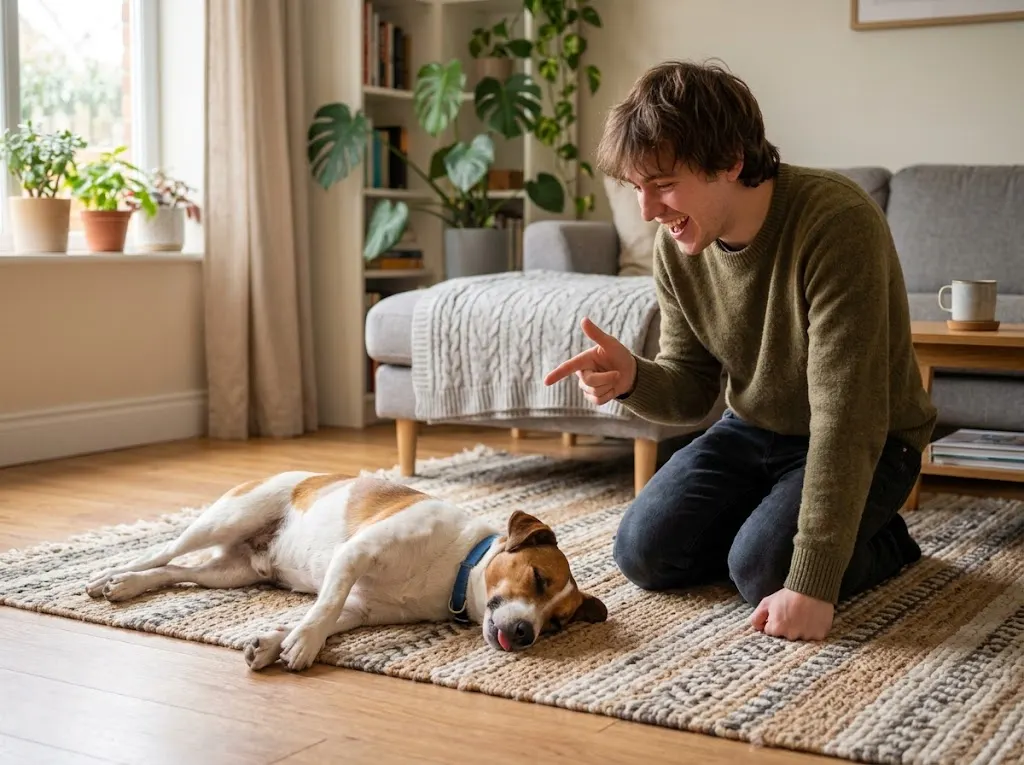
15. Play dead
Best for: party tricks; teach down first.
- Ask for a down, then lure your dog onto their side.
- Mark and treat the moment their head rests on the floor.
- Build to a second or two of stillness.
- Add a finger-gun signal and the cue “bang!”.
16. Crawl
Best for: small and medium dogs; teach down first.
- Ask for a down and hold a treat at your dog’s nose, close to the floor.
- Pull the treat slowly forward a few inches.
- Mark any forward shuffle that keeps their belly low.
- Build to a longer crawl and add the cue “crawl”.
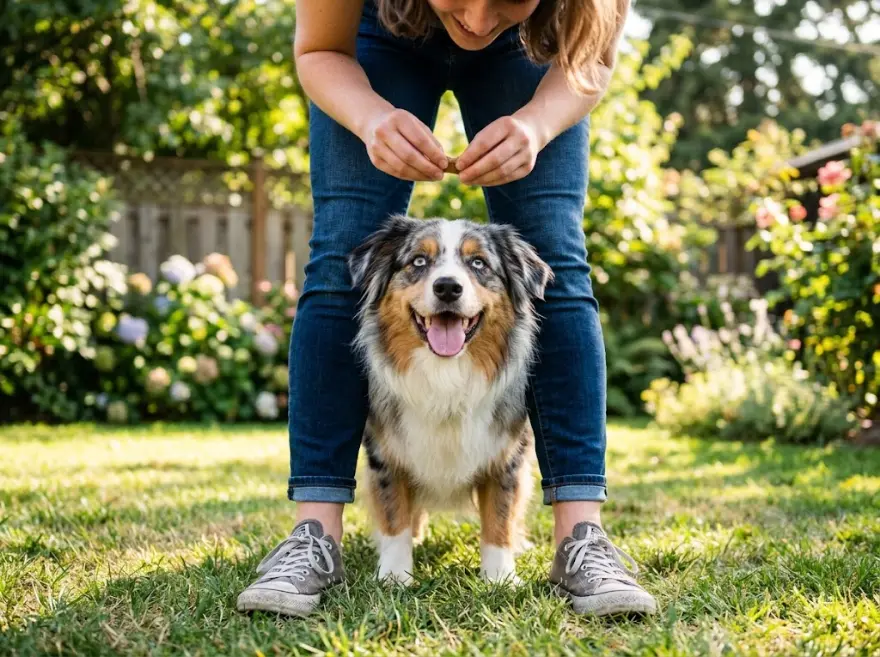
17. Peekaboo
Best for: every dog; it makes a great photo.
- Stand with your feet apart and your dog behind you.
- Lure them forward through your legs with a treat.
- Mark and treat when their head pokes out between your legs.
- Hold the treat there for a second or two, then add the cue “peekaboo”.
18. Leg weave
Best for: agile dogs that already know spin.
- Take a big step forward with your right foot.
- Lure your dog through your legs from left to right.
- Step forward with your left foot and lure them back through.
- Mark each pass and build a smooth figure eight.
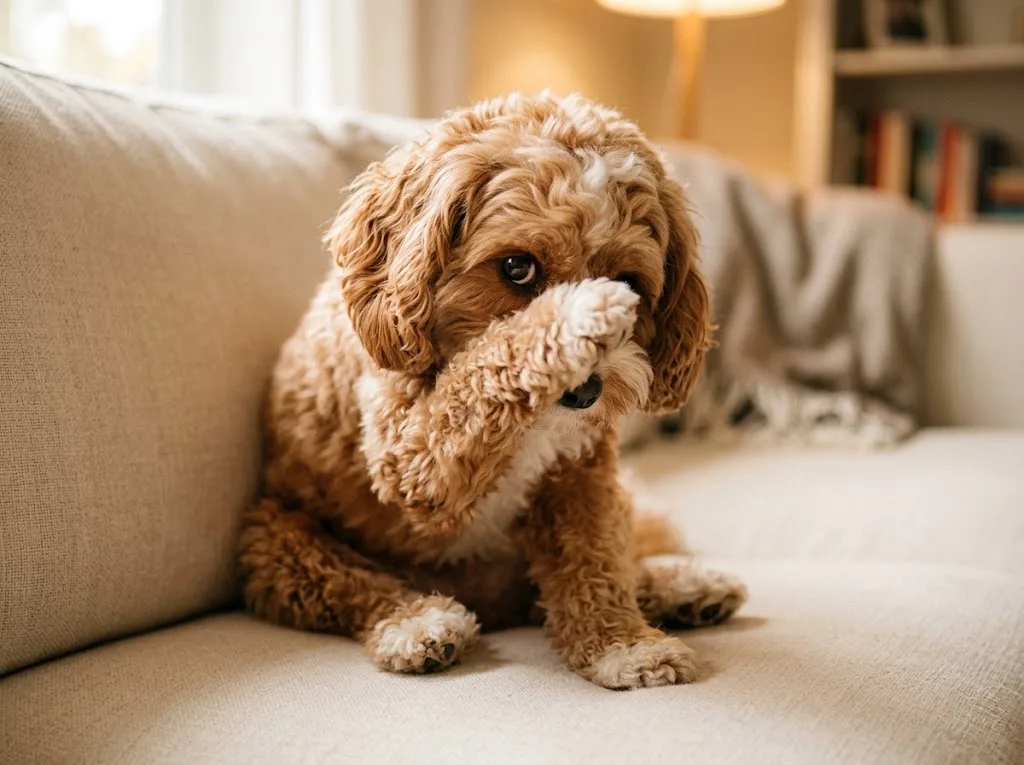
19. Cover your eyes
Best for: show-offs who already know wave.
- Stick a small piece of painter’s tape or a sticky note lightly on your dog’s snout.
- When they swipe at it with a paw, mark and treat.
- Remove the tape once they swipe reliably and add the cue “shy”.
Tip: use low-tack tape and only for a few seconds at a time.
20. Sit pretty
Best for: healthy adult dogs with a strong core.
- From a sit, hold a treat just above your dog’s nose.
- Raise it slowly so their front paws lift off the floor.
- Mark and treat even a tiny lift, and support their chest if they wobble.
- Build balance slowly over many sessions.
Tip: skip this one for puppies, long-backed breeds like dachshunds, and any dog with back or hip problems. Ask your vet if you’re unsure.
Advanced dog tricks to teach your dog
These advanced dog tricks combine skills your dog already knows, so save these advanced tricks to teach your dog for when the basics are solid. They’re unique tricks to teach your dog that will make people do a double take.
21. Tidy up toys
Best for: clever dogs that know drop it.
- Hold a toy basket under your dog’s mouth while they hold a toy.
- Say “drop it” so the toy lands in the basket. Mark and treat.
- Gradually put the basket farther away so they carry the toy to it.
- Add the cue “tidy up”.
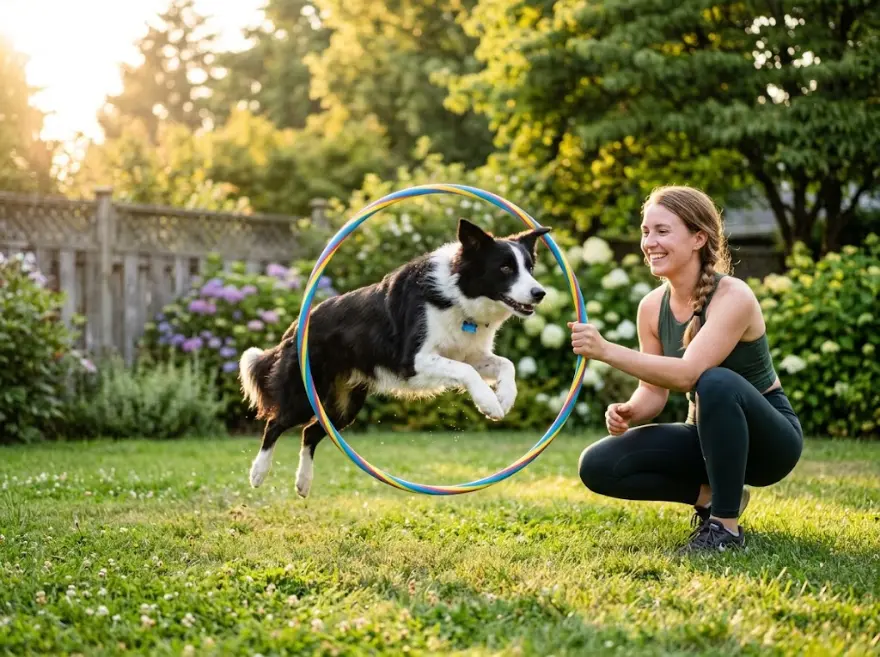
22. Jump through a hoop
Best for: adult dogs only; skip it for puppies.
- Hold a hula hoop upright with its bottom touching the floor.
- Lure your dog to walk through it. Mark and treat.
- Raise it only a few inches at a time over many sessions.
- Add the cue “hoop”.
Tip: the American Kennel Club advises against repetitive, high jumping for young dogs, so keep the hoop low and wait until your dog is fully grown.
23. Say your prayers
Best for: medium and large dogs that know touch.
- Have your dog put their front paws on a low, stable stool.
- Lure their head down between their paws with a treat.
- Mark and treat the moment their head dips, and build a short hold.
- Add the cue “say your prayers”.
24. Fetch by name
Best for: retrievers and herding breeds.
- Start with one toy and say its name every time you play with it.
- Put that toy on the floor alone and ask for it by name. Mark and treat.
- Add a second toy and only reward the named one.
- Add toys one at a time.
25. Close the door
Best for: clever dogs that know touch.
- Put a sticky note on a light door at nose height.
- Ask for a “touch” on the note. Mark and treat each nose bump.
- Wait for a harder push, and reward when the door moves.
- Remove the note and add the cue “close it”.
Turn tricks into a routine: 3 trick chains
Once your dog knows a few tricks, chain them into a 30-second show. Chains keep training fresh, which matters a lot for a bored dog.
| Trick chain | Sequence | Best for |
|---|---|---|
| The Greeting | Sit, shake, high five, wave, bow | Guests and video clips |
| The Party Trick | Spin, bow, play dead, roll over, bow | Family gatherings |
| The Calm-Down | Go to your mat, down, find it | Before guests or bedtime |
Dog trick troubleshooting
| Problem | Likely cause | Fix |
|---|---|---|
| My dog loses interest | Sessions too long or treats too boring | Stop after 5 minutes and use softer, smellier treats |
| My dog only works for food in my hand | The lure wasn’t faded | Switch to an empty hand and pay from your pocket |
| My dog keeps lying down during bow | Treat lowered too far or too slow | Mark faster, the instant the elbows dip |
| My dog jumps up for the treat | Treat held too high | Keep the lure at nose height |
| My dog guesses tricks randomly | Cue added too early | Go back to the hand signal before adding words |
| My dog won’t learn a new trick | Missing a step | Teach the “teach first” trick from the picker table |
Is your dog bored? 8 signs and what to do
Wondering “is my dog bored?” A bored dog usually shows it through behavior: chewing, digging, attention barking, pacing, or following you around the house. Short daily trick sessions, sniffing games and food puzzles give their brain the work it’s missing.
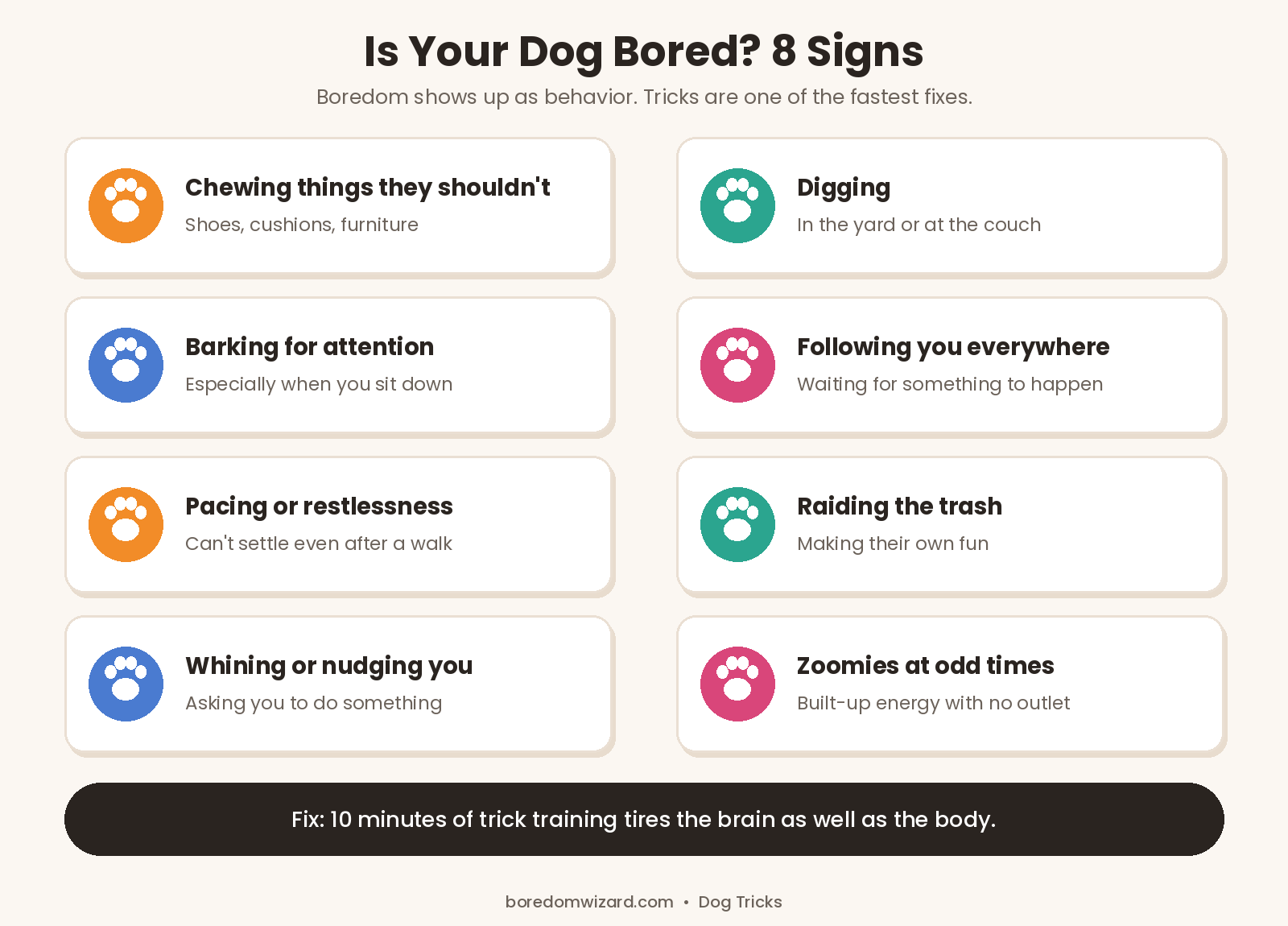
If you’re wondering how to tell if your dog is bored, compare the behavior to their routine: it usually shows up on low-activity days. Mix in a 5-minute trick session, a find it game, and dog toys for bored dogs like snuffle mats and treat-dispensing balls. Any sudden behavior change is worth a chat with your vet, since pain or illness can look like boredom.
Earn a trick title: the AKC Trick Dog program
Want a goal? The AKC Trick Dog program awards titles for tricks your dog can perform, and many tricks on this list count toward them.
| AKC Trick Dog title | What’s required |
|---|---|
| Novice (TKN) | 10 novice tricks |
| Intermediate (TKI) | 10 intermediate tricks, after Novice |
| Advanced (TKA) | 10 advanced tricks, after Intermediate |
| Performer (TKP) | A routine of at least 10 tricks, including props |
| Elite Performer (TKE) | A scripted routine with at least 5 props |
Safety rules for teaching dog tricks
- Reward, never punish: use treats, toys and praise only.
- Protect growing joints: the American Kennel Club says puppies shouldn’t do high or repetitive jumping until they’re at least 12 to 15 months old, and longer for giant breeds.
- Know your dog’s body: skip sit pretty and jumping tricks for dogs with back, hip or joint problems.
- Watch the treats: count training treats as part of your dog’s daily food, and use tiny pieces.
- End on a win: finish every session with a trick your dog knows well.
Dog tricks FAQ
What is the easiest trick to teach a dog?
Touch (hand target) is usually the easiest trick to teach a dog. Hold your palm near their nose, mark “yes” when they bump it, and reward. Most dogs get it in one or two short sessions.
What tricks can I teach my dog?
Start with easy tricks like touch, shake, spin, bow and find it. Then move on to useful tricks like leave it and go to your mat, fun tricks like play dead and peekaboo, and advanced tricks like tidy up toys.
Can you teach an old dog new tricks?
Yes. Senior dogs learn new tricks well with short sessions and soft treats. Choose low-impact tricks like touch, find it, shake and go to your mat, and skip jumping or sit pretty if they have joint issues.
How long does it take to teach a dog a trick?
Easy tricks often take a few 5-minute sessions. Fun and advanced dog tricks can take a few weeks of regular practice. Every dog is different, so focus on progress, not speed.
How often should I train my dog to do tricks?
Two or three 5-minute sessions a day work better than one long session. Short sessions keep your dog focused and end before they get bored.
What are the most common dog tricks?
Sit, shake, high five, spin, roll over and play dead are among the most common dog tricks. They’re popular because they’re quick to teach and fun to show off.
What treats are best for teaching dog tricks?
Small, soft, smelly treats that your dog loves, cut into pea-sized pieces. Save the highest-value treats for the hardest tricks.
Can puppies learn tricks?
Yes. Puppies can learn simple tricks like touch, sit, spin and find it. Avoid jumping tricks and sit pretty until they’re fully grown.
How many tricks can a dog learn?
There’s no fixed limit. Many dogs learn dozens of tricks when they’re taught one at a time and practiced regularly.
Should I use a clicker to teach dog tricks?
A clicker is optional. A short marker word like “yes!” works just as well as long as you say it at the exact moment your dog gets it right.
Are dog tricks good for bored dogs?
Yes. Trick training is mental exercise, which helps tire out a bored dog and can reduce chewing, digging and attention barking.
What are the best tricks to train your dog first?
The best tricks to train your dog first are touch, sit, leave it and go to your mat. They are quick to learn, useful every day, and they make every later trick easier.
How do I keep my dog from being bored when home alone?
Before you leave, do a 5-minute trick session and a short sniff walk. Then leave a food puzzle, a stuffed chew toy or a snuffle mat so your dog has a job while you are out.
What is the hardest dog trick?
Tricks that chain several skills, like tidy up toys, fetch by name and close the door, are among the hardest because your dog has to understand each step.
Start with one trick tonight
Pick one easy trick from the list, grab a handful of treats and set a 5-minute timer. That’s all it takes to turn a bored evening into the best part of your dog’s day. Trick training is also one of the best things to do when bored with no money, a perfect rainy day activity and a great break when working from home.
Kids love helping, too: it’s one of our favorite things to do when bored for kids. And if you’d rather put the phone down for good, see our things to do instead of doomscrolling. Looking for a skill of your own? Try easy card tricks, learn some skateboard tricks, or take our hobby quiz.