25 Interesting Things to Do When Bored as a Stay-at-Home Mom in 2026
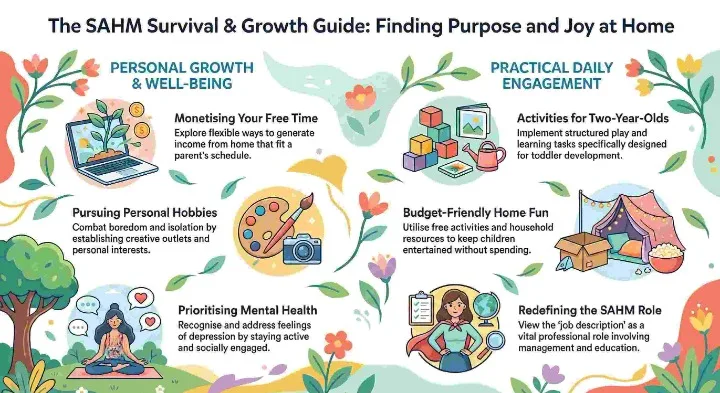
Things to do when bored as a stay-at-home mom feels like a confession you are not supposed to make. You are surrounded by children who need you constantly. The house needs cleaning. The laundry is never done. How can you possibly be bored? And yet: the repetition of the same tasks in the same rooms on the same schedule produces a specific kind of brain boredom that has nothing to do with having free time and everything to do with having no variety. You are busy and bored at the same time, and that combination is more exhausting than either one alone.
The 25 best things to do when bored as a stay at home mom include starting a sourdough starter experiment, building a nap-time microlearning habit on YouTube or Coursera, launching a small Etsy shop with digital prints, creating a family time capsule, starting an indoor herb garden, doing a zero-waste craft project with your kids, beginning a capsule wardrobe closet edit, trying slow cooker experiments with cuisines you have never cooked, starting a bird watching journal with your children, and 16 more ideas designed specifically for the windows of time, energy, and identity that stay-at-home motherhood actually provides.
This is not a list of things to do with your kids. Your kids already have your attention for most of the day. This is a list of things for you — the person inside the mom — during nap time, after bedtime, during independent play, and in the 20-minute windows that appear and disappear without warning. These 25 activities were chosen because they fit inside the fragmented time reality of stay-at-home life and because each one gives you back a piece of the identity that repetitive domestic routines slowly erode.
The Stay-at-Home Boredom Map — 5 Types Most Moms Never Name
Stay-at-home-mom boredom is not one thing. It is 5 different things wearing the same label, and each one needs a different fix.
| Boredom Type | What It Actually Feels Like | What Fixes It | Activities |
| Repetition Boredom | Same tasks, same rooms, same routine. Groundhog Day with diapers. | Novelty: new recipes, new skills, new projects that break the pattern. | 1–5 |
| Identity Boredom | You miss who you were before kids. Your brain craves adult-level stimulation. | Learning and creating: courses, writing, selling, building something that is yours. | 6–10 |
| Isolation Boredom | Not lonely exactly, but starved for adult conversation and shared experience. | Connection: local groups, letter swaps, community involvement, friendship projects. | 11–15 |
| Trapped Boredom | Cannot leave the house. Kids are napping, sick, or the weather is bad. | Indoor micro-projects that fit in 15–30 minute nap windows. | 16–20 |
| Guilt Boredom | Bored but feel guilty admitting it. Equating boredom with ingratitude. | Self-care and self-permission: activities that are explicitly for you, not for the house or the kids. | 21–25 |
Identify your type right now. Skip to that section. You do not need all 25 ideas. You need the 5 that match what your brain is actually asking for today.

When Every Day Feels Like the Same Day (Activities 1–5)
1. Start a Sourdough Starter and Bake With It Weekly
Creating a sourdough starter from flour and water gives you a living kitchen project that demands daily attention, produces fresh bread weekly, and introduces genuine unpredictability into a routine that has none.
Mix equal parts flour and water in a jar. Feed it daily. In 7 days you have an active starter. From that point, you bake one loaf per week — each one slightly different based on temperature, timing, and technique. Sourdough starter experiments break the repetition cycle because the process is never identical twice. The dough rises differently. The crust varies. The crumb structure changes. Your kids can help with shaping, and the kitchen smells like something worth waking up for.
This works because it introduces a project with a living timeline into your week. The starter needs feeding whether you are bored or not, and that small daily obligation anchors the monotonous days with something that grows and produces. If cooking sparks your interest, our guide on things to cook when bored has recipe-based projects organized by time and difficulty.
| Detail | Info |
| Time Required | 10 min daily feeding, 3–4 hrs bake day |
| Cost | Under $5 (flour, water) |
| Energy Level | Low daily, Medium on bake day |
| Best Window | Daily morning feed, bake on weekends or nap time |
| What You Need | Flour, water, jar, oven |
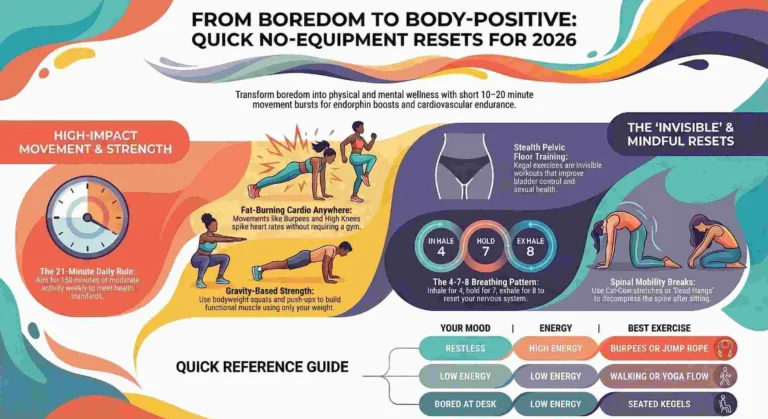
2. Try a New Cuisine Every Week Using Slow Cooker Experiments
Choosing one unfamiliar cuisine per week and making it in a slow cooker lets you explore the world from your kitchen while dinner cooks itself during the chaos hours.
Week 1: Moroccan tagine. Week 2: Japanese curry. Week 3: Mexican birria. Week 4: Indian dal. Search Pinterest or YouTube for “slow cooker [cuisine]” and pick a recipe. Prep takes 15 to 20 minutes in the morning. The slow cooker does the rest. By dinner, your house smells like a country you have never visited, and the meal is ready during the exact window when your energy is lowest and your kids are loudest.
Slow cooker experiments work for stay at home moms because they front-load the effort into the morning — when energy is highest — and deliver the result during the evening — when energy is lowest. That timing alignment is the whole trick. If you are looking for recipe inspiration beyond the slow cooker, HelloFresh and Blue Apron offer meal kits that add variety without requiring recipe research.
| Detail | Info |
| Time Required | 15–20 min prep, 6–8 hrs passive cook |
| Cost | $10–$20 per meal |
| Energy Level | Low (prep only) |
| Best Window | Morning prep, evening result |
| What You Need | Slow cooker, grocery list, one new recipe |
3. Create a Nature Scavenger Hunt Template for Weekly Outdoor Trips
Designing a printable scavenger hunt list and using it every time you go to a park, local stream, pond, or county park turns repetitive outings into a game your kids look forward to and you actually enjoy.
Make a list of 15 things to find: a smooth rock, something yellow, a feather, a bug, a leaf bigger than your hand, something that makes noise. Print 5 copies. Bring one on every park trip. Your kids search. You walk. The park that felt boring last Tuesday feels different because the hunt gives it structure. Update the list monthly with seasonal items: spring flowers, fall acorns, summer insects, winter animal tracks. Nature scavenger hunts transform the playground visit from a supervision shift into a shared project.
This works because it gives you a reason to be present during outings instead of just watching. Your brain has a task. Your kids have a mission. Everyone is engaged. If outdoor activities with kids are something you want more of, our guide on things to do when bored on a rainy day has indoor alternatives for the days when weather cancels the park plan.
| Detail | Info |
| Time Required | 10 min to design, 30–60 min per outing |
| Cost | Free |
| Energy Level | Low to Medium |
| Best Window | Weekday mornings, weekend family time |
| What You Need | Paper, pen, outdoor location |
4. Start an Indoor Herb Garden on Your Kitchen Windowsill
Planting 3 to 5 herbs in pots on your windowsill gives you a living project that demands 2 minutes of daily care, teaches your kids about growing things, and produces ingredients you actually use.
Buy basil, rosemary, mint, cilantro, and thyme as starter plants from a grocery store for under $15 total. Place them on a sunny windowsill. Water daily. Let your kids help — watering herbs is a perfect toddler task. Use the herbs in cooking. An indoor herb garden breaks the repetition of motherhood because it introduces growth into a routine that often feels static. The plants change daily. The basil gets taller. The mint spreads. Something in your kitchen is visibly alive and different every morning.
If gardening sparks something deeper, seed starting indoors during winter is a natural next step that extends the project into spring. For more home transformation projects, our guide on home decor ideas to explore when bored has 53 ideas that turn domestic spaces into creative projects.
| Detail | Info |
| Time Required | 2 min daily watering, 15 min initial setup |
| Cost | Under $15 |
| Energy Level | Low |
| Best Window | Morning routine with kids |
| What You Need | Pots, soil, herb plants, windowsill with light |
5. Build a Weekly “Themed Day” Schedule for Your Family
Assigning a loose theme to each weekday — Music Monday, Trail Tuesday, Watercolor Wednesday — gives the week a rhythm that prevents the “every day is the same” feeling without requiring rigid planning.
Write 5 themes, one per weekday. Monday: music (play instruments, dance, make playlists). Tuesday: outdoor (park, local stream, splash pad, pond). Wednesday: art (watercolors, homemade play dough, zero waste crafts). Thursday: learning (library, local children’s museum, YouTube documentaries). Friday: social (friend’s house, play cafe, playground meetup). The themes are suggestions, not obligations. Some weeks you hit all 5. Some weeks you hit 2. The structure is what matters — it gives Monday a different feel from Wednesday, and that variation is the antidote to repetition boredom.
Lucy from Mama of Minis recommends a similar approach for stay at home moms, and the Balanced Mom Checklist framework supports it: variety across the week prevents the monotony that makes individual days feel endless.
| Detail | Info |
| Time Required | 15 min to plan, ongoing |
| Cost | Free |
| Energy Level | Low |
| Best Window | Sunday evening planning, daily execution |
| What You Need | Paper, pen, willingness to be flexible |

When You Miss Who You Were Before Kids (Activities 6–10)
6. Build a Nap-Time Microlearning Habit — 15 Minutes Per Day
Using 15 minutes of every nap time to learn something on YouTube, Coursera, or Skillshare gives you daily intellectual stimulation that has nothing to do with parenting.
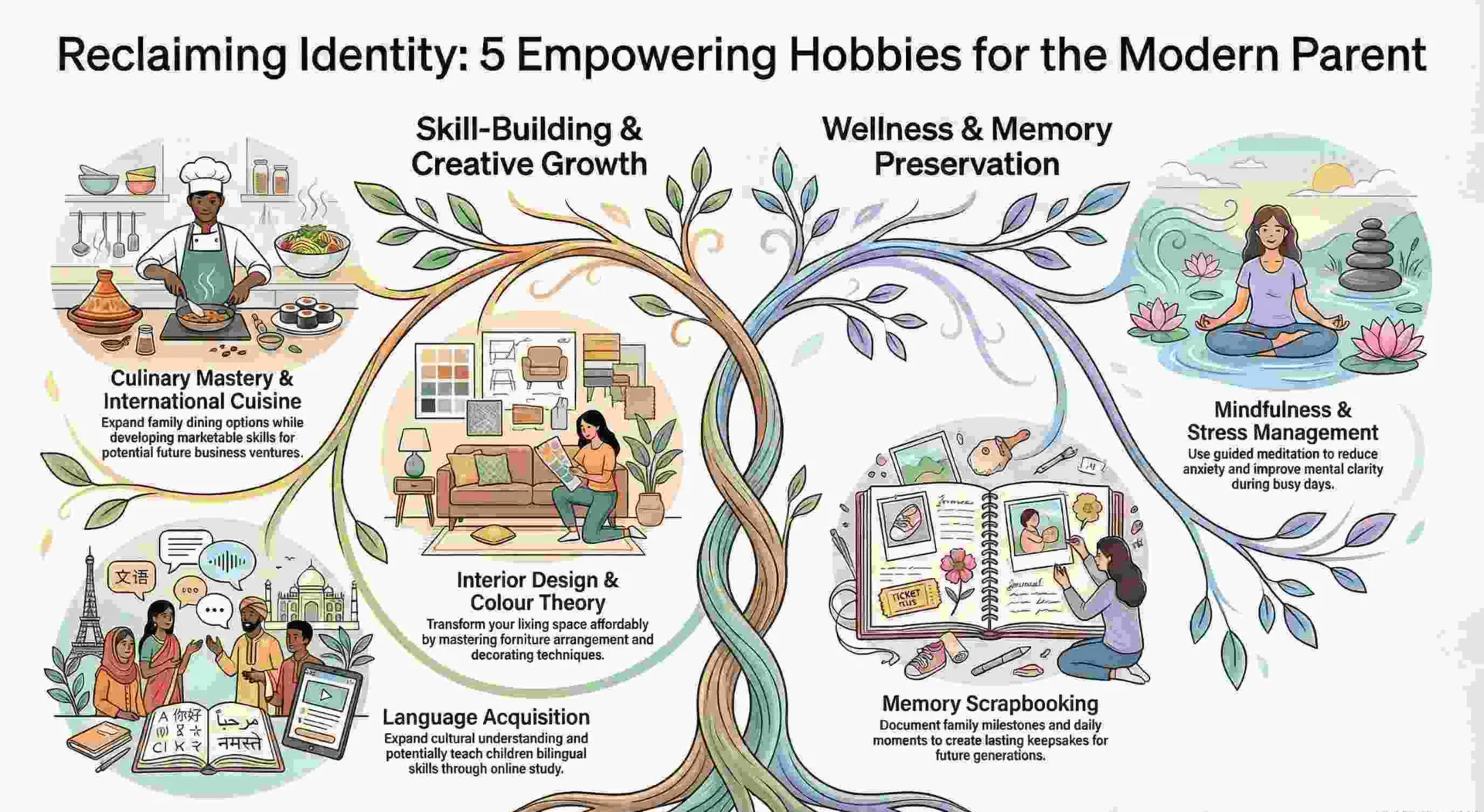
Pick a topic: photography, graphic design, business fundamentals, psychology, coding, creative writing, a new language on Duolingo. Watch one lesson per nap. Take notes if you want. The topic does not need to lead anywhere. It just needs to engage the part of your brain that motherhood does not use. Nap time microlearning works because it fits the fragmented schedule of stay at home life — 15 minutes is realistic, and the daily consistency compounds into genuine knowledge over weeks.
This is one of the best things to do as a stay at home mom because it is explicitly for you. Not for the house. Not for the kids. For the person you are outside of motherhood. If learning sparks career thinking, our guide on things to do when bored for adults has professional development activities that scale from casual to serious.
| Detail | Info |
| Time Required | 15–25 minutes per session |
| Cost | Free to $15/month |
| Energy Level | Low |
| Best Window | Nap time, after bedtime |
| What You Need | Phone or laptop, headphones |
7. Launch a Small Etsy Shop Selling Digital Prints
Creating and listing 10 digital prints on Etsy takes one focused weekend and gives you a micro-business that generates passive income while you sleep — or while your kids sleep.
Digital prints are downloadable art files: wall quotes, nursery art, planners, checklists, seasonal decor. Design them in Canva (free). List them on Etsy ($0.20 per listing). Customers buy and download instantly — no shipping, no inventory, no leaving your house. The initial setup takes 5 to 8 hours spread across nap times and evenings. After that, the shop runs itself. You add new designs when you are bored, and each one becomes a potential sale forever.
An Etsy shop works for stay at home moms because it requires zero childcare and zero start-up capital beyond the listing fees. It also gives you something to build that is entirely yours — your designs, your brand, your income. If you are interested in more income-generating ideas, babysitting, walking dogs, cleaning houses, and selling on Amazon are other home-based options that fit around childcare schedules.
| Detail | Info |
| Time Required | 5–8 hours initial setup, 1–2 hrs/week ongoing |
| Cost | Under $5 to start |
| Energy Level | Medium |
| Best Window | Nap times, evenings, one focused weekend |
| What You Need | Canva (free), Etsy account, creativity |
8. Start Writing — A Blog, A Journal, A Memoir, Anything
Writing for 20 minutes during nap time — a blog post, a journal entry, a chapter of the memoir you keep thinking about — exercises the part of your brain that motherhood leaves idle.
You do not need to publish. You do not need an audience. You need a notebook or a laptop and 20 minutes of quiet. Write about your day. Write about what motherhood actually feels like, not what Instagram says it should feel like. Write about the life you had before kids and the life you are building now. Write about the boredom itself — name it, describe it, examine it. The act of writing transforms experience into meaning, and that transformation is what bored brains are craving.
If writing becomes something you enjoy, blogging is a natural next step — and it can become income-generating over time. If you prefer reading over writing, our guide on books to read when bored has curated lists by genre that are perfect for nap-time reading sessions.
| Detail | Info |
| Time Required | 15–30 minutes |
| Cost | Free |
| Energy Level | Low |
| Best Window | Nap time, after bedtime, early morning |
| What You Need | Notebook or laptop |
9. Take One Online Course Module Per Week on a Topic You Loved Before Kids
Completing one module per week of a course on a pre-motherhood interest — art history, marketing, psychology, music theory — reconnects you to the person you were and the person you are becoming.
Think about what you were interested in before children. Not what was practical. What was interesting. Psychology? Art? Business? Coding? Science? Go to Coursera, YouTube, or Skillshare and find a course on that topic. Complete one module per week. One. That is 20 to 40 minutes. Over 3 months, you will have finished an entire course — and you will have a weekly appointment with a version of yourself that motherhood did not create.
This is different from nap-time microlearning because it is intentionally connected to your pre-motherhood identity. The topic matters. Choose something that reminds you of who you were at 22, at 25, at 28 — before the house and the kids and the laundry became the whole landscape. For more structured self-improvement during downtime, our guide on how to build a dopamine menu when bored gives you a framework for choosing activities by reward type.
| Detail | Info |
| Time Required | 20–40 minutes per week |
| Cost | Free to $15/month |
| Energy Level | Low |
| Best Window | Nap time, one consistent day per week |
| What You Need | Laptop, headphones, course platform |
10. Build a Flip Furniture Side Project
Buying a cheap piece of furniture from a thrift store or Facebook Marketplace, refinishing it, and selling it for a profit gives you a hands-on creative project with a visible result and potential income.
Find a nightstand, a dresser, or a chair for under $20. Sand it. Paint it. Replace the hardware. Sell it for $60 to $150. The whole project takes 3 to 5 hours spread across multiple nap times. Flip furniture as a hobby or as a micro-business — either way, you get a creative outlet, a physical project, and the satisfaction of transforming something worn out into something someone wants to buy.
This works for stay at home moms because the work happens in your garage or back deck on your schedule, and the kids can be nearby (supervised) during sanding and painting. The investment is low, the creative satisfaction is high, and the profit is real.
| Detail | Info |
| Time Required | 3–5 hours total spread across sessions |
| Cost | $20–$40 investment, $60–$150 return |
| Energy Level | Medium to High |
| Best Window | Nap times, weekends, garage or outdoor |
| What You Need | Thrift furniture, sandpaper, paint, brushes |
Natty’s take: I successfully pursue my career while raising 4 kids. I am not saying that to brag — I am saying it because the identity question is real. The part of you that misses working, creating, building, and being recognized for something other than keeping children alive — that part is not selfish. It is essential. Feed it during nap time. Feed it after bedtime. Feed it in the 15-minute windows. The version of you that emerges is a better mother, not a worse one.

When You Are Starved for Adult Connection (Activities 11–15)
11. Join a Local Moms Group or Start One
Attending one local moms group meetup per week gives you scheduled adult conversation, shared experience, and proof that other mothers feel exactly the way you do.
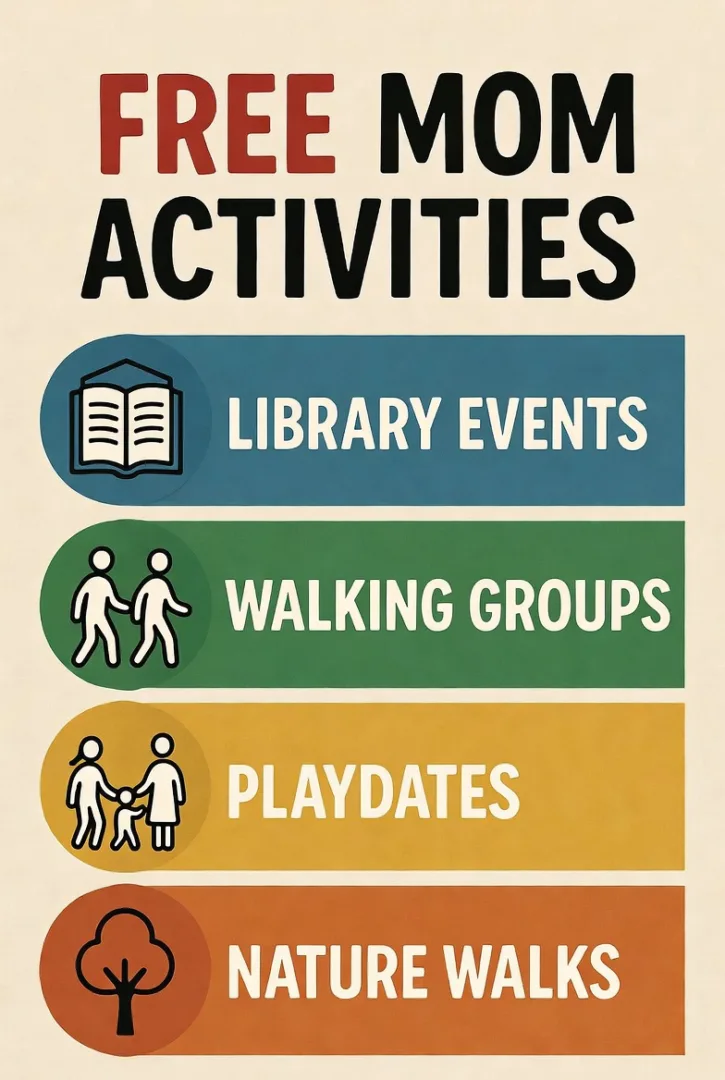
Search Facebook for “[your city] moms group.” Check your library for free storytimes — the parents standing around during story time are your people. Look for local activity classes: music class, baby gym, open gym at the YMCA. Play cafes. Trampoline parks with toddler hours. The venue does not matter. What matters is showing up regularly to the same group until the faces become familiar and the conversations become real.
If your local options are limited, Meetup has parenting groups in most areas. If you are in a rural area, online communities on Reddit (r/sahm, r/beyondthebump) provide connection that is available at 2 AM when the house is quiet and the loneliness is loudest. For more social activities that work for introverts and extroverts, our guide on things to do when bored with friends has structured group ideas.
| Detail | Info |
| Time Required | 1–2 hours per meetup |
| Cost | Free to $10 (activity fee) |
| Energy Level | Medium |
| Best Window | Weekday mornings, playground hours |
| What You Need | Transportation, one willing attempt |
12. Start a Handwritten Letter Swap With Another Mom
Finding one other mom and exchanging handwritten letters once a month gives you a creative outlet, a connection ritual, and something in the mailbox that is not a bill.
Ask one friend — a college friend, a childhood friend, a mom from your group — if she wants to swap letters monthly. Write about real life, not highlight-reel life. What the days actually feel like. What is boring. What is hard. What made you laugh this week. Handwritten letter swaps work because the format forces slow, honest communication that texting does not allow. The letter takes 20 minutes to write. The anticipation of receiving one lasts all month.
This is one of the most underrated connection activities for stay at home moms because it requires no childcare, no leaving the house, and no schedule coordination. You write when you have time. She writes when she has time. The mail does the rest.
| Detail | Info |
| Time Required | 20–30 minutes per letter |
| Cost | $1 (stamp) |
| Energy Level | Low |
| Best Window | Nap time, after bedtime |
| What You Need | Pen, paper, stamp, envelope, one willing friend |
13. Volunteer With a Local Organization That Accepts Kids
Volunteering 2 hours per month with a local organization that allows children gives you purpose, adult interaction, and community contribution without requiring childcare.
Search for local food banks, community gardens, church groups, or neighborhood associations that welcome families. Some organizations specifically create volunteer roles for parents with young children: sorting donations, assembling kits, planting in community gardens. A local organization near you likely needs help, and showing up with a toddler on your hip is more welcome than you think.
Volunteering works against isolation boredom because it connects you to people outside your household around a shared purpose. You leave with the feeling that your time mattered to someone beyond your immediate family. If volunteering sparks a desire for more community involvement, our guide on things to do when bored with no money has free activities that build connection.
| Detail | Info |
| Time Required | 1–2 hours per session |
| Cost | Free |
| Energy Level | Medium |
| Best Window | Weekday mornings, flexible scheduling |
| What You Need | Transportation, child in tow if needed |
14. Host a Monthly Cookie Decorating Party for Neighborhood Moms
Inviting 3 to 5 moms and their kids over once a month to decorate cookies gives you a social anchor on your calendar that everyone looks forward to and nobody has to organize except you.
Bake sugar cookies the night before (or buy pre-made ones). Set out icing, sprinkles, and toppings on your kitchen table. Invite moms from your neighborhood, your library group, or your social media. Kids decorate cookies. Adults talk. The structure — everyone has something to do with their hands — removes the social pressure that makes hosting feel intimidating. A cookie decorating party costs under $15 and creates 2 hours of genuine connection.
The monthly rhythm is the key. A one-time event is nice. A monthly tradition builds friendships. By month 3, people are asking when the next one is. By month 6, someone else offers to host. Social momentum builds slowly, and a cookie table is the lowest-friction starting point.
| Detail | Info |
| Time Required | 2 hours per event, 30 min prep |
| Cost | Under $15 |
| Energy Level | Medium |
| Best Window | Monthly, weekend or weekday afternoon |
| What You Need | Cookies, icing, sprinkles, table, invites |
15. Start a “Mom Book Club” With 3 Friends (One Book Per Month, Meet at a Coffee Shop)
Reading one book per month and meeting at a coffee shop with 2 to 4 other moms gives you a recurring adult conversation, a reading goal, and a reason to sit in a chair that is not your couch.
Pick 3 friends. Pick a book. Meet once a month at a local coffee shop — mornings while kids are in school or preschool, or evenings when partners take over. The book is the excuse. The conversation is the point. The coffee shop is the change of scenery your brain has been begging for.
A mom book club works because it is structured enough to survive cancellations and flexible enough to fit around kids. You do not need to finish the book to attend. You just need to show up. If building a reading list is the first step, our guide on books to read when bored has picks organized by mood and genre.
| Detail | Info |
| Time Required | 1.5–2 hours per month, 15–20 min reading sessions |
| Cost | $5–$10 (coffee, book) |
| Energy Level | Low |
| Best Window | Monthly, morning or evening |
| What You Need | One book, one coffee shop, 2–4 friends |

When You Cannot Leave the House and the Walls Are Closing In (Activities 16–20)
These activities are for the days when leaving is not an option: napping baby, sick child, bad weather, no car, or you simply cannot face the process of getting everyone dressed and out the door. If trapped-at-home days are frequent for you, our guide on things to do when bored at home has 50+ ideas beyond what is listed here.
16. Create a Family Time Capsule
Assembling a sealed box with items representing your family right now — photos, handprints, a drawing, current favorites, a letter from each person — gives you a 45-minute project with a payoff that grows every year it stays sealed.
Get a box or jar. Add: a family photo, each child’s handprint, a list of everyone’s current favorite song, food, and word. A letter from you about what life looks like right now. A drawing from each kid. A price list of groceries (your future self will laugh). Seal it with a date to open: 5 years, 10 years, or when the youngest turns 18. A family time capsule turns an ordinary trapped afternoon into something your family will treasure when they open it.
Memory jar moments — small notes about funny things the kids said — are a lighter version if a full capsule feels like too much. Keep a jar in the kitchen. Drop notes in all year. Read them on New Year’s Eve. For more family bonding activities, our guide on things to do when bored for kids has all-ages projects.
| Detail | Info |
| Time Required | 30–60 minutes |
| Cost | Free to $5 |
| Energy Level | Low |
| Best Window | Nap time, rainy afternoon, weekend |
| What You Need | Box or jar, paper, pen, photos, tape |
17. Do a Zero-Waste Craft Project With Your Kids
Making something usable from household items you would normally throw away — cardboard box forts, toilet roll binoculars, egg carton planters — fills 30 minutes with creativity and costs nothing.
Save cereal boxes, toilet paper rolls, egg cartons, and bottle caps for a week. Then spend 30 minutes turning them into something: a cardboard castle, a robot, seed-starting planters, a marble run, binoculars. Zero waste crafts teach your kids resourcefulness and give you a shared project that requires no prep and no trip to Target or Walmart. The mess is the activity. The product is secondary.
| Detail | Info |
| Time Required | 20–45 minutes |
| Cost | Free |
| Energy Level | Low to Medium |
| Best Window | Rainy days, post-nap energy, trapped indoors |
| What You Need | Household recyclables, tape, scissors, markers |
18. Do a Full Junk Drawer and Closet Edit — One Space Per Trapped Day
Pulling out one junk drawer, one closet shelf, or one section of the garage and sorting it into keep, donate, and trash piles takes 30 minutes and produces a visible result that makes the house feel different.
Pick one space. Not the whole house. The junk drawer in the kitchen. The front closet. The shelf in the garage. The basket by the front door. Pull everything out. Sort it. Throw away trash. Donate what you have not used in a year. Put back what stays. One space, done properly, takes 20 to 30 minutes and gives your brain the satisfaction of a completed project on a day that otherwise felt stuck.
If organizing becomes your go-to trapped-day activity, a cleaning checklist that assigns one small space per day turns the whole house into a long-term project that never requires a full cleaning day. For more organizing and home improvement ideas, our guide on things to do when bored working from home has home-office and living-space optimization projects.
| Detail | Info |
| Time Required | 20–40 minutes per space |
| Cost | Free |
| Energy Level | Medium |
| Best Window | Kids occupied, nap time, independent play |
| What You Need | Trash bag, donation bag, 30 minutes |
19. Start a Bird Watching Journal With Your Kids
Sitting by a window with your children and drawing or listing every bird you see for 15 minutes introduces slow observation, nature vocabulary, and a quiet shared activity that works even when you cannot leave.
Get a notebook. Sit by a window with the best view of your yard or street. Watch for birds. Draw what you see (badly is fine). Write the color, size, and behavior. Look up the species later on a free bird ID app. A bird watching journal works for stay at home moms because it requires zero preparation, zero energy, and zero leaving the house. It also teaches your kids to observe patiently, which is a skill that pays off in every other context.
If you put a simple bird feeder outside the window, the traffic increases and the journal fills faster. This activity pairs naturally with nature scavenger hunts (activity 3) and indoor herb gardening (activity 4) — all part of turning your home environment into something that feels alive instead of repetitive.
| Detail | Info |
| Time Required | 10–20 minutes per session |
| Cost | Free (feeder optional: $10) |
| Energy Level | Low |
| Best Window | Morning, nap time, sick days, rainy days |
| What You Need | Notebook, pen, window, optional bird feeder |
20. Do Rainy Day Science Experiments With Kitchen Staples
Running a 15-minute science experiment using ingredients from your kitchen — baking soda volcanoes, milk color explosions, walking water — turns a trapped indoor day into the highlight of your child’s week.
Search Pinterest or YouTube for “kitchen science experiments for toddlers.” Pick one. Gather the supplies (you probably already have them). Do it. Rainy day science gives your kids sensory engagement, gives you a break from screen-based entertainment, and produces the kind of wonder that makes a boring Tuesday at home feel like a field trip. Baking soda and vinegar volcanoes never get old. Milk with food coloring and dish soap creates swirling colors. Walking water with paper towels teaches physics.
If screen-free activities are something you are deliberately seeking, our guide on things to do instead of doomscrolling has more analog alternatives for both parents and kids.
| Detail | Info |
| Time Required | 15–30 minutes per experiment |
| Cost | Free (kitchen staples) |
| Energy Level | Low to Medium |
| Best Window | Rainy days, winter afternoons, post-nap |
| What You Need | Baking soda, vinegar, food coloring, paper towels, cups |
When You Feel Guilty for Being Bored (Activities 21–25)
This section is for the boredom you are not allowed to feel. The one where your brain says “I have children and a home and a life — how dare I be bored?” That guilt is not evidence that something is wrong with you. It is evidence that your identity has been compressed into a single role, and the other parts of you are asking to be used. These 5 activities are permission slips. If you are dealing with the emotional weight that sometimes rides alongside mom boredom, our guide on things to do when feeling depressed and bored addresses the overlap between boredom and emotional heaviness.
21. Build a Capsule Wardrobe From What You Already Own
Spending 45 minutes editing your closet into a 30-piece capsule wardrobe gives you a personal style project that makes getting dressed easier every morning and reminds you that you are a person with preferences, not just a mom in leggings.
Pull everything out of your closet. Try on each piece. Ask: does this fit? Do I feel like myself in it? Have I worn it in 6 months? Keep 25 to 35 pieces that work. Donate the rest. A capsule wardrobe closet edit is not about minimalism for its own sake — it is about reclaiming a small daily decision (what to wear) as an act of self-expression rather than survival. Getting dressed should feel like a choice, not a chore.
| Detail | Info |
| Time Required | 30–60 minutes |
| Cost | Free |
| Energy Level | Medium |
| Best Window | Nap time, partner-home evening |
| What You Need | Your closet, a trash bag for donations, a mirror |
22. Take a Solo Trip to a Coffee Shop With a Book — No Kids, No Guilt
Leaving the house alone for 60 minutes to sit in a coffee shop with a book and no children is not indulgence — it is the minimum viable dose of solitude your brain needs to function.
Wait for nap time with a partner home. Or swap childcare with another mom. Or use the gym with childcare area for the gym’s sake and the coffee shop after. Walk in. Order something. Sit down. Open a book. Stay for one hour. Do not check your phone for kid updates unless genuinely needed. The solitude is the point. The coffee is the excuse. The book is the anchor.
If finding solo time feels impossible, trading childcare with one other mom gives both of you monthly solo hours at zero cost. You watch her kids for 2 hours on Saturday. She watches yours the following Saturday. The system works because it is reciprocal and scheduled. For more solo activities that work in short windows, our guide on things to do when bored by yourself has ideas designed for exactly this kind of fragmented free time.
| Detail | Info |
| Time Required | 60–90 minutes |
| Cost | $5 (coffee) |
| Energy Level | Low |
| Best Window | Partner home, childcare swap, gym nursery hour |
| What You Need | Car, coffee shop, book, permission to leave |
23. Watch One Full Episode of Something That Is Not a Kids’ Show
Watching one episode of a show you chose — on Netflix, Disney+, Hulu, or Amazon — that has nothing to do with animated animals or musical numbers is a small reclamation of your own taste.
After bedtime. During nap time. On your phone in the bathroom for 25 minutes if that is the only privacy you get. Pick a show that interests you as a human being, not as a parent. A thriller. A documentary. A comedy that makes you laugh in a way your kids would not understand. The act of consuming entertainment that is chosen for your preferences — not your children’s — is a small but real act of identity maintenance.
If screen time guilt is part of the problem, reframe it: consuming one adult show per day is no less valid than the 4 episodes of Bluey your kids watched this morning. Your brain needs input that matches your age. Give it some. If you want screen-free alternatives, our guide on things to do when bored on your phone has productive and entertaining phone activities.
| Detail | Info |
| Time Required | 25–60 minutes per episode |
| Cost | Streaming subscription |
| Energy Level | Low |
| Best Window | Nap time, after bedtime |
| What You Need | TV, laptop, or phone; headphones if kids are nearby |
24. Do a 20-Minute Workout That Is Yours, Not a “Mom Workout”
Following a 20-minute workout on YouTube that you chose because it interests you — not because it promises to fix your postpartum body — is exercise as self-expression, not self-correction.
Search YouTube for the kind of movement that appeals to you. Boxing. Dance. Yoga. Strength training. Pilates. A 20-minute HIIT that makes you feel powerful. Not a “get your body back” routine. A routine that makes your body feel like yours. The distinction matters. Mom fitness culture is full of messaging about fixing what pregnancy changed. This activity is about using your body because it is yours and it wants to move.
Do it during nap time. Do it in the living room while your toddler crawls around you. Do it after bedtime. 20 minutes. No gym. No childcare. No equipment. If you want a wider range of options, our guide on exercises to do when bored has 37 routines organized by time, equipment, and energy level.
| Detail | Info |
| Time Required | 20–30 minutes |
| Cost | Free |
| Energy Level | Medium to High |
| Best Window | Nap time, after bedtime, early morning |
| What You Need | Floor space, YouTube, phone or laptop |
25. Write Down 3 Things That Are True About You That Have Nothing to Do With Being a Mom
Spending 5 minutes writing 3 facts about yourself that do not mention your children, your house, or your role as a mother is the fastest exercise for combating the identity compression that causes guilt boredom.
Get a piece of paper. Write: “3 things that are true about me that have nothing to do with motherhood.” Then write them. “I love thunderstorms.” “I am good at strategy games.” “I used to paint and I miss it.” “I know every word to an album nobody else listens to.” “I want to travel to Japan someday.” The exercise takes 5 minutes. The effect — remembering that you are a full person with preferences, desires, memories, and plans that exist outside of parenting — lasts much longer.
Do this once a week. Add to the list. Over time, the list becomes a map of who you are beyond motherhood — and that map is the foundation for choosing which activities on this list to pursue next. If the exercise reveals something you want to explore further, our guide on things to do when bored alone has 27 solo activities designed for self-exploration.
| Detail | Info |
| Time Required | 5 minutes |
| Cost | Free |
| Energy Level | Low |
| Best Window | Any quiet moment |
| What You Need | Pen and paper |
Natty’s take: I am a mother of 4. My kids range from 11 to 22. I have been the stay at home mom on the couch wondering what happened to the person I used to be. I have also been the mom who built a business during nap time and discovered that the boredom was never about having nothing to do — it was about having nothing that was mine. If you are bored as a stay at home mom, the boredom is not the problem. The absence of something that belongs only to you is the problem. Fix that, and the boredom resolves itself.
Best Things to Do When Bored as a Stay at Home Mom — By Situation
| Your Situation | Best Activities | Time | Cost |
| Nap time, 30 min window | Microlearning, Write, Letter Swap, Bird Journal, Identity List | 15–30 min | Free |
| After bedtime, 1–2 hours | Etsy Shop, Online Course, Sourdough Bake, TV Show, Workout | 20–120 min | Free–$15 |
| Trapped inside with kids | Time Capsule, Zero-Waste Crafts, Science Experiments, Bird Journal | 15–60 min | Free |
| Trapped inside, kids napping | Closet Edit, Junk Drawer Sort, Microlearning, Writing, Book | 15–45 min | Free |
| Weekend with partner home | Solo Coffee Shop Trip, Furniture Flip, Moms Group, Day Trip | 1–4 hours | $5–$40 |
| Feeling isolated and lonely | Moms Group, Letter Swap, Cookie Party, Book Club, Volunteer | 1–2 hours | Free–$15 |
| Feeling guilty about boredom | Identity List, Solo Coffee, Adult TV, Your Workout, Capsule Wardrobe | 5–60 min | Free–$5 |
| Repetition driving you crazy | Sourdough, Slow Cooker Cuisine, Themed Days, Herb Garden, Scavenger Hunts | 10 min–2 hrs | Free–$20 |
| Missing your pre-kid identity | Online Course, Etsy Shop, Writing, Furniture Flip, Microlearning | 15 min–8 hrs | Free–$40 |
| No money, no childcare | Bird Journal, Zero-Waste Crafts, Writing, Identity List, Letter Swap | 5–45 min | Free |
How to Choose the Right Activity in Under 30 Seconds
1. What type of bored are you right now?
Repetition: 1–5. Identity: 6–10. Isolation: 11–15. Trapped: 16–20. Guilt: 21–25.
2. How much time do you actually have?
5 minutes: identity list (25), gratitude note, bird journal entry. 15 minutes: microlearning (6), letter writing (12), junk drawer (18). 30 minutes: sourdough feed + bake prep (1), workout (24), capsule wardrobe start (21). 1+ hours: Etsy setup (7), coffee shop trip (22), cookie party (14).
3. Is this for you or for you-and-kids?
For you: microlearning, Etsy shop, writing, online course, capsule wardrobe, workout, coffee shop, TV show, identity list. For you-and-kids: scavenger hunt, herb garden, time capsule, zero-waste crafts, bird journal, science experiments, cookie party.
4. Are you bored or burned out?
If the boredom comes with exhaustion, resentment, or a sense of being invisible, you may be experiencing burnout rather than boredom. Burnout does not respond to activity lists. It responds to rest, support, and a conversation with someone who gets it. If that resonates, our guide on things to do when tired and bored covers the specific intersection of exhaustion and restlessness. And if the emotional weight feels heavier than situational boredom, our guide on things to do when bored and anxious addresses the overlap directly.
What Stay-at-Home-Mom Boredom Is Actually Telling You
Mom boredom is not ingratitude. It is not evidence that you do not love your children or your life. It is your brain telling you that one or more of your core needs — novelty, identity, connection, autonomy, or rest — is not being met inside the current structure of your days. The boredom is the signal. Not the problem.
You need novelty. Doing the same tasks in the same rooms on the same schedule is neurologically identical to sensory deprivation over time. Your brain habituates to the familiar and stops registering it as stimulating. Activities 1 through 5 introduce variety without overhauling your routine.
You need something that is yours. When every task you do serves someone else — the kids, the house, the family — your sense of personal agency erodes. Activities 6 through 10 give you a project, a skill, or an income stream that belongs to you alone.
You need adult-level interaction. Children are wonderful and they are not peers. Your brain needs conversation with people who share your vocabulary, your references, and your experience. Activities 11 through 15 build that connection into your schedule. If the isolation has deepened into something that affects your mood daily, our guide on things to do when bored and lonely addresses the specific loneliness that stay-at-home life can create. And if you are navigating motherhood alongside a significant life change, our guide on things to do when bored after a breakup covers the intersection of identity disruption and daily boredom.
More Boredom Wizard Guides
By Location: [Things to Do When Bored at Home: 50+ Creative Ideas That Actually Work] · [20 Things to Do When Bored in Your Room] · [20 Things to Do When Bored at Work] · [20 Things to Do When Bored at School] · [50 Things to Do When Bored in Class] · [20 Things to Do When Bored in a Waiting Room] · [25 Things to Do When Bored in a Car] · [30Things to Do When Bored on a Plane] · [30 Things to Do When Bored on Computer]
By Season: [50 Things to Do When Bored in Summer] · [50 Things to Do When Bored in Winter] · [30 Things to Do in Fall When Bored] · [20 Things to Do When Bored in Spring] · [50 Things to Do When Bored on a Rainy Day] · [52 Things to Do on a Snow Day When Bored] · [25 Things to Do When Bored During Holiday]
By Who You Are: [Things to Do When Bored for Adults] · [Things to Do When Bored for Teens] · [Things to Do When Bored for Kids] · [Things to Do When Bored: College Student Edition] · [Things to Do When Bored After Retirement]
By Situation: [Things to Do When Bored by Yourself] · [Things to Do When Bored Alone] · [Things to Do When Bored with Friends] · [25 Things to Do at a Friend’s House] · [Things to Do at a Sleepover] · [50 Things to Do When Bored on Weekends] · [25 Things to Do When Bored at Night] · [37 Things to Do When Tired and Bored] · [20Productive Things to Do When Bored and Sick] · [49 Things to Do When Feeling Depressed and Bored] · [49 Things to Do Instead of Doomscrolling] · [29 Things to Do When Feeling Narcoleptic and Bored] · [37 Exercises to Do When Bored] · [53 Home Decor Ideas to Explore When Bored].[Books to read when bored].[Things to do cook when bored].[Fun things to do when bored].[Personal care products to explore when bored].[Tattoo ideas to explore when feeling bored and doomscrolling]. [Upcoming Car Models to explore when feeling bored].[Things to do when bored with no money]. [Things to do when bored with ADHD].[Things to do when bored after breakup]. [Things to do when bored working from home].[Things to do when bored on phone]. [30 days digital detox challenge in 2026].[Things to do when bored and anxious]. [How to build a Dopamine Menu When Bored].