What to Do in Retirement: 75 Things to Do When You’re Retired and Bored (2026)
The first few weeks of retirement feel like a long vacation. Then one Tuesday you realize there is nowhere to be, nobody expecting you and a whole day to fill. If you are retired and bored, you are in good company: it is one of the most common surprises of the first year.
So, what to do in retirement? This guide has 75 things to do in retirement, sorted into five pillars: move, learn, give back, connect and explore. Each idea notes the energy, cost and whether it is solo or social. Then use the free Retirement Week Planner to turn the list into an actual week, plus free perks for retirees, a bucket list and the trends shaping retirement in 2026 and 2027.

What should you do in retirement? The best things to do in retirement mix five kinds of activity every week: something active (pickleball, walking groups, gardening), something to learn (a lifelong learning class, a language, watercolor), a way to give back (volunteering, mentoring, a part-time encore job), regular social plans (a coffee date, mahjong, a book club) and something to look forward to (day trips, national parks, slow travel). Give each one a fixed day and boredom fades fast.
Best first step: a weekly volunteer shift | Best free: a library card | Best social: pickleball or mahjong
Quick picks: retirement ideas by what you miss
Boredom in retirement usually means one thing from your working life is missing. Start with the pillar that fills that gap:
| If you miss… | Try this first | Jump to |
|---|---|---|
| Feeling fit and busy | A beginner pickleball session | Stay active (1-15) |
| Challenge and growth | A lifelong learning class | Learn (16-30) |
| Purpose and being needed | A weekly volunteer shift | Give back (31-45) |
| Coworkers and chat | A standing weekly coffee date | Stay social (46-60) |
| Something to look forward to | A national park trip | Travel (61-75) |
Retirement Week Planner
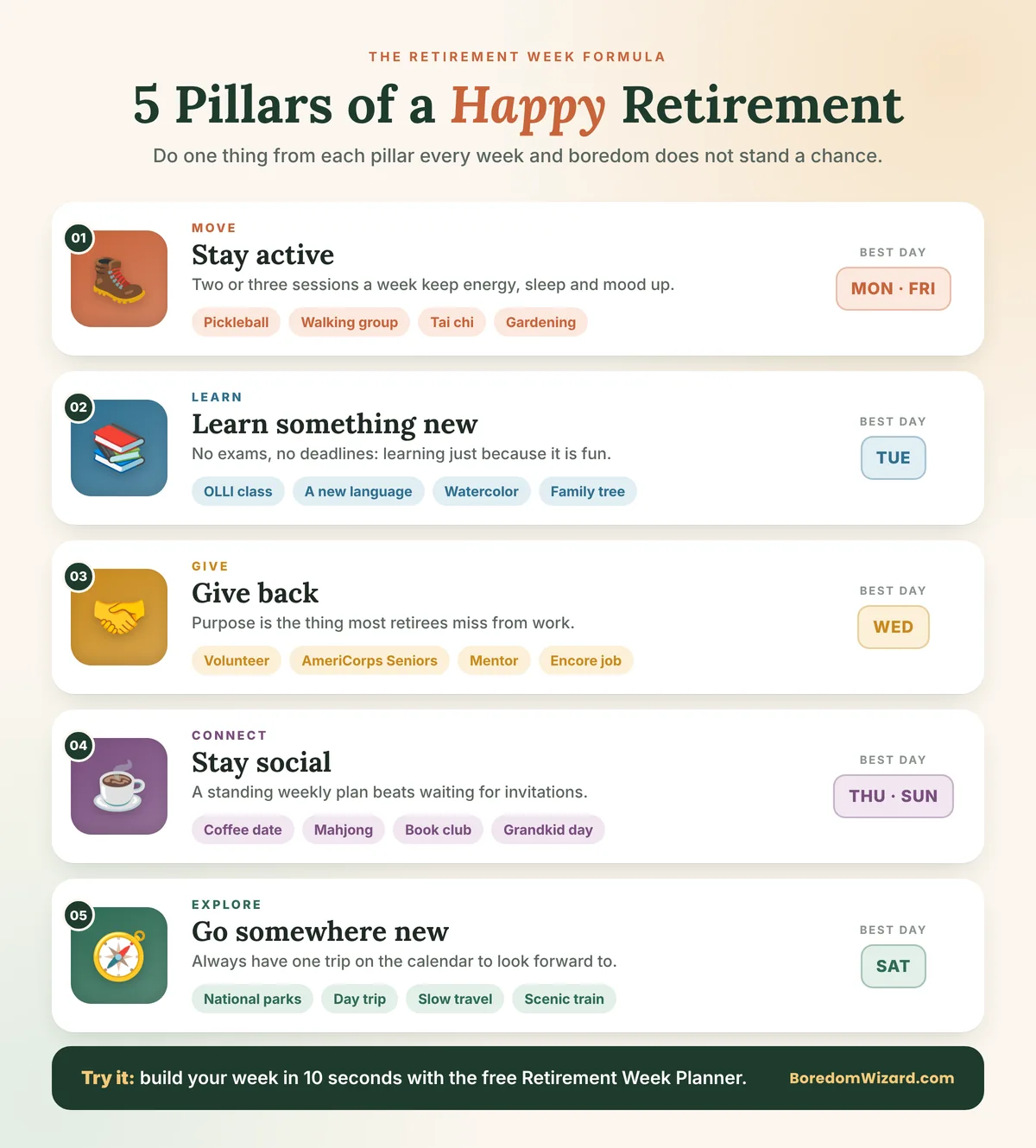
A full week, not a full calendar, is what keeps retirees happy. Pick your energy level, budget and whether you like solo or social plans. The planner gives you one idea from each pillar for every day of the week: move on Monday and Friday, learn on Tuesday, give back on Wednesday, connect on Thursday and Sunday and explore on Saturday. Tap Shuffle for new picks or Print to stick it on the fridge.
🌞 Retirement Week Planner
Answer three questions and get a balanced week: something to move, learn, give, connect and explore, from our list of 75.
Energy level
Budget
You prefer
Activities to stay active in retirement (1-15)
Movement is the fastest cure for retirement restlessness. Pick something you enjoy enough to do twice a week.
Want more options for staying fit? Our best hobbies for retirees to stay active goes deeper on gentle sports and outdoor hobbies.
- Join a walking group (easy pace, free, with others): Many senior centers, parks and malls host free morning walking groups. You get steps and conversation.
- Learn pickleball (moderate, $, with others): The fastest-growing sport in the US is easy on the joints and very social. Most parks offer beginner sessions.
- Try tai chi or chair yoga (easy pace, $, with others): Gentle classes for balance and flexibility at community centers, YMCAs and libraries.
- Swim or do water aerobics (moderate, $, with others): Low-impact, great for joints, and pools often have senior-only hours.
- Start a vegetable garden (moderate, $, solo): Raised beds or containers keep it easy on your back. Share the harvest with neighbors.
- Take up golf (moderate, $$, solo or social): Many courses have senior rates and twilight discounts. Join a weekly league for built-in friends.
- Go ballroom or line dancing (moderate, $, with others): Drop-in classes need no partner and count as cardio.
- Hike the national parks (active, $, solo or social): US citizens and permanent residents 62+ can buy the Senior Pass: $80 for life or $20 a year.
- Bike a rail trail (moderate, free, solo or social): Flat, car-free trails are perfect for e-bikes and regular bikes alike.
- Do a 30-day step challenge (easy pace, free, solo): Add 500 steps a day each week and track it on your phone or a cheap pedometer.
- Go birdwatching (easy pace, free, solo or social): The free Merlin Bird ID app names birds by their song. Many towns have bird clubs.
- Learn to fish (easy pace, $, solo or social): Many states offer discounted or free fishing licenses for seniors.
- Join a bowling league (easy pace, $, with others): Weekday senior leagues are cheap and social.
- Try kayaking (moderate, $$, solo or social): Rent by the hour on calm lakes. Sit-on-top kayaks are the easiest to start.
- Stretch every morning (easy pace, free, solo): Ten minutes of stretching makes everything else on this list easier.
Things to learn in retirement (16-30)
Retirement is the first time in decades you can learn just for fun, with no exams and no deadlines.
Creative learners can start with our easy watercolor painting ideas, crochet for beginners or journal prompts for memoir writing.
- Take a lifelong learning class (easy pace, $, with others): Osher Lifelong Learning Institutes at universities nationwide offer classes for adults 50+.
- Audit a college course (easy pace, free, with others): Many public colleges let seniors audit classes free or at low cost. Ask the registrar.
- Learn a language (easy pace, free, solo): Free apps teach in 10-minute lessons. Pick the language of your next trip.
- Play an instrument (easy pace, $, solo): Ukulele and piano are the easiest to start. Many towns have adult beginner bands.
- Trace your family tree (easy pace, $, solo): Genealogy sites, library databases and old family photos can fill months happily.
- Write your memoir (easy pace, free, solo): Write one story a week. Use our journal prompts if you get stuck.
- Learn watercolor (easy pace, $, solo): Relaxing, portable and easy to start with 15-minute paintings.
- Take a cooking class (easy pace, $$, with others): Learn a new cuisine with others, then host a dinner to show it off.
- Master your smartphone (easy pace, free, with others): Libraries and senior centers run free tech classes. Learn video calls, photos and apps.
- Learn chess or bridge (easy pace, free, solo or social): Great for your brain and there are clubs in nearly every town and online.
- Learn photography (easy pace, $, solo or social): Your phone is enough. Join a camera club for photo walks and feedback.
- Read the classics (easy pace, free, solo): Make a list of the books you always meant to read and work through it with a library card.
- Learn woodworking (moderate, $$, solo): Community makerspaces offer tools and classes. Start with a birdhouse.
- Try crochet or knitting (easy pace, $, solo or social): Make blankets for babies in hospitals or hats for shelters.
- Do daily brain games (easy pace, free, solo): Crosswords, sudoku and word games. Make it social by texting scores to friends.
Ways to give back and find purpose (31-45)
Purpose is what most retirees say they miss from work. Helping others replaces it faster than anything.
- Volunteer weekly (easy pace, free, with others): Food banks, hospitals, libraries and animal shelters all need reliable volunteers.
- Join AmeriCorps Seniors (easy pace, free, with others): Programs for people 55+ include Foster Grandparents, Senior Companions and RSVP volunteering.
- Tutor or mentor (easy pace, free, with others): Help kids read, mentor young professionals or teach English to new immigrants.
- Become a museum docent (easy pace, free, with others): Museums train volunteers to give tours. Perfect if you love history or art.
- Foster a shelter pet (easy pace, free, solo): Short-term fostering gives you company without a lifelong commitment.
- Build with Habitat for Humanity (active, free, with others): No construction skills needed. They teach you on site.
- Start a part-time encore job (moderate, free, solo or social): Work a few hours a week at a garden center, library, golf course or a field you love.
- Consult in your old field (easy pace, free, solo): Your experience is valuable. Freelance a few projects a year.
- Run for a local board (easy pace, free, with others): Library boards, park committees and HOAs need experienced people.
- Knit or sew for charity (easy pace, $, solo or social): Hospitals, shelters and NICUs welcome handmade blankets and hats.
- Drive for a seniors program (easy pace, free, solo): Drive other older adults to appointments through local volunteer programs.
- Record family stories (easy pace, free, solo): Interview older relatives and save the recordings for the grandkids.
- Plant a community garden plot (moderate, $, with others): Grow food for yourself and donate the extra to a pantry.
- Coach a youth team (moderate, free, with others): Rec leagues always need assistant coaches and referees.
- Help at the polls (easy pace, free, with others): Poll workers are paid in many areas and are always needed on election days.
Social activities for retirees (46-60)
Retirement can shrink your social circle fast. Put people on your calendar on purpose.
New to tile games? Our guide on how to play mahjong gets you to your first table in an afternoon.
- Join a senior center (easy pace, free, with others): Modern senior centers offer fitness, classes, trips and cheap lunches.
- Start a supper club (easy pace, $, with others): Four to six couples or friends rotate hosting dinner once a month.
- Learn mahjong (easy pace, $, with others): Mahjong groups are booming. Learn the rules and find a weekly table.
- Host a card night (easy pace, free, with others): Bridge, rummy, euchre or poker for pennies. Rotate homes weekly.
- Join a book club (easy pace, free, with others): Libraries host free monthly clubs, many with daytime meetings.
- Spend a day with grandkids (moderate, $, with others): Pick one regular day a week. Teach them a skill you love.
- Find your people on Meetup (easy pace, free, with others): Search hiking, history, wine, photography or dog groups near you.
- Sing in a community choir (easy pace, free, with others): Most choirs welcome anyone who can carry a tune. Singing with others is a mood booster.
- Join a faith or service group (easy pace, free, with others): Churches, temples, Rotary and Lions clubs all offer ready-made community.
- Schedule a weekly coffee date (easy pace, $, with others): Same friend, same time, same cafe. Consistency builds friendship.
- Join a travel club (easy pace, $$, with others): Group trips for older adults handle the planning and come with instant travel buddies.
- Reconnect with old friends (easy pace, free, solo): Call one old friend or classmate every week.
- Join a walking or golf league (moderate, $, with others): Leagues combine fitness and friendship on a set schedule.
- Video call family weekly (easy pace, free, solo): A standing weekly call keeps distant family close.
- Take a group class (easy pace, $, with others): Pottery, painting or dance classes put you with the same people every week.
Travel and adventure ideas for retirees (61-75)
You finally have the time. Travel slower, off-season and cheaper than you ever could while working.
- Visit every national park you can (moderate, $, solo or social): Use the $80 Senior Pass and work through a list of parks, one region at a time.
- Take a road trip on Route 66 (moderate, $$, solo or social): Plan small daily drives with diners, motels and museums along the way.
- Ride a long-distance train (easy pace, $$, solo or social): Scenic trains let you see the country without driving.
- Try slow travel (easy pace, $$, solo or social): Rent a place for a month in one town instead of rushing between cities.
- Take an educational trip (easy pace, $$, with others): Learning-focused tours for older adults include experts, lectures and small groups.
- Go house-sitting (easy pace, free, solo): Watch homes and pets in exchange for free stays, from nearby towns to abroad.
- Visit all 50 states (moderate, $$, solo or social): Keep a map on the fridge and color in each state you visit.
- Take a river cruise (easy pace, $$, with others): Small ships, short walks and a new town every day.
- RV for a season (moderate, $$, solo or social): Rent before you buy. Campground hosting can even give you a free site.
- Trace your family roots abroad (easy pace, $$, solo or social): Visit the towns your ancestors came from. Combine it with your family tree research.
- Take a virtual walk abroad (easy pace, free, solo): On a rainy day, walk the streets of Tokyo or Venice from your couch with our free Explore the World tour (below).
- Go to spring training (easy pace, $$, with others): Baseball spring training in Florida or Arizona is cheap, sunny and relaxed.
- See the fall colors (easy pace, $, solo or social): New England, the Smokies and the Upper Midwest peak at different times. Plan a color tour.
- Learn to sail (moderate, $$, with others): Community sailing clubs often offer affordable lessons.
- Write a retirement bucket list (easy pace, free, solo): Write 25 things and book the first one this month.
On a rainy day or a slow-energy week, try idea #71 right here. Pick a place and take a real walking tour from your armchair:
Take a virtual walk abroad (idea #71)
Rainy day or tired legs? Stroll a famous street, canal or national park from your armchair, free.
🌍Pick a destination above to start a free walking tour right here, with live local time and weather.
Retired and bored at home? 10 easy ideas
Not every day is a pickleball day. When you are home, the weather is bad or energy is low, these are the best low-effort picks:
- Call one old friend and set a date for the next call before you hang up.
- Start a memoir: one story a week for the grandkids. Our journal prompts help.
- Build a family tree from old photos and free library databases.
- Paint for 15 minutes with a small watercolor set.
- Play a solo card game. See our card games to play by yourself.
- Do a daily word game and text your score to friends. Try our games like Wordle.
- Cook a new recipe from a country you want to visit. Our things to cook when bored has ideas.
- Read a book you always meant to. Browse our books to read when bored.
- Take the virtual walk above to Tokyo, Venice or Yosemite.
- Plan next month: put one item from each pillar on the calendar so tomorrow is not empty.
Spending more time alone than you want? Our things to do when bored alone has more solo ideas that still feel good.
Free and cheap things to do in retirement
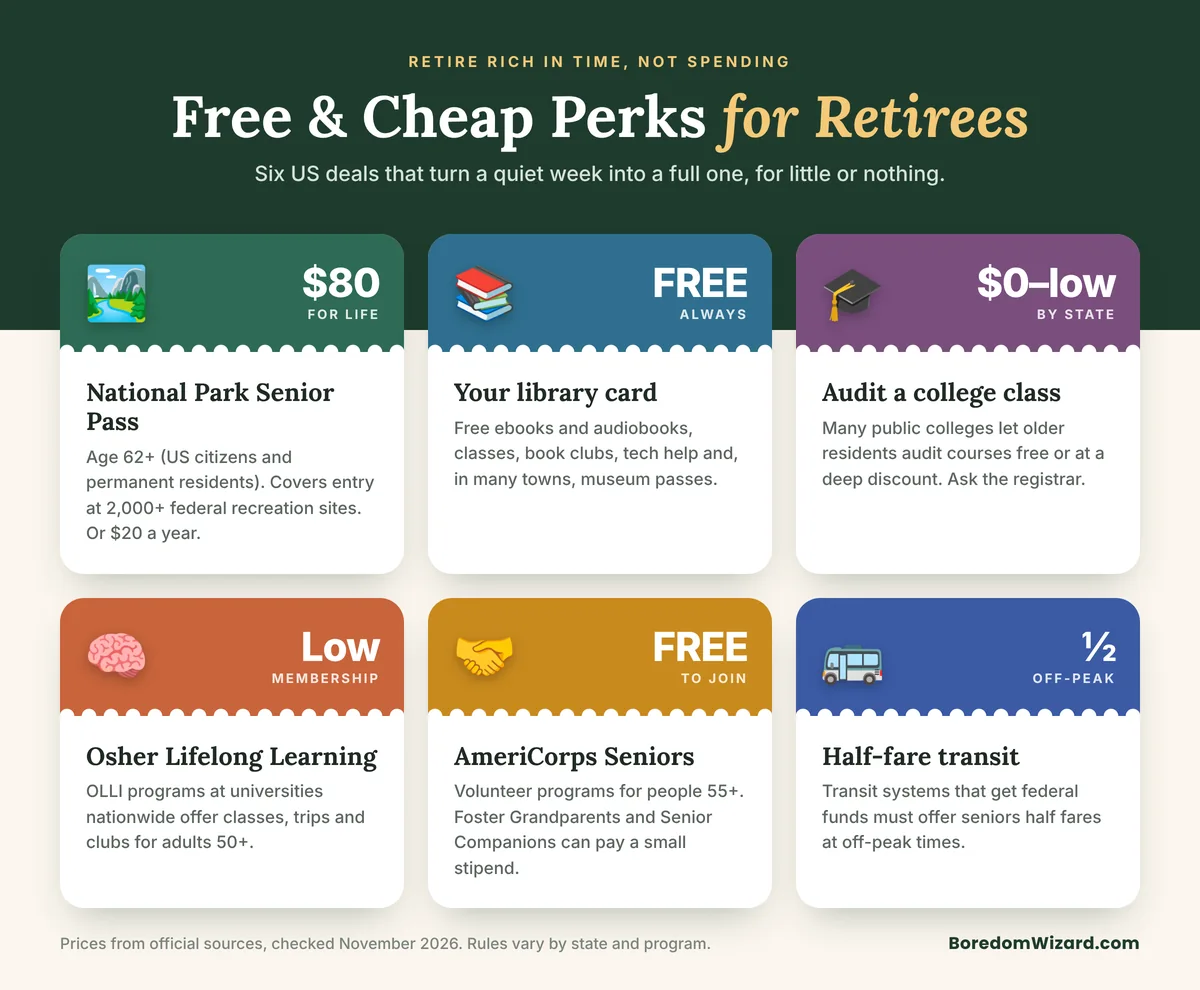
Retirement can be rich in time without being expensive. Older adults get some of the best deals in the US, but you usually have to ask:
- National Park Senior Pass: US citizens and permanent residents 62 or older can buy a lifetime pass for $80 or an annual pass for $20. It covers entrance fees at national parks and other federal recreation sites. Details are on the National Park Service passes page.
- Your library card: free ebooks and audiobooks, book clubs, tech help, classes and, in many towns, free museum passes.
- Auditing college classes: many public colleges and universities let older residents sit in on courses free or at a steep discount. Rules vary by state, so ask the registrar.
- Osher Lifelong Learning Institutes (OLLI): low-cost, no-exam classes, trips and clubs for adults 50 and older at universities across the country. Find one through the Osher National Resource Center.
- AmeriCorps Seniors: volunteer programs for people 55+, including Foster Grandparents, Senior Companions and RSVP. Some roles pay a small stipend. See AmeriCorps Seniors.
- Half-fare transit: transit systems that receive federal funding must offer reduced fares (no more than half price) to seniors at off-peak times. Ask your local transit agency for a senior card.
- Senior hours and discounts: pools, gyms, museums, movie theaters and golf courses often have senior rates. One question saves a lot: “Do you have a senior price?”
For more no-cost ideas at any age, see our things to do when bored with no money.
Your retirement bucket list: 25 ideas

A retirement bucket list gives the open calendar a direction. Write 25 things, then book the first one this month. Steal any of these:
- See the Grand Canyon at sunrise
- Visit 10 national parks with your Senior Pass
- Drive Route 66 end to end
- Ride a scenic long-distance train
- Take a river cruise
- Watch baseball spring training in Florida or Arizona
- See peak fall colors in New England
- Spend a month living in another town
- Visit the town your ancestors came from
- Color in all 50 states on a map
- Learn to sail
- Finish a 1,000-piece puzzle every month for a year
- Write and print your memoir
- Learn to play one song on piano
- Paint 30 watercolors in 30 days
- Walk a half marathon
- Play in a pickleball tournament
- Grow a full summer vegetable garden
- See the northern lights
- Take each grandchild on a one-on-one trip
- Volunteer at a national park
- Learn enough of a language to order dinner
- Host a family reunion
- Read every book that won the Pulitzer for fiction in your lifetime
- Teach a class on what you did for work
Need more inspiration? Our full bucket list ideas has hundreds more, from small to once-in-a-lifetime.
What to do in retirement for men and women
What to do in retirement for men
Many men lose most of their social circle when they leave work, so start with ideas that come with built-in regulars: a golf or bowling league, a woodworking makerspace, coaching a youth team, consulting in your old field, a fishing trip with friends or a weekly breakfast group. Hands-on projects and a regular time slot make it easier to keep going. More options are in our hobbies for men.
What to do in retirement for women
Popular picks for retired women include a supper club, mahjong, a choir, OLLI classes, watercolor, crochet for charity, a walking group and a girls trip with a travel club. Many women also choose an encore job or a board seat to put decades of skills to use. Browse our hobbies for women for more.
Why retirees get bored, and how to fix it
Work quietly gave you four things: structure (somewhere to be), purpose (someone needs you), people (daily small talk) and challenge (problems to solve). Retirement removes all four at once. Boredom is the signal that one of them is missing, not a sign that something is wrong with you.
How to stop being bored in retirement in five steps.
Total time: 30 minutes
Name what you miss
Pick the one that hurts most: structure, purpose, people or challenge. That tells you which pillar to start with.
Set weekly anchors
Give three days a fixed commitment, like Tuesday class, Wednesday volunteer shift and Thursday coffee date. Anchors create structure without a full schedule.
Fill the rest with the planner
Use the Retirement Week Planner above to add one idea from each pillar to the open days.
Join one group
Say yes to one recurring group: a league, a club, a choir or a class. Recurring beats one-off events for making friends.
Review after 30 days
Keep what you look forward to, drop what feels like a chore and try one new idea from the list.
If boredom comes with feeling low, hopeless or withdrawn for more than two weeks, talk with your doctor. Depression is common after big life changes and very treatable.
Retirement trends for 2026 and 2027
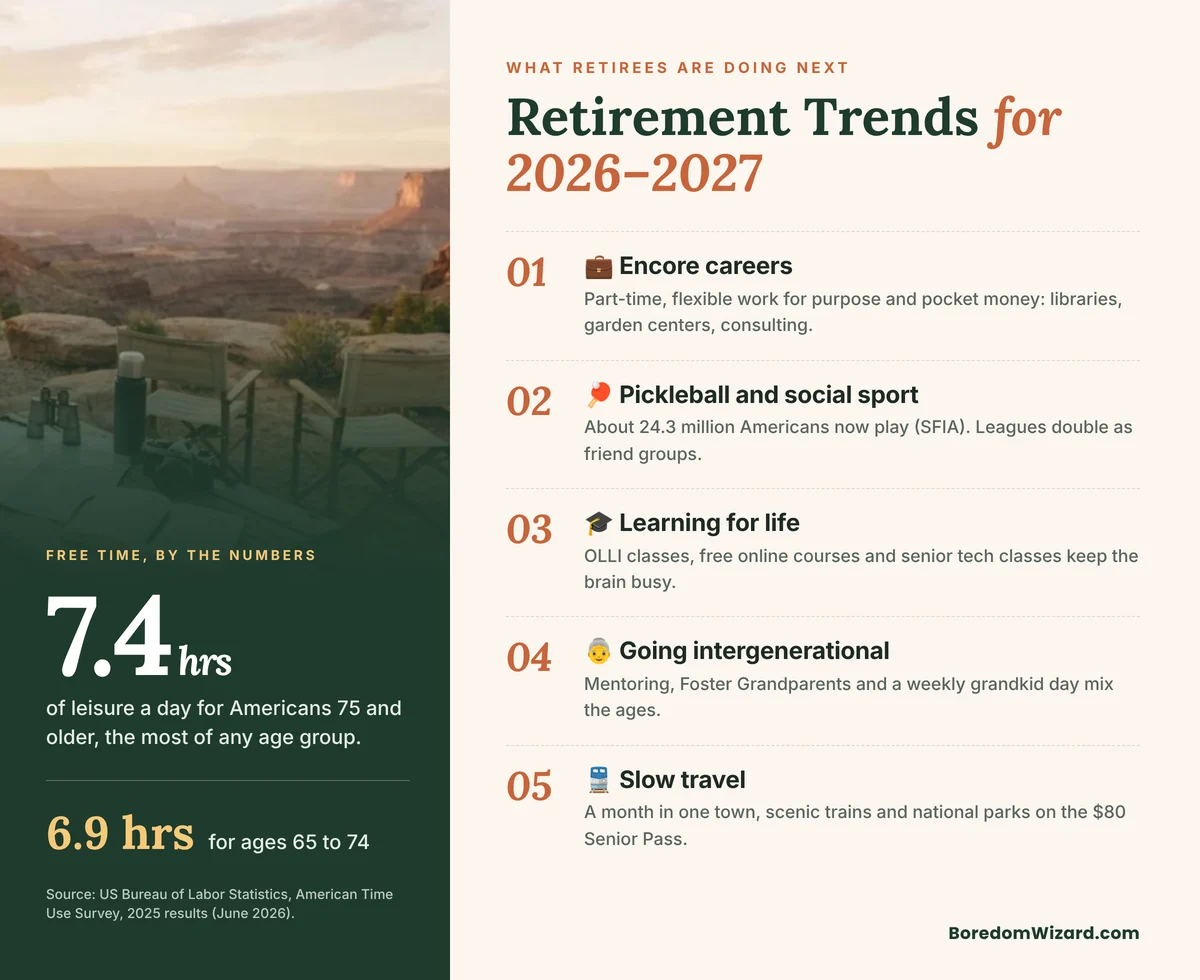
Retirees have more free time than anyone. In the Bureau of Labor Statistics American Time Use Survey for 2025, adults 75 and older spent 7.4 hours a day on leisure and sports, the most of any age group, and people 65 to 74 spent 6.9 hours. How retirees fill those hours is changing:
- Encore careers: part-time, flexible work for purpose and pocket money, from library and garden center jobs to consulting in an old field.
- Pickleball and social sport: the Sports & Fitness Industry Association counted 24.3 million US pickleball players in 2025. For retirees, leagues double as friend groups.
- Learning for life: OLLI programs, free online courses and library tech classes keep older brains busy without the pressure of grades.
- Going intergenerational: mentoring, Foster Grandparents and a weekly grandkid day put different ages together, which helps everyone.
- Slow travel: instead of rushing through ten cities, retirees are renting a place for a month, taking scenic trains and working through national parks on the Senior Pass.
Expect 2027 to bring more of the same: more retirees blending part-time work with travel, more pickleball courts and mahjong tables, and more senior centers that look like community clubs with classes, cafés and trips.
More ideas for retirees
For hobbies with more depth, read our best hobbies for retirees. For ideas that work at any age, see things to do when bored for adults. Love the outdoors? Try our outdoor hobbies. Want something to make with your hands? Start with crochet or watercolor.
What to do in retirement: FAQ
What should I do in retirement?
Mix five kinds of activity every week: something active like pickleball or walking, something to learn like an OLLI class or a language, a way to give back like volunteering, regular social plans like a coffee date or mahjong, and something to look forward to like a trip. Give each a fixed day.
What do you do when you are retired and bored?
Figure out what you miss from work (structure, purpose, people or challenge), then add one recurring commitment that fills it, such as a weekly volunteer shift, a class, a league or a club. Plan one thing from each pillar every week so no day is empty.
What are the best retirement activities?
Popular retirement activities include pickleball, walking groups, gardening, lifelong learning classes, volunteering, AmeriCorps Seniors, mahjong and card nights, book clubs, choirs, national park trips, scenic train rides and slow travel.
What are free things to do in retirement?
Free ideas include volunteering, walking groups, library book clubs and classes, free ebooks and museum passes from the library, birdwatching, auditing college classes where allowed, AmeriCorps Seniors and senior center activities.
How much does the National Park Senior Pass cost?
The Senior Pass costs $80 for a lifetime pass or $20 for an annual pass. It is for US citizens and permanent residents age 62 or older and covers entrance fees at national parks and other federal recreation sites.
What should be on a retirement bucket list?
Common retirement bucket list items include visiting national parks, driving Route 66, taking a scenic train or river cruise, seeing the northern lights, living a month in another town, visiting your ancestors’ hometown, writing a memoir and taking each grandchild on a trip.
How do retirees fill their day?
According to the BLS American Time Use Survey for 2025, adults 75 and older spent 7.4 hours a day on leisure and sports and people 65 to 74 spent 6.9 hours. Happy retirees fill that time with a mix of exercise, learning, volunteering, social plans and travel.
Is it normal to feel bored or lost after retiring?
Yes. Losing the structure, purpose and daily contact of work is a big change, and boredom often shows up in the first year. A weekly routine with fixed commitments usually helps. If you feel low or withdrawn for more than two weeks, talk with your doctor.