Raised Garden Bed Ideas: 30 Cheap, DIY & Beautiful Designs + Soil Calculator (2026)
Here is a gardening secret most beginners learn too late: the best time to build a raised garden bed is not spring. It is right now, in the quiet months. Fall and winter give you free leaves to fill it, cheaper lumber and months for the soil to settle, so the bed is ready to plant the minute the weather warms up.
Below are 30 raised garden bed ideas for 2026, from cheap and DIY raised garden beds you can build in an afternoon to beautiful metal, stone and trellis designs. You will also find the Reach-Root-Route Rule for sizing any bed, a guide to how deep a raised garden bed should be, the best soil for raised garden beds, a cost chart by material and a free soil calculator that tells you exactly how many bags to buy.
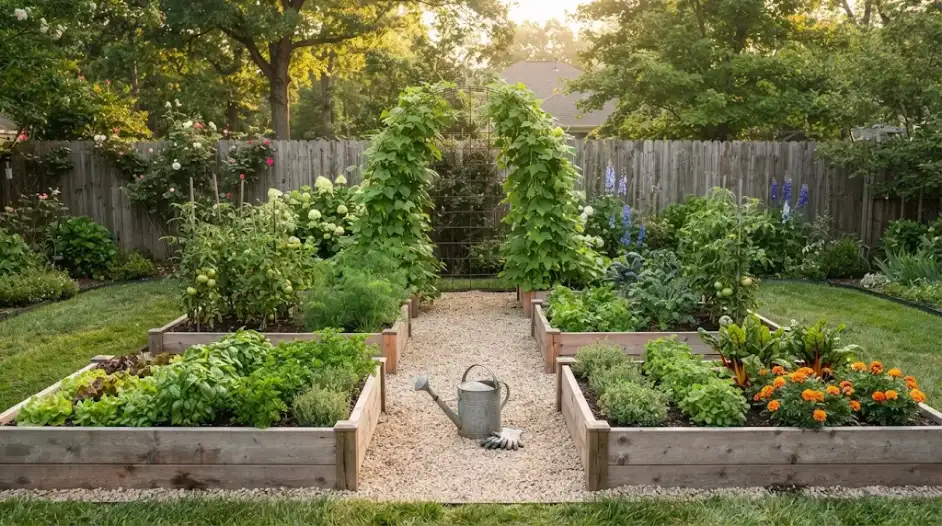
What is the best raised garden bed for beginners? For most beginners, the best raised garden bed is a 4 by 8 foot bed made of cedar or galvanized metal, about 12 inches deep, filled with a mix of 60% topsoil and 40% compost. Place it where it gets 6 to 8 hours of sun, close to a hose, and leave 2 to 3 foot paths around it.
Cheapest: #1, #2, #4 | Best DIY build: #9 | Most beautiful: #16, #19, #22 | Best with trellis: #25
The Reach-Root-Route Rule: how to size a raised bed
Before you pick a material or a style, lock in three numbers. Almost every raised bed regret, from soil you cannot reach to paths you cannot walk, comes from getting one of these wrong.
- Reach (width): keep beds no wider than 4 feet so you can reach the middle from both sides without stepping on the soil. If the bed sits against a fence or wall, keep it 2 to 3 feet wide. Length can be anything, but 8 feet is a sweet spot because lumber comes in 8-foot boards.
- Root (depth): 12 inches grows almost every vegetable. Go 18 to 24 inches for carrots and potatoes, or if your bed sits on hard clay, gravel or a patio.
- Route (paths): leave 2 to 3 feet between beds, and 3 feet if you will push a wheelbarrow or need wheelchair access. Narrow paths are the number one thing gardeners wish they had done differently.
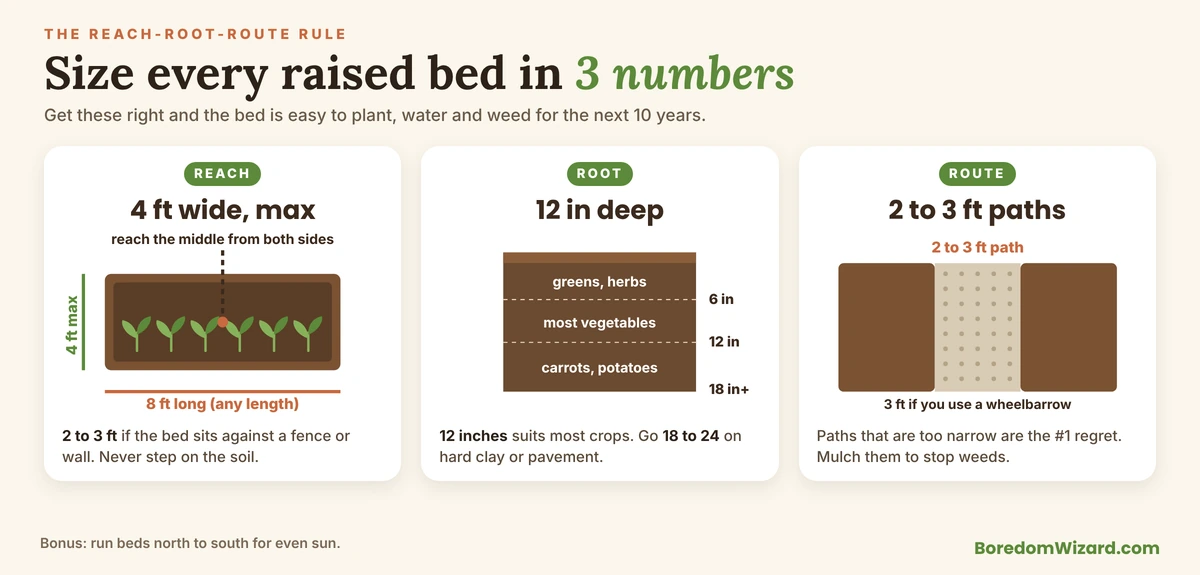
Two more placement rules: give vegetables 6 to 8 hours of direct sun, and run long beds north to south so both sides get equal light. Put tall crops and trellises on the north end so they do not shade the rest.
Cheap raised garden bed ideas
You do not need to spend hundreds. These inexpensive raised garden bed ideas use cheap lumber, blocks and things you may already own. Most cost under $100, and a few are nearly free.
- Simple untreated pine box: Four 2×10 boards screwed to 4×4 corner posts. It is the cheapest wood bed you can build. Pine rots in about 3 to 5 years, so think of it as a starter bed you will replace or upgrade.
- Cinder block bed: Lay concrete blocks in a rectangle, no mortar needed. A 4 by 8 foot bed takes about 16 blocks per 8-inch layer. Bonus: plant herbs, strawberries or marigolds in the holes for a bed that looks planted all the way around.
- Log or branch border: Got a fallen tree? Lay thick logs in a rectangle and pin them with stakes. It costs nothing and looks right at home in a woodland or cottage garden.
- Straw bale garden: Condition straw bales with water and fertilizer for about two weeks, then plant right into them. One season later, the bales break down into compost for your next bed.
- Fabric raised bed: Sturdy felt-like fabric beds fold flat, cost $25 to $60 and need no tools. Perfect for renters, patios and anyone not ready to commit.
- Reclaimed pallet wood bed: Free pallets make rustic beds. Only use pallets stamped HT (heat treated). Skip any stamped MB, which were treated with a chemical fumigant, and skip painted or stained wood.
- Repurposed containers: An old bathtub, a wheelbarrow, a dresser drawer or a feed trough can all become a small raised bed. Drill drainage holes first.
- Stacked rock border: If your yard is rocky, you already own a raised bed. Stack flat stones two or three high around a mound of soil and compost.
DIY raised garden bed ideas and plans
Ready to build something that lasts? These DIY raised garden bed designs go from a weekend classic (with our guide on how to build a raised garden bed step by step) to clever builds that solve real problems, like bad backs, slopes and short seasons.
- The classic 4 by 8 cedar bed: The bed most gardeners start with and never regret. Cedar is naturally rot resistant and lasts 10 to 20 years without chemicals. Step-by-step build below.
- Bed with a sit-down cap rail: Screw a flat 2×6 board around the top edge. It locks the corners, stops the sides from bowing and gives you a bench to sit on while you weed.
- Keyhole or U-shaped bed: A U shape lets you step into the middle and reach every corner from one spot. Great for small yards because you get more growing space with less path.
- Tiered bed for a slope: Build two or three stepped boxes into a hillside. Each level holds soil like a terrace and turns an awkward slope into the best spot in the yard.
- Elevated waist-high planter: A raised bed on legs, about 30 inches high. No bending at all, so it is perfect for seniors, wheelchair users and anyone with a sore back. Keep it shallow (8 to 10 inches) so it is not too heavy.
- Self-watering wicking bed: A waterproof liner and a water reservoir in the bottom let soil drink from below. You water every week or two instead of every day. A smart pick for hot, dry climates.
- Cold frame bed: Hinge an old window or a clear polycarbonate lid onto your bed. It traps heat so you can grow lettuce and spinach into late fall and start seeds weeks early in spring.
How to build a raised garden bed (step by step)
This is the classic 4 by 8 by 1 foot cedar bed. You need four 8-foot cedar 2×12 boards (or six 2×6 boards stacked two high), one 4×4 post cut into four 12-inch corner posts, 3-inch exterior wood screws, a drill and a saw. Most home stores will make the cuts for you.
How to build a simple 4 by 8 foot raised garden bed from cedar boards in one afternoon.
Total time: 180 minutes
Cut the boards
Cut one 8-foot board in half to make two 4-foot end pieces. Keep two boards at 8 feet for the long sides. Cut the 4×4 post into four 12-inch corner posts.
Build the box
Screw each end board to two corner posts with three screws per joint. Then attach the long side boards to the posts to make a rectangle.
Level the site
Rake the spot flat. Use a level across the top of the box and dig or shim under low corners until it sits even.
Smother the grass
Lay plain brown cardboard over the grass inside the bed and soak it with water. It kills the grass and breaks down by spring. No digging needed.
Fill and water
Fill with your soil mix to an inch below the top, water it well, then let it settle for a week or a whole winter. Top up before planting.
Beautiful and modern raised garden bed ideas
A raised bed can be the best-looking thing in your yard. These modern raised garden bed ideas and classic raised bed garden ideas prove that vegetable gardens do not have to look plain.
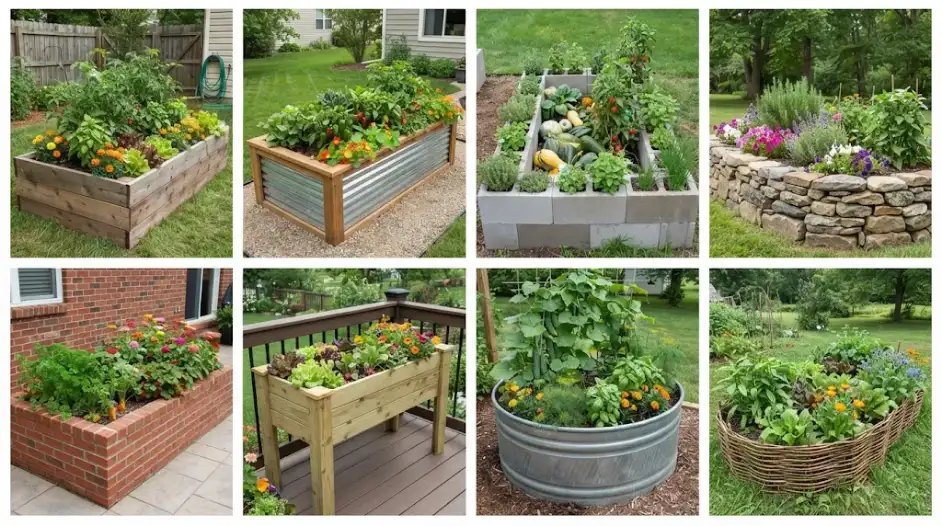
- Corrugated metal with a wood frame: Galvanized corrugated panels framed in cedar. It is the farmhouse look that took over Pinterest, and the metal lasts for decades.
- Round metal beds: Circular galvanized or powder-coated rings. No corners means no weak spots, and a row of round beds looks like art.
- Galvanized stock tank: A farm water trough with holes drilled in the bottom becomes an instant, tall, indestructible bed. No building required.
- Red brick bed: Classic, warm and permanent. Mortared brick suits formal and colonial-style homes and lasts for generations.
- Dry-stacked stone bed: Natural stone laid without mortar. It looks like it has always been there and doubles as seating.
- Woven willow wattle bed: Flexible willow or hazel branches woven between stakes. Cottage-garden charm you can make from prunings.
- Curved or serpentine beds: Flexible metal edging lets you bend beds around paths and trees. Curves soften a yard and look professionally designed.
- Front yard raised beds: Two neat matching beds with flowers mixed in with the vegetables look tidy enough for any street, and most HOAs. Planting marigolds, zinnias and herbs along the edges helps.
- Potager layout: A French kitchen garden: four beds arranged around a center point like a birdbath or obelisk, with gravel paths. Beautiful and practical.
Raised garden bed with trellis ideas
Growing up instead of out doubles your harvest in the same space. Cucumbers, pole beans, peas, small melons and squash all love to climb. Always put the trellis on the north side of the bed.
- Cattle panel arch: Bend a 16-foot livestock panel into an arch between two beds and zip-tie it to the sides. Beans and cucumbers cover it by midsummer and you walk through a green tunnel.
- A-frame trellis: Two panels hinged at the top, set inside the bed. Easy to fold away in winter.
- Fence-side bed with trellis: Build a narrow bed along a fence and screw wire panels to the fence posts. Perfect for raised garden beds along a fence.
- String trellis for tomatoes: Run a top bar between two posts and drop a string to each tomato plant. Wind the vine around the string as it grows. Cheap and very tidy.
Raised garden bed cover ideas, fences and add-ons
- Hoop covers: Bend PVC or metal hoops over the bed and add frost cloth in fall, shade cloth in summer and insect mesh in spring. One simple frame protects your crops all year.
- Critter fence: A short hardware cloth or chicken wire fence keeps rabbits out. Lay wire mesh across the bottom of the bed before filling if you have gophers or voles.
Want an easy upgrade for any bed? Add a soaker hose or simple drip line on a timer. It saves water and it is the single best thing you can do for a busy summer.
How deep should a raised garden bed be?
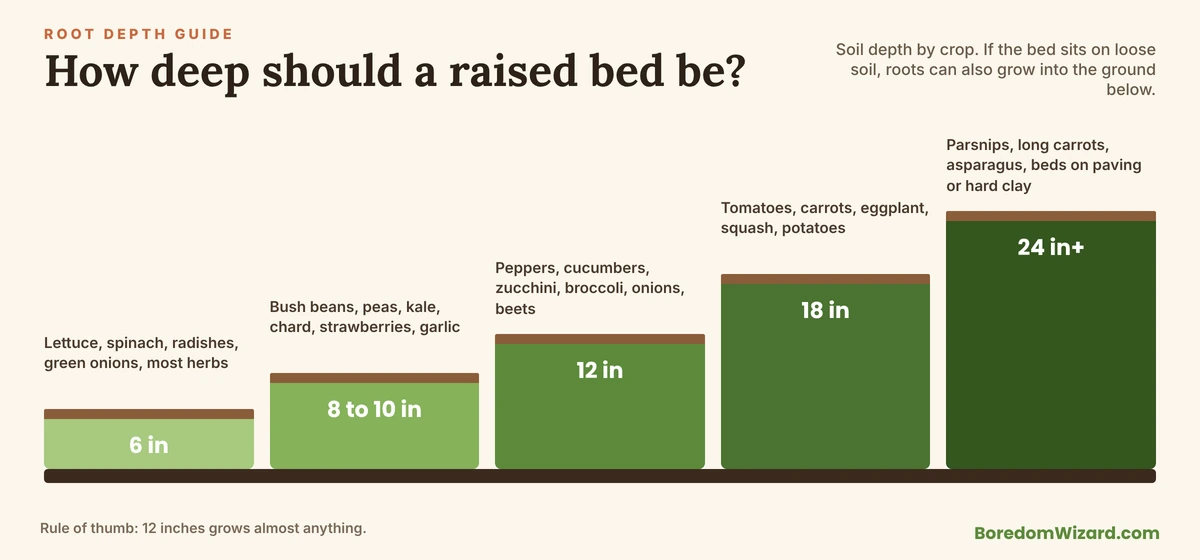
A raised garden bed should be at least 6 inches deep for lettuce and herbs, 12 inches deep for most vegetables, and 18 to 24 inches deep for root crops like carrots and potatoes. If your bed sits on loose soil, roots can also grow down into the ground below, so 12 inches is enough for almost everything. If it sits on clay, gravel or concrete, go deeper.
Best soil for raised garden beds
Do not fill a raised bed with plain garden dirt. It packs down hard and drains poorly. Here are the two mixes that work best:
- The simple mix (most beds): 60% screened topsoil and 40% compost. Cheap, easy to buy in bulk and great for big or deep beds.
- The fluffy mix (small beds, square foot gardens): one third compost, one third coconut coir or peat moss and one third vermiculite. Light and airy, but pricier.
Each spring, top up the bed with 2 to 3 inches of fresh compost. That is all the “feeding” most raised beds need. Use the calculator below to work out how much soil to buy.
Raised Garden Bed Soil Calculator
Enter your bed size. We will tell you how much soil to buy, in bags and cubic yards.
Raised garden bed filler ideas (to save money)
A deep bed holds a lot of soil. A 4 by 8 foot bed that is 2 feet deep needs about 64 cubic feet, more than two cubic yards. Fill the bottom with free organic material instead, and buy good soil only for the top 8 to 12 inches where most roots live. This layered method is related to hugelkultur, a German technique that buries logs under the soil to hold moisture as they rot.
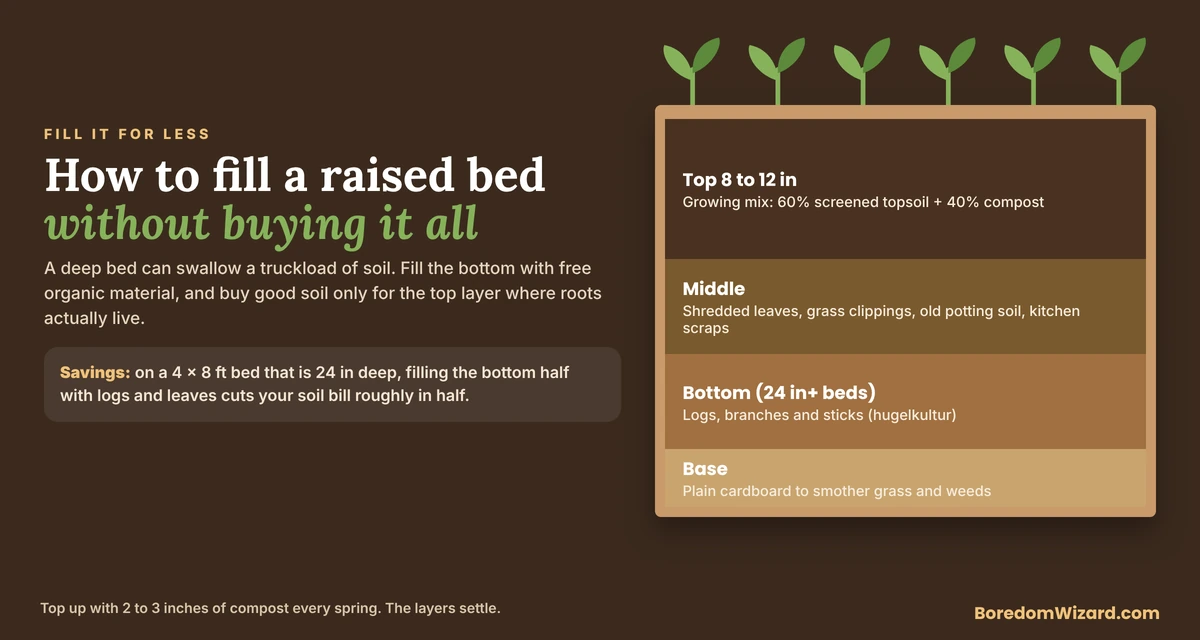
- Good fillers: untreated logs and branches, shredded fall leaves, grass clippings without weed killer, straw, old potting soil and kitchen scraps.
- Skip: black walnut wood (it releases a chemical that stunts plants), anything painted or treated, rocks and gravel at the bottom (they do not improve drainage) and plastic.
- Expect settling: layered beds sink a few inches as the material breaks down. Top up with compost each year.
Raised garden bed cost by material
Here is what one 4 by 8 foot bed costs to build in 2026, not including soil. Prices vary by region and the lumber market, so treat these as rough guides.
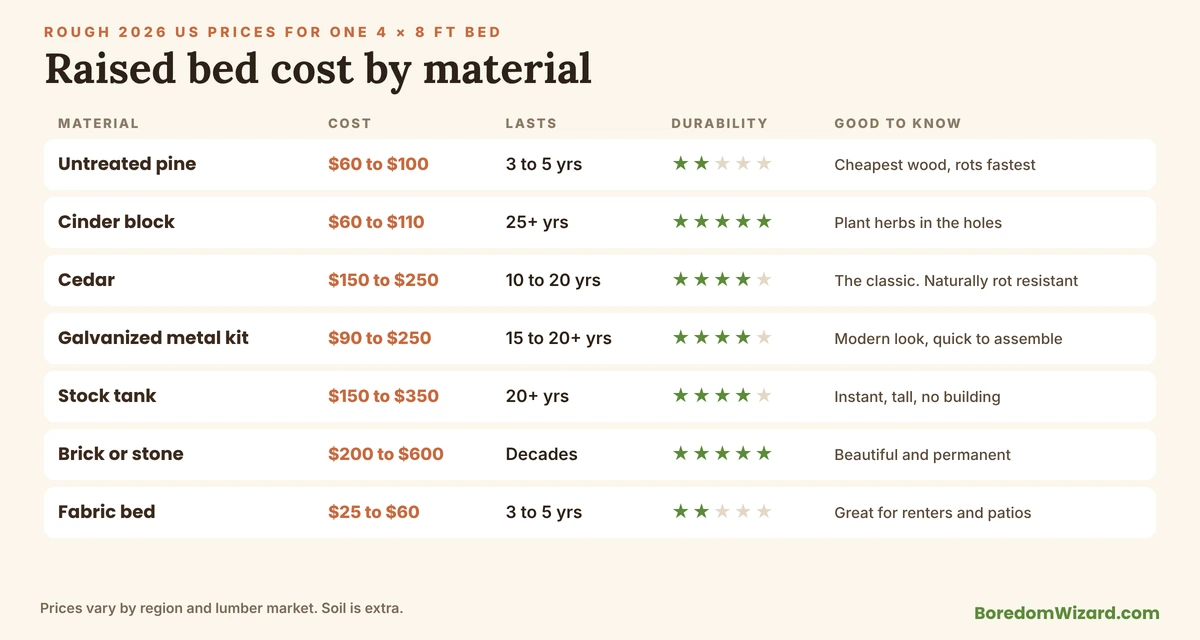
A note on wood safety: if you choose pressure-treated lumber, modern ground-contact lumber made since 2004 uses copper-based treatments, not the arsenic-based kind that was phased out for home use. Many gardeners still prefer cedar or a liner for vegetable beds. Never use old railroad ties, which are soaked in creosote.
Raised garden bed layout ideas
| Layout | Best for | Beds and paths |
|---|---|---|
| Single 4 x 8 bed | First-time gardeners | One bed, 2 to 3 ft clear on all sides |
| Two parallel beds | Small backyards | Two 4 x 8 beds, 3 ft path between, trellis arch connecting them |
| Four-square potager | Classic kitchen garden | Four beds around a center feature, 3 ft gravel paths |
| L-shaped corner | Fence corners | Two 2 x 8 beds meeting in an L along the fence |
| Keyhole circle | Tight spaces | One 6 ft round bed with a 2 ft notch to stand in |
Planning what to grow in your raised bed garden? A 4 by 8 bed fits 32 one-foot squares. A simple first-year plan: 1 tomato, 2 peppers, 4 squares of lettuce, 4 of bush beans, 2 of herbs, 8 of carrots or radishes, 1 zucchini at the corner and marigolds to fill gaps.
Raised bed gardening trends for 2026 and 2027
- Metal is winning: powder-coated steel and galvanized beds are outselling wood because they last longer and come in colors.
- Accessible gardening: waist-high and wheelchair-friendly beds are growing fast as more retirees take up gardening.
- Smart watering: low-cost soil moisture sensors and app-controlled drip timers are becoming standard for home beds.
- No-dig and hugelkultur fills: filling beds with logs, leaves and cardboard is going mainstream to cut soil costs.
- Pollinator edges: gardeners are planting flowers like zinnias, borage and marigolds in every bed to bring in bees.
- Grocery-bill gardens: expect even more people to grow salad greens, herbs and tomatoes at home in 2027 to beat food prices.
Raised bed mistakes to avoid
- Building beds wider than 4 feet, then stepping on the soil to reach the middle.
- Paths too narrow for a wheelbarrow or a garden cart.
- Filling with cheap “garden soil” or clay from the yard.
- Putting the bed in shade or far from the hose. If watering is a chore, it will not happen.
- Forgetting to top up compost every year as the soil settles.
Make gardening your new hobby
A raised bed is one of the most rewarding ways to spend a slow weekend, and it pays you back in tomatoes. If you are looking for more ways to get outside, see our list of outdoor hobbies and our fun outdoor hobbies for the weekend. Retirees love gardening for good reason, and our guide to hobbies for retirees explains why. Painted garden markers are a fun add-on, and our rock painting ideas make great plant labels. Grew too many flowers? Try our pressed flower ideas.
Raised garden bed ideas FAQ
What is the cheapest way to make a raised garden bed?
The cheapest raised garden beds are untreated pine boxes, cinder block beds, log borders, straw bales and HT-stamped pallet wood. Fill the bottom with free leaves, branches and grass clippings, and buy good soil only for the top 8 to 12 inches.
How deep should a raised garden bed be?
At least 6 inches for lettuce and herbs, 12 inches for most vegetables and 18 to 24 inches for carrots, potatoes and beds on hard ground or pavement.
What is the best soil for raised garden beds?
A simple mix of 60% screened topsoil and 40% compost works for most beds. For small beds, a fluffy mix of one third compost, one third coconut coir or peat moss and one third vermiculite works well.
What is the best wood for raised garden beds?
Cedar is the best wood for raised garden beds because it is naturally rot resistant and lasts 10 to 20 years without chemicals. Redwood and juniper also last well. Untreated pine is cheapest but lasts only 3 to 5 years.
What do you put in the bottom of a raised garden bed?
Put plain cardboard on the ground to smother grass and weeds. In deep beds, add untreated logs and branches, then shredded leaves and grass clippings, and finish with 8 to 12 inches of good soil.
How much soil do I need for a 4×8 raised bed?
A 4 by 8 foot bed that is 12 inches deep needs 32 cubic feet of soil, which is about 1.2 cubic yards, or about 22 bags of 1.5 cubic feet.
When is the best time to build a raised garden bed?
Fall is the best time. Lumber is often cheaper, free leaves are everywhere for filling, and the soil has all winter to settle so the bed is ready to plant in spring.
Should raised garden beds have a bottom?
Most raised beds should be open at the bottom so roots can grow into the ground and water drains well. Add hardware cloth at the bottom only if you have gophers or voles. Elevated planters on legs need a solid bottom with drainage holes.