Indoor Herb Garden for Beginners: How to Grow 12 Herbs Indoors All Year (2026)
Most indoor herb gardens die the same way. Someone buys a cute set of pots, lines them up on whatever windowsill is free, waters them every day out of love and watches the basil turn black within a month. It is not a green-thumb problem. It is a matching problem: the wrong herbs in the wrong light with the wrong watering.
This guide fixes the match first. You will test your light in 10 seconds with the shadow test, choose from the 12 best herbs to grow indoors, pick a “grow what you cook” kit so nothing goes to waste, and follow a simple 30-day plan. It covers how to grow herbs indoors on a windowsill, under a grow light or in a hydroponic garden, and it is written for the hardest season of all: winter.
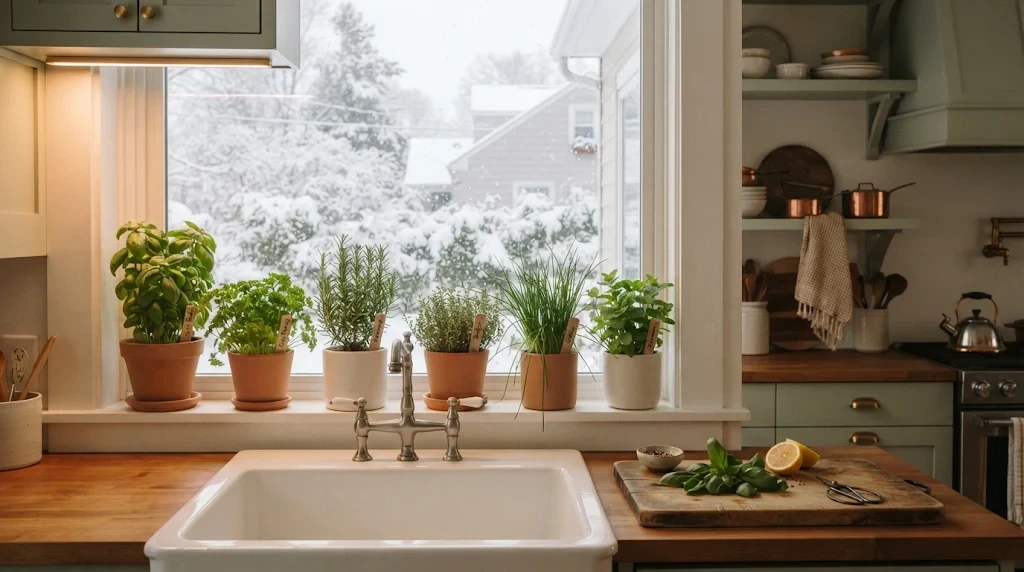
Quick answer: how do you start an indoor herb garden? Put 3 starter herb plants in pots with drainage holes and fresh potting mix, place them in a window with at least 6 hours of direct sun (or 6 to 12 inches under a full-spectrum LED grow light for 12 to 16 hours a day), water only when the top inch is dry, feed lightly every 2 weeks and harvest up to one third of each plant at a time.
Easiest herbs to grow indoors: thyme, oregano, chives, mint and lemon balm. Hardest: cilantro, dill and rosemary.
Step 1: Test Your Light With the Shadow Test
Light decides everything. Penn State Extension notes that most herbs need about 6 hours of direct sun, which in most US homes means a south-facing window. You do not need a light meter to check yours. At midday, hold your hand about a foot above the windowsill and look at the shadow.
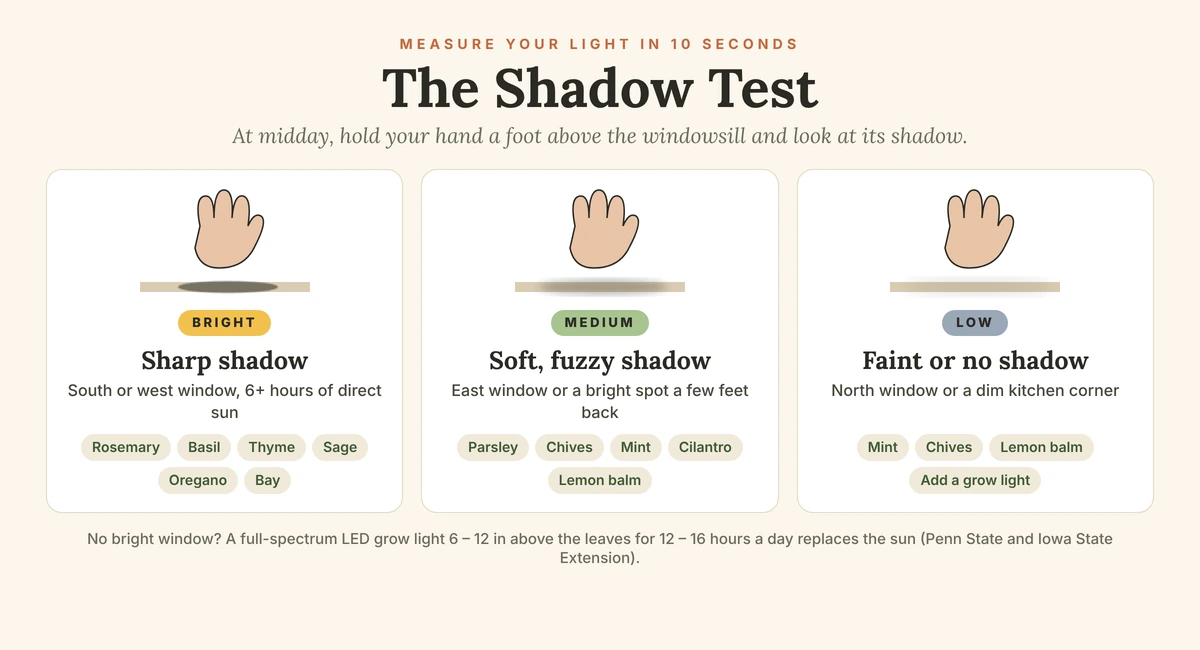
- Sharp, crisp shadow = bright light. Grow the sun lovers: rosemary, basil, thyme, sage, oregano and bay.
- Soft, fuzzy shadow = medium light. Grow parsley, chives, mint, cilantro and lemon balm. Penn State lists lemon balm, chives and cilantro among herbs that tolerate 2 to 6 hours of direct sun.
- Faint or no shadow = low light. Only mint, chives and lemon balm will cope, and even they will be leggy. Add a grow light.
Grow light settings that work: a full-spectrum LED grow light hung 6 to 12 inches above the leaves and run on a timer for 12 to 16 hours a day, the range recommended by both Iowa State and Penn State Extension. In winter, even a bright window benefits from a few extra hours of grow light in the evening.
Step 2: Pick From the 12 Best Herbs to Grow Indoors
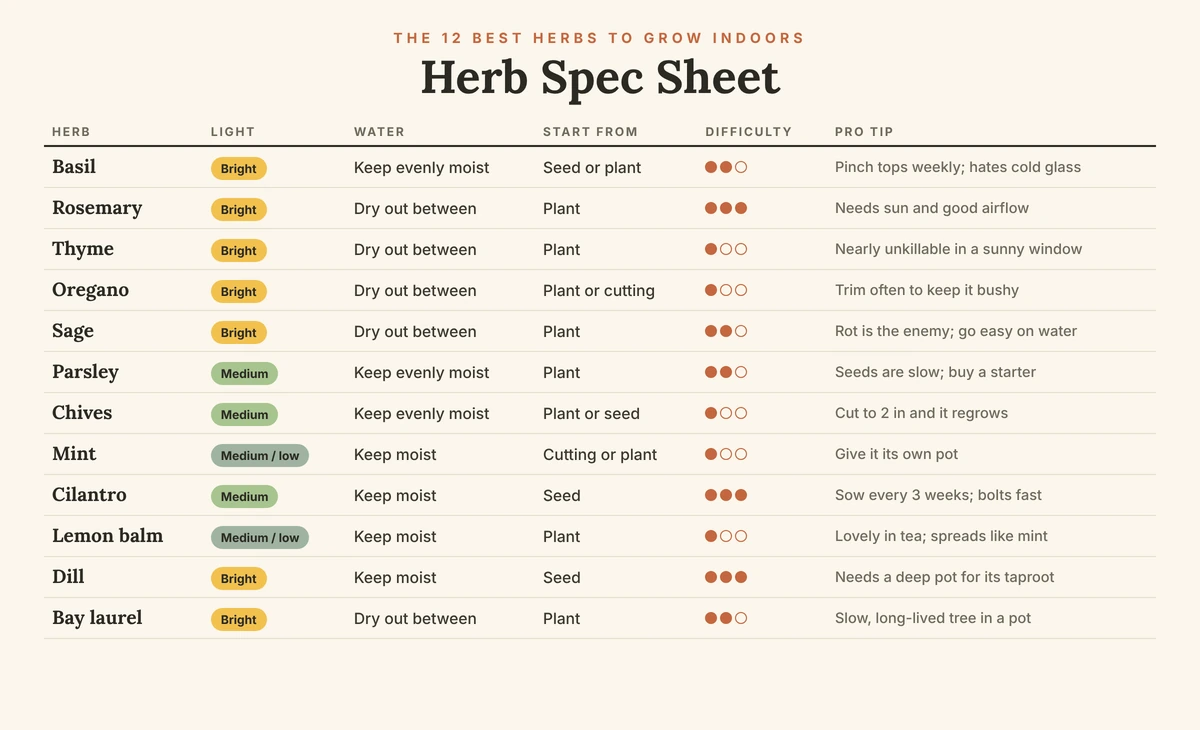
Here is every herb worth trying indoors, with the light it needs, how to water it and how easy it really is.
Basil
Bright light · keep evenly moist · start from seed or plant
The most wanted indoor herb and the most fussy. Basil hates cold, so keep it away from icy winter glass; Penn State notes it cannot tolerate temperatures below 50°F. Pinch the top pair of leaves every week and it grows into a bush instead of a stick.
Rosemary
Bright light · dry out between waterings · start from a plant
Rosemary needs your sunniest window and moving air. Overwatering kills it far more often than underwatering. If the needles turn brown at the base, water less.
Thyme
Bright light · dry out between waterings · start from a plant
The easiest Mediterranean herb to keep alive indoors. Snip sprigs often and it stays compact and full.
Oregano
Bright light · dry out between waterings · plant or cutting
Forgiving, fast and great on pizza night. Cut stems back by a third whenever they get long and floppy.
Sage
Bright light · dry out between waterings · start from a plant
Soft, silvery leaves that rot if they stay wet. Water at the soil, not over the leaves, and only when the pot feels light.
Parsley
Medium to bright light · keep evenly moist · start from a plant
Parsley seed can take weeks to sprout, so buy a starter plant. Harvest the outer stems first and the center keeps producing.
Chives
Medium light · keep evenly moist · plant or seed
Cut a clump down to about 2 inches and it regrows in a couple of weeks. One of the best value herbs you can grow.
Mint
Medium to low light · keep moist · start from a cutting or plant
Mint grows almost anywhere, but it spreads aggressively, so always give it its own pot. A grocery-store sprig will root in a glass of water in about a week.
Cilantro
Medium light · keep moist · start from seed
Cilantro “bolts” (flowers and turns bitter) quickly, especially in warm rooms. Sow a fresh pot every 3 weeks for a steady supply.
Lemon balm
Medium to low light · keep moist · start from a plant
A mint relative with a bright lemon scent. Perfect for tea and very tolerant of an east window.
Dill
Bright light · keep moist · start from seed
Dill has a long taproot and grows tall, so it needs a deep pot (at least 12 inches). Harvest young fronds often.
Bay laurel
Bright light · dry out between waterings · start from a plant
Technically a small tree, bay lives for years in a pot and gives you fresh leaves for soups and stews. Slow, steady and beautiful.
Skip these indoors: horseradish, fennel and lovage have big root systems that struggle in containers, according to Penn State Extension, which also warns that tarragon is toxic to dogs and cats.
Step 3: Grow What You Cook (5 Kitchen Herb Garden Kits)
The fastest way to waste money on an indoor herb garden is to grow herbs you never use. Instead, pick three herbs that match how you already cook. Each kit fits on one windowsill.
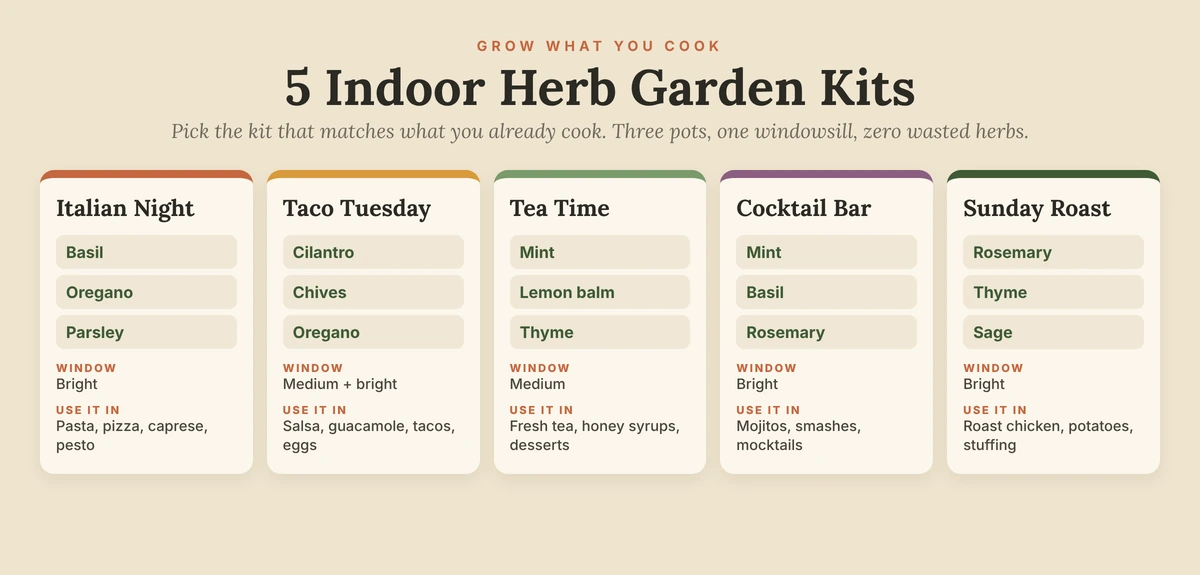
| Kit | Herbs | Window | First thing to make |
|---|---|---|---|
| Italian Night | Basil, oregano, parsley | Bright | Fresh pesto or a caprese salad |
| Taco Tuesday | Cilantro, chives, oregano | Medium plus bright | Pico de gallo |
| Tea Time | Mint, lemon balm, thyme | Medium | Fresh mint and lemon balm tea |
| Cocktail Bar | Mint, basil, rosemary | Bright | A basil lemonade or mojito mocktail |
| Sunday Roast | Rosemary, thyme, sage | Bright | Herb-roasted potatoes |
Not sure which fits you? Let the matchmaker decide:
Herb Garden Matchmaker
Answer four quick questions and get your starter herbs and the best setup for your home.
Step 4: Choose Your Setup (Indoor Herb Garden Ideas)
There is no single right way to set up an indoor herb garden. Pick the setup that fits your light, your space and how much you want to spend.
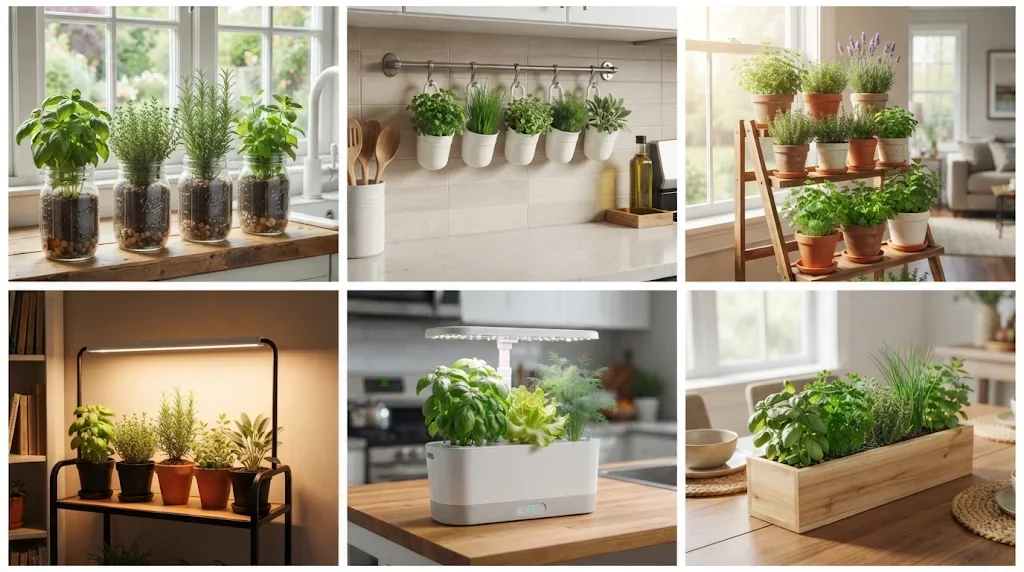
| Setup | Best for | Typical cost | Watch out for |
|---|---|---|---|
| Windowsill herb garden | Bright south or west windows | $20 to $40 | Cold glass in winter; pull pots back at night |
| Mason jars | Small kitchens, gifts | $15 to $30 | Jars need a drainage hole, or use them as covers over nursery pots |
| Wall rail with hanging pots | Counters with no sill space | $30 to $60 | Drips; water over the sink |
| Tiered plant stand | Growing 6 or more herbs | $40 to $80 | Bottom shelf gets less light; rotate weekly |
| Grow-light shelf | Low-light homes, basements, winter | $50 to $120 | Keep the light 6 to 12 in above the leaves |
| Hydroponic herb garden | No soil, no mess, gadget lovers | $80 to $250 | Refill water and nutrients on schedule |
| Long planter box | Dining tables, wide sills | $25 to $50 | Do not mix mint into it; it takes over |
About indoor herb garden kits: countertop hydroponic gardens with built-in lights take the guesswork out of light and watering and are a great option for dark homes. They cost more to run and lock you into seed pods, so try a simple windowsill first if you have good light. Searching for a gift? A kitchen herb garden kit with three pots, soil and seeds makes a lovely present for anyone who likes to cook.
Step 5: Plant, Water and Feed the Right Way
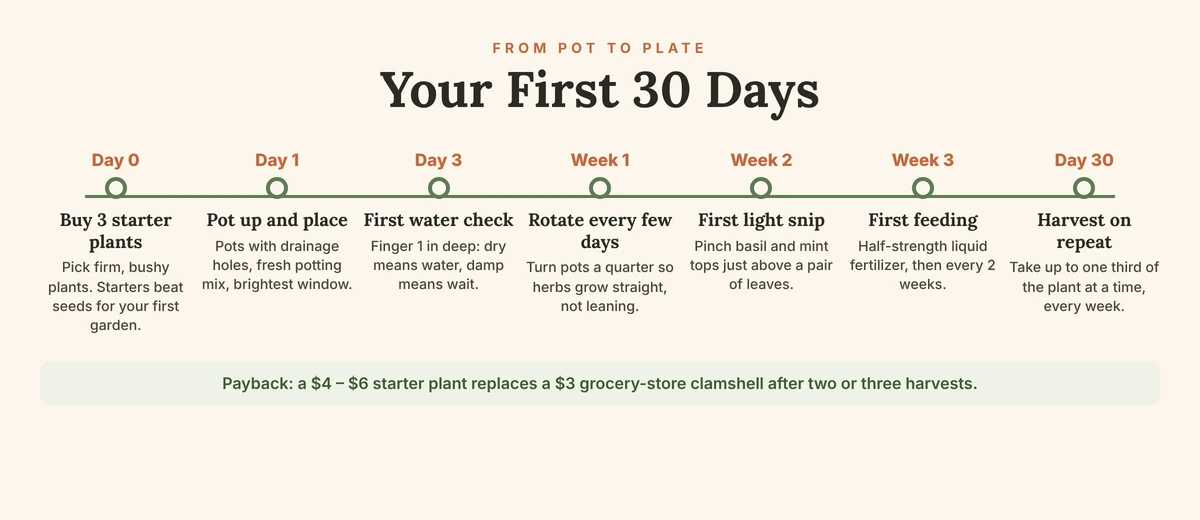
- Use pots with drainage holes. This is non-negotiable. Herbs sitting in water rot. A 4 to 6-inch pot per herb is a good start.
- Use fresh, fast-draining potting mix. Never garden soil, which packs down and carries pests.
- Water with the finger test. Push a finger an inch into the mix. Dry means water until it drains out the bottom; damp means wait. Rosemary, thyme, sage, oregano and bay like to dry out slightly, while basil should never dry out completely (Penn State Extension).
- Feed lightly. A low dose of water-soluble fertilizer every 2 weeks is plenty. More feeding can actually weaken the flavor and aroma.
- Keep it comfortable. Herbs like 65 to 70°F during the day and 55 to 60°F at night. Winter heating dries the air, so group pots together or set them on a tray of damp pebbles.
- Rotate the pots. Turn each pot a quarter every few days so the herbs grow straight instead of leaning toward the glass.
How to Harvest Herbs So They Keep Growing
- Never take more than one third of a plant at once, so it has enough leaves left to recover.
- Leafy herbs (basil, mint, oregano, sage): cut just above a pair of leaves. Two new stems grow from that point.
- Clump herbs (chives, parsley, cilantro): cut the outer stems near the base, about 2 to 3 inches up, and leave the center to keep producing.
- Woody herbs (rosemary, thyme, bay): snip the soft green tips and avoid cutting into old brown wood.
- Pinch off flowers on basil and mint as soon as you see them to keep the leaves tender.
The payback: a grocery-store clamshell of fresh herbs costs around $3, and a starter plant around $4 to $6. Harvested weekly, a healthy herb pays for itself after two or three harvests and keeps going for months.
Indoor Herb Garden Problems (and Quick Fixes)
| Problem | Likely cause | Fix |
|---|---|---|
| Tall, floppy, pale stems | Not enough light | Move to a brighter window or add a grow light |
| Yellow lower leaves, soggy soil | Overwatering | Water less and check drainage |
| Crispy brown edges | Dry heated air or underwatering | Group pots and use a pebble tray |
| Black spots on basil | Cold glass or cold drafts | Pull the pot back from the window at night |
| Tiny flies around the soil | Fungus gnats from wet soil | Let soil dry more; yellow sticky traps |
| Cilantro flowering | Bolting from warmth or age | Harvest it all and sow a new pot |
Herbs and Pets: What to Know
Several popular herbs, including chives, mint, oregano, parsley and lemon balm, appear on the ASPCA list of plants that are toxic to cats and dogs, and Penn State Extension warns against tarragon in pet homes. Basil, rosemary and sage are popular choices for pet owners. Whatever you grow, keep pots out of reach of nibblers and check the ASPCA plant list before you buy.
Growing Herbs Indoors in Winter
Winter is when an indoor herb garden earns its keep, and also when it struggles. Days are short, windows are cold and heaters dry the air. Add 4 to 6 hours of grow light in the evening, move pots a few inches away from frosty glass at night, water less often because growth slows, and group plants to share humidity. It is a calm, rewarding hobby for long evenings, and a great project to add to your winter bucket list.
Indoor Gardening Trends for 2026 and 2027
- Smart countertop gardens get cheaper: more affordable hydroponic units with app reminders and better LEDs.
- Kitchen grow cabinets: built-in under-cabinet grow lights designed into new kitchens.
- Regrowing from groceries: rooting supermarket mint, basil and green onions in water instead of buying seed.
- Micro-greens beside herbs: a tray of microgreens ready in about 10 days alongside the slower herbs.
- 2027 watch list: lower-energy full-spectrum LEDs, self-watering pots with soil-moisture sensors and herb “subscriptions” that send replacement seed pods by season.
Love keeping things green? Try building a tiny world with our terrarium ideas, plan an outdoor bed for spring with these raised garden bed ideas, or press your favorite leaves and flowers with our pressed flower ideas. For more slow, satisfying projects, browse our hobbies to do at home.
What is the easiest herb to grow indoors?
Thyme, oregano, chives, mint and lemon balm are the easiest herbs to grow indoors. They tolerate small mistakes with watering, and mint, chives and lemon balm cope with less light than most herbs.
How much light does an indoor herb garden need?
Most herbs need about 6 hours of direct sun, usually from a south-facing window. Without that, use a full-spectrum LED grow light 6 to 12 inches above the leaves for 12 to 16 hours a day.
Can you grow herbs indoors year round?
Yes. With a bright window or a grow light, a comfortable room of about 65 to 70 degrees F and regular harvesting, most herbs grow indoors all year. Growth slows in winter, so water and feed less often.
How often should I water indoor herbs?
Water when the top inch of potting mix is dry, not on a fixed schedule. Rosemary, thyme, sage, oregano and bay like to dry out slightly between waterings, while basil, parsley and mint prefer evenly moist soil.
Why is my indoor basil dying?
The most common causes are cold (basil is damaged below 50 degrees F, often from touching winter window glass), too little light and overwatering. Move it somewhere warm and bright, water only when the top inch is dry and pinch the tips weekly.
Is a hydroponic herb garden better than soil?
A hydroponic herb garden with a built-in light is easier in dark homes and grows faster, but it costs more to buy and run. Soil pots on a bright windowsill are cheaper and work very well if you have good light.
How long does an herb garden take to grow?
Starter plants can be lightly harvested in about 2 weeks. From seed, fast herbs like basil and cilantro are ready in roughly 4 to 6 weeks, while parsley and chives take longer.