30 Terrarium Ideas by Type: Closed, Open, Succulent and Moss Gardens (2026)
Most terrarium lists dump 15 pretty photos into a listicle and call it a day — no plant recommendations, no cost breakdown, no mention of what happens when the mould shows up three weeks later. This guide is built differently. Every idea below includes the container type, which plants actually work inside it, a realistic cost range, and the one mistake that kills that particular build. They’re organised by terrarium type — closed, open, succulent, moss, and bioactive — so you can jump straight to the style that fits your light conditions, your budget, and how much maintenance you’re willing to do.
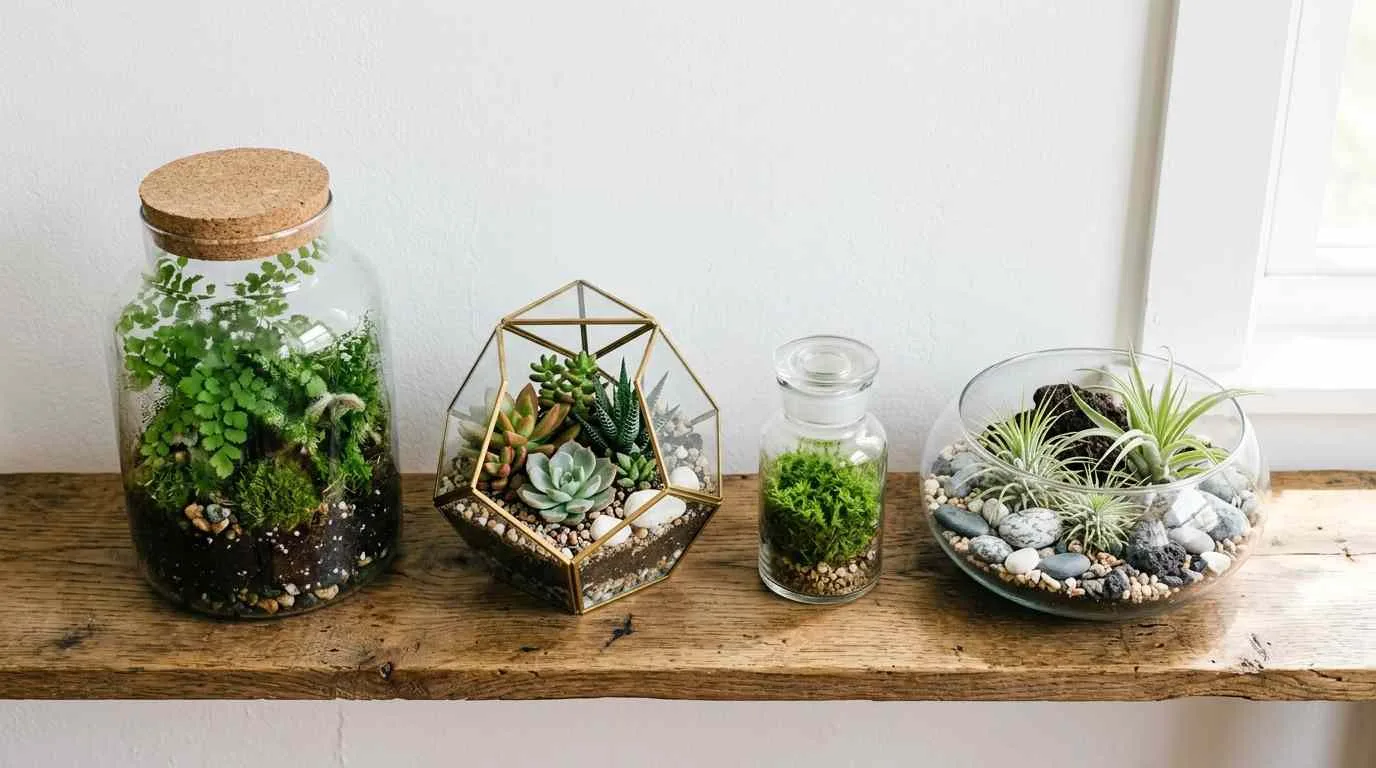
Terrarium Type Cheat Sheet (Read This First)
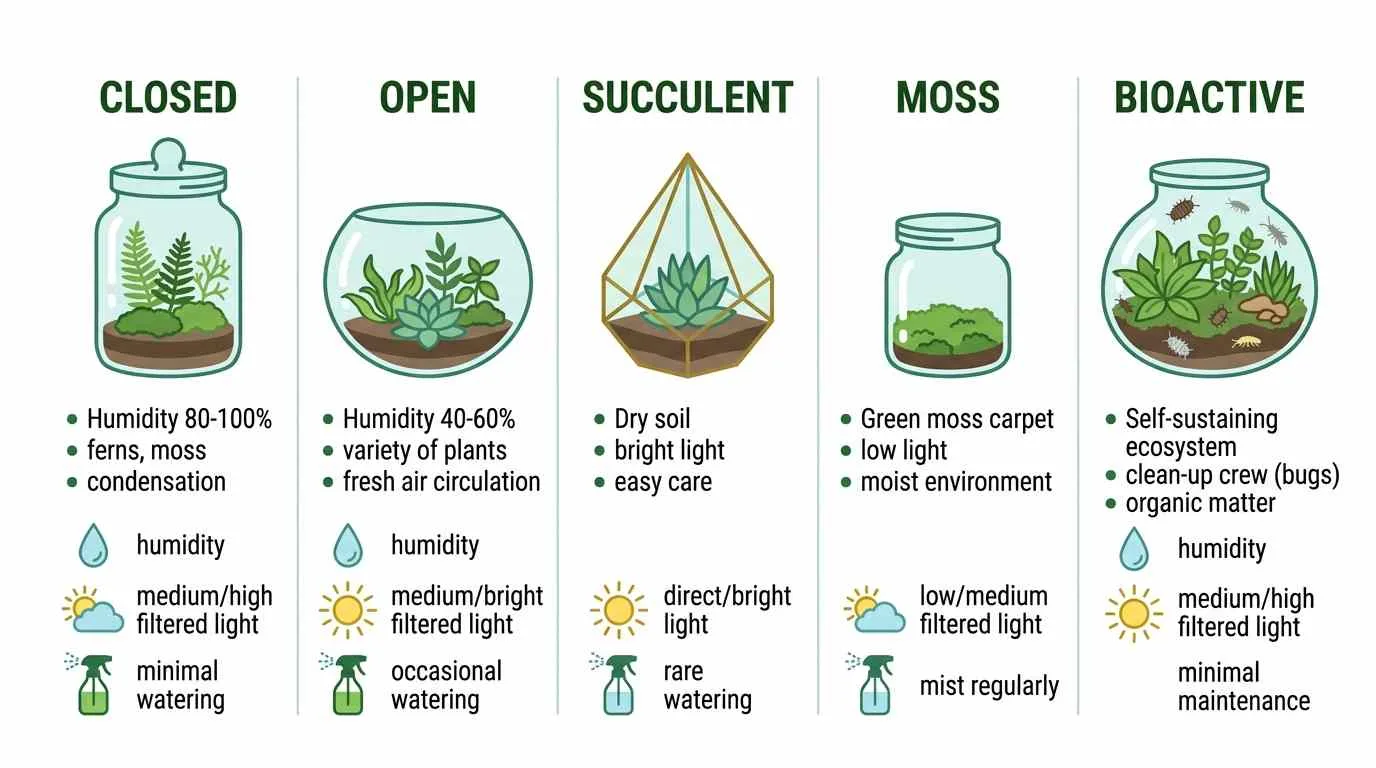
Before you pick a project, understand the five types. Choosing the wrong one for your conditions is the number-one reason terrariums die within a month.
Closed Terrariums
Sealed glass containers that create their own water cycle. Humidity stays at 80–100%, so only tropical plants survive: ferns, fittonia, moss, and selaginella. They need indirect light and almost zero watering after the initial setup — some closed terrariums haven’t been watered in years. The trade-off is that mould loves the same conditions your plants do, so airflow management matters.
Open Terrariums
Containers with a wide opening or no lid. Humidity sits around 40–60%, which suits succulents, air plants, cacti, and herbs. They need more frequent watering (every one to two weeks) but are far more forgiving of beginner mistakes because excess moisture evaporates instead of rotting roots.
Succulent Terrariums
A subset of open terrariums designed specifically for drought-tolerant plants. The key difference is the soil — succulents need a fast-draining mix (50/50 cactus soil and perlite), not the moisture-retaining substrate used in tropical builds. These are the hardest to kill if you tend to forget about your plants.
Moss Terrariums
The lowest-maintenance option. Sheet moss, cushion moss, and mood moss thrive in indirect light and high humidity. A sealed jar with a thin layer of moss over gravel can survive on a north-facing windowsill for months with zero attention. Moss terrariums are also the most affordable — moss is free if you forage it responsibly.
Bioactive Terrariums
Living ecosystems with springtails, isopods, or both. The microfauna break down dead plant material and prevent mould, creating a self-sustaining cycle. These are the most advanced builds but also the most self-sufficient once established. Expect a higher upfront cost ($30–60 for the fauna alone) and a two-to-four-week settling period.
Closed Terrarium Ideas
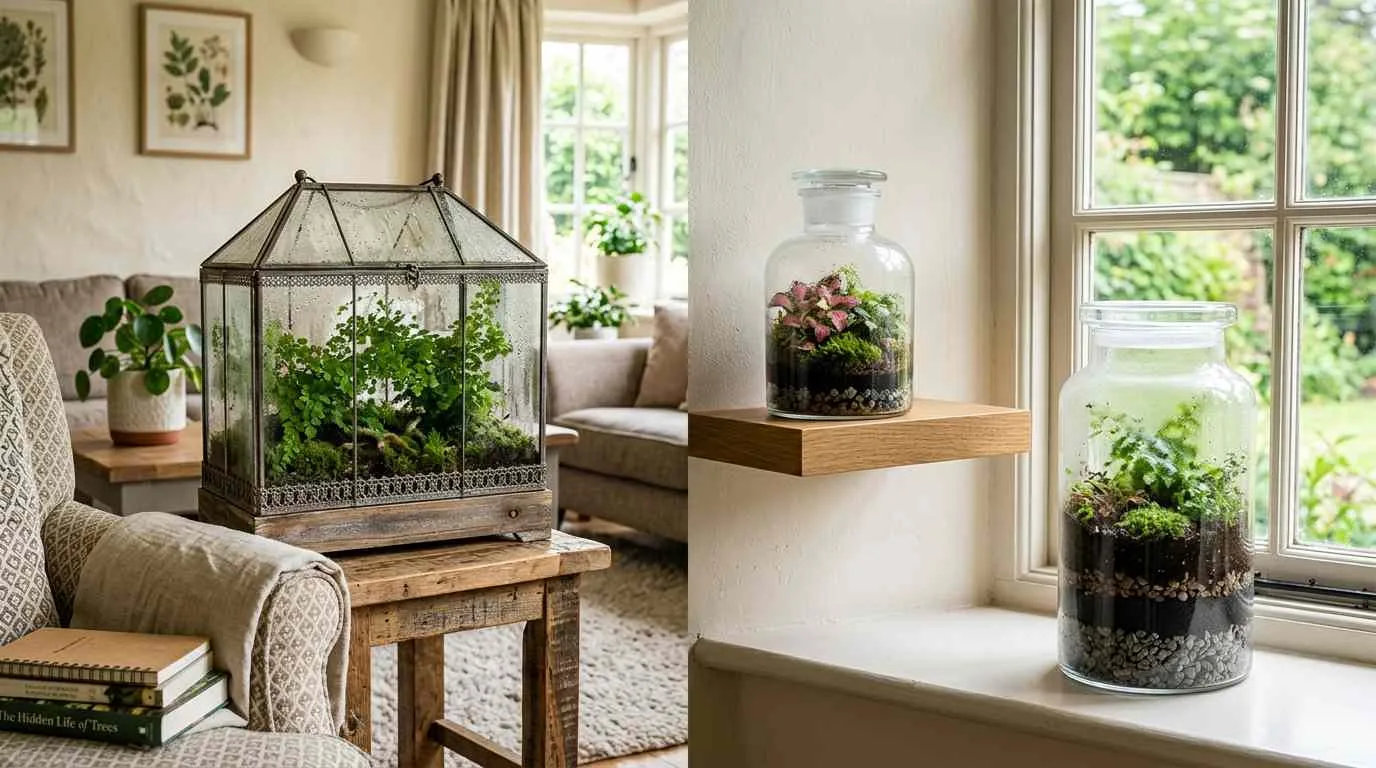
Closed terrariums are the showpieces — the ones that make visitors ask “how is that alive in there?” The sealed environment creates a miniature rainforest, and once balanced, they can run for months or even years without intervention.
1. Classic Wardian Case
The original terrarium. A glass-paned case (rectangular or house-shaped) with a hinged lid, filled with ferns, selaginella, and sheet moss over a gravel-charcoal-soil layering. The Wardian case is the terrarium equivalent of a leather-bound book — it never goes out of style and looks at home on a desk, a mantle, or a bookshelf.
Best plants: Maidenhair fern, bird’s nest fern, creeping fig.
Cost: $25–60 for the case; $10–20 for plants and substrate.
Mistake to avoid: Placing it in direct sunlight. The glass magnifies heat and cooks the plants inside. Bright indirect light only.
2. Apothecary Jar Tropical
A round apothecary jar (the kind you see in sweet shops) filled with a lush tropical mix. The curved glass distorts the view slightly, which gives the interior a dreamlike quality. These look best when the plants are dense enough that you can’t see the soil — aim for full coverage within six to eight weeks of planting.
Best plants: Fittonia (nerve plant), polka dot plant, baby tears.
Cost: $15–30 for a 20cm jar; $8–15 for plants.
Mistake to avoid: Overfilling. Leave at least a third of the jar’s height as airspace above the plants — they need room to breathe and the condensation cycle needs ceiling clearance.
3. Demijohn Bottle Garden
A large glass demijohn (5–10 litre carboy) turned into a sealed ecosystem. Planting through the narrow neck is a challenge — you’ll need long tweezers and a chopstick — but the result is a conversation piece that runs itself. The famous David Latimer bottle garden has been sealed since 1972 and is still thriving.
Best plants: Tradescantia, spiderwort, small-leaf ficus.
Cost: $10–25 for a second-hand demijohn; $8–12 for plants.
Mistake to avoid: Using plants that grow too fast. In a bottle with no pruning access, aggressive growers take over in weeks. Stick to slow-growing, compact species.
4. Cookie Jar Cloud Forest
A repurposed glass cookie jar (check thrift stores — they’re everywhere for $3–5) set up as a cloud forest with vertical planting. Attach small ferns and moss to a piece of cork bark or driftwood standing upright in the jar. The height creates micro-climates: humid at the base, slightly drier at the top.
Best plants: Button fern, selaginella, java moss on cork.
Cost: $3–8 for the jar; $10–18 for plants and hardscape.
Mistake to avoid: Skipping the activated charcoal layer. Without it, bacterial buildup in a closed jar produces that swamp smell within two to three weeks.
5. Cloche Bell Jar Display
A glass cloche (bell-shaped dome) over a wooden or cork base. This is the most visually striking closed design because the dome shape focuses attention on one central composition — a miniature tree, a mounded moss landscape, or a single dramatic fern. Cloches are popular in home decor stores, which means the containers are easy to source but pricier than repurposed jars.
Best plants: Preserved moss (if decorative only), live sheet moss, small fittonia.
Cost: $20–45 for a quality cloche; $5–12 for plants.
Mistake to avoid: Assuming every cloche is airtight. Many have a gap between the dome and the base — check the seal or add a thin felt strip if you want a true closed environment.
6. Hanging Globe Terrarium (Sealed)
A sealed glass globe suspended from a macrame hanger or a ceiling hook. The swinging, floating effect makes this the most Instagram-ready terrarium design. Size matters here — anything under 15cm diameter dries out too fast to maintain a stable cycle, so go bigger than you think you need.
Best plants: Peperomia prostrata (string of turtles), micro fittonia, pillow moss.
Cost: $12–25 for the globe; $5–10 for a macrame hanger; $8–15 for plants.
Mistake to avoid: Hanging it near a heat source. Hot air rises, and a globe near a ceiling light or radiator becomes an oven. Hang it at eye level away from heat.
7. Layered Geology Jar
A tall, narrow jar (a spaghetti jar or olive jar works) where the visible layers ARE the design. Build up distinct, coloured bands: white gravel, black charcoal, brown sphagnum moss, reddish-brown soil, then green plants on top. The cross-section effect looks like a geological diagram come to life.
Best plants: Small fern, fittonia, club moss.
Cost: $5–10 for the jar; $12–20 for gravel, charcoal, moss, soil, and plants.
Mistake to avoid: Making layers too thin. Each layer needs to be at least 1.5cm thick to be visible and functional. The gravel drainage layer especially — too shallow and water pools at the roots.
8. Rainforest Floor Vivarium
A front-opening glass enclosure (designed for reptiles, but perfect for plants) set up as a dense rainforest floor. The front-opening door makes planting and maintenance dramatically easier than a top-opening jar. Add a small USB fan for air circulation and you’ve built a micro-climate that tropical plants genuinely thrive in.
Best plants: Begonia rex (small varieties), jewel orchid, creeping fig, sphagnum moss carpet.
Cost: $40–80 for a small vivarium enclosure; $20–35 for plants and substrate.
Mistake to avoid: Ignoring drainage. These enclosures don’t have drain holes. Build a false bottom with egg crate and mesh fabric, or waterlogging will rot everything within a month.
Open Terrarium Ideas
Open terrariums trade the self-watering magic of sealed jars for versatility. Anything that doesn’t need tropical humidity — succulents, air plants, cacti, herbs, even small tropicals in a humid room — works in an open container.
9. Geometric Glass Terrarium
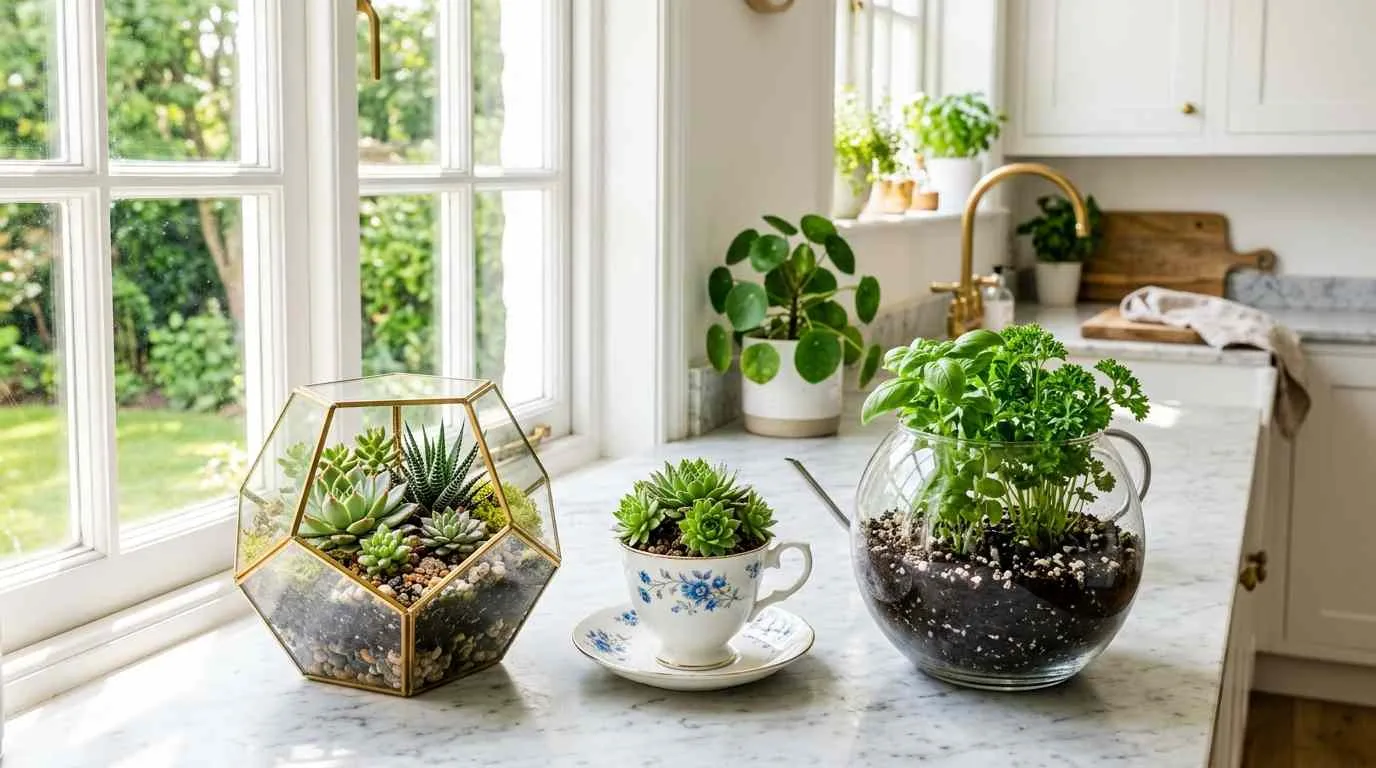
The modern classic. A brass-framed geometric polyhedron (pentagon, hexagon, or diamond-shaped) filled with succulents and decorative sand. The angular container does all the design work — you just need to choose three to four plants with different textures (one rosette, one trailing, one upright) and let the geometry frame them.
Best plants: Echeveria, string of pearls, haworthia.
Cost: $15–35 for the container; $8–15 for plants and sand.
Mistake to avoid: Using regular potting soil. Succulents in standard soil hold too much moisture and rot. Use a 50/50 mix of cactus soil and perlite.
10. Teacup Terrarium
A vintage teacup (with or without a saucer) planted with a single small succulent or air plant. This is the smallest practical terrarium size — small enough for a desk, a bathroom shelf, or a bedside table. Raid charity shops for ornate teacups that are too chipped to drink from but perfect for planting.
Best plants: Sempervivum (hens and chicks), small tillandsia, baby echeveria.
Cost: $1–5 for a thrifted teacup; $3–5 for one plant.
Mistake to avoid: No drainage. Drill a small hole in the base with a ceramic drill bit, or layer pebbles 1cm deep as a water reservoir so roots don’t sit in standing water.
11. Fish Bowl Herb Garden
A large round fish bowl turned into a kitchen herb garden. The wide opening gives herbs the airflow they need, and the clear glass lets you monitor root health. Plant three herbs that share light and water needs — and that you actually cook with.
Best plants: Basil, cilantro, and parsley (all prefer moist soil and bright light), or thyme, rosemary, and oregano (all prefer drier soil and full sun).
Cost: $5–10 for a fish bowl; $5–8 for herb seedlings.
Mistake to avoid: Mixing drought-lovers with water-lovers. Rosemary and basil have completely different watering needs. Pick one camp.
12. Driftwood Air Plant Display
Mount three to five air plants (tillandsia) on a piece of driftwood using non-toxic craft wire or hot glue on the dry base. Air plants don’t need soil at all — they absorb water through their leaves — so the driftwood is purely structural. Mist twice a week or dunk the whole piece in water for 20 minutes monthly.
Best plants: Tillandsia ionantha, T. xerographica, T. caput-medusae.
Cost: $5–15 for driftwood (or free if you beach-forage); $3–5 per air plant.
Mistake to avoid: Gluing air plants in a way that traps water at the base. The base needs to dry within four hours of watering or it rots. Mount them tilted or upside-down so water drains out.
13. Tiered Cake Stand Terrarium
A two-or-three-tier cake stand with a different plant composition on each level. The tiers create a vertical garden effect without wall mounting. Bottom tier: larger succulents with decorative stones. Middle tier: smaller rosettes or trailing varieties. Top tier: a single statement air plant. The finished piece looks like a wedding centrepiece.
Best plants: Mix of echeveria, sedum, and one tillandsia xerographica on top.
Cost: $10–30 for a tiered stand; $15–25 for mixed plants.
Mistake to avoid: Overwatering the top tier. Water runs down and the bottom tier gets double-dosed. Water each tier individually with a small squeeze bottle.
14. Picture Frame Terrarium
A deep shadow box frame (5–8cm depth) mounted on a wall and filled with air plants and preserved moss. This is a terrarium that hangs like art. Use hot glue to secure the moss as the background, then wire air plants into position. The frame does double duty as wall decor and a living garden.
Best plants: Preserved reindeer moss for background, live tillandsia for the focal point.
Cost: $10–20 for a shadow box; $8–15 for moss and air plants.
Mistake to avoid: Forgetting the air plants still need watering. Remove them from the frame monthly, soak for 20 minutes, dry completely, and remount. The moss stays in the frame.
15. Beach-in-a-Bowl
A wide, shallow glass bowl with white sand, small pebbles, driftwood fragments, and succulents arranged to look like a miniature beach scene. Add a small ceramic umbrella or wooden beach chair for personality. This is the terrarium that doesn’t look like a terrarium — it looks like a holiday souvenir.
Best plants: Lithops (living stones), small aloe, string of bananas.
Cost: $8–15 for the bowl; $10–18 for sand, plants, and miniatures.
Mistake to avoid: Using actual beach sand without washing it first. Salt residue in beach sand kills most plants. Rinse thoroughly or use craft sand.
Succulent Terrarium Ideas
Succulent terrariums are the most popular entry point — they’re forgiving, photogenic, and available as kits at every garden centre. The challenge isn’t building one, it’s avoiding the slow death by overwatering that claims most beginner builds within two months.
16. Desert Landscape Bowl
A wide, shallow terracotta bowl arranged to mimic a desert landscape. Build up sand dunes using layers of fine sand over cactus soil, plant three to five drought-tolerant succulents at different heights, and scatter small red or orange pebbles to suggest arid ground. A miniature wooden fence or a tiny ceramic coyote completes the scene.
Best plants: Barrel cactus (mini), aloe juvenna, pachyveria.
Cost: $8–12 for a terracotta bowl; $12–20 for plants and decor.
17. Succulent Wreath
A living wreath made from a wire wreath form packed with sphagnum moss and planted with succulent cuttings. Hang it on a wall or lay it flat as a centrepiece. The succulents root into the moss over two to three weeks (mist daily until established), and the wreath stays alive for one to two years with minimal care.
Best plants: Cuttings from echeveria, sedum, sempervivum — the more variety, the better.
Cost: $8–12 for a wreath form and moss; $15–30 for a mixed bag of succulent cuttings.
18. Broken Pot Fairy Garden
Take a terracotta pot that’s cracked or broken (or deliberately break one with a hammer — wear safety glasses), tilt the largest shard inside the pot to create a terraced hillside effect, and plant succulents on each level. Add a miniature door, a tiny ladder, or a pebble pathway. This rescues pots most people throw away.
Best plants: Sedum morganianum (burro’s tail), sempervivum, crassula.
Cost: $0–5 for a broken pot; $10–15 for miniatures and plants.
19. Colour-Gradient Succulent Tray
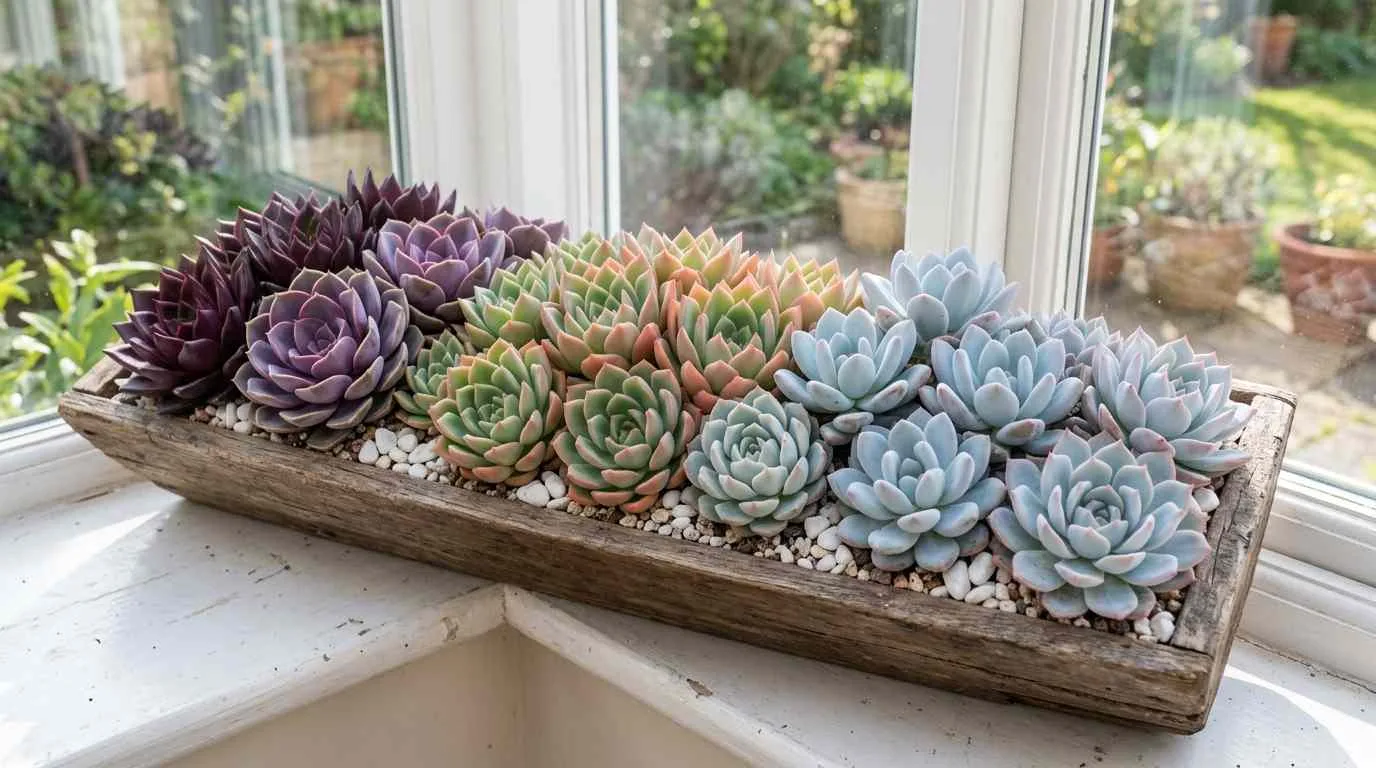
A long, narrow planter (a wooden trough or a baking tin) planted with succulents arranged by colour: deep purple echeveria at one end, transitioning through green and silver to pale blue-green sedums at the other end. The gradient effect works because succulents come in an extraordinary colour range that most people don’t realise until they see them side by side.
Best plants: Echeveria ‘Black Prince’ (dark purple) → E. ‘Perle von Nurnberg’ (lilac) → Graptoveria ‘Fred Ives’ (pink-green) → Sedum rubrotinctum (green-red) → Pachyphytum oviferum (pale blue).
Cost: $5–15 for the planter; $20–35 for a varied colour set.
20. Mason Jar Succulent Garden
A wide-mouth mason jar tipped on its side (secured with a ring of hot glue or a small stand) and planted through the opening. The sideways jar is an unexpected angle that makes people look twice. Layer gravel, cactus soil, and one to two compact succulents visible through the glass. This is a five-minute project if you already own a jar.
Best plants: Haworthia fasciata (zebra plant), small echeveria.
Cost: $2–5 for a jar; $5–8 for plants.
21. Pumpkin Succulent Planter (Seasonal)
Hollow out a real or faux pumpkin, line the inside with plastic wrap, fill with cactus soil, and plant succulents in the top. With a real pumpkin this lasts two to four weeks — perfect as a Thanksgiving centrepiece. With a faux pumpkin (craft foam or ceramic), it’s permanent. The autumn orange against green succulents is an automatic colour palette.
Best plants: Rosette-forming echeveria, sedum, and dried wheat or berry stems as accents.
Cost: $3–8 for a real pumpkin / $8–15 for faux; $10–15 for plants.
Moss Terrarium Ideas
Moss is the most underrated terrarium plant. It doesn’t need soil, tolerates low light, grows slowly enough that you won’t need to prune for months, and costs nothing if you forage it yourself (legally — check local regulations and only take small amounts from abundant patches). A moss terrarium is a miniature forest floor in a jar.
22. Forest Floor Jar
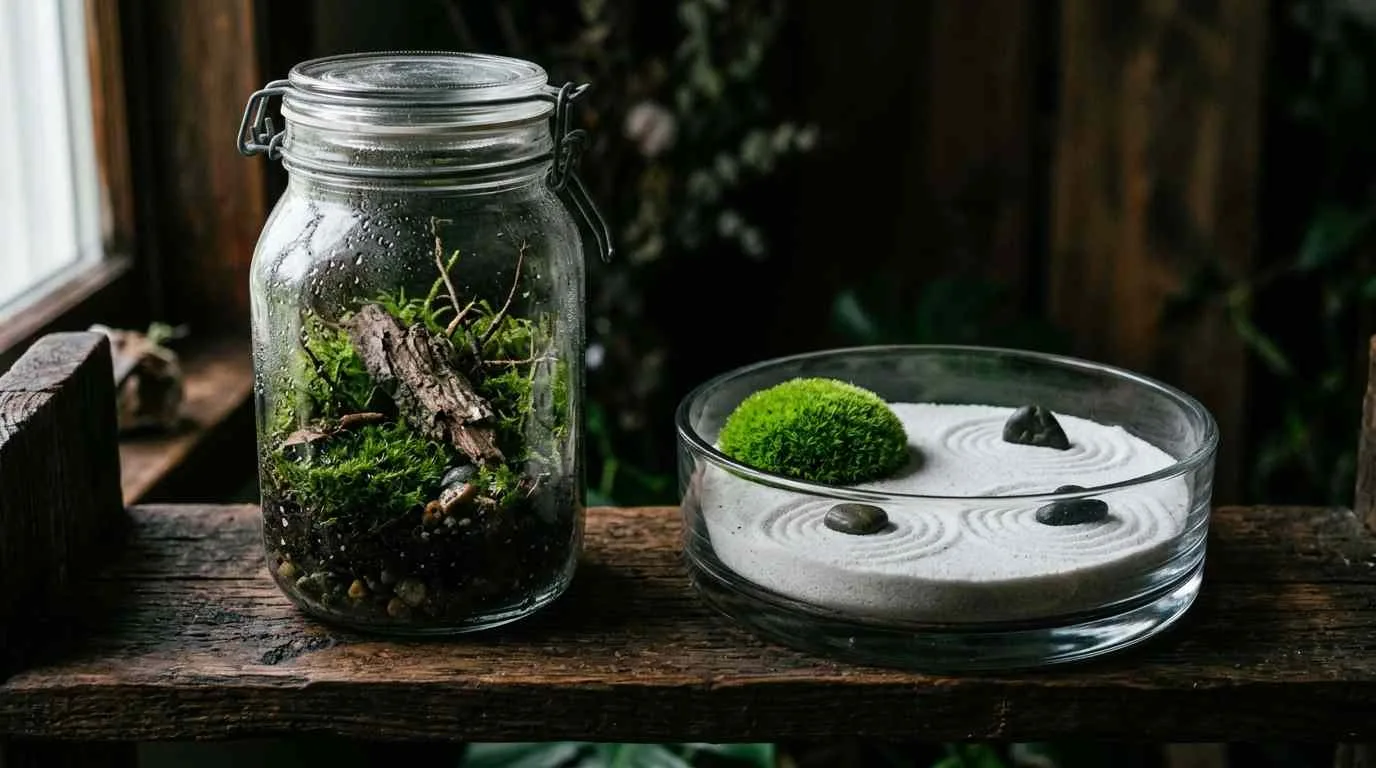
The quintessential moss terrarium. A sealed mason jar or candy jar with a thin gravel layer, a sprinkle of activated charcoal, and a carpet of sheet moss. Add one to two small stones and a tiny piece of bark for texture. The effect is a slice of woodland trapped in glass — and it genuinely maintains itself.
Best moss: Sheet moss (Hypnum) for the base, mood moss (Dicranum) for height variation.
Cost: $2–5 for the jar; $5–10 for moss (or free foraged).
Mistake to avoid: Packing the moss too tightly. It needs air pockets underneath to prevent the base from going anaerobic (the source of that rotting-egg smell).
23. Zen Landscape Jar
White sand raked into patterns (use a toothpick or chopstick for miniature Zen garden lines), three to five carefully placed stones, and a single island of cushion moss. The negative space is the design. This is meditation in a jar — the act of raking the sand is as calming as looking at the finished result.
Best moss: Cushion moss (Leucobryum) for the single green island.
Cost: $5–10 for a shallow glass bowl; $8–12 for white sand, stones, and moss.
24. Moss Wall Art Panel
Preserved moss (not live — preserved reindeer moss is dyed and dried) glued onto a wooden panel or canvas frame and hung on the wall. This isn’t a terrarium in the traditional sense — there’s nothing alive — but the effect is a lush green wall feature that needs zero maintenance, zero light, and zero watering. It lasts for years.
Materials: Preserved reindeer moss in mixed greens, a shadow box or canvas frame, hot glue.
Cost: $15–30 depending on panel size.
Mistake to avoid: Using live moss for wall art. It will dry out and brown within days unless you mist it constantly. Preserved moss is the right choice for vertical displays.
25. Bonsai Moss Companion
Add a layer of live moss around the base of a bonsai tree. The moss acts as a living mulch — it retains moisture, adds colour, and makes the bonsai look like a full-scale tree in a miniature landscape. This is the traditional Japanese approach (called “kokedama” when the moss ball replaces the pot entirely) and it works in any bonsai container.
Best moss: Java moss or sheet moss, trimmed to fit the container surface.
Cost: $3–8 for moss to add to an existing bonsai setup.
26. Stacked Stone Moss Cascade
Stack flat river stones (slate works best) inside a glass container, tucking live moss into the crevices between each stone. The finished effect looks like a mossy cliff face or a waterfall frozen in green. Mist the moss every few days — the stone surfaces retain moisture and create micro-habitats in the gaps.
Best moss: Java moss (attaches to stone surfaces), fern moss for crevices.
Cost: $5–12 for a glass container; $5–10 for stones and moss.
27. Terrarium Ring Light
A glass ring-shaped container (toroidal vase — search “ring vase” on Etsy) filled with cushion moss and tiny fern fronds. Place a small LED tea light in the centre ring opening. The light glows through the moss and glass, creating a lamp-terrarium hybrid that works as a nightstand piece.
Best moss: Cushion moss, miniature fern.
Cost: $12–25 for a ring vase; $5–10 for moss and LED light.
Bioactive & Advanced Terrarium Ideas
These builds are for people who’ve made a few terrariums and want to level up. Bioactive terrariums include living microfauna — tiny creatures that form a cleanup crew, eating mould and dead plant matter so the ecosystem regulates itself.
28. Springtail Bioactive Jar
A closed terrarium with a thriving springtail colony. Springtails are tiny (1–2mm), harmless arthropods that eat mould and decomposing plant material — they’re the terrarium world’s cleaning crew. Add a starter culture of tropical springtails to any closed terrarium and they’ll establish within two weeks. The result is a self-cleaning ecosystem that handles mould before you even notice it.
Where to buy: Springtail cultures are available from reptile supply shops and specialist terrarium suppliers. A culture of 50–100 costs $8–15.
Mistake to avoid: Adding springtails to an open terrarium. They need the humidity of a sealed environment — in open containers, they escape or desiccate.
29. Isopod Vivarium
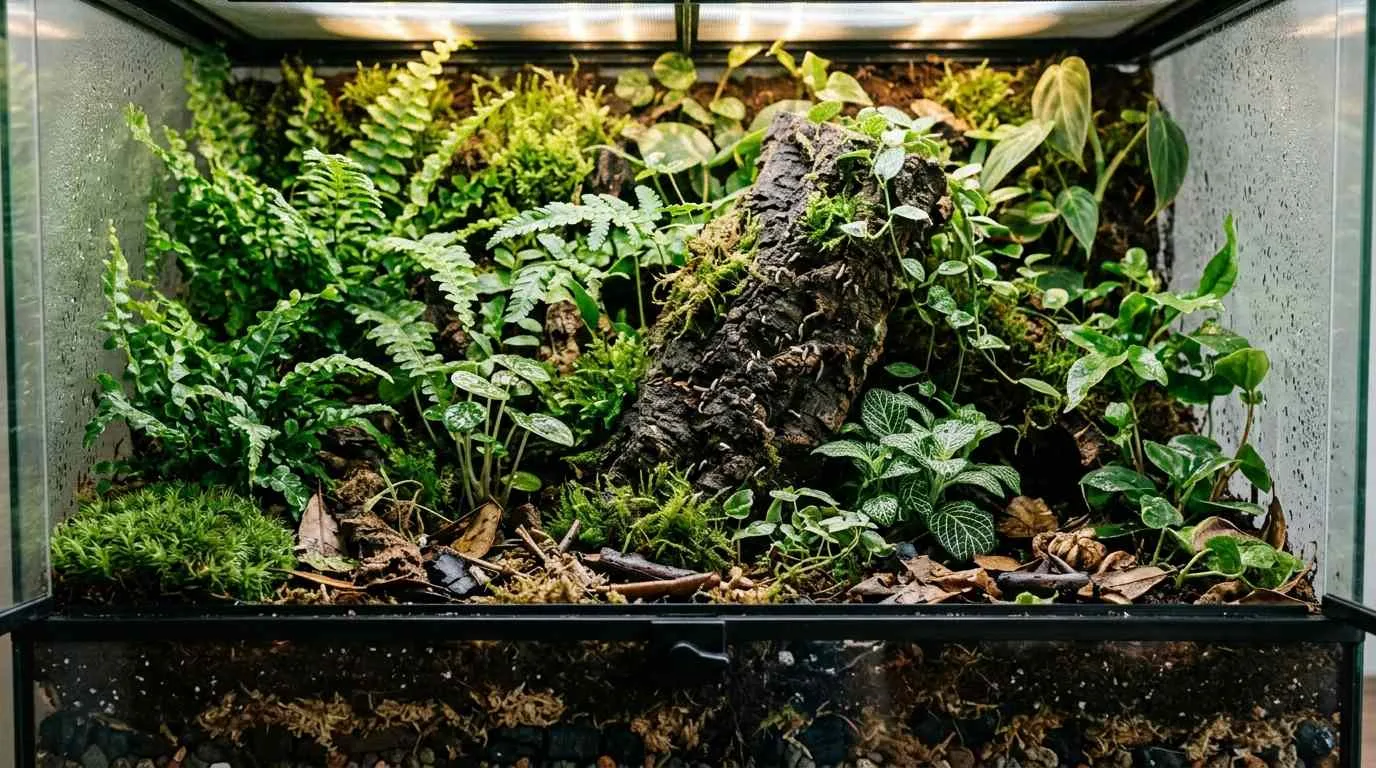
A front-opening enclosure with a deep (8–10cm) substrate layer, bark hides, leaf litter, and a colony of isopods (roly-polies / woodlice). This is part terrarium, part pet enclosure. Dwarf white isopods are the most common starter species. They’re endlessly fascinating to watch and they breed readily, creating a self-sustaining population.
Best plants: Pothos (can handle isopod traffic), moss, and hardy ferns.
Cost: $40–80 for the enclosure; $10–20 for isopod starter culture; $15–25 for substrate and plants.
Mistake to avoid: Letting humidity drop below 60%. Isopods breathe through gill-like structures that need moisture to function. A dry vivarium kills a colony within days.
30. Paludarium (Land-and-Water)
The most ambitious build on this list. A paludarium combines a terrestrial terrarium section with a water feature — a small pond, a stream, or a waterfall. The land portion holds tropical plants and moss; the water portion can house small aquatic plants, snails, or even shrimp. You’ll need a small water pump (USB-powered pumps cost $8–15) and a divider to separate the land and water sections.
Best plants: Land: ferns, moss, fittonia. Water: java moss, anubias nana, duckweed on the surface.
Cost: $60–120 total for a basic paludarium setup.
Mistake to avoid: Skipping the water circulation. Stagnant water breeds mosquito larvae and algae. Even a tiny pump with a trickle flow keeps the water oxygenated and clean.
Terrarium Troubleshooting Guide
Every terrarium runs into problems eventually. Here’s how to diagnose and fix the seven most common issues before they kill your build.
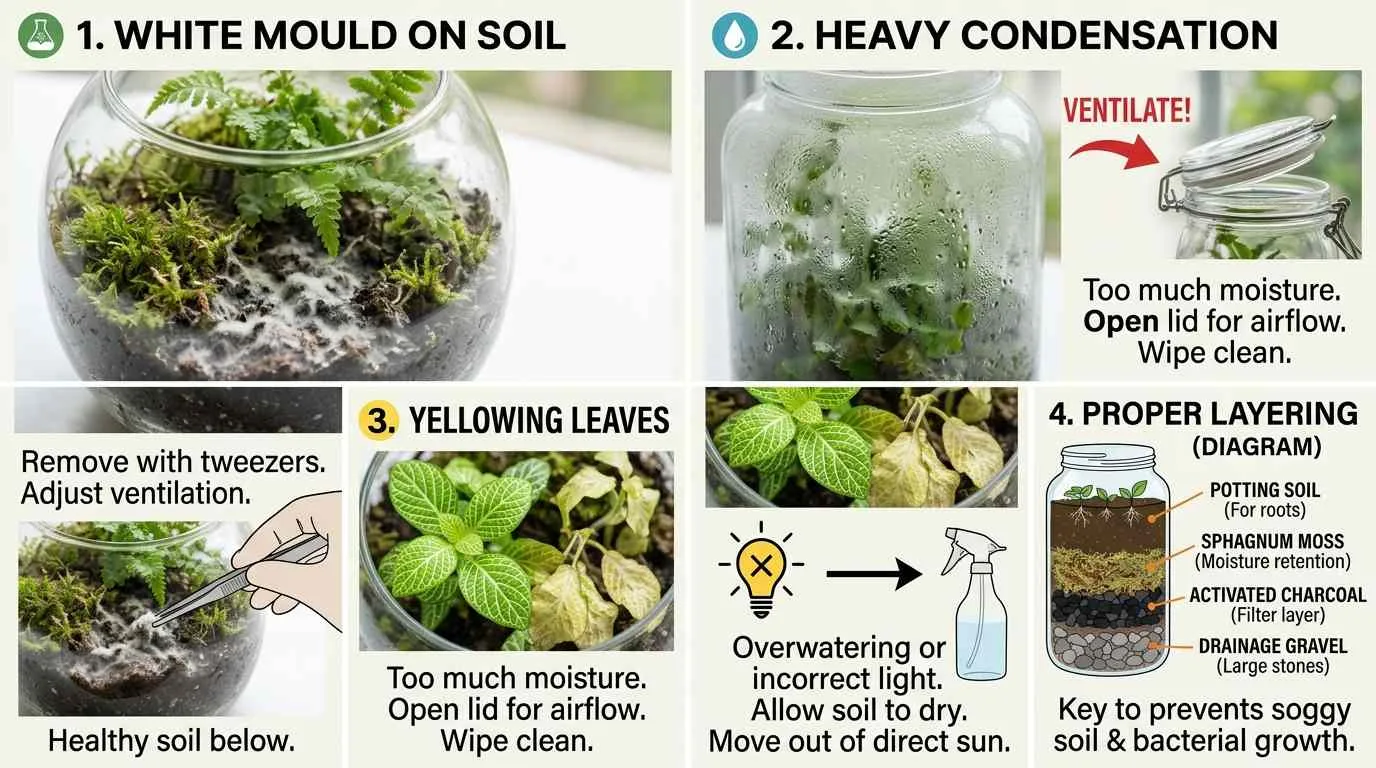
Mould Growth
What it looks like: White, fuzzy patches on soil, dead leaves, or wood.
Why it happens: Excess moisture, dead organic material, and poor airflow — usually all three.
Fix: Remove the mouldy material with tweezers. Open the lid for 24 hours to reduce humidity. If it recurs, add springtails — they eat mould before it spreads. For prevention, remove dead leaves immediately and ensure your charcoal layer is at least 1cm thick.
Excessive Condensation
What it looks like: Water streaming down the glass, fog so thick you can’t see the plants.
Why it happens: Too much water in the system or a temperature swing (cool nights, warm days push the water cycle into overdrive).
Fix: Leave the lid off for two to four hours until the fog clears, then reseal. If it returns, remove a tablespoon of water with a pipette. A light morning condensation is normal and healthy — rivers of water running down the glass are not.
Yellowing Leaves
What it looks like: Leaves turning yellow from the edges inward, then dropping.
Why it happens: Overwatering (most common), insufficient light, or nitrogen deficiency in old soil.
Fix: If the soil is soggy, open the lid and let it dry for one to two days. Move to brighter indirect light. If the terrarium is over a year old, add a pinch of slow-release fertiliser granules — the soil may be nutrient-depleted.
Root Rot
What it looks like: Plants wilting despite wet soil. When you tug gently, the plant pulls out easily with brown, mushy roots.
Why it happens: Standing water in the root zone, usually from a too-thin drainage layer or no charcoal layer.
Fix: Remove the affected plant. Trim off all brown roots, let the remaining roots dry for 24 hours, and replant in fresh substrate with a proper drainage layer (at least 2cm of gravel).
Fungus Gnats
What it looks like: Tiny black flies hovering around the terrarium opening or crawling on the soil surface.
Why it happens: Gnats lay eggs in moist organic soil. They’re annoying but rarely harm plants directly — their larvae can damage fine roots though.
Fix: Let the top layer of soil dry out (gnats can’t lay eggs in dry soil). Place a small piece of yellow sticky trap near the opening to catch adults. For persistent infestations, water with a diluted neem oil solution (follow label dilution rates).
Algae on Glass
What it looks like: Green film on the interior glass surfaces.
Why it happens: Too much direct light. Algae photosynthesize aggressively when light levels are high.
Fix: Move the terrarium away from direct sunlight. Wipe the glass interior with a damp cloth or cotton bud. Adding springtails helps long-term — they graze on algae along with mould.
Terrarium Smells Bad
What it looks like: A swampy, rotten-egg odour when you open the lid.
Why it happens: Anaerobic conditions in the substrate — decomposition without oxygen, usually from compacted soil with no drainage or charcoal layer.
Fix: This usually means the build needs to be redone. Remove the plants, discard the old substrate, and rebuild with proper layering: gravel → mesh separator → activated charcoal → sphagnum moss → soil. The charcoal is non-negotiable — it absorbs the gases that cause the smell.
Terrarium Supplies & Cost Guide
You don’t need specialist equipment to build a terrarium. Here’s every material, what it does, and what you should actually pay.
- Container ($0–80): Any clear glass vessel. Thrift-store jars ($2–5) work as well as purpose-built terrarium cases ($40–80). The only requirement: clear glass so light reaches the plants.
- Drainage gravel ($3–8): Small pebbles, aquarium gravel, or LECA (lightweight expanded clay aggregate). Forms the water reservoir at the bottom. 2–3cm depth minimum.
- Activated charcoal ($5–10): Filters water and absorbs odour-causing gases. Essential for closed terrariums. Available at pet stores (aquarium section) or online. A 500g bag lasts 5–10 builds.
- Sphagnum moss ($4–8): The barrier layer between drainage and soil. Prevents soil from sinking into the gravel and keeps the layers distinct over time.
- Substrate/soil ($5–12): For tropical plants: standard potting mix with added perlite. For succulents: cactus mix with 50% perlite. For moss: no soil needed — moss grows on almost any damp surface.
- Plants ($3–30): Three to five small plants per build. Buy from garden centres, Etsy, or propagate from existing houseplants. Fittonia, ferns, and moss are the cheapest. Rare tropicals and begonias cost more.
- Decorative elements ($0–15): Stones, driftwood, miniature figurines, coloured sand. Functional and aesthetic — the hardscape gives your terrarium its personality.
- Tools ($5–15): Long tweezers, a small spray bottle, a miniature trowel or spoon, and scissors. A terrarium tool kit from Amazon runs $8–12 and covers all four.
Total cost for a first terrarium: $15–40 depending on container choice. A thrift-store jar with foraged moss is under $10. A purpose-built geometric terrarium with bought plants and decorative sand runs $35–50.
Terrarium Ideas: FAQ
How long do terrariums last?
A well-built closed terrarium can last years — even decades. David Latimer’s sealed bottle garden has been growing since 1960. Open terrariums and succulent arrangements last as long as you maintain them, typically one to three years before they outgrow their container and need replanting.
Do terrariums need sunlight?
Indirect light, yes. Direct sunlight, almost never. Glass magnifies heat, and direct sun can raise internal temperatures high enough to cook the plants. Place terrariums near a window but out of the direct beam, or use a grow light on a timer (12 hours on, 12 off) for rooms with no natural light.
How often do you water a terrarium?
Closed terrariums: rarely, if ever. The sealed water cycle means moisture recirculates. If condensation disappears entirely, add a tablespoon of water. Open terrariums: every one to two weeks for tropical plants, every two to three weeks for succulents. The soil should dry slightly between waterings.
Can you use tap water in a terrarium?
You can, but distilled or rainwater is better. Tap water contains minerals that build up as white deposits on the glass and soil surface over time. If you only have tap water, let it sit in an open container for 24 hours to off-gas the chlorine before using it.
What plants should you not put in a terrarium?
Avoid plants that grow fast and tall (pothos in a sealed jar will take over in weeks), plants that need direct sun (most flowering plants), and plants that are sensitive to humidity extremes. Specifically: peace lilies (too large), orchids (too finicky for beginners), and standard cacti in closed terrariums (they’ll rot in the humidity).
Are terrariums good for mental health?
Research suggests that interacting with indoor plants reduces physiological and psychological stress. Building a terrarium is also a focused, meditative activity — you’re working with your hands, making design decisions, and creating something living. It’s a screen-free creative project with a tangible result.
More Creative Ideas from BoredomWizard
If building a miniature ecosystem hooked you, these guides from our hobbies collection take the same hands-on creative energy in different directions:
- Pottery Ideas — make your own terrarium containers from scratch
- Crystals and Their Meanings — decorative crystals as terrarium hardscape
- Air Dry Clay Ideas — sculpt miniature figurines for your terrarium landscape
- Things to Paint — paint terracotta pots before planting
- Junk Journal Ideas — start a botanical journal to track your terrarium’s growth
- Things to Do When Bored — our full hobbies hub