50 Scrapbook Ideas That Actually Look Good (2026)
Most scrapbook-ideas lists hand you a vague theme — “travel!” “family!” — and leave you staring at a blank page wondering what to actually do with it. This one doesn’t. Every idea below comes with a layout tip: which arrangement makes the page work, how many photos to use, what filler pieces finish the spread. They’re sorted by theme so you can jump straight to whatever you’re making, and the whole set starts with a five-rule cheat sheet that makes any scrapbook page look like you know what you’re doing — even if you just started yesterday.
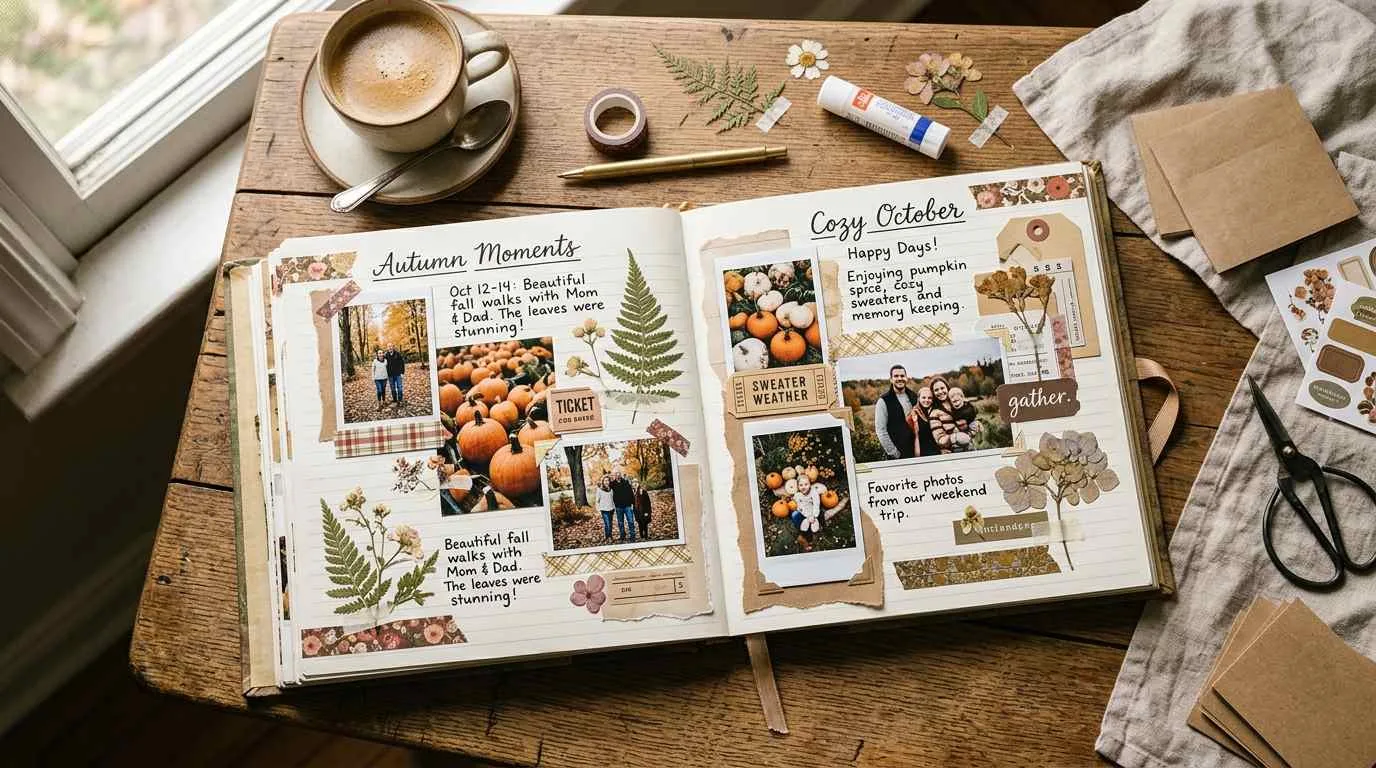
The 5-Rule Layout Cheat Sheet (Read This First)
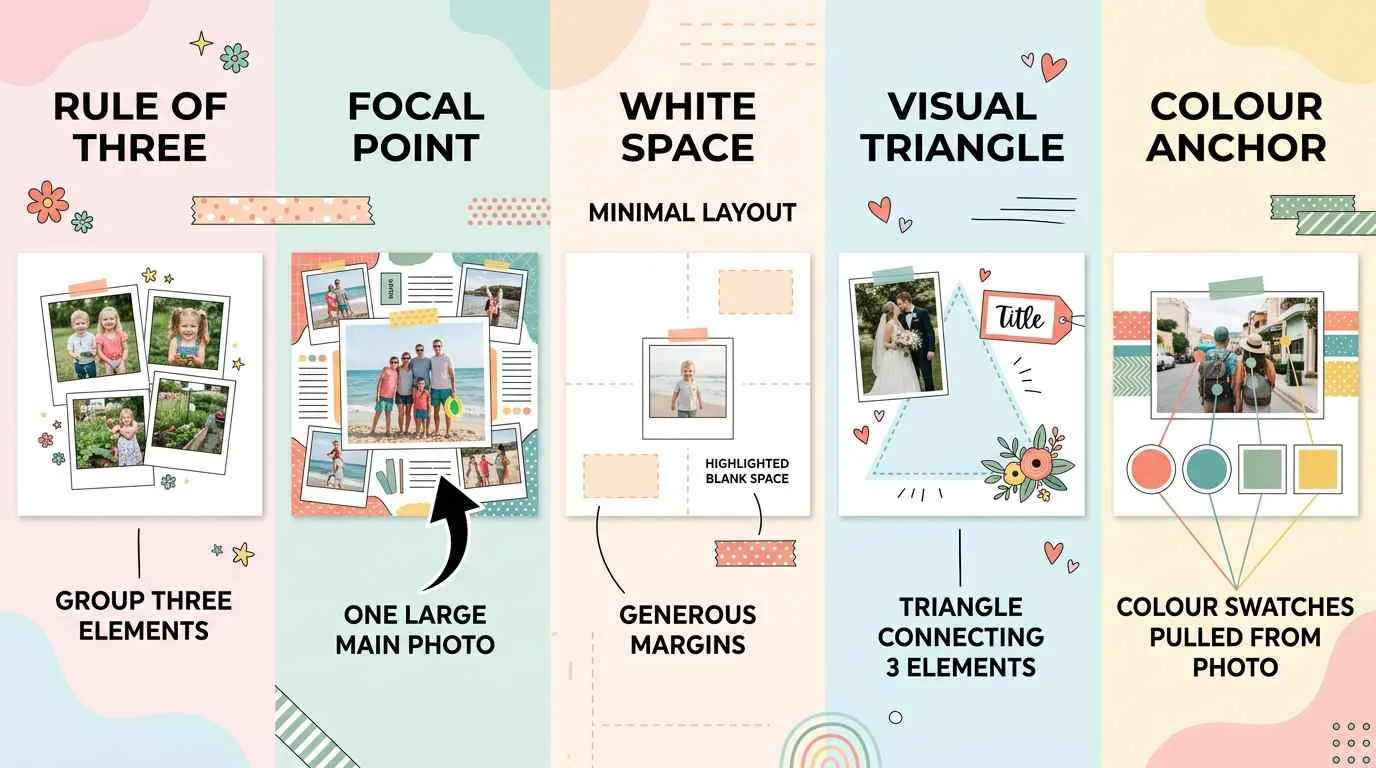
Before you touch a single photo, learn these five principles. They’re the difference between a page that looks intentional and one that looks like you emptied a craft drawer onto cardstock.
1. The Rule of Three
Group elements in threes — three photos, three embellishments, three colours. Odd numbers create visual tension that the eye finds satisfying. A grid of four photos feels static; shift to three and add a journaling block in the fourth space, and the page immediately has movement.
2. The Focal Point Principle
Every page needs one element that’s larger, bolder, or more central than everything else. If every photo is the same size, nothing stands out and the eye doesn’t know where to land. Pick your best shot, make it twice the size of the others, and build outward from it.
3. The White Space Rule
Beginners fill every millimetre. Experienced scrapbookers leave breathing room. A 1-centimetre margin between elements and a clear border around the page edges stops layouts from feeling cluttered. When in doubt, remove one thing.
4. Visual Triangle
Place your three strongest elements (photo, title, embellishment) in a triangle formation across the page. This guides the viewer’s eye in a natural path and creates balance even when elements aren’t symmetrical.
5. The Colour Anchor
Pick one colour from your main photo and repeat it in your background paper, title lettering, and one accent piece. This single thread ties a messy collection of memories into a cohesive page. Pull out a phone app like Coolors to identify exact shades from your photos.
Travel Scrapbook Ideas
Travel pages have a built-in advantage: you come home with tickets, maps, receipts, and menus that double as design elements. The trick is treating them as layout pieces, not just things to glue in.
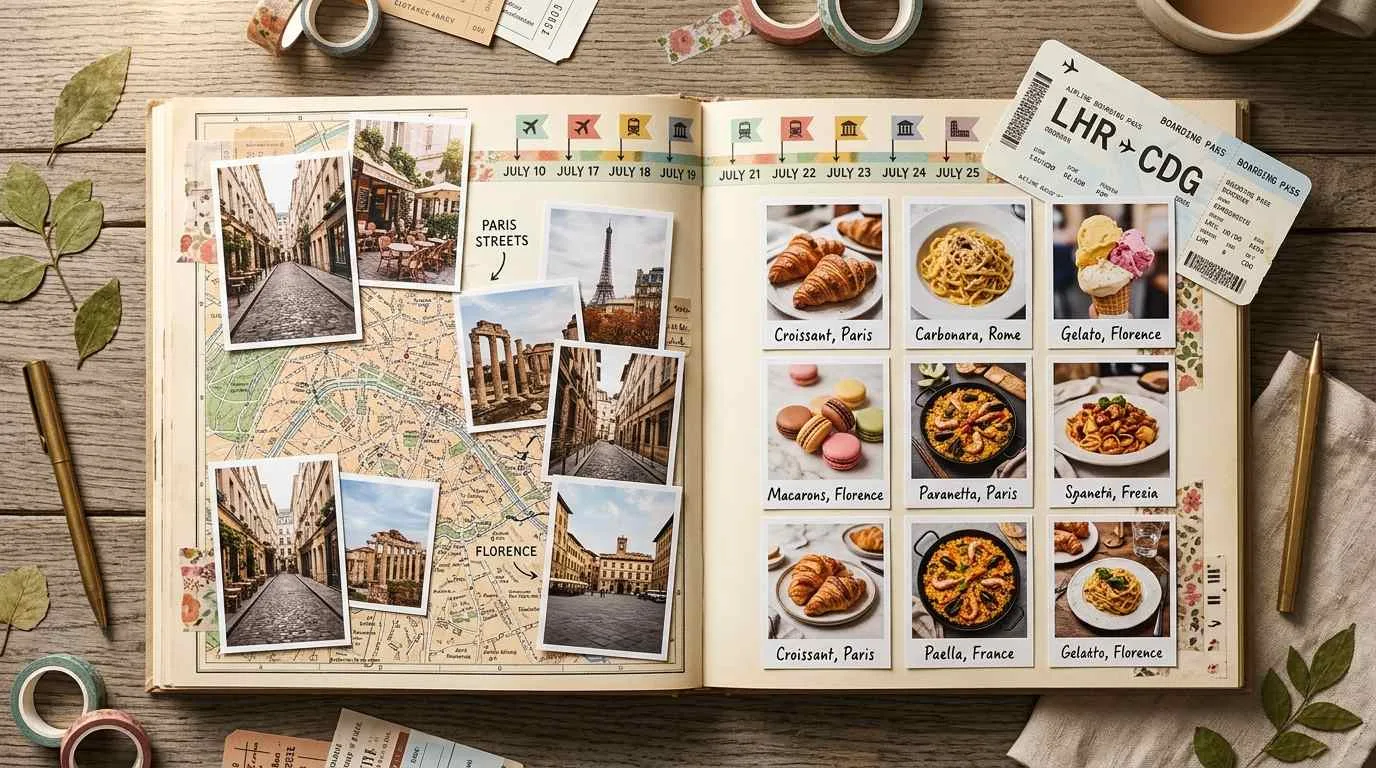
1. The Boarding Pass Spread
Scan or photograph your boarding pass at high resolution, print it at 50% size, and use it as a background layer under your arrival photo. Add a small luggage-tag die cut with the destination name. The pass gives the page instant context without a single word of journaling.
Layout tip: Place the pass diagonally across the lower-left corner. It breaks the grid and adds movement.
2. Pocket-Page Postcard Collection
Use 4×6 pocket-page protectors and fill alternate slots with postcards and matching photos. One slot gets the front of the postcard, the one beside it gets a photo from the same spot. No adhesive, no cutting, fully rearrangeable.
Layout tip: Leave one pocket empty for a handwritten note on cardstock — the gap gives the eye a rest.
3. Map Background Page
Print a map of your destination on A4 paper (Google Maps screenshot works) and use it as the full background. Layer three to four photos on top with foam dots for dimension. Circle or star the locations you visited directly on the map with a red pen.
4. Hotel Key Card Layout
Hotel key cards are free souvenirs most people throw away. Tape one to the page alongside a room-view photo and a mini review: the view, the weird thing about the bathroom, the breakfast rating out of five. It’s the mundane detail that makes travel pages feel real years later.
5. Food Diary Grid
Create a 3×3 grid of food photos from the trip. Under each, write the dish name, the restaurant, and a one-word verdict. Frame the grid with a menu from the standout meal. Travel scrapbooks that skip the food skip half the experience.
Layout tip: Print food photos slightly smaller (3×3 inches) so nine fit comfortably with a thin border between each.
6. Day-by-Day Mini Timeline
Run a horizontal strip of washi tape across the centre of the page. Mark each day with a small circle sticker and attach one photo per day below the line. Above the line, write one sentence per day. A week-long trip fits on a single spread.
7. Souvenir Pocket Envelope
Glue a small kraft envelope to the page and fill it with flat souvenirs: a pressed flower, a bus ticket, a receipt in another language. Beside the envelope, place one wide landscape photo. The sealed envelope adds interactivity — flipping through the book, you reach in every time.
Family & Milestone Scrapbook Ideas
Family pages carry the most emotional weight, which is exactly why they’re the hardest to start. The fix is structure: give yourself a framework, and the memories fill it.
8. Baby’s First Year Monthly Tracker
Dedicate one page per month with a single photo and three stats: weight, new skill, funniest moment. Use the same layout template for all twelve months so the progression tells its own story when you flip through. Consistency is the design trick here — the changing baby against the identical frame is what makes it powerful.
9. Family Recipe Page
Photograph a handwritten recipe card from a parent or grandparent. Print it alongside a photo of the finished dish and one of the person who makes it. Add a note about the first time you remember eating it. This is the page people cry over twenty years later.
Layout tip: Position the recipe card slightly tilted, as if someone just set it down. It reads as authentic rather than clinical.
10. Generation Comparison Spread
Place a childhood photo of yourself next to a childhood photo of your parent at the same age, then your child at the same age. Three photos in a row with ages labelled underneath. The resemblance (or lack of it) writes its own caption.
11. Birthday Timeline
For milestone birthdays (1, 5, 10, 18, 21, 30), create a single spread with one photo from each birthday. Run a horizontal timeline across both pages with the age marked at each photo. The visual ageing is the story.
12. First Day of School Series
Same pose, same front door, every year. One photo per page, same layout, same position. The changing child against the unchanging backdrop is the simplest and most effective long-term scrapbook project that exists. Start it now even if your kid is already in year four — you’ll have it for the next decade.
13. Pet Page
One hero photo of your pet, surrounded by the hard data: name, breed, adoption date, favourite sleeping spot, the thing they destroyed, the trick they refuse to learn. Add a paw print stamp (ink pad on the paw, press onto cardstock). Pets deserve a page.
14. Wedding Invitation Spread
Mount the original wedding invitation on one side. On the other, place three photos: the ceremony, the first dance, and a candid nobody posed for. This pairs the promise with the reality, and the invitation’s typography gives you a built-in colour scheme.
15. “Overheard” Quotes Page
Keep a running note on your phone of funny things your kids (or partner, or flatmate) say. At the end of the year, pick the ten best and letter them across a page with speech-bubble die cuts. No photos needed — the words are the content.
Seasonal & Holiday Scrapbook Ideas
Holiday pages have a built-in colour palette and a shared cultural context, which makes them easier to design than you think.
16. Halloween Costume Lineup
Photograph every costume your child (or you) wears each year, same background, same pose. Print small (3×4) and line them up across a spread. Label each year. By year five this is the best page in the book.
17. Autumn Pressed-Leaf Page
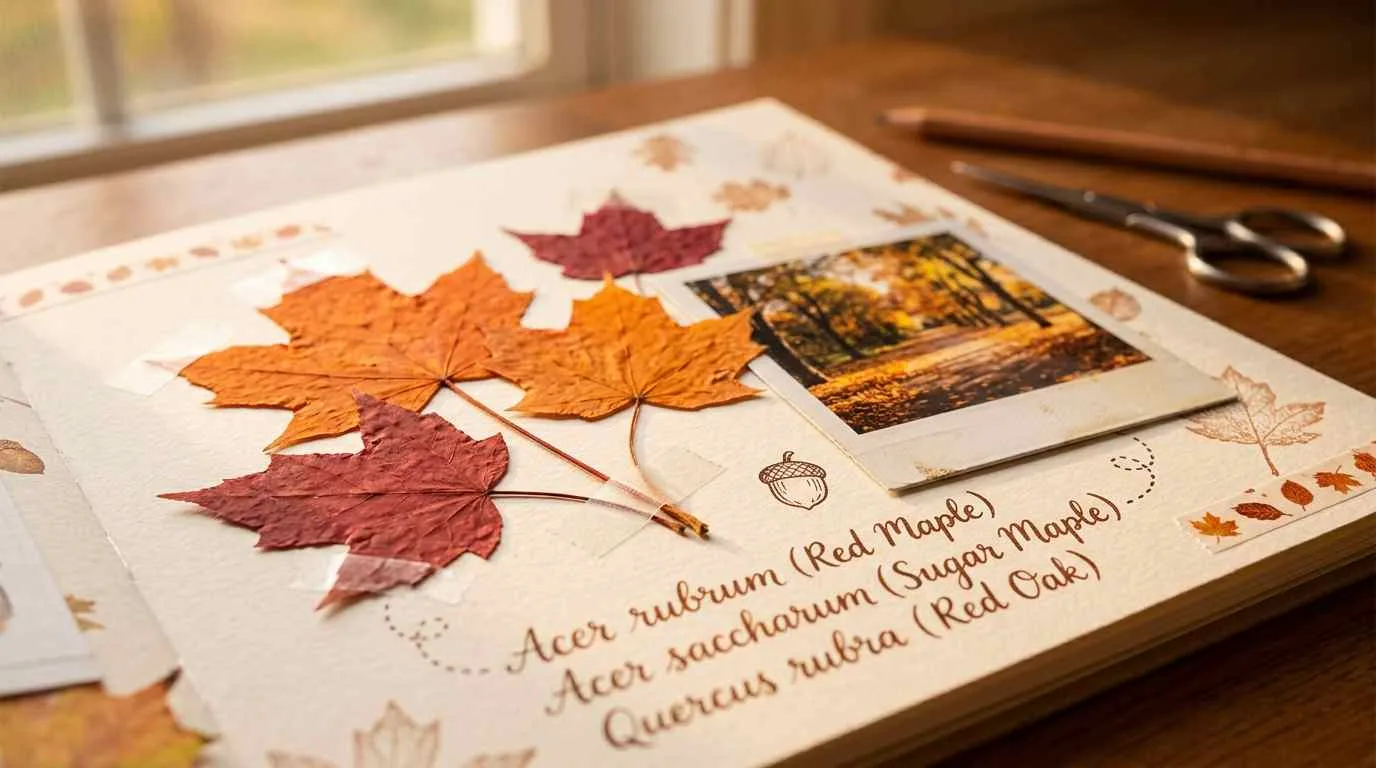
Press real leaves between wax paper for a week, then tape them directly onto the page with clear archival tape. Pair with a photo of the tree they came from. Write the leaf type and the date collected. This is physical scrapbooking at its purest — the actual thing, preserved on the page.
Tip: Use acid-free tape and a page protector sleeve to prevent the leaves from staining adjacent pages over time.
18. Christmas Card Collage
At the end of December, trim the photos from every Christmas card you received and arrange them in a mosaic on a single page. Write each family’s name beside their photo. Ten years of these pages become a visual record of your entire social circle ageing.
19. Summer Bucket List Check-Off
At the start of summer, write a list of ten things to do. At the end, attach a photo to each one that happened and cross off the ones that didn’t. The mix of done and undone is more honest — and more interesting — than a perfect completion record.
20. Valentine’s Day Love Notes
Collect every note, text screenshot, or card your partner gives you during the year. At Valentine’s Day, compile the best ones onto a single page with one photo of the two of you. The accumulation across years is the point.
21. Easter Egg Hunt Action Shots
Skip the posed basket photos. Capture the mid-sprint, the reaching-into-bushes, the triumphant egg-in-the-air moment. Print three action shots across a page with a pastel cardstock background. Tape one real foil wrapper to the corner. Movement makes the page feel alive.
22. New Year’s Predictions Page
On January 1st, write your predictions for the year: who’ll get married, what you’ll learn, where you’ll travel. Seal the page in an envelope. On December 31st, open it and score yourself. Add a photo from the best thing that actually happened.
Simple Scrapbook Ideas for Beginners
If you’ve never made a scrapbook before, start here. Every layout uses one to three photos, minimal supplies, and no advanced techniques. The goal is a finished page you’re proud of, not a craft-store explosion.
23. The One-Photo Focus Page
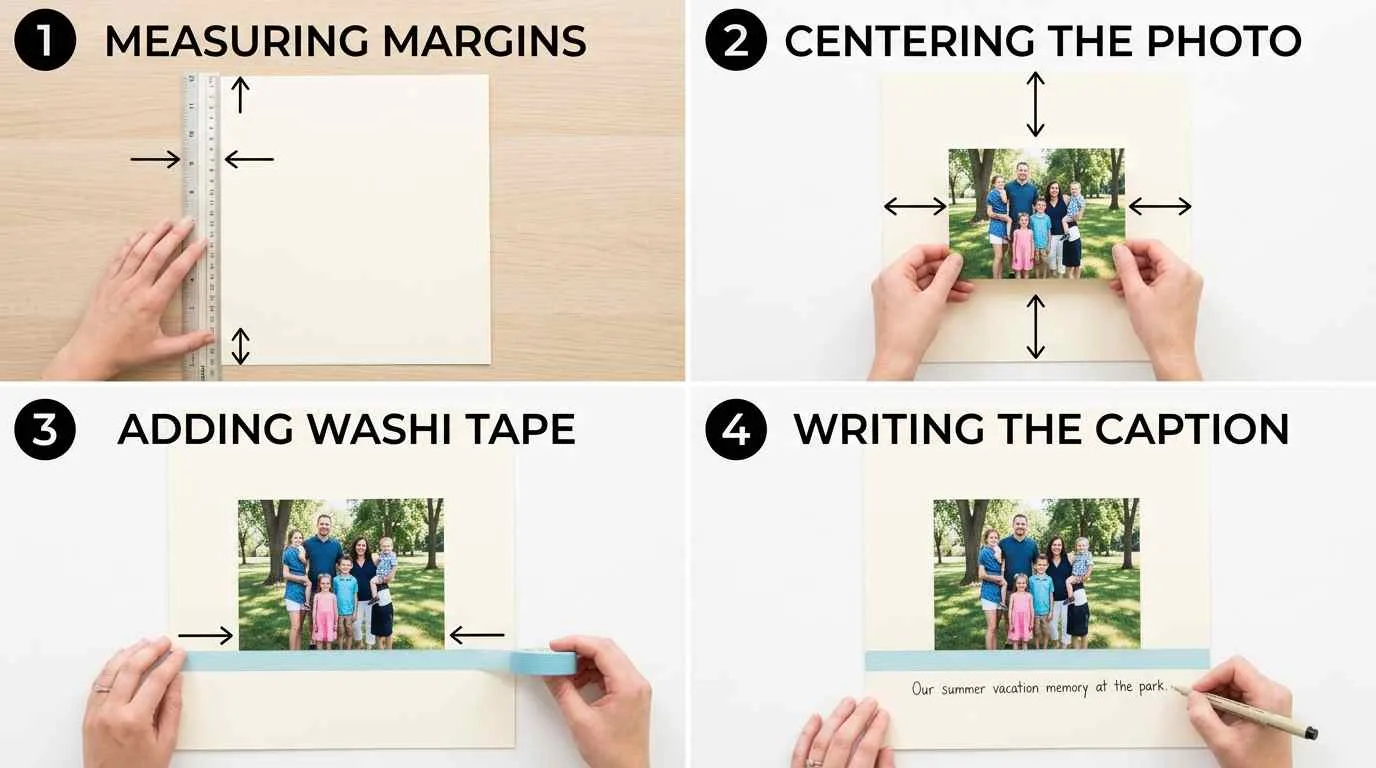
Print your favourite photo at 5×7 inches. Centre it on the page. Add a strip of washi tape along the bottom edge and write a single sentence underneath. That’s it. One photo, one sentence, zero overwhelm. This is the page that gets beginners past the blank-page fear.
Layout tip: Leave at least two centimetres of border on all sides. The white space makes the photo feel intentional.
24. Grid Layout (The Failsafe)
Print four photos at 3×3 inches. Arrange them in a 2×2 grid with a half-centimetre gap between each. Title above, date below. This layout cannot look bad — the even spacing does all the design work for you.
25. Pocket-Page Album
Buy a pocket-page album (Scrapbook.com sells them from $10). Slip 4×6 photos into alternating pockets and fill the remaining slots with journaling cards. No glue, no tape, no cutting. If scrapbooking intimidates you, this is the entry point.
26. Washi Tape Border Page
Place one photo in the centre. Run strips of washi tape in parallel lines around it as a border, alternating patterns. The tape IS the decoration. If you own three rolls of washi tape, you can build this page in ten minutes.
27. Journaling-Heavy Layout
Some of the best scrapbook pages have no photos at all. Write a full-page letter to your future self, your child, or a friend. Use lined paper or draw your own lines with a ruler. The words are the content; the page is the frame.
28. Ticket Stub Page
Glue concert tickets, movie stubs, museum entries, and event wristbands onto a single page in the order you collected them. Write the date and one memory beside each. This page practically builds itself over a few months of saving stubs.
29. Sticker Collage (No Photos Needed)
Pick a theme (flowers, space, animals, food) and fill a page entirely with stickers. Overlap them, layer them, let them bleed off the edges. This is zero-pressure creative play that produces a genuinely pretty page. Good for kids, good for adults who need to stop overthinking.
Aesthetic & Creative Scrapbook Ideas
These are the pages that end up on Pinterest — the ones that look like they belong in a design studio. They take a little more time, but the result is a spread you’ll genuinely want to frame.
30. Minimalist White-on-White
White cardstock, white background, photos printed with wide white borders, black ink only. The restraint is the aesthetic. One small dried flower taped to the corner as the single accent. This style photographs beautifully for social sharing.
31. Vintage Layered Collage
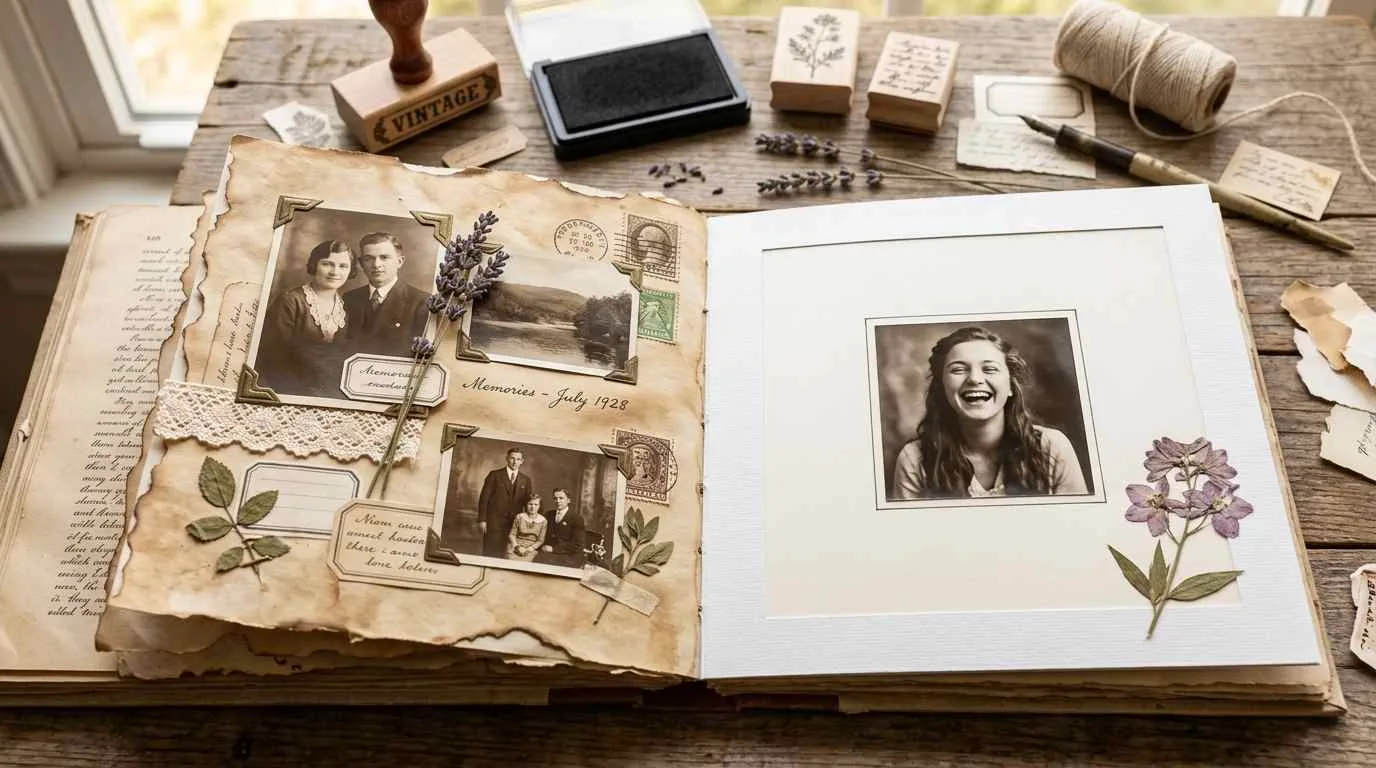
Layer torn paper, old book pages, postage stamps, lace trim, and sepia-toned photos to create a page that looks like it was pulled from an antique trunk. Use tea-staining (dip paper in cold tea for five minutes, dry flat) for authentic aged paper. The imperfection is the point.
Tip: Don’t trim your paper with scissors — tear it by hand. Rough edges read as vintage; straight cuts read as modern.
32. Watercolour Wash Background
Paint a light watercolour wash directly onto your cardstock page. Let it dry completely, then mount photos on top. The paint bleeds and dries with natural variation that no printed paper can replicate. Even if you can’t paint, a single colour wash is impossible to get wrong.
33. Mixed-Media Spread
Combine photos, acrylic paint, magazine cut-outs, fabric scraps, and hand lettering on one page. The key is choosing one colour palette and sticking to it — the variety of materials works because the colours unify everything.
34. Black Page with White Gel Pen
Buy black cardstock and a white gel pen. Mount photos with white photo corners. Write captions in white ink. The inversion of the usual white-page format makes every photo pop. Night-time photos, fireworks, and neon signs look stunning on black.
35. Film Strip Layout
Print five photos at 2×3 inches and mount them in a vertical strip down the centre of the page, with thin black borders between each to mimic a 35mm film strip. Punch sprocket holes along both sides with a hole punch. The retro format adds story to even ordinary photos.
36. Transparency Overlay
Print a quote or title on a sheet of acetate (transparency film). Layer it over a photo so the text floats over the image. The see-through effect adds depth that a flat printed title can’t match.
Trending Scrapbook Styles in 2026
Scrapbooking trends shift slowly, but 2026 has a few clear directions. These are the styles dominating Pinterest boards and YouTube channels right now.
37. Junk-Journal-Style Pages
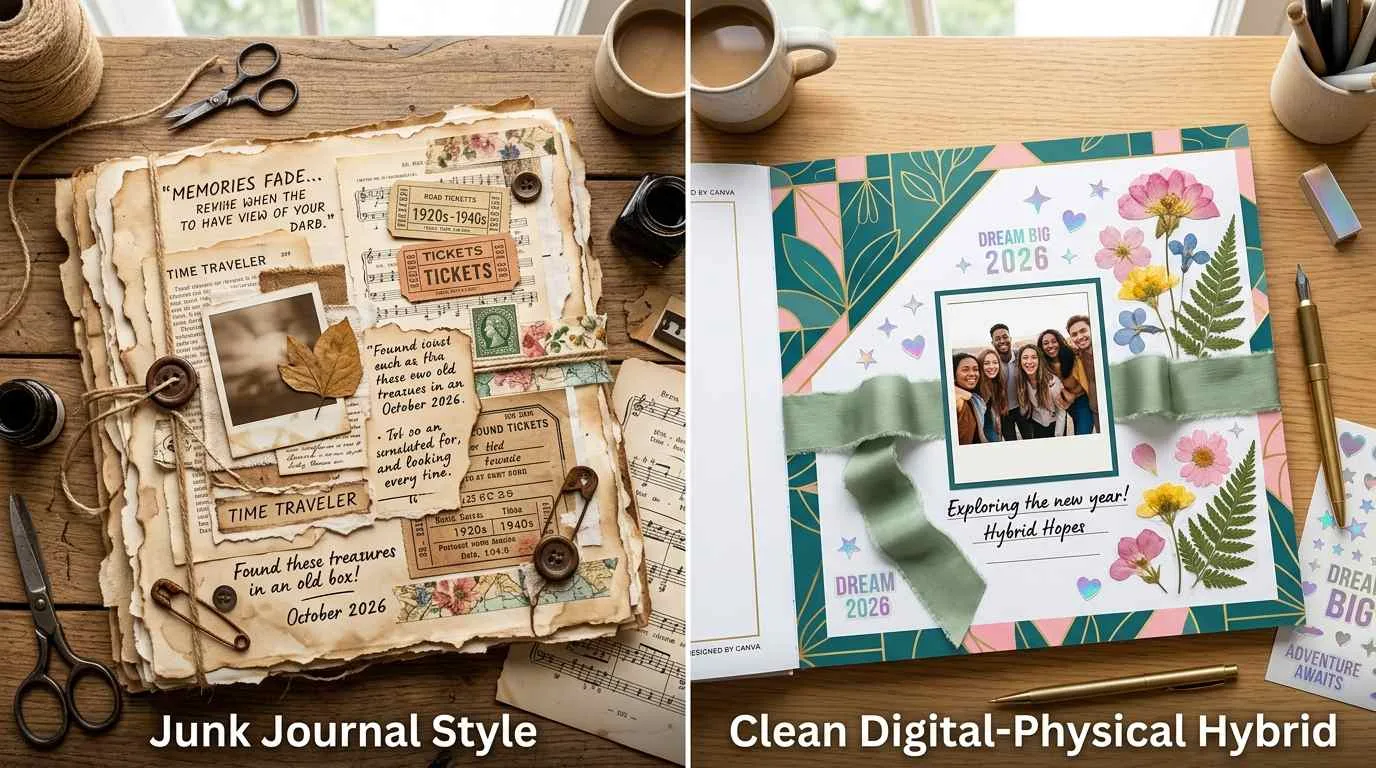
The junk journal aesthetic — layered ephemera, coffee-stained edges, no grid, maximum texture — has bled into mainstream scrapbooking. The look is deliberately imperfect: torn paper, overlapping elements, handwritten notes at odd angles. If you’re already into junk journaling, your scrapbook pages will feel like a natural extension. (We have a full junk journal ideas guide if you want to dive deeper.)
38. Digital-Physical Hybrid
Design your layout digitally in Canva (free scrapbook templates), print it, and then add physical embellishments on top — a real ribbon, a real flower, a real sticker. You get the precision of digital design with the tactile charm of handmade. This hybrid approach is especially popular with people who find full-physical scrapbooking intimidating.
39. K-Inspired Deco / Toploader Decorating
Korean-inspired sticker decorating — originally from the K-pop photocard community — has crossed into scrapbooking. Small holographic stickers, glitter tape, and pastel colour schemes arranged with precision inside toploaders or on mini pages. The style is cute, maximalist, and extremely shareable on TikTok and Instagram.
40. Polaroid Grid Layout
Print photos in Polaroid format (white border, square image) and arrange them in a clean grid. The uniform format eliminates all design decisions — every photo looks cohesive regardless of the subject. This is also the fastest layout to build: print, peel, stick, done.
Where to print: Polaroid-format prints are available through the Instax printer, Lalalab app, or any online photo service that offers square prints with borders.
41. Spotify Playlist Page
Screenshot your most-played playlist from a trip, a season, or a year. Print it alongside photos from that period. The music anchors the memory to a feeling that photos alone can’t capture. Add a Spotify code (generated free at Spotify Codes) so you can scan the page with your phone and the playlist plays.
Theme-Based Scrapbook Ideas
If you want a scrapbook with a clear through-line — not just a collection of random pages — pick a theme and let it shape every layout decision.
42. Year-in-Review Annual Scrapbook
One spread per month, same template. January on the left, December on the right. Include one photo, one stat (miles run, books read, best meal), and one sentence summary. At twelve pages, this is the most finishable long-term scrapbook project.
43. Friendship Scrapbook
Collaborate with a friend: each person builds alternate pages and mails the book back and forth. One page is your perspective on a shared memory; the facing page is theirs. The two viewpoints of the same event make every spread a conversation.
44. Gratitude Scrapbook
One page per week, one thing you’re grateful for. Photo optional — a written description is enough. At the end of the year, you have 52 pages of good things that happened. It’s a scrapbook and a mental health exercise.
45. Home Renovation Tracker
Before-and-after photos of every room, with paint swatches taped to the page, flooring samples in an envelope, and a running total of the budget. This is a scrapbook with a practical afterlife — you’ll reference it during the next renovation and when you eventually sell.
46. Concert & Festival Log
Every gig gets a page: ticket stub, setlist (screenshot or handwritten from memory), one photo, one sentence about the best moment. Wristbands get taped along the top as a running border. After a few years, flipping through this book is as good as hearing the first few bars of your favourite song.
47. Garden Journal Scrapbook
Photograph each plant when you buy it, when it first blooms, and at peak season. Press one flower or leaf from each onto the page. Track planting dates, watering schedules, and what worked. Gardeners will use this more than any app.
48. Book Club Scrapbook
One page per book: photograph the cover, paste in the best quote, write your one-sentence review, and rate it out of five. Over a year of monthly reads, this becomes a personal literary record that’s more useful than Goodreads.
What to Actually Put in a Scrapbook
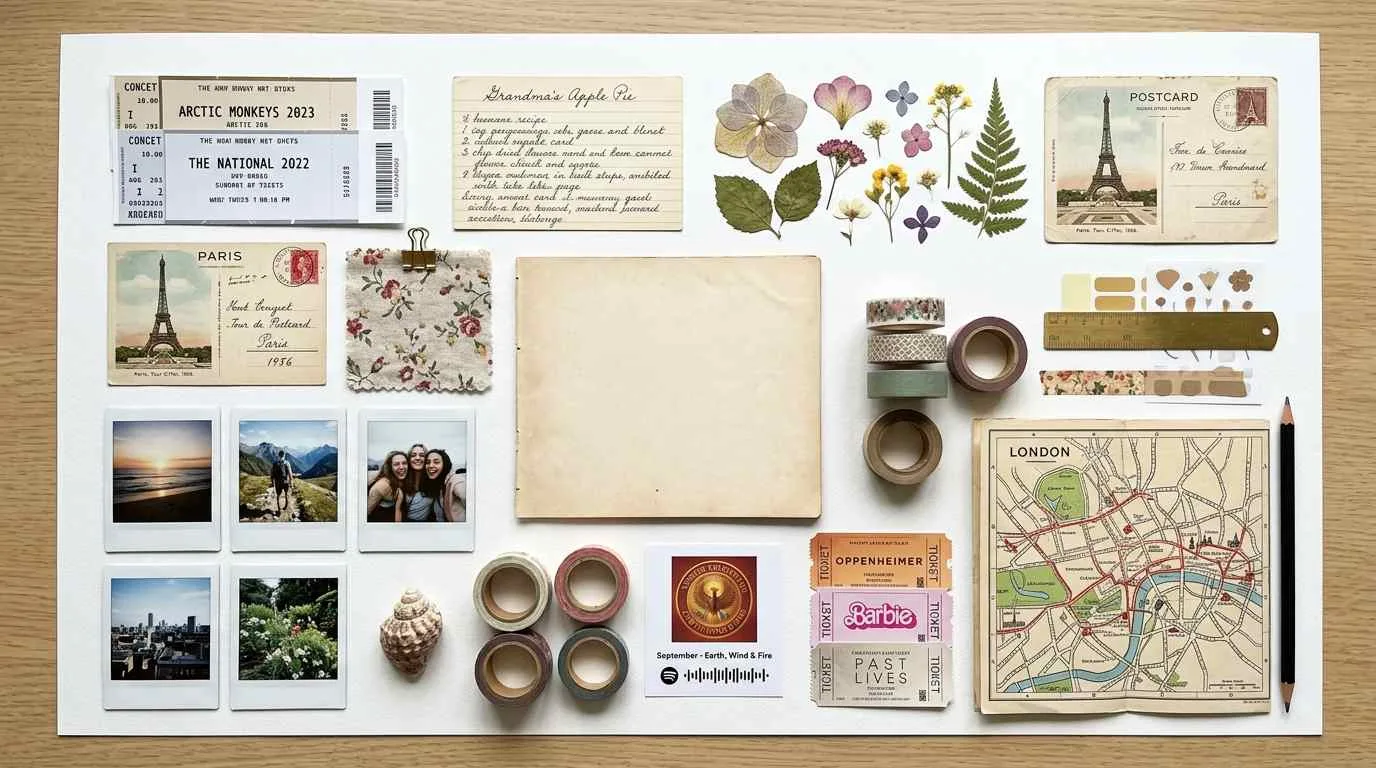
The number one question beginners ask is “what goes in a scrapbook besides photos?” The answer is: almost anything flat enough to close the book. Here’s a checklist of things worth saving.
- Tickets & stubs: concert tickets, movie stubs, boarding passes, museum entries, parking receipts from important days
- Paper ephemera: menus, napkins with doodles, wedding programs, birth announcements, newspaper clippings
- Handwritten notes: birthday cards, love notes, your child’s first written sentence, postcards
- Fabric & textile: a swatch of your wedding dress, a piece of your baby’s first outfit, a ribbon from a gift
- Nature: pressed flowers, leaves, feathers (sanitise first), small shells
- Digital prints: screenshots of meaningful texts, Instagram posts, Spotify playlists, FaceTime screenshots
- Maps & documents: hotel receipts, hand-drawn maps, report cards, certificates
Two Final Showpiece Ideas
If you want one spread that anchors the entire book — the double-page people stop and study — try one of these.
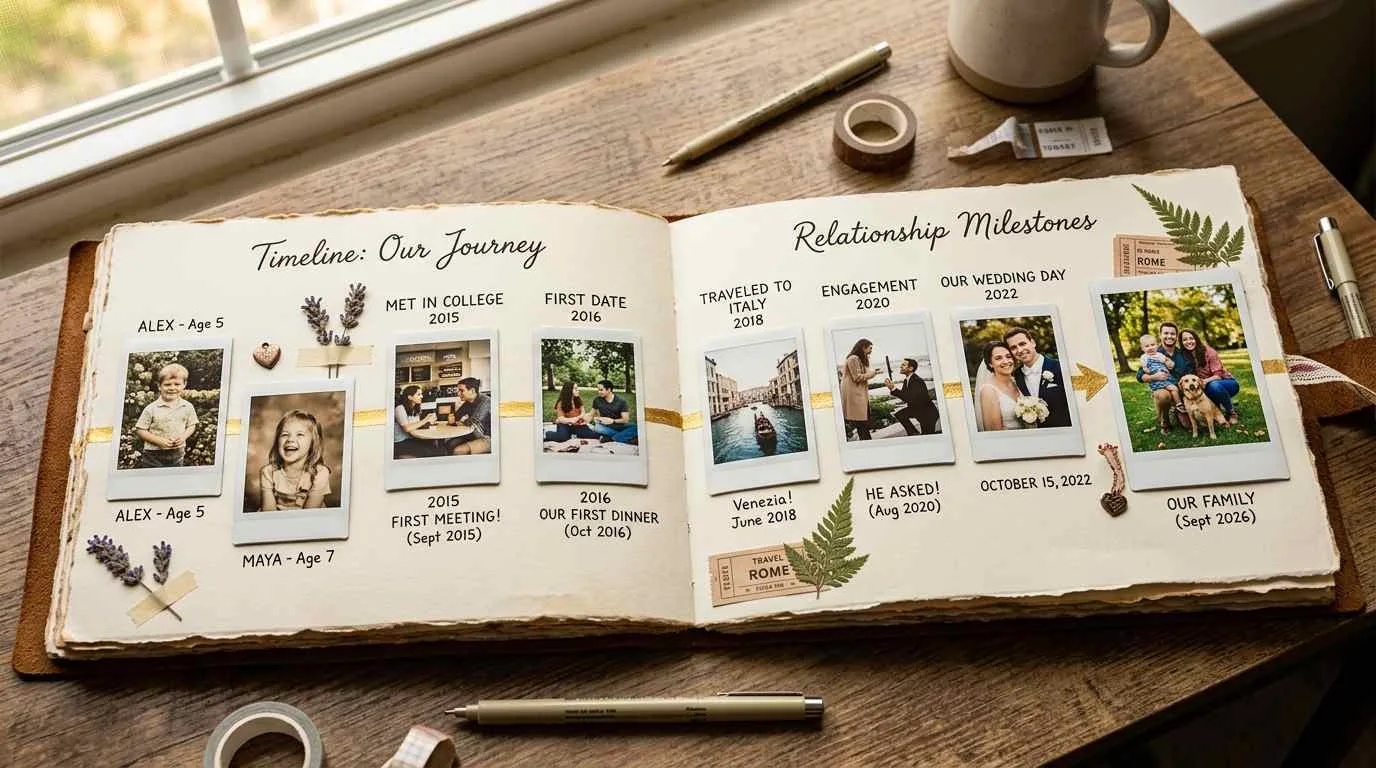
49. The Story-of-Us Timeline
A double-page spread mapping the major moments of a relationship, a friendship, or a family. Run a timeline across both pages. At each point, place a small photo and a one-line caption: “first met,” “moved in,” “got the dog,” “that awful holiday,” “figured it out.” Start the timeline before the relationship — solo photos of each person — and end it with the most recent photo you have.
Layout tip: Use a metallic pen for the timeline itself. Gold or copper against cream cardstock elevates the entire page.
50. Full-Bleed Photo Spread
Print your single best photograph across two full pages — edge to edge, no border, no text, no embellishment. Let it breathe. This is the page that doesn’t compete with anything. Put it in the middle of the book so the viewer reaches it after pages of layered, detailed spreads, and the sudden simplicity hits differently.
Essential Scrapbooking Supplies for Beginners
You don’t need a craft room to start. Here’s the short list:
- An album — 12×12 is the standard; 8.5×11 is easier to print for at home
- Cardstock — a variety pack in neutral tones gets you through the first ten pages
- Acid-free adhesive — tape runners are faster and cleaner than glue sticks
- Washi tape — three to five rolls in coordinating patterns
- A paper trimmer — a small guillotine trimmer is more precise than scissors
- Page protectors — archival-quality sleeves that keep pages safe
- A fine-tip pen — Micron or Sakura for journaling that won’t bleed
That’s it. Everything else — die cuts, stamps, stencils, embossing powder — is a bonus, not a prerequisite. Start with the basics and add tools as you find a style you like.
For free printable scrapbook templates, Canva’s scrapbook template library has hundreds of editable designs you can customise and print at home.
Scrapbook Ideas: FAQ
What is the rule of three in scrapbooking?
The rule of three means grouping elements — photos, stickers, embellishments — in sets of three. Odd numbers create natural visual tension that feels balanced without being symmetrical. A page with three photos, three colours, or three layers of paper will almost always look more interesting than one with two or four.
What are some good things to include in a scrapbook?
Beyond photos: ticket stubs, postcards, handwritten notes, pressed flowers, fabric swatches, screenshots of meaningful text messages, menus, maps, report cards, and small flat souvenirs. The best scrapbook items are the things you’d otherwise throw away but would miss if they were gone.
What are the current trends in scrapbooking?
In 2026, the biggest trends are quiet scrapbooking (minimal, muted-tone layouts), junk-journal-style pages with layered ephemera, digital-physical hybrid designs using Canva templates with real embellishments on top, and K-inspired deco with holographic stickers. The Polaroid grid layout continues to grow as a low-effort, high-impact format.
How do I start scrapbooking with no experience?
Start with a pocket-page album, which requires zero craft skills — you slide photos and journaling cards into clear pockets. No glue, no cutting, no commitment. Once you’ve filled a pocket album and want more control, move to a traditional 12×12 album and follow the five layout rules at the top of this guide.
How much does it cost to start scrapbooking?
A basic starter setup — album, cardstock variety pack, adhesive runner, washi tape set, and page protectors — runs about $30–50. Photo printing at home costs roughly $0.10–0.25 per 4×6 print; pharmacy or online printing services charge $0.09–0.15 each. You can start a scrapbook for under $40.
More Creative Ideas
If scrapbooking clicked for you, these guides from our hobbies collection take the same hands-on creative energy in different directions:
- Junk Journal Ideas — the messier, more experimental cousin of scrapbooking
- Pottery Ideas — if you want to make something three-dimensional
- Perler Bead Ideas — pixel art you can iron into coasters and wall art
- Things to Paint — if the watercolour-wash background idea hooked you
- Paper Squishy Ideas — 3D paper crafts that pair with scrapbook skills
- Things to Do When Bored — our full hobbies hub