20 Modern Hobbies to Adopt to Beat Boredom in 2026 (That Didn’t Exist 10 Years Ago)
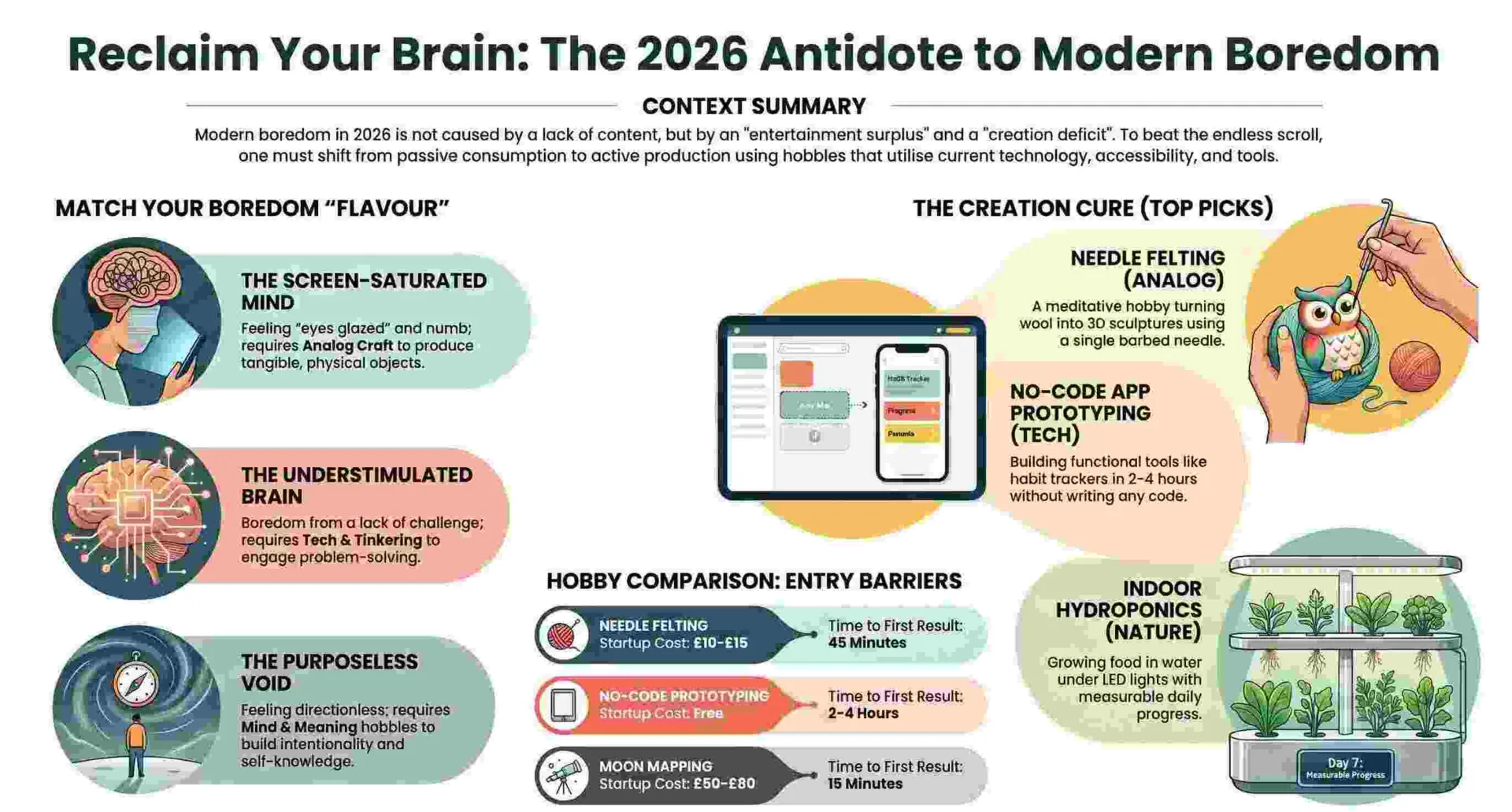
The internet solved boredom for about 15 years. Then it became the cause. Scrolling through the same feeds, watching the same algorithm-selected clips, passively consuming content that someone else made — that is not entertainment anymore. That is the wallpaper of modern life, and your brain stopped noticing it somewhere around 2022. If you are reading this in 2026 and you feel bored despite having infinite content at your fingertips, you are not broken. You are experiencing what happens when consumption replaces creation and familiarity replaces novelty. Your brain is not asking for more content. It is asking for a hobby.
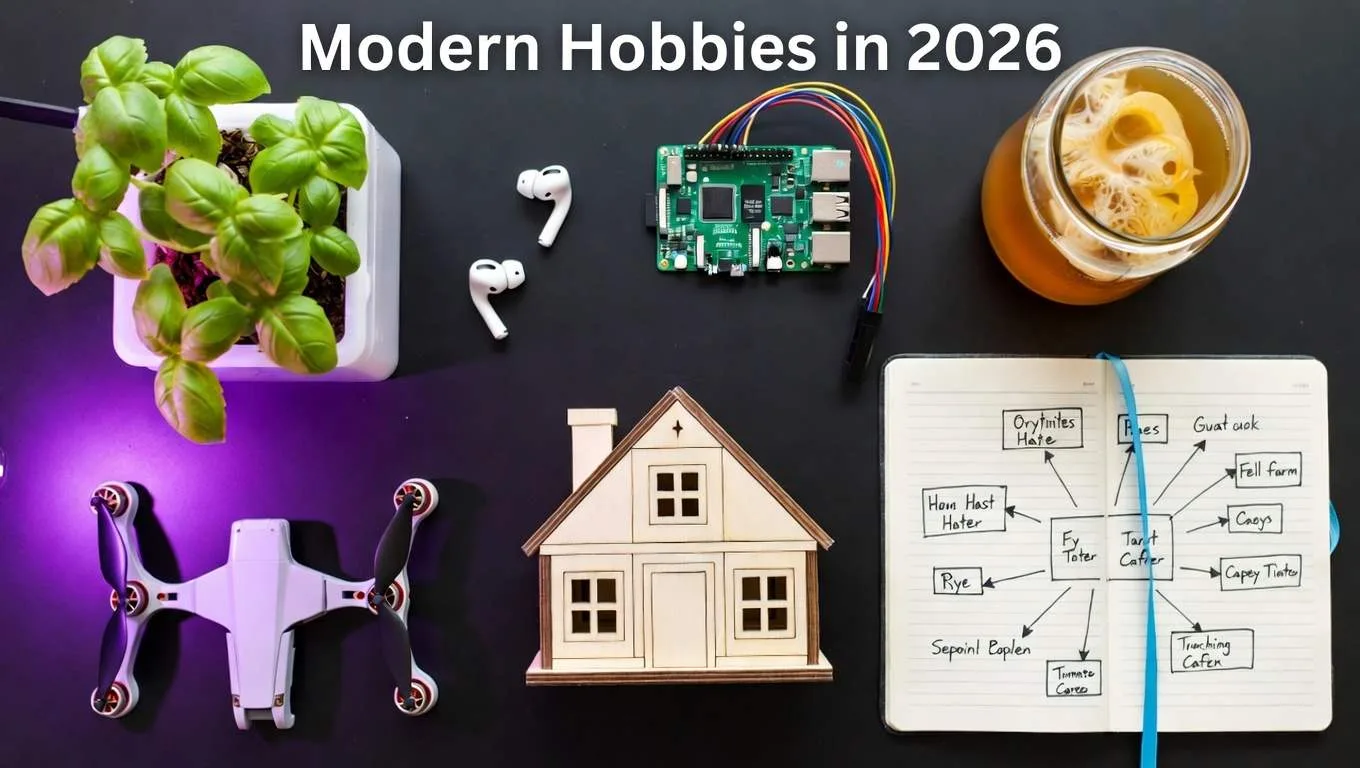
The 20 best modern hobbies to adopt to beat boredom in 2026 include indoor hydroponic gardening, no-code app prototyping, generative AI art collaboration, personal drone racing, needle felting fiber art, DIY book nook kit building, astrophotography moon mapping, interactive fiction writing, citizen science projects, retro game modding, smart home automation building, zero-waste fermentation, 3D wooden puzzle engineering, sound bath meditation, mindfulness journaling, urban foraging walks, solo board game nights with Murdle-style logic puzzles, biohacking sleep patterns, digital decluttering sprints, and geocaching urban puzzles.
This is not a list of hobbies your grandparents had. No knitting. No stamp collecting. No “go for a walk.” Those are fine. They exist. This list is different: every hobby here either did not exist 10 years ago, became accessible to beginners only recently, or takes advantage of technology, tools, and communities that are specifically available in 2026. These are hobbies for the current moment. Not timeless. Current.
The 2026 Hobby Spectrum — 4 Categories for 4 Types of Bored
Modern boredom comes in 4 flavors. Each one responds to a different category of hobby. Match your flavor to the right section and skip the rest.
| Your Boredom Flavor | What It Feels Like | Hobby Category | Activities |
| Screen-Saturated | Tired of consuming. Eyes glazed. Brain numb. You want to use your hands. | Analog Craft & Making: physical projects that produce tangible objects. | 1–5 |
| Understimulated | Not bored from too much screen — bored from too little challenge. Your brain wants a puzzle. | Tech & Tinkering: digital-physical hybrids that engage problem-solving. | 6–10 |
| Disconnected | Feeling like a spectator of your own life. You want to participate in something real. | Nature & Observation: hobbies that reconnect you to the physical world. | 11–15 |
| Purposeless | Not tired, not lonely — just lacking direction. Free time feels like wasted time. | Mind & Meaning: hobbies that build self-knowledge and intentionality. | 16–20 |
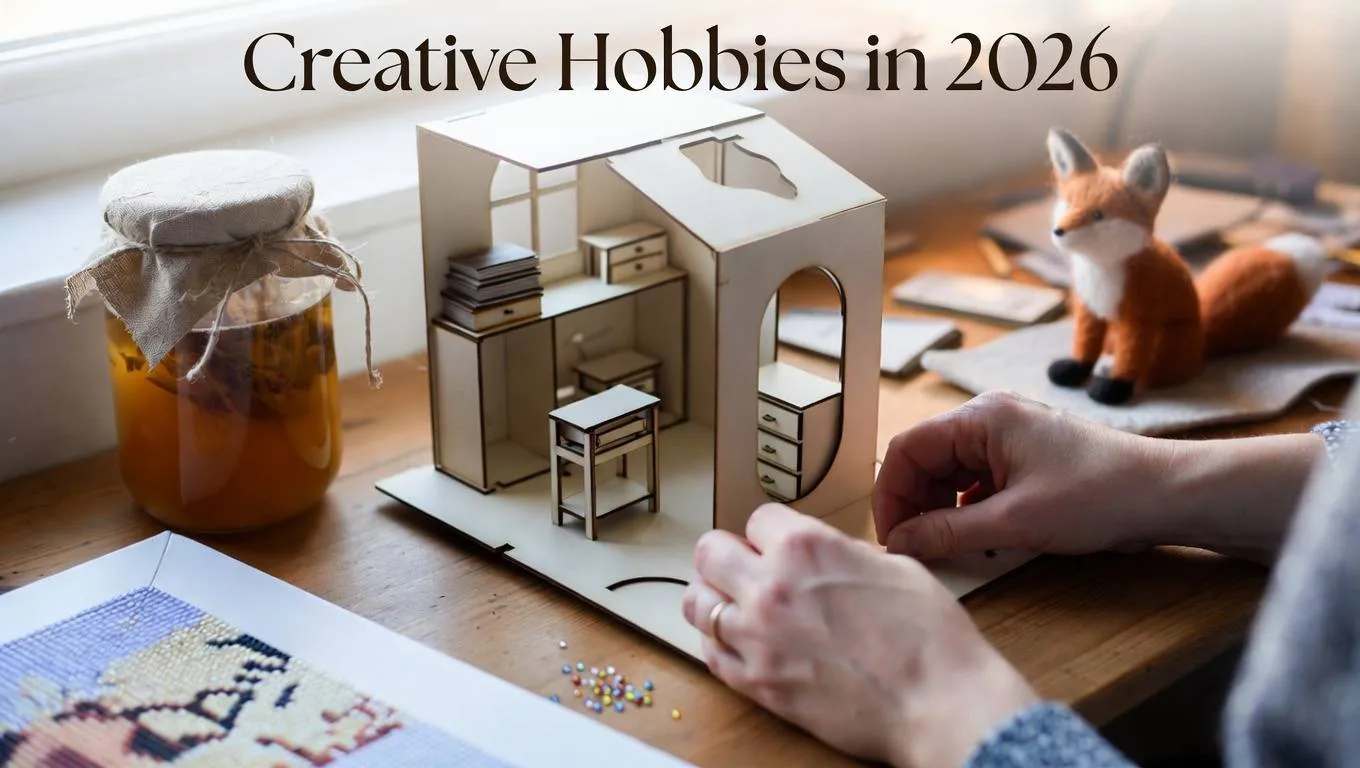
When You Are Tired of Screens and Want to Use Your Hands (Hobbies 1–5)
1. Needle Felting — Fiber Art That Starts With a $15 Kit
Needle felting turns loose wool roving into solid 3D sculptures using a single barbed needle, and a beginner kit costs $12 to $18 on Amazon.
You take a clump of wool fiber. You stab it repeatedly with a special barbed needle. The barbs tangle the fibers together. Slowly, a shape emerges: a mushroom, a cat, a bird, a tiny landscape. The process is meditative, oddly satisfying, and produces a physical object you can hold. Eligijus Sinkunas and other fiber artists on Bored Panda have shown what advanced needle felting looks like — full animal sculptures with lifelike detail — but the beginner version is a simple round shape with a face, and it takes 45 minutes.
Needle felting is a modern hobby in the sense that the community, the beginner kits, and the tutorial ecosystem on YouTube did not exist at this scale until the last 5 years. The craftsmanship involved is ancient, but the accessibility is brand new. If you are tired of the endless scroll and want to feel the simple joy of making something with your hands, this is where you start.
| Detail | Info |
| Time to Start | 45 min first project |
| Cost | $12–$18 (starter kit on Amazon) |
| Difficulty | Beginner — no prior skill needed |
| Best For | Adults, teens, screen-fatigued creatives |
| What You Need | Felting needle, wool roving, foam pad (all in kit) |
2. DIY Book Nook Kits — Build a Miniature World That Fits Between Your Books
A book nook kit is a miniature 3D scene — a tiny alley, a bookshop, a forest path — that you build from pre-cut pieces and display between books on your shelf.
Open the kit. Follow the instructions. Glue tiny wooden walls, doors, windows, and furnishings into place. Add LED lights. The finished piece sits between 2 books on your shelf and glows like a miniature portal to another world. DIY book nook kits became a mainstream hobby in 2023–2024 and the kits available in 2026 are significantly more detailed, with working lights, moving parts, and themed designs (enchanted forests, Japanese ramen shops, Hogwarts corridors).
Patricia and KatWitch57 — Amazon reviewers — both describe book nooks as “time-consuming to build and addictive once you start.” The builds take 8 to 20 hours depending on complexity, which makes them ideal for spreading across multiple evenings. The finished result is a permanent display piece that impresses anyone who sees it.
| Detail | Info |
| Time to Complete | 8–20 hours (spread across sessions) |
| Cost | $25–$60 per kit |
| Difficulty | Beginner to Intermediate |
| Best For | Detail-oriented adults, crafters, readers |
| What You Need | Kit (includes all pieces), glue, tweezers, patience |
3. 3D Wooden Puzzle Engineering — Build Mechanical Models Without Glue
3D wooden puzzles are laser-cut wooden kits that assemble into working mechanical models — clocks, cars, marble runs, music boxes — using interlocking pieces and no adhesive.
The pieces pop out of flat wooden sheets. You follow numbered steps and slot them together. The finished product has moving gears, rotating wheels, and functional mechanisms. Dominique Tomm and Megan Truax on Amazon both describe 3D wooden puzzles as “engineering meets art” — the process requires spatial reasoning and fine motor control, and the result looks like something from a steampunk workshop.
These puzzles range from 50-piece beginner models (30 minutes) to 500-piece mechanical clocks (15+ hours). The hobby scales from casual to obsessive, and the finished models are display-worthy. They are one of the best modern hobbies for adults who like problem-solving skills and hands-on construction but do not want to deal with model airplane glue, paint, or messy materials.
| Detail | Info |
| Time to Complete | 1–15+ hours depending on complexity |
| Cost | $15–$60 per model |
| Difficulty | Beginner to Advanced |
| Best For | Engineers, puzzle lovers, patient builders |
| What You Need | Kit only — no glue, no tools |
4. Zero-Waste Fermentation — Brew Kombucha, Kimchi, and Cider From Your Kitchen
Starting a fermentation hobby in 2026 — kombucha, kimchi, sauerkraut, hot sauce, or artisanal cider — costs under $30 for a starter kit and produces food and drinks that are better than store-bought within 7 to 14 days.
Buy a starter kit for cider making or a SCOBY for kombucha. Follow the instructions. Wait. Fermentation is the only hobby where patience is the primary skill. The bacteria and yeast do the work. You provide the ingredients, the jar, and the time. In 7 days you have kombucha. In 14 days you have sauerkraut. In 3 weeks you have hot sauce. Zero-waste fermentation kits are specifically designed for beginners in 2026 — they include everything, with clear instructions and troubleshooting guides.
This hobby is trending in 2026 because it sits at the intersection of sustainability, DIY food culture, and the desire to produce something tangible. Every batch is a small science experiment. If fermentation sparks a food interest, our guide on things to cook when bored has more kitchen-based projects.
| Detail | Info |
| Time to Start | 15 min setup, 7–21 days waiting |
| Cost | $15–$30 (starter kit) |
| Difficulty | Beginner |
| Best For | Food enthusiasts, sustainability-minded adults |
| What You Need | Starter kit, jars, kitchen staples, patience |
5. Diamond Painting — Meditative Mosaic Art With a Low Entry Bar
Diamond painting is paint-by-numbers made from tiny resin gems: you peel, place, and press hundreds of small “diamonds” onto an adhesive canvas to create a sparkling mosaic image.
Buy a kit on Amazon. Unroll the canvas. Use the included stylus to pick up tiny resin gems. Place each one on its coded spot. The process is hypnotic, repetitive, and deeply calming. Kelly and S. H. Morris on Amazon both describe diamond painting as “a cozy new hobby that provides a sense of accomplishment.” Diamond painting coasters are a beginner-friendly entry point — smaller canvases that take 1 to 2 hours instead of 20.
Diamond painting became a mainstream hobby in 2024–2025 and the kits available in 2026 include custom designs from your own photos, round and square gems, and glow-in-the-dark options. It is one of the most popular hobbies of the current moment because the skill floor is zero and the result is visually striking. If you want a screen-free hobby you can do while listening to podcasts or watching true crime documentaries, this is it.
| Detail | Info |
| Time to Complete | 2–20+ hours depending on size |
| Cost | $8–$25 per kit |
| Difficulty | Beginner — zero skill required |
| Best For | Relaxation seekers, podcast listeners, detail lovers |
| What You Need | Kit (canvas, gems, stylus, tray — all included) |
When Your Brain Wants a Challenge, Not Just Content (Hobbies 6–10)
6. No-Code App Prototyping — Build a Working App Without Writing Code
Using no-code platforms like Glide, Bubble, or Softr to build a functional app prototype — a personal task manager, a recipe organizer, a habit tracker — takes 2 to 4 hours and requires zero programming knowledge.
Pick a problem in your daily life. Design a simple app that solves it. Use a no-code platform to build it. No-code app prototyping is a hobby that did not exist in any accessible form before 2020, and in 2026 the platforms are powerful enough to build genuinely useful tools. You are not writing computer programming code. You are dragging, dropping, and connecting components. The result is a working app you can use on your phone.
This hobby is for people who are bored because their brain is not being challenged. It engages logic, design thinking, and problem-solving at the same time. If the prototype leads somewhere, it could become a side project or a freelancing skill. If it does not, you still spent an evening building something instead of consuming something. For more tech-adjacent boredom cures, our guide on things to do when bored on computer has screen-based activities organized by engagement level.
| Detail | Info |
| Time to Start | 2–4 hours first prototype |
| Cost | Free (most platforms have free tiers) |
| Difficulty | Beginner to Intermediate |
| Best For | Problem-solvers, tech-curious adults, career builders |
| What You Need | Laptop, internet, a no-code platform (Glide, Bubble, Softr) |
7. Personal Drone Racing — FPV Flying in Your Backyard
Flying a first-person-view (FPV) drone through a backyard obstacle course using goggles that show the drone’s camera feed gives you the adrenaline of racing without leaving your property.
Buy a beginner FPV drone kit ($80–$150). Set up a simple course: cones, pool noodle gates, chairs as pylons. Put on the goggles. Fly. The goggles display what the drone sees in real time, and the sensation of flying at speed through obstacles is genuinely thrilling. Personal drone racing became accessible to beginners in 2024 when sub-$100 FPV kits hit the market, and in 2026 the technology is good enough that a backyard pilot with a month of practice can fly courses that look cinematic.
This hobby is for people whose boredom comes from a lack of physical-world adrenaline. Scrolling cannot replicate the feeling of a drone banking through a gate at 40 mph from the first-person perspective. If you want more physical engagement, our guide on exercises to do when bored has 37 routines that channel restless energy.
| Detail | Info |
| Time to Start | 1 hour setup, 1 week to fly confidently |
| Cost | $80–$150 (beginner FPV kit) |
| Difficulty | Beginner (steep initial learning curve, then satisfying) |
| Best For | Thrill-seekers, tech enthusiasts, outdoor tinkerers |
| What You Need | FPV drone, goggles (often included in kit), outdoor space |
8. Retro Game Modding — Customize Classic Consoles and Cartridges
Modifying old game consoles and cartridges — adding backlit screens to Game Boys, installing new shells, patching ROM translations — combines nostalgia, electronics, and craftsmanship into a hobby with a growing community.
Buy a used Game Boy, SNES, or N64 from eBay or a thrift store. Order a mod kit (backlit screen, custom shell, better speaker). Follow a YouTube tutorial. Solder 3 wires. Reassemble. You now have a retro console that looks and performs better than it did in 1995. Retro game modding is a 2026 hobby because the mod kits are standardized, the tutorials are professional, and the community on Reddit and Discord is massive. PackLeaderJ and CHALLENGERGUY on Amazon forums describe the hobby as “fun to build and addictive to collect.”
This hobby pairs gaming nostalgia with hands-on engineering. If you are bored of modern games, building a custom retro console gives you both the physical project and the library of games to play afterward. If gaming interests you, our guide on fun things to do when bored has more entertainment-focused boredom cures.
| Detail | Info |
| Time to Complete | 2–5 hours per mod |
| Cost | $20–$80 (console + mod kit) |
| Difficulty | Beginner to Intermediate (basic soldering) |
| Best For | Gamers, tinkerers, nostalgic adults |
| What You Need | Old console, mod kit, basic soldering iron, YouTube tutorial |
9. Generative AI Art Collaboration — Direct an AI to Create What You Imagine
Using AI image generators (Midjourney, DALL-E, or Grok’s image tool) to create original art from text prompts is a creative hobby that requires artistic vision but no drawing ability.
Write a prompt: “A moss-covered stone bridge over a glowing river in a bioluminescent forest, Studio Ghibli style, cinematic lighting.” Submit it. Refine it. Adjust the style, the lighting, the composition. The AI is the tool. You are the creative director. Generative AI art is a 2026 hobby because the technology is now sophisticated enough to produce genuinely beautiful output, and the skill of prompt engineering — writing precise descriptions that produce specific visual results — is itself a creative discipline.
This is not “letting AI do art for you.” This is learning to communicate visual ideas through language, iterating on results, and curating outputs. Some people print their best generations and hang them. Some sell them on Etsy. Some use them as reference for traditional painting. The hobby lives at the intersection of creativity and technology, and it did not exist in any form before 2022.
| Detail | Info |
| Time Per Session | 15–60 minutes |
| Cost | Free (some tools) to $10–$30/month |
| Difficulty | Beginner — skill grows with practice |
| Best For | Visual thinkers, writers, designers, creative non-artists |
| What You Need | Computer or phone, AI image generator, imagination |
10. Smart Home Automation Building — Program Your House to Think
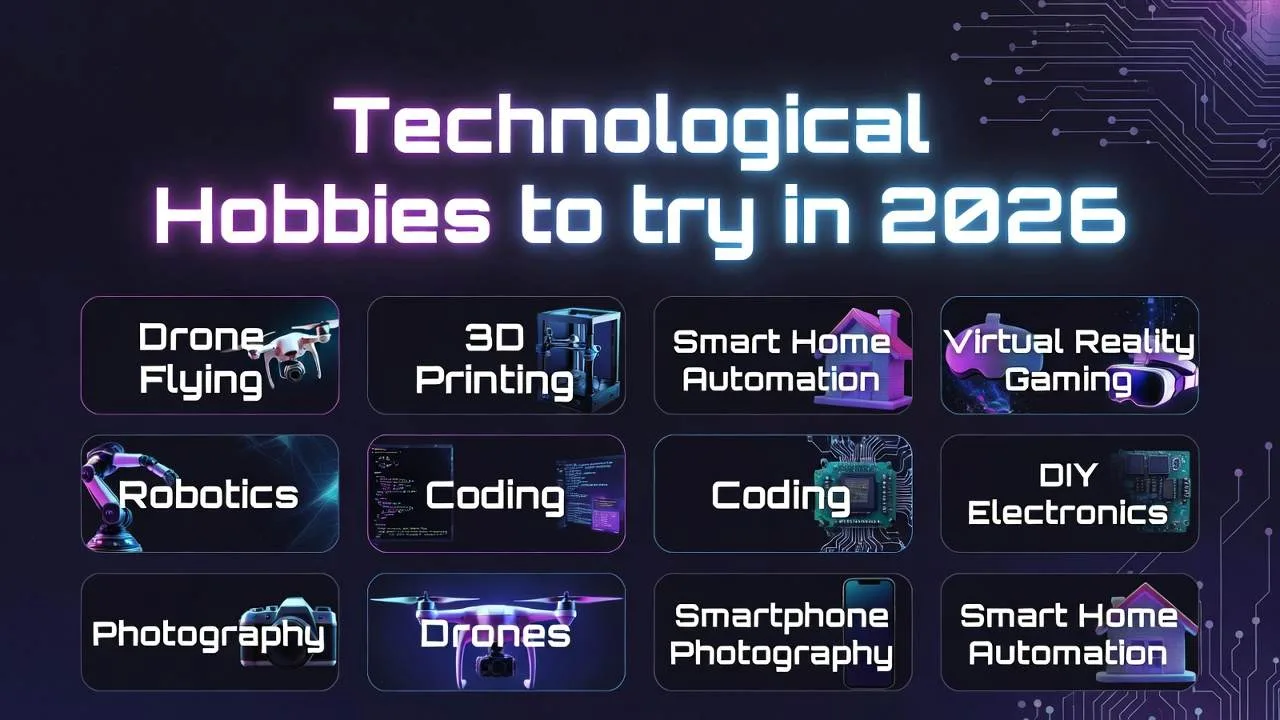
Using a Raspberry Pi, Home Assistant, or smart plugs to build custom automations — lights that follow the sunset, a coffee maker that starts when your alarm goes off — turns your home into a personal engineering project.
Start simple: buy a smart plug ($10). Connect it to your coffee maker. Set it to turn on at 6:45 AM. That is your first automation. Then add another: a motion sensor that turns on hallway lights at night. Then another: a routine that dims lights, starts a playlist on Spotify, and locks the doors when you say “goodnight.” Smart home automations are a 2026 hobby because the hardware is cheap, the platforms are beginner-friendly, and the result is a house that feels like it was designed by a futurist.
Dirk Daring and ttirreg on tech forums describe smart home building as “the hobby where the result is your daily life getting better.” That is the distinction: most hobbies produce an object. This one produces an environment. If you enjoy systems thinking, our guide on things to do when bored working from home has more home-office optimization projects.
| Detail | Info |
| Time to Start | 30 min first automation, unlimited expansion |
| Cost | $10 (smart plug) to $100+ (Raspberry Pi setup) |
| Difficulty | Beginner to Advanced |
| Best For | Engineers, problem-solvers, tech enthusiasts |
| What You Need | Smart plugs or Raspberry Pi, phone, Wi-Fi, curiosity |
When You Want to Reconnect With the Physical World (Hobbies 11–15)
11. Indoor Hydroponic Gardening — Grow Food Without Soil, Without a Yard
Setting up a small hydroponic system on your kitchen counter and growing lettuce, herbs, or strawberries in water under LED lights produces food in 3 to 4 weeks with no outdoor space required.
Buy a beginner hydroponic kit ($30–$80 for a countertop system). Fill it with water. Add the nutrient solution. Plant seed pods. Turn on the LED light. Wait. In 2 to 3 weeks, seedlings appear. In 4 to 6 weeks, you are harvesting lettuce and basil from your kitchen counter. Indoor hydroponic gardening is a 2026 hobby because the countertop kits are now affordable, automated (self-watering, timed lights), and designed for apartments with no outdoor access.
This hobby produces visible daily progress — the plants grow measurably every 24 hours. That progression is the opposite of the static, repetitive feeling that modern boredom creates. You check the garden every morning and something has changed. If indoor gardening interests you, our guide on things to do when bored at home has more home-based projects.
| Detail | Info |
| Time to Start | 20 min setup, daily 2-min check |
| Cost | $30–$80 (countertop system) |
| Difficulty | Beginner |
| Best For | Apartment dwellers, food growers, plant lovers |
| What You Need | Hydroponic kit, water, seed pods, counter space |
12. Astrophotography Moon Mapping — Photograph the Moon in Stunning Detail With Your Phone
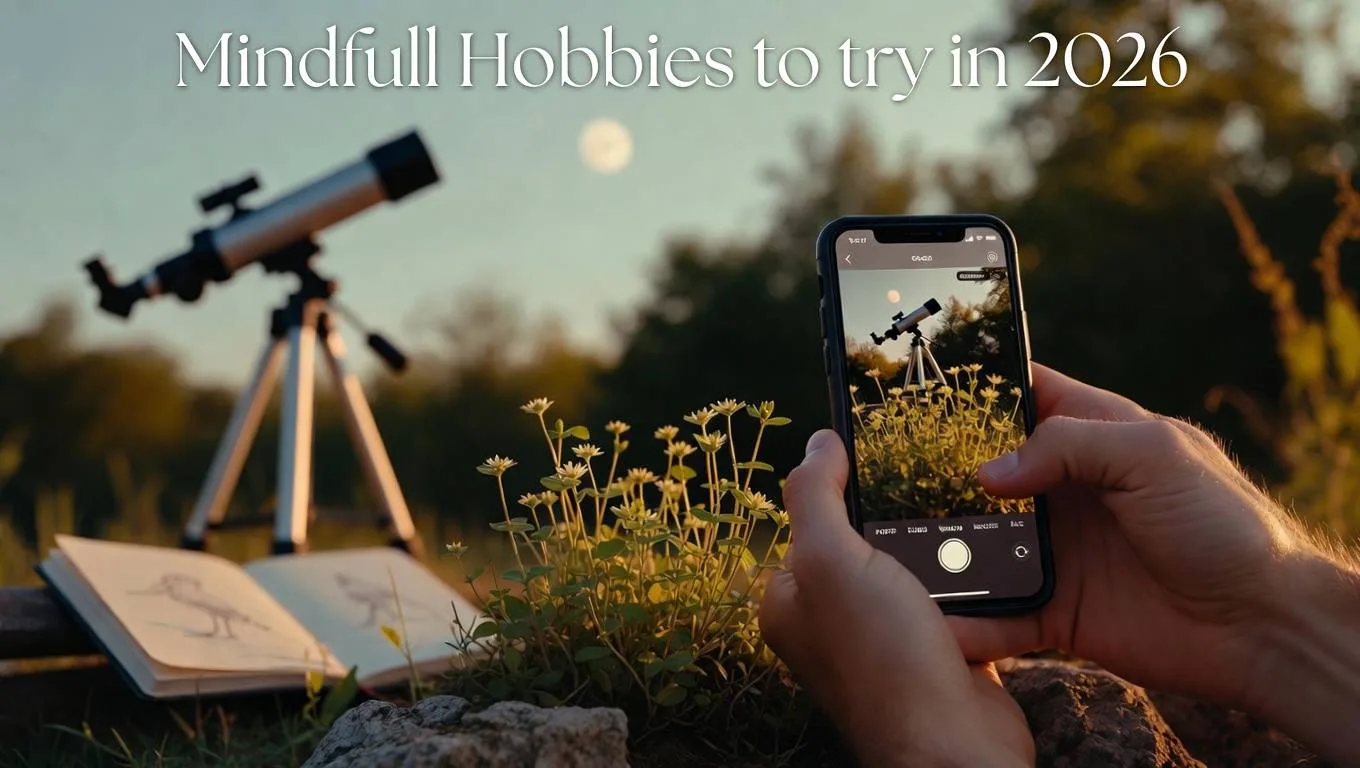
Attaching a phone adapter to a basic telescope and photographing the moon’s craters, seas, and terminator line produces images that look professional — and the setup costs under $100.
Buy a basic telescope ($50–$80) and a phone adapter ($15). Point the telescope at the moon. Attach your phone to the eyepiece. Take a photo. The level of detail visible through even a cheap telescope is shocking — individual craters, mountain ranges, shadows moving across the terminator line. Astrophotography moon mapping is the act of photographing the moon over multiple nights and documenting how the shadows shift as the lunar cycle progresses.
This hobby is perfect for bored evenings. You walk outside, point the telescope at the moon, take a photo, and go back inside. 10 minutes. The photos are genuinely impressive and shareable. If nighttime activities interest you, our guide on things to do when bored alone has more solo evening ideas.
| Detail | Info |
| Time Per Session | 10–20 minutes |
| Cost | $65–$100 (telescope + phone adapter) |
| Difficulty | Beginner |
| Best For | Night owls, curious minds, anyone with a clear sky |
| What You Need | Basic telescope, phone adapter, clear night, phone camera |
13. Urban Foraging Walks — Identify Edible Plants Growing in Your Neighborhood
Walking your neighborhood with a foraging app and identifying edible plants growing on sidewalks, in parks, and in vacant lots turns a boring walk into a food-gathering adventure.
Download a foraging identification app. Walk your neighborhood. Look for chickweed (edible, pesto-worthy), dandelion greens (salad), clover flowers (tea), plantain leaves (medicinal), wild garlic (cooking). Most urban environments have 10 to 20 edible species growing within walking distance of any home. Urban foraging walks are a modern hobby because the identification apps available in 2026 use AI-powered plant recognition that is accurate enough to trust — a capability that did not exist at consumer level 5 years ago.
This hobby changes how you see your neighborhood permanently. Streets you have walked 500 times suddenly contain plants you can eat. The shift in perception is as valuable as the food. If walking-based activities interest you, our guide on things to do when bored in spring has seasonal outdoor projects.
| Detail | Info |
| Time Per Session | 20–45 minutes |
| Cost | Free (app) to $15 (foraging guide book) |
| Difficulty | Beginner (always verify before eating) |
| Best For | Nature lovers, walkers, food experimenters |
| What You Need | Phone with foraging app, walking shoes, a bag for harvest |
14. Citizen Science Projects — Contribute to Real Research From Your Backyard
Joining a citizen science project — counting birds for eBird, reporting firefly sightings for Firefly Watch, classifying galaxies on Zooniverse — turns solo observation into a contribution to actual scientific research.
Go to Zooniverse.org. Pick a project: classify galaxy shapes, transcribe historical weather records, identify wildlife in camera trap photos. Or download eBird and log every bird you see during a walk. Citizen science projects are a 2026 hobby because the platforms are polished, the projects are genuinely interesting, and your contributions feed into published research. You are not pretending to do science. You are doing science. The data you submit is used by real researchers at real institutions.
This hobby is for people who want their boredom to matter. Every observation you log, every classification you make, adds a data point to a project that would not exist without volunteer contributors. If observation-based hobbies interest you, our guide on things to do when bored by yourself has more solo activities designed for curious minds.
| Detail | Info |
| Time Per Session | 10–40 minutes |
| Cost | Free |
| Difficulty | Beginner |
| Best For | Science enthusiasts, detail-oriented people, solo observers |
| What You Need | Phone or laptop, internet, optional binoculars for bird projects |
15. Geocaching Urban Puzzles — GPS Treasure Hunts Hidden in Your City
Using the free Geocaching app to find hidden containers in parks, urban alleys, and landmarks near you turns a walk into a real-world puzzle game with millions of caches worldwide.
Download the app. Search for caches near you. Walk to the coordinates. Search the area. Find the container. Sign the log. Hide it again. Geocaching urban puzzles combine outdoor movement, GPS navigation, and the genuine thrill of discovery. The global network has over 3 million active caches, and the puzzle-style caches (where you solve a riddle to get the coordinates) add an intellectual layer to the physical search. If outdoor treasure hunts interest you, our guide on things to do when bored on weekends has more adventure-based weekend activities.
| Detail | Info |
| Time Per Session | 30 min to 3 hours |
| Cost | Free |
| Difficulty | Beginner |
| Best For | Families, couples, solo explorers, teens |
| What You Need | Phone with Geocaching app, comfortable shoes |
When You Want Purpose, Not Just Distraction (Hobbies 16–20)
16. Murdle-Style Logic Puzzles and Solo Board Game Nights
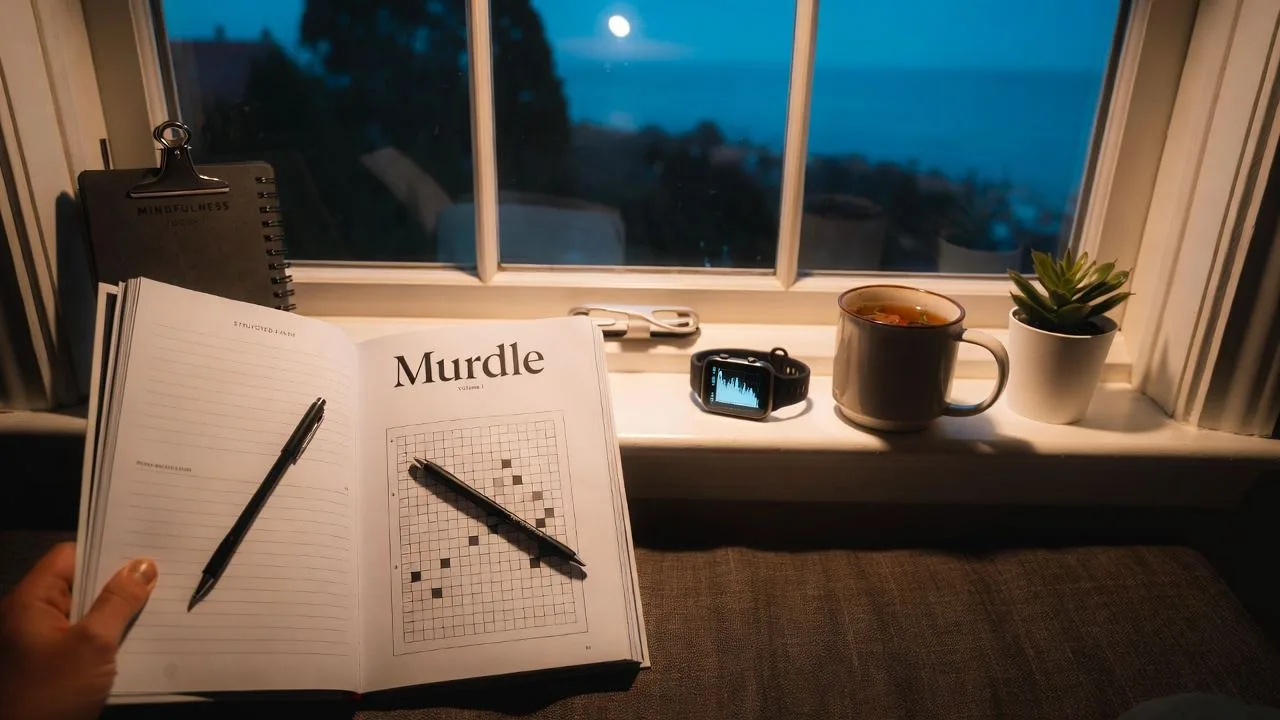
Solving deductive logic grid puzzles from Murdle: Volume 1 — where you play as Deductive Logico solving whodunits with Inspector Irratino — gives your brain 20 minutes of genuine detective work per puzzle.
Buy the book. Open to a puzzle. Read the scenario. Use the logic grid to eliminate suspects based on clues. Solve the murder. Murdle became a bestseller because the puzzles are genuinely challenging, the humor is dry and smart, and each one takes 15 to 25 minutes. Solo board game nights extend this: games like Sprawlopolis, Under Falling Skies, and Friday are designed specifically for one player. If you want more puzzle-based solo activities, our guide on things to do when bored alone has logic and creative challenges for quiet evenings.
| Detail | Info |
| Time Per Session | 15–60 minutes |
| Cost | $12 (Murdle book) to $25 (solo board game) |
| Difficulty | Beginner to Intermediate |
| Best For | Puzzle lovers, true crime fans, solo evening planners |
| What You Need | Murdle book or solo board game, pen, table |
17. Mindfulness Journaling — The 2026 Version With Structure
Using a structured mindfulness journal with prompts — not blank pages — gives you a 10-minute daily habit that builds self-awareness, reduces anxiety, and gives free time a reflective purpose.
Buy a guided mindfulness journal (Amazon has dozens under $15) or use a free printable template. Each day: write 3 gratitudes, 1 intention, and 1 observation about how your body feels. 10 minutes. Mindfulness journaling is a 2026 hobby because the journals available now are designed with behavioral science — structured prompts that guide reflection without requiring you to stare at a blank page. The structure is what makes it work for people who have tried journaling and abandoned it.
This hobby compounds. Day 1 feels small. Day 30 feels different. Day 90 has measurably changed how you process your thoughts. If journaling sparks a broader self-care interest, our guide on how to build a dopamine menu when bored gives you a neuroscience-based framework for choosing daily activities. And if you are dealing with anxiety alongside boredom, our guide on things to do when bored and anxious covers that overlap.
| Detail | Info |
| Time Per Session | 10 minutes |
| Cost | Free (template) to $15 (guided journal) |
| Difficulty | Beginner |
| Best For | Everyone — especially overthinkers and anxious types |
| What You Need | Journal or template, pen, 10 quiet minutes |
18. Biohacking Sleep Patterns — Track, Experiment, Optimize
Using a sleep tracking app or wearable to measure your sleep quality, then systematically testing one variable per week — caffeine cutoff, screen time, room temperature — turns sleep improvement into a data-driven hobby.
Start with a free sleep tracking app. Record your baseline for 1 week. Then change one variable: stop caffeine after 2 PM. Track for a week. Compare. Then try another: dim all screens an hour before bed. Track. Compare. Biohacking sleep patterns is a 2026 hobby because the tracking technology is now accurate enough on consumer devices to produce meaningful data, and the personal experiment framework makes it genuinely interesting. You are not just “trying to sleep better.” You are running controlled experiments on yourself.
The results are tangible: better energy, better mood, better focus. The hobby pays dividends every morning. If optimizing your daily routines interests you, our guide on things to do when bored for adults has more self-improvement projects for grown-ups.
| Detail | Info |
| Time Per Session | 5 min logging, 1 week per experiment |
| Cost | Free (app) to $50–$200 (wearable tracker) |
| Difficulty | Beginner |
| Best For | Data-driven adults, anyone with sleep issues |
| What You Need | Sleep tracking app or wearable, notebook for variables |
19. Interactive Fiction Writing — Write Stories Where the Reader Chooses the Path
Using free tools like Twine or Ink to write branching-path stories — where the reader makes decisions that change the outcome — combines creative writing with game design in a format that did not exist for casual creators until recently.
Download Twine (free, browser-based). Write a scenario: you are in a dark room, you hear footsteps. Option A: open the door. Option B: hide under the desk. Each option leads to a different page. Each page leads to more choices. Interactive fiction writing is storytelling meets architecture — you design the structure and the narrative simultaneously. The result is a playable story you can share with anyone via a link.
This hobby is for writers who are bored with linear formats and gamers who want to create instead of consume. If creative writing interests you, our guide on things to do when bored in your room has micro fiction and haiku exercises. And if you want more screen-based creative projects, our guide on things to do when bored on your phone covers mobile creative activities.
| Detail | Info |
| Time Per Session | 30–90 minutes |
| Cost | Free (Twine) |
| Difficulty | Beginner to Intermediate |
| Best For | Writers, gamers, storytellers, creative thinkers |
| What You Need | Computer, Twine (free), story idea |
20. Digital Decluttering Sprints — Clean Your Digital Life in 15-Minute Bursts
Spending 15 minutes cleaning one digital space — email inbox, phone photos, browser bookmarks, app subscriptions, cloud storage — produces a cleaner digital environment that reduces the mental noise causing your boredom.
Set a timer for 15 minutes. Pick one target: unsubscribe from 20 email lists, delete 100 photos from your camera roll, close 30 browser tabs, cancel 2 subscriptions you forgot about, organize your desktop files into 5 folders. Digital decluttering sprints are a 2026 hobby because the digital clutter in most people’s lives has reached a level where it actively contributes to the feeling of being overwhelmed and bored at the same time. Cleaning it produces immediate relief.
Do one sprint per day for a week and your digital life feels dramatically lighter. The boredom that was masked by digital noise often resolves when the noise is removed — you can finally hear what your brain actually wants. If you want to extend this into a structured practice, our 30-day digital detox challenge gives you a day-by-day framework. And if digital overwhelm comes with anxiety, our guide on things to do when bored and anxious addresses the overlap.
| Detail | Info |
| Time Per Sprint | 15 minutes |
| Cost | Free (saves money) |
| Difficulty | Beginner |
| Best For | Everyone — especially screen-saturated adults |
| What You Need | Phone or laptop, timer, willingness to delete |
Natty’s take:
I have coached people who say they are bored in 2026, and the first thing I ask is: when is the last time you made something with your hands? Not typed. Not tapped. Made. The answer is almost always measured in months or years. Modern boredom is a creation deficit disguised as an entertainment surplus. You do not need more content. You need a hobby that produces something — an object, a plant, a puzzle solution, a photograph, a jar of kombucha. The production is the cure. Everything on this list produces something. Pick one.
Best Modern Hobbies for 2026 — By Situation
| Your Situation | Best Hobbies From This List | Start Cost | Time to Start |
| Tired of screens, want analog | Needle Felting, Book Nook Kits, 3D Wooden Puzzles, Diamond Painting | $8–$60 | 30 min–20 hrs |
| Want a mental challenge | No-Code Prototyping, Retro Game Modding, Interactive Fiction, Murdle Puzzles | Free–$80 | 15 min–5 hrs |
| Want to connect with nature | Hydroponics, Urban Foraging, Astrophotography, Citizen Science, Geocaching | Free–$100 | 10–40 min |
| Want daily purpose/habit | Mindfulness Journaling, Sleep Biohacking, Digital Decluttering, Fermentation | Free–$30 | 10–15 min |
| Want adrenaline | Drone Racing, Geocaching (puzzle caches), Retro Game Modding | $15–$150 | 30 min–2 hrs |
| Budget under $20 | Needle Felting Kit, Murdle Book, Diamond Painting Coasters, Citizen Science, Foraging | Free–$18 | 10 min–2 hrs |
| Hobbies for women 2026 | Needle Felting, Diamond Painting, Book Nook Kits, Journaling, Hydroponics | $8–$80 | 10 min–20 hrs |
| Hobbies for men 2026 | Drone Racing, Retro Game Modding, Smart Home, 3D Puzzles, Fermentation | $10–$150 | 20 min–15 hrs |
| Hobbies to do at home | All 20 — every hobby on this list can be done at home | Free–$150 | 10 min+ |
| Unique hobbies nobody else has | Urban Foraging, Interactive Fiction, Moon Mapping, Citizen Science, Seed Bomb Making | Free–$100 | 10 min+ |
How to Choose Your 2026 Hobby in 30 Seconds
1. Are you screen-tired or screen-comfortable?
Screen-tired: hobbies 1–5 (analog making). Screen-comfortable: hobbies 6–10 (tech tinkering).
2. Do you want something daily or something project-based?
Daily habit: mindfulness journaling, sleep biohacking, hydroponics, digital decluttering, Duolingo. Project-based: book nook kit, 3D puzzle, retro mod, interactive fiction, fermentation batch.
3. How much do you want to spend to start?
Free: citizen science, geocaching, digital decluttering, urban foraging. Under $20: needle felting kit, Murdle book, diamond painting coasters. Under $100: hydroponic kit, telescope + adapter, FPV drone, book nook kit.
4. Are you bored or purposeless?
Bored needs stimulation: drone racing, retro modding, AI art, geocaching. Purposeless needs direction: mindfulness journaling, citizen science, sleep biohacking, interactive fiction writing. Different problems, different hobbies. If the purposelessness is deeper and comes with emotional weight, our guide on things to do when depressed and bored addresses that overlap. And if the boredom follows you into the workplace, our guide on things to do when bored at work has professional-context activities.
What Modern Boredom in 2026 Is Actually Telling You
Boredom in 2026 is a different animal than boredom in 2010. In 2010, boredom meant you had nothing to do. In 2026, boredom means you have infinite things to do and none of them feel worth doing. The problem is not a lack of options. It is a lack of engagement. You have been consuming so much passive content for so long that your brain has stopped registering it as stimulating. The scroll feels empty. The feed feels flat. The 47th episode of something does not land the way the first one did. Explore things to do when bored.
You are not bored. You are under-created. The single biggest predictor of modern boredom is the ratio of consumption to creation. If you spend 95% of your free time consuming (watching, scrolling, reading, listening) and 5% creating (making, building, growing, writing, solving), your brain will register boredom regardless of how much content you consume. Every hobby on this list shifts that ratio toward creation.
Your hands have been idle too long. Humans evolved to use their hands. Typing and tapping are not the same as building, folding, planting, and assembling. The hobbies in section 1 (needle felting, book nook kits, 3D puzzles, fermentation, diamond painting) exist specifically to re-engage your hands with physical material. The satisfaction of holding a finished object you built is something no amount of streaming can replicate.
You need a hobby that produces evidence. The most effective modern hobbies are the ones that leave a trace: a felted animal on your shelf, a jar of kombucha in your fridge, a moon photo on your phone, a solved Murdle grid in a book, a growing hydroponic garden on your counter. The evidence matters because it counters the feeling that your free time disappeared into nothing. If you want to channel this insight into a broader personal overhaul, our guide on building a 30-day digital detox challenge provides a day-by-day framework for reshaping your relationship with screens and free time. And for more boredom-specific ideas organized by life situation, our complete guide on things to do when bored at home covers 50+ activities across every category.
Final Thoughts
You have 20 modern hobbies to adopt to beat boredom in 2026. Some cost nothing. Some cost $15. Some take 10 minutes. Some take 20 hours. Some use technology. Some reject it entirely. The common thread is that every one of them produces something: an object, a skill, a photograph, a data point, a solved puzzle, a growing plant, a cleaner digital life.
More Boredom Wizard Guides
By Location: [Things to Do When Bored at Home: 50+ Creative Ideas That Actually Work] · [20 Things to Do When Bored in Your Room] · [20 Things to Do When Bored at Work] · [20 Things to Do When Bored at School] · [50 Things to Do When Bored in Class] · [20 Things to Do When Bored in a Waiting Room] · [25 Things to Do When Bored in a Car] · [30Things to Do When Bored on a Plane] · [30 Things to Do When Bored on Computer]
By Season: [50 Things to Do When Bored in Summer] · [50 Things to Do When Bored in Winter] · [30 Things to Do in Fall When Bored] · [20 Things to Do When Bored in Spring] · [50 Things to Do When Bored on a Rainy Day] · [52 Things to Do on a Snow Day When Bored] · [25 Things to Do When Bored During Holiday]
By Who You Are: [Things to Do When Bored for Adults] · [Things to Do When Bored for Teens] · [Things to Do When Bored for Kids] · [Things to Do When Bored: College Student Edition] · [Things to Do When Bored: Stay-at-Home Mom Edition] · [Things to Do When Bored After Retirement]
By Situation: [Things to Do When Bored by Yourself] · [Things to Do When Bored Alone] · [Things to Do When Bored with Friends] · [25 Things to Do at a Friend’s House] · [Things to Do at a Sleepover] · [50 Things to Do When Bored on Weekends] · [25 Things to Do When Bored at Night] · [37 Things to Do When Tired and Bored] · [20Productive Things to Do When Bored and Sick] · [49 Things to Do When Feeling Depressed and Bored] · [49 Things to Do Instead of Doomscrolling] · [29 Things to Do When Feeling Narcoleptic and Bored] · [37 Exercises to Do When Bored] · [53 Home Decor Ideas to Explore When Bored].[Books to read when bored].[Things to do cook when bored].[Fun things to do when bored].[Personal care products to explore when bored].[Tattoo ideas to explore when feeling bored and doomscrolling]. [Upcoming Car Models to explore when feeling bored].[Things to do when bored with no money]. [Things to do when bored with ADHD].[Things to do when bored after breakup]. [Things to do when bored working from home].[Things to do when bored on phone]. [Things to do when bored and anxious]. [How to build a Dopamine Menu When Bored].[30 Days Digital Detox Challenge].